Miz Chef

Cooking Up a Healthy Life


2 Comments

Kantola Secret

Okay, that was a very bad play on words. Forgive me. But kantola is a secret, at least to the Western world.

Kantola

Kantola

Kantola, also known as spiny gourd, is a member of the gourd family and is used mainly in India and parts of South Asia. I saw them in my favorite Indian market and was fascinated. I bought a few and looked up how to use them.

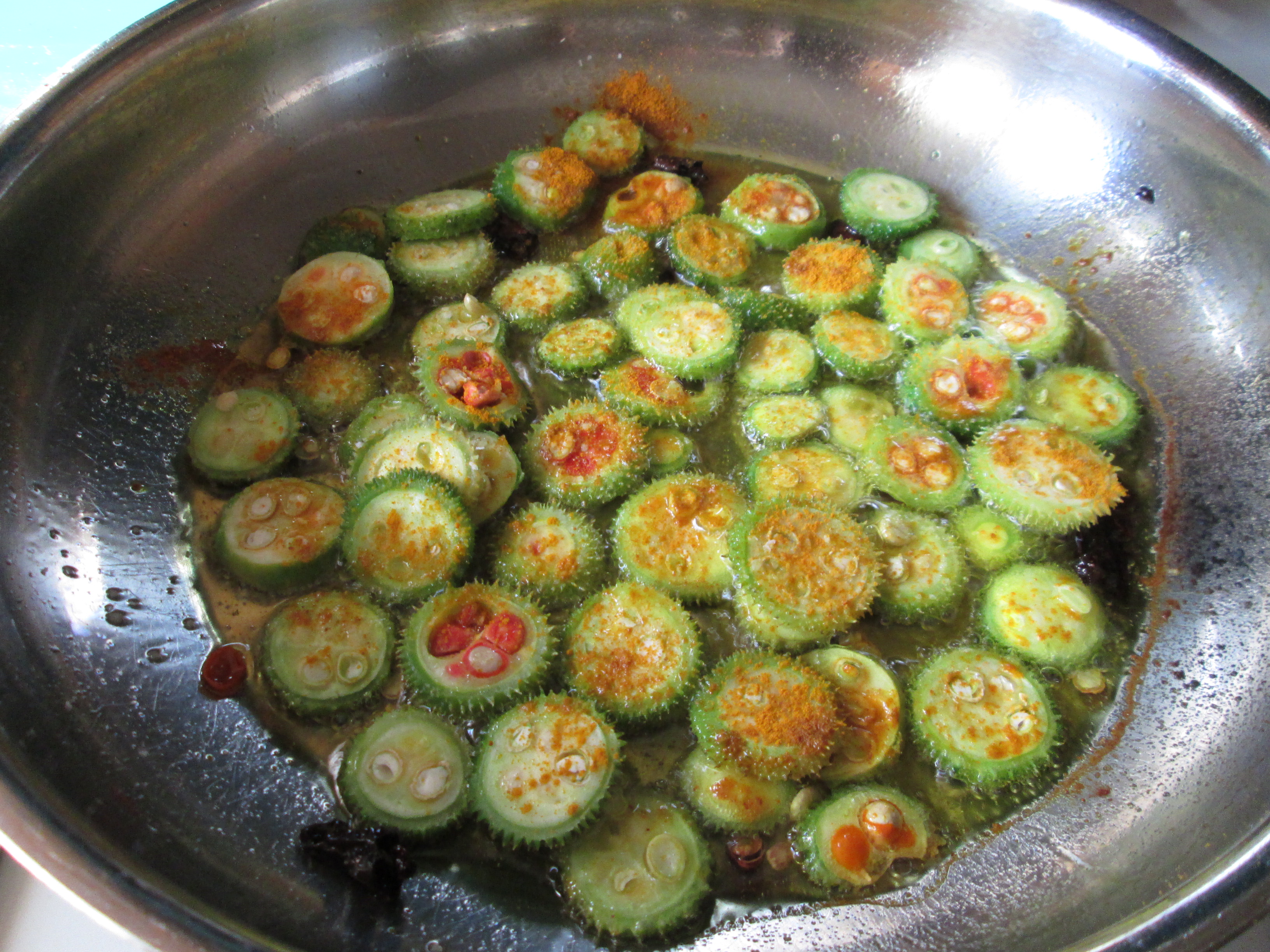
Most recipes I found called for slicing and frying them, or, occasionally, boiling them. I decided to fry them for my first experiment, but kept the spices to a minimum, since I wanted to taste their natural flavor. I added a little salt, a bit of crumbled chile flakes, and a dash of turmeric, since that seems to be the spice de rigueur for this vegetable. Some sources said to peel them, while others said not to peel them. I peeled a couple and found it to be tedious because they’re so small. In the end, the skin was not an issue.IMG_1254

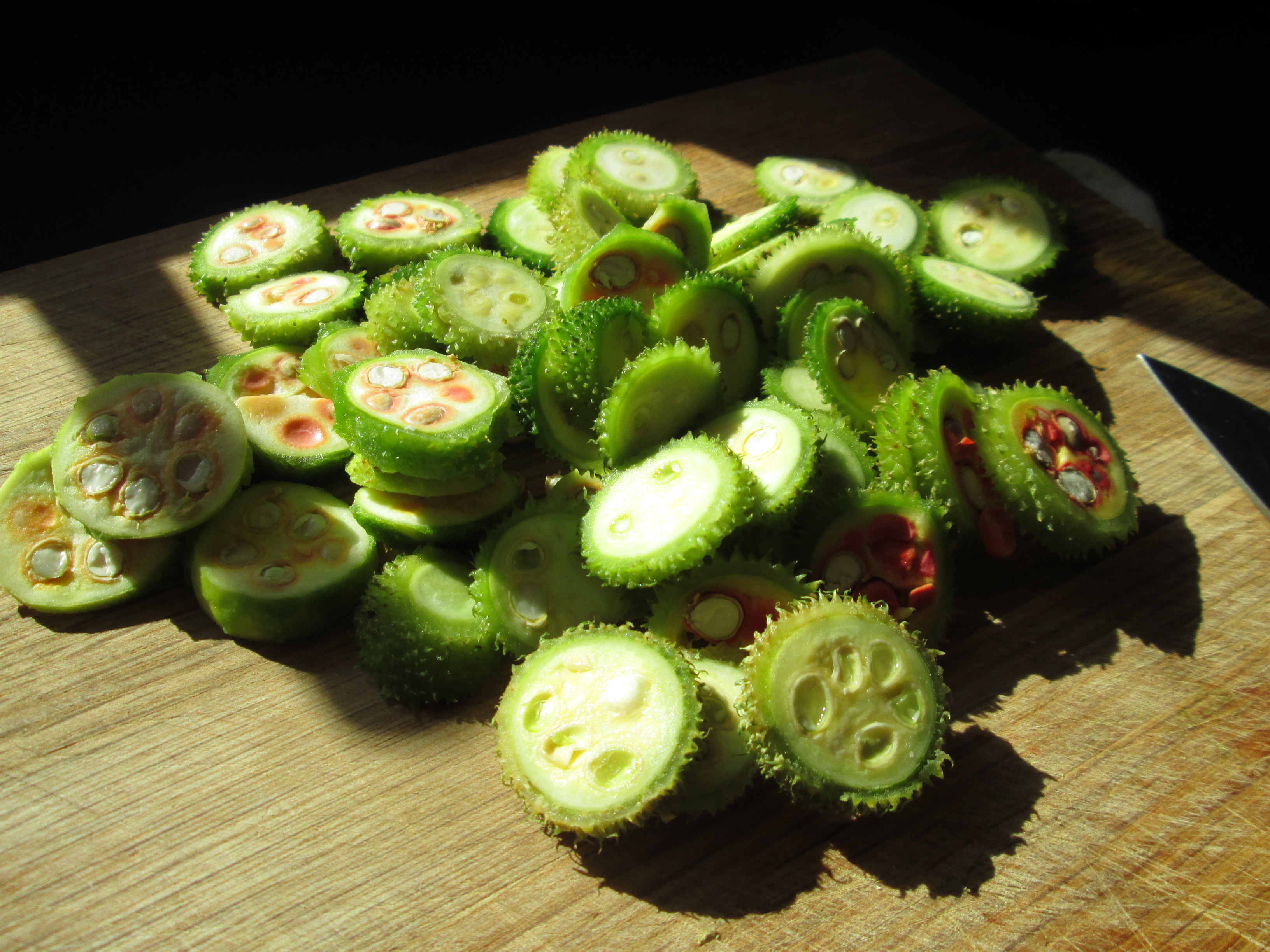
So, I sliced up the kantola and, as you can see, they have seeds very much like squash or cucumber (also part of the gourd family).IMG_1256

I heated up some oil (I found this extra virgin olive oil-sunflower oil and I wanted to give I a try). I toasted the chile flakes, then added the kantola and, after a minute, the seasonings. Then I transferred them to a paper towel to drain.IMG_1257

And you know what? They tasted like—surprise—fried squash. The flavor was very mild, although a few had a slightly bitter aftertaste, but it wasn’t unpalatable.

IMG_1258

So, that was my timid first adventure with kantola. I’m going to go get some more and just go crazy. Maybe I’ll even mix them with other ingredients!


Leave a comment

Jamaican Black Cake, aka Christmas Cake

As stunned as I am that it’s late September, I have to face the fact that summer is over. With that comes the realization that it’s time to start my Jamaican black cake, which is also called Christmas cake.
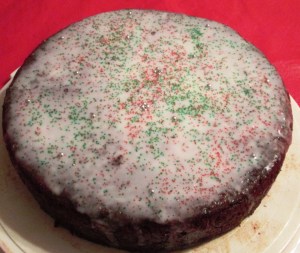
Jamaican Black Cake

Jamaican Black Cake

Several years ago, a co-worker, who was from Jamaica, introduced me to black cake and I asked her for a recipe, which I shared on Epicurean.com. It’s a tradition in Jamaica (and other parts of the West Indies) to serve this cake at Christmas, as well as weddings and other special occasions.

The problem is that in order to get a really good black cake, you have to begin the process at least several weeks in advance, and who’s thinking about Christmas in September? (Okay, well, many of you probably start your Christmas shopping in July, but the way my life has been going the past several years, my thoughts about Christmas have had me on the brink of nervous breakdowns trying to find gifts on Christmas Eve.)

Black cake/Christmas cake is also sometimes called plum pudding because it’s derived from the traditional British Christmas cake of the same name. Plum pudding is basically fruit cake and it was soaked in brandy to keep it fresh on long voyages across the seas. (Plum pudding is traditionally lit aflame at presentation time. I suspect that this was done the first time by accident as a result of being so soused in brandy and someone getting too close to it with a candle or something.) When the British began trading through the Caribbean, the plum pudding went with them. But rum, rather than brandy, was the liquor available on the islands, and sugar and molasses became the sweeteners. The addition of allspice and nutmeg are more Island touches on the old recipe.

It is said that the original recipe for plum pudding dates to Medieval times, when it called for 13 ingredients—1 for Jesus Christ and 12 for his apostles—and was to be made on Christmas Eve. Since then, it’s become a more elaborate affair. As with other fruit cakes, a black cake contains various dried fruits that are macerated in rum and, sometimes, port wine for weeks. The ideal time to bake it is a couple of weeks before Christmas, and as the days go by, it’s periodically basted with more booze.

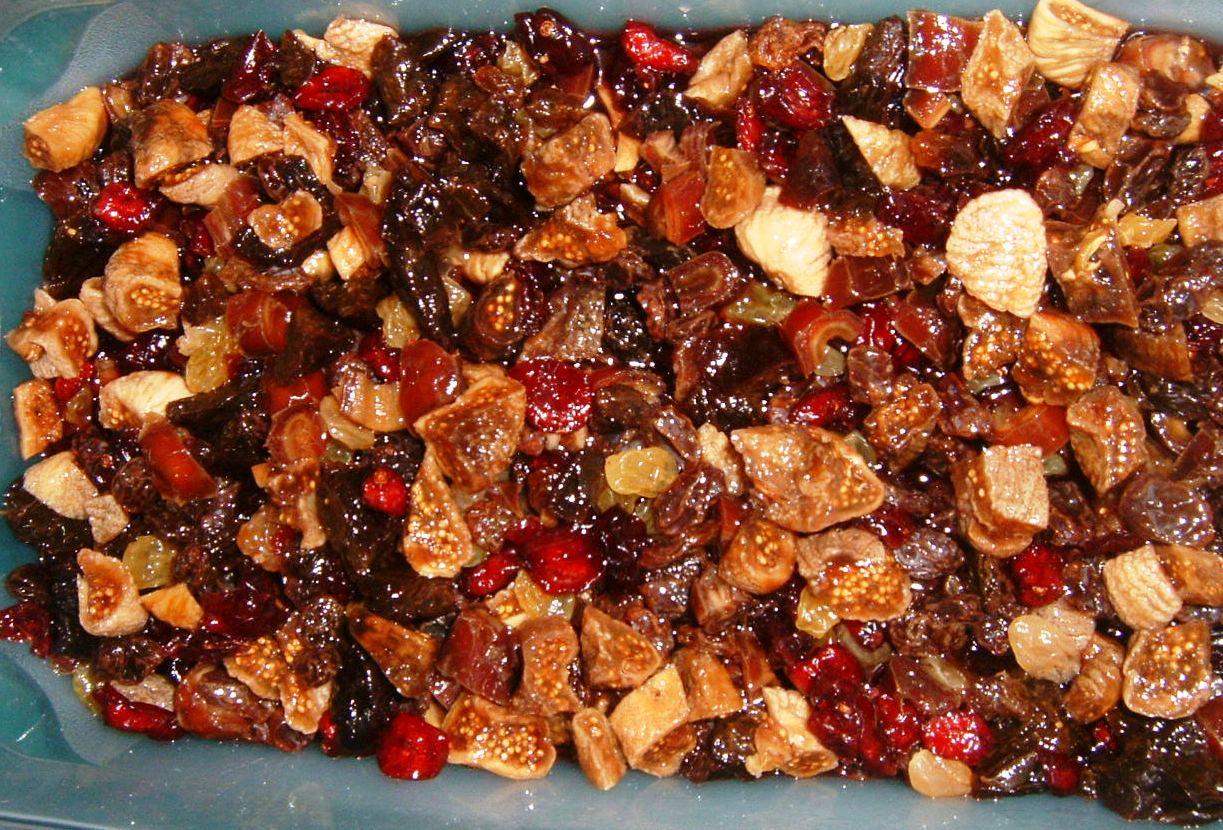
The photos here are from last year, so that you can see the process from start to finish. So, in September, I put my fruit—raisins, golden raisins, plums, figs, dates, and cranberries—in a large container with a cover and poured in a wee bit of rum and port wine and let that sit until December. About a week before Christmas (I couldn’t get around to it before then), I baked the cake, basted it a few times, and brought it for Christmas Eve dinner. It came out really, really good. It’s not like any fruit cake you’ve ever had, I guarantee it. Normally, black cake is served as is, but I wanted it to look a little more festive so I iced it with a basic powdered sugar icing (which eventually melted). The only thing was that my cake was not as dark as it should be (it is called black cake, after all). I was told to increase the amount of browning or molasses. This recipe contains the increased amounts. (Browning is also known as burnt sugar and can be found in West Indian markets.)

Give it a shot. This is one fruit cake that will not get passed around. Enjoy!

Christmas Cake (Jamaican Black Cake)

4 cups mixed dried fruits (raisins, currants, prunes, citron, cherries, dates)
3 cups port wine
3 cups white rum (preferably Appleton)
1/2 lb. butter
1 cup brown sugar
6 eggs
12 oz. all-purpose flour
2 tbsp baking powder
2 tbsp browning
1/4 molasses
1 tsp Benjamin vanilla extract
1 tsp almond extract
1 tsp nutmeg
1 tsp ground allspice
2 tsp lemon juice

Preparing Fruits for Baking:

Wash fruit well. Soak fruits in 2 cups port wine and 2 cups rum for at least 4 weeks before baking.

Soaking the fruit

Soaking the fruit

To bake the cake:

1. Preheat oven to 350 degrees F.

2. Grease a 10-inch baking tin with butter or margarine. Line the tin with wax paper.

3. Mix butter and sugar until light and fluffy.

4. Add eggs, one at a time, and continue beating until mixture is smooth.
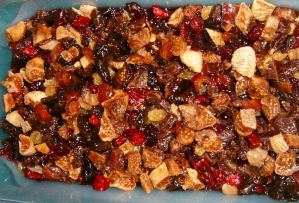
Dried fruit after soaking several weeks

Dried fruit after soaking several weeks

5. Add flour and baking powder and continue to mix.

6. Blend in browning, molasses, vanilla, almond, nutmeg, allspice, and lemon juice.

7. In a blender or processor, grind fruits and add to mixture.

8. Add 1 cup rum and 1 cup wine and mix well. Place in oven.

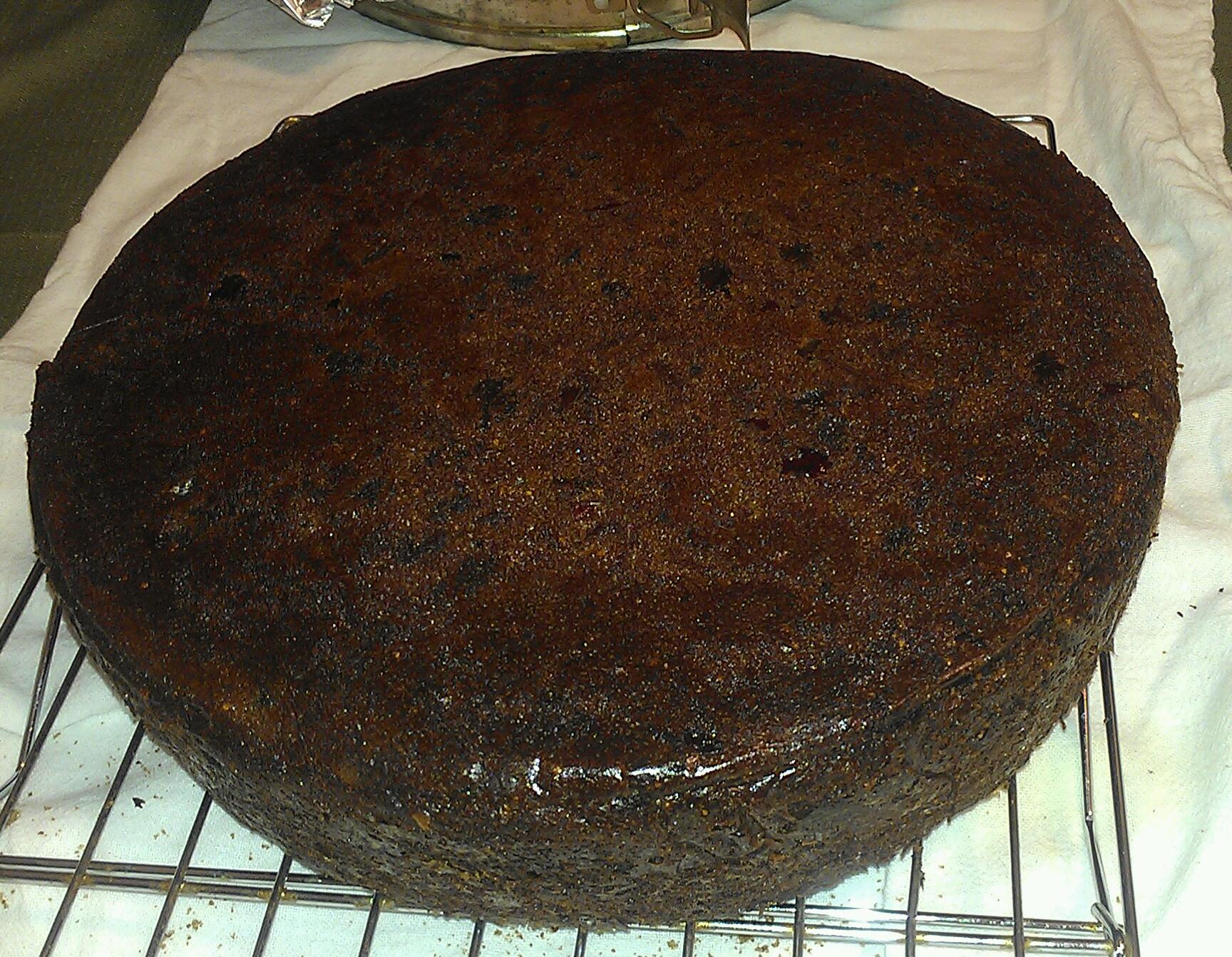
Baked Black Cake

Baked Black Cake

Cake is baked when a knife is inserted into center of cake and comes out clean. Check cake after an hour. This will make approximately 4 lbs. of cake. If you’re baking it weeks or months in advance, continue basting it periodically with wine. Decorate if you wish, but it can be served as is.


3 Comments

Minty Peach Salsa

Summer is almost over. Technically, we have until September 22, but the kids are back in school, the stores are already displaying holiday merchandise, and my neighbor’s trees have red leaves in them. As much as I love autumn, I’m always sad when the summer comes to a close. It’s never long enough, is it?

Minty Peach Salsa

Minty Peach Salsa

But there’s still time to enjoy some summer activity and summer deliciousness, including the wonderful stone fruit that are still available. And if you grow your own mint, it’s probably out of control by now. Here’s a way to use both: Minty Peach Salsa.

This salsa was inspired by a peach salsa I bought at a farmer’s market in Virginia. I set out to replicate it and made a few modifications to make it a little less sweet and a bit spicier. It’s very simple and perfect for those last summer picnics or barbecues. It also makes a great condiment for grilled veggies, chicken, or fish.

You can substitute the peach with nectarines, plums, or apricots, but I find that peach works the best. It has the right flavor and texture to complement the other ingredients.

Enjoy the salsa and what’s left of summer!

Minty Peach Salsa

Makes about 2 ½ cups.

2 cups chopped peaches
1/3 cup chopped shallot or finely chopped Vidalia onion
¾ cup chopped red pepper
1 small jalapeno, minced
2 tablespoon minced mint
1 tablespoon apple cider vinegar
½ teaspoon sea salt
½ teaspoon sugar
½ teaspoon garlic powder
1/2 teaspoon chili powder
2 teaspoon spiced rum (optional)

1. Combine all ingredients in a medium bowl. Refrigerate for an hour before serving to allow the flavors to blend.

2. Taste for seasoning and adjust, if necessary, before serving. Serve with tortilla or pita chips.


Leave a comment

Cucumber Mango Mint Shooter

I can’t believe it, but tomorrow is Labor Day. This summer was a non-summer, what with all the rain and cold days. Then again, there have been some gorgeous weekends recently, so I guess it wasn’t all bad.

Doesn’t change the fact that the summer is over. I can hear the Friday night fireworks at Coney Island from my house and this past Friday was the last one of the season. When I hear that final, cacophonous thunder that marks the end of not only of the week’s display but of the summer’s, it always makes me a little sad.

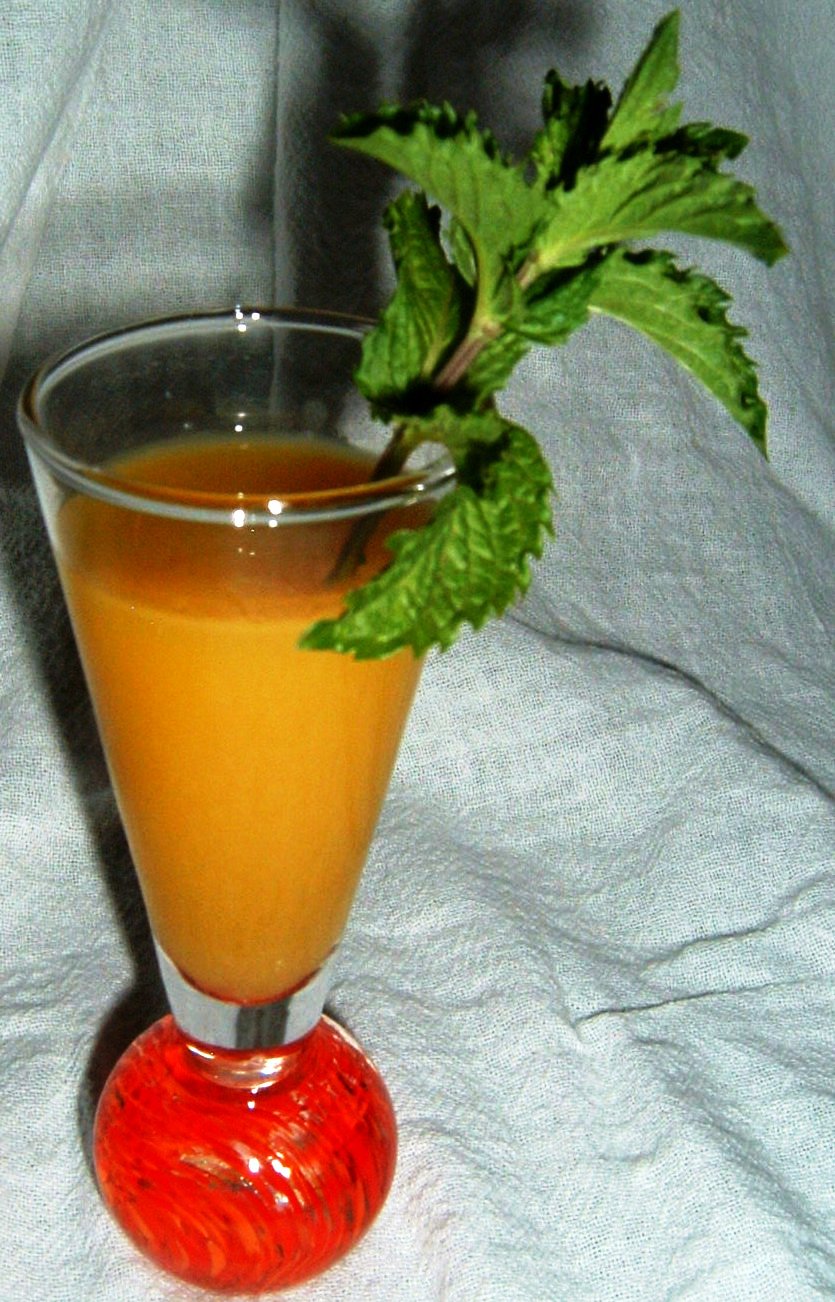
Cucumber Mango Mint Shooter

Cucumber Mango Mint Shooter

But Americans do not go gently into that goodbye of summer. Labor Day means picnics, barbecues, beach parties, and lots of food and fun. And I have just the cocktail to go with it all. It makes use of summer goodies, like cucumber, mango, and mint, but it makes a great cocktail for the coming holidays, too. And because cucumber and mint are also considered a restorative and a digestive, respectively, it makes a great after-dinner cocktail for Thanksgiving and Christmas.

Cheers!

Cucumber Mango Mint Shooter

Makes 4.

1 medium cucumber, peeled and seeded
1 mango, coarsely chopped
1 tablespoon mint leaves
1 teaspoon maple syrup
1 teaspoon lime juice
¼ cup melon liqueur
4 mint sprigs (optional)

1. Place cucumber, mango, mint, maple syrup, and lime juice in a food processor or blender. Process until fully pureed.

2. Set a fine mesh strainer over a bowl. Pour mixture into strainer and let it drip through. Press down on pulp with a rubber spatula to strain as much liquid out as possible. Whisk in  liqueur.

3. Pour into shot glasses, top with mint sprig, and serve.