Miz Chef

Cooking Up a Healthy Life


3 Comments

Delicious Date-Nut Bread

Date-nut Bread is a classic winter holiday treat. In fact, it’s become so popular that December 22 is National Date-Nut Bread Day.

Okay, so it’s January, but the cold winter weather continues to call for hearty, comforting foods, and date-nut bread definitely falls into that category.

Dates originated in the Middle East, and they play a huge role in the cuisines from that part of the world. They made their way to the U.S. via the Spaniards, who were introduced to them by the Moors. They are now a popular crop in California.

The word “date” is derived from a Greek word (dáchtylo), which means “finger.” Dates have been shown to help with constipation; promote bone health and ward off osteoporosis; and aid in intestinal disorders, heart problems, anemia, sexual dysfunctions, as well other health issues. They’re a good source of fiber, calcium, iron, phosphorus, potassium, magnesium, and zinc. They also contain thiamin, riboflavin, niacin, folate, vitamin A, and vitamin K. They’re also a great source of energy, so if you’re doing any kind of physical activity, dates are a great thing to add to your snack pack. Be aware, though, that dates contain a fair amount of sugar, so you don’t want to overdo them, unless you plan on burning them off.

Enjoy date-nut bread for breakfast or a snack, by itself, toasted with butter, or with jam, honey, maple syrup, or anything else you like.

Enjoy!

Date-Nut Bread

2 cups chopped dates
1½ teaspoons baking soda
2 large eggs
¾ cup sugar
1 teaspoon vanilla extract
¼ teaspoon allspice
¼ teaspoon kosher salt
2 cups all-purpose flour
1 cup chopped walnuts

Grease an 8×10-inch loaf pan and line it with parchment paper. Preheat the oven to 325 degrees F.

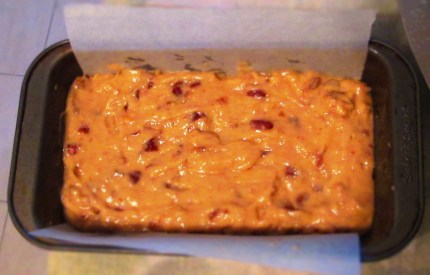
Place the dates and baking soda in a small bowl and cover them with 1 cup boiling water. Stir. Let them sit until they cool down.In a medium bowl, whisk together the eggs, sugar, vanilla, allspice, and salt.Add the flour and dates (including the water), and mix with a wooden spoon. Gently stir in the walnuts.Transfer the mixture to the loaf pan and smooth out the top. Bake for 55 to 65 minutes, or until a toothpick inserted in the center comes out clean.Cool the loaf on a cooling rack for 10 to 15 minutes. Turn out the bread onto the rack and cool completely.Store the loaf wrapped in plastic in the refrigerator up to 5 days.

Leave a comment

Celery Root Bisque with Oats


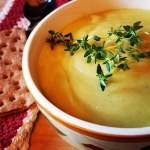
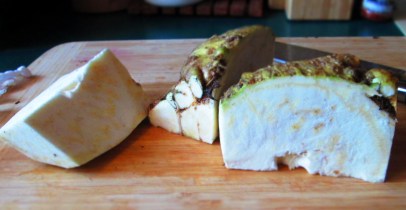
Celery root, also known as celeriac or knob celery, is one of those vegetables that confounds many people. What is it? Is it really the root of the celery plant? What do you do with it? What does it taste like?

Celery root is related to celery, but it’s a different variety. Whereas celery is cultivated for its stalks and leaves, celeriac is cultivated for the root. Its flavor is definitely celery-like, only deeper and earthier. It’s kind of off-putting in its appearance—big, bulbous, knobby, and usually dirt-encrusted—and is not used as commonly as other root vegetables. But like so many overlooked vegetables, it’s rising in popularity.

As to what you can do with it, many things. You roast them, saute them, gratinee them, use them in soups and stews, and, as in this recipe below, puree them for a smooth, silky bisque.

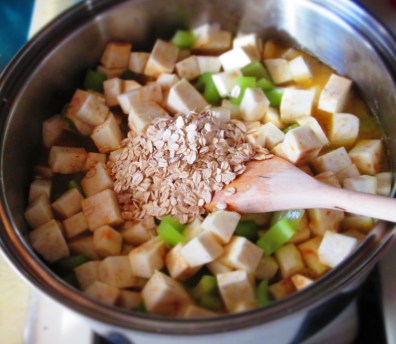
Celery root bisque is often thickened with potatoes, but I’ve chosen instead to use oats, a trick I learned in culinary school. Oats not only increases the soups nutrition factor, but also makes it less starchy.

Speaking of nutrition, celery root contains vitamin C, vitamin K,  vitamin B-6, potassium, phosphorus, and fiber. It’s been shown to be beneficial for bone health, heart health, and lowering the risk of diabetes.

Enjoy!

Celery Root Bisque with Oats

Makes 6 to 8 servings.

2 large celery root knobs
2 tablespoons olive oil
4 cups chopped celery
½ cup chopped shallots
1 tablespoon kosher salt
5 cups vegetable broth
1/3 cup rolled oats
½ cup parsley*
2 tablespoons fresh thyme*
Freshly ground pepper to taste

*Don’t worry about chopping the herbs or if you have some stems. They’re going to be pureed.

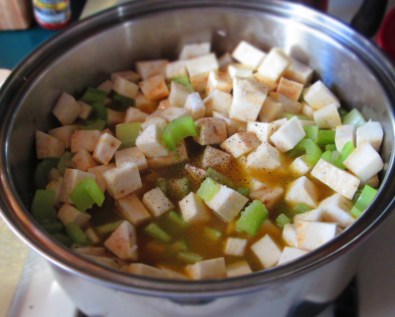
Peel the celery root with a knife or vegetable peeler. Cut up the roots into cubes (you should get about 10 cups). Heat the oil in a large soup pot or Dutch oven. Add the celery and shallots and ½ teaspoon of the salt and sauté until softened, about 5 or 6 minutes.Add the celery root and 1 teaspoon salt and stir. Pour in the broth and add oats. Bring to a boil; lower the heat to medium-low, and simmer, covered, until the celery root is tender, about 40 minutes. Stir occasionally.Stir in the parsley and thyme and remaining salt.Transfer the soup in batches to a blender and puree until smooth. Pour each batch into a bowl. When all the batches are in the bowl, stir it to blend. Add pepper and stir. Taste the soup for seasoning and add more salt and pepper, if desired.If you’ve made the soup ahead of time, pour it back into the pot and heat gently over medium-low heat before serving.

Keep it stored covered in the refrigerator up to 5 days.


Leave a comment

Macerated Mulberries

Berries are beautiful things. They are filled with vitamins, minerals, and antioxidants, most are low calorie, and all are pretty to look at. How many desserts have been made works of art just by the addition of berries?

Macerating berries takes them a step further. Macerating berries involves simply soaking them in liquid. You can start with fresh or dried berries, or any fruit. This techniques softens the fruit (and rehydrates dried fruit) and draws out their sugars, resulting in a syrup-like consistency, perfect for topping cake or ice cream. Sometimes people add sugar to sweeten them even more. You can use almost any liquid to macerate fruit, such as juice or wine. I chose rum for a nice boozy flavor.

For this recipe, I used mulberries. Mulberries can be found in various parts of the world, including Asia and the United States. They come in white, black, and red, and they are similar in appearance to blackberries, except they’re longer and narrower. Aside from being a good source of magnesium, iron, potassium, calcium, vitamin C, and fiber, as well as antioxidants, they’ve been known to help improve circulation, lower blood pressure, improve eyesight, boost immunity, improve digestion, and reduce blemishes and age spots. I’ve also read that mulberries are one of the few fruits that contain protein.

I purchased my mulberries in dehydrated form, so macerating was the perfect way to use them. They’re sweet-tart in flavor and complement any dessert, and can be used in place of preserves.

If you can’t find mulberries, try macerating any fruit you like. Enjoy.

Macerated Mulberries

1 cup dried mulberries
2 teaspoons maple sugar
2 cups vodka or dark rum
1 cinnamon stick

Place the mulberries in a jar with a tight-fitting lid. Add the sugar, vodka or rum, and cinnamon stick. Seal the jar and shake well.

Let it sit at least a few hours.Store in the refrigerator or room temperature up to two weeks. (Because of the alcohol, the fruit will stay well at room temperature.)


Leave a comment

Winter Eggnog Pancakes

So, the holidays have come and gone. You’ve shopped until you dropped, partied hardy, and eaten every holiday goodie there was.

Now you’re settling back into a regular routine again. The decorations have come down (maybe), you’ve made your resolutions (possibly), and you’re starting to eat normal and/or healthy food again (hopefully). You open up your refrigerator and find that container of eggnog that never got finished is still there, with still enough eggnog in it that makes you feel bad about throwing it away.

You don’t have to.

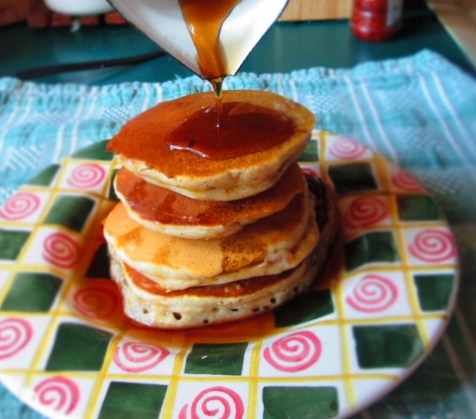
There are many ways to use up leftover eggnog, but one of the simplest is pancakes. Eggnog pancakes are kind of like buttermilk pancakes, but they’re richer and more complex.

Okay, so pancakes don’t have to be complex. But it’s really, really great if they’re tasty and satisfying. Made with eggnog, they are.

So, if you’re like me and hate to throw out even a scrap of food, try this recipe with that leftover eggnog. It’s a great post-holiday treat.

Enjoy!

Winter Eggnog Pancakes

Makes 16 pancakes.

1½ cups all-purpose flour
2 teaspoons baking powder
½ teaspoon baking soda
1 tablespoon maple or coconut palm sugar
¼ teaspoon sea salt
¼ teaspoon cinnamon
Pinch nutmeg
Pinch allspice
1½ cups eggnog
1 large egg, lightly beaten
1½ tablespoons unsalted butter, melted

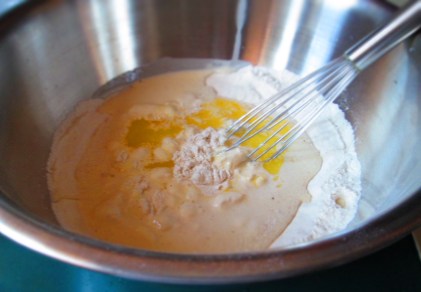
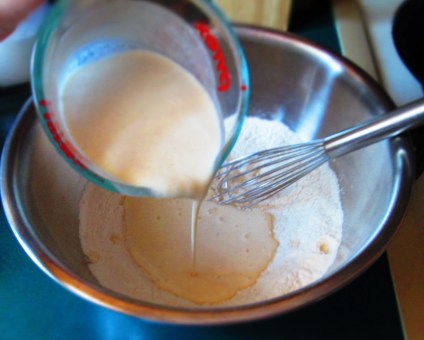
In a large bowl, whisk together the flour, baking powder, baking soda, sugar, salt, cinnamon, nutmeg, and allspice.In a medium bowl or measuring cup, whisk together the eggnog, egg, and melted butter. Pour this into the dry ingredients and mix gently just until blended.Heat a nonstick or cast iron skillet over medium heat. Place several mounds of the batter, a scant ¼ cup each, into the pan about an inch apart. Spread the batter out just a little to ensure even cooking (the eggnog makes the batter thick and it may not spread on its own).Let them cook until bubbles form on top and the bottoms have browned, about 2 minutes. Flip them over and continue to cook until the bottoms have browned and there’s no wet batter on the sides, about another 1 to 2 minutes.Serve with real maple syrup, fruit, jam, or whatever toppings you like.