Miz Chef

Cooking Up a Healthy Life


2 Comments

Gorgeously Green Pasta Salad

So, tomorrow is St. Patrick’s Day and green is the official black for that holiday. The foodIMG_0445 world, too, suddenly turns green. We see  green bagels, green cake, and even green beer. But if all of that turns you green, here’s a recipe that keeps that particular tradition going but is a lot better for you and is gorgeously green naturally.

Happy St. Patrick’s Day, and may the Luck o’ the Irish be with you!

Gorgeously Green Pasta Salad

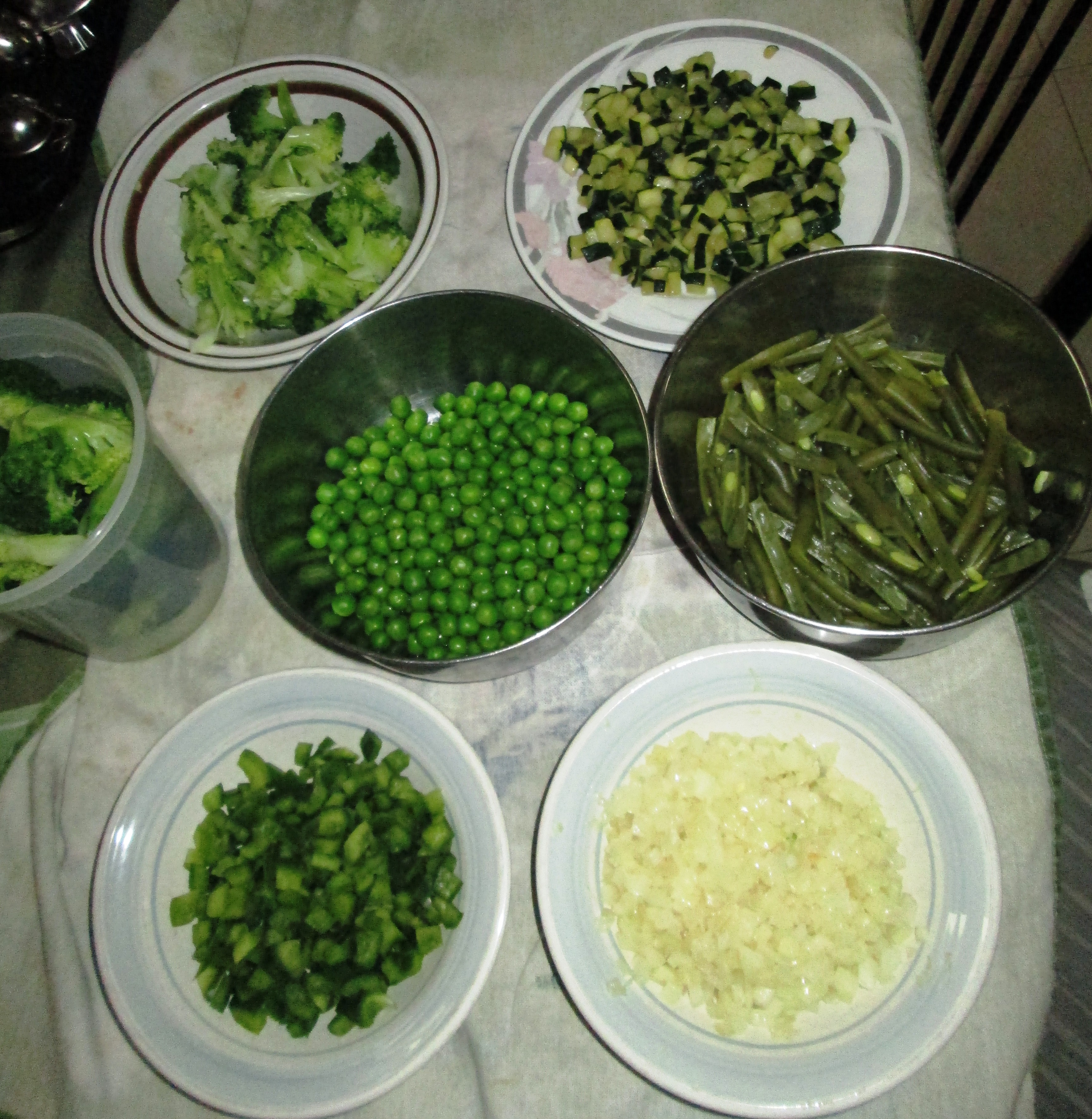
This pasta salad is open to many variations—you can add anything you want, as long as it’s green! It has several components to it, but if you’re willing to spend a little time on it, the result will truly be gorgeous, not to mention delicious. Aside from the broccoli florets, I split the string beans in half, used only the green part of the zucchini, and garnished it with zucchini curls.

1 medium head broccoli
1 tablespoon olive oil
1 medium onion, small dice
1/2 teaspoon salt plus more
2 small zucchini, diced small
2 ½ cups cut string beans
2 cups peas (if frozen, thawed)
1 lb short pasta
½ lb arugula
¼ lb watercress
1 cup sliced scallions (white part only), divided
3 cloves garlic
1 teaspoon sea salt
Freshly ground black pepper
1 medium green bell pepper, diced small
½ cup chopped parsley

Garnish: zucchini, scallion greens, broccoli florets
IMG_0430

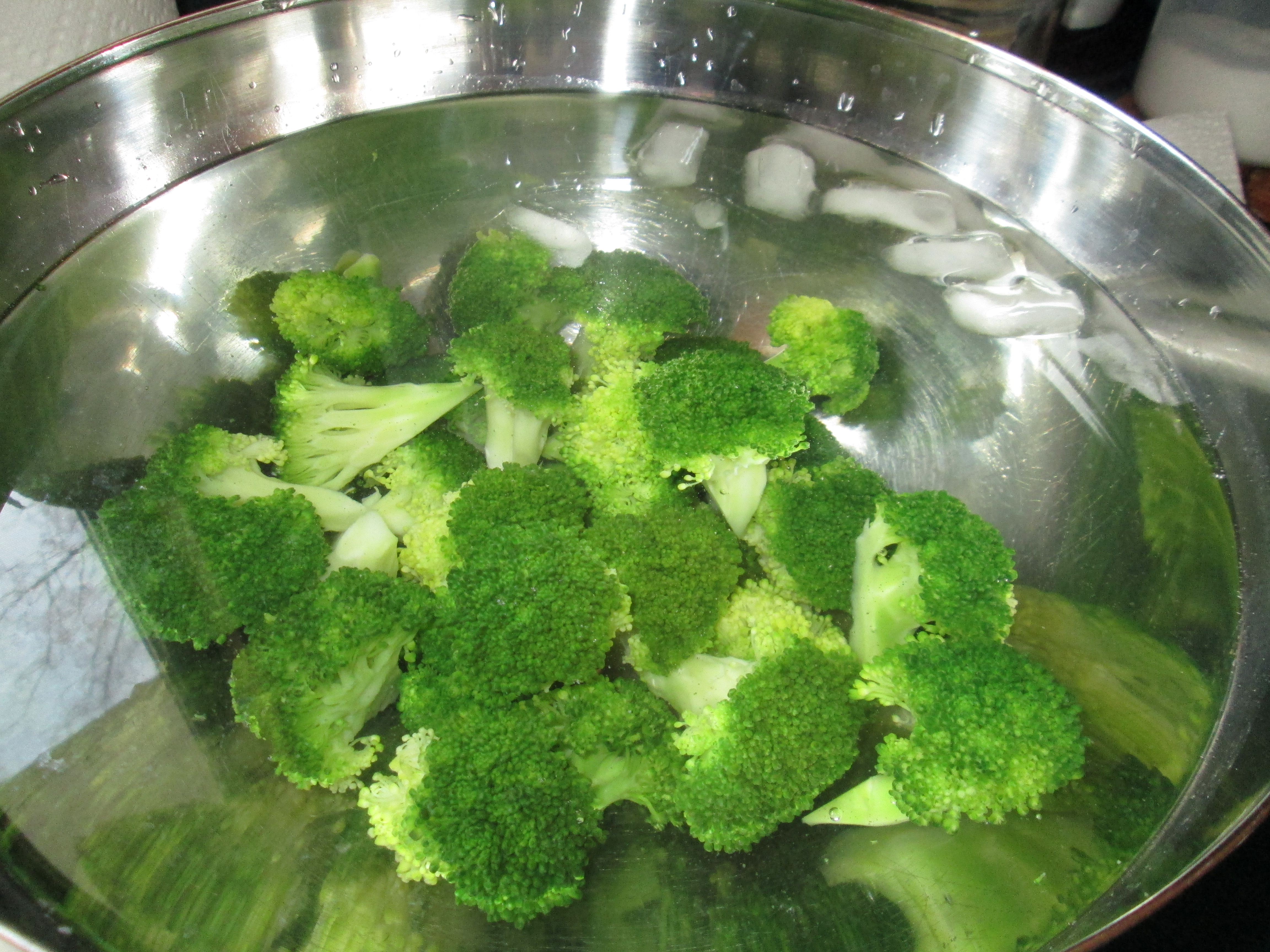
1. Cut the broccoli into florets. Set aside as many “pretty” florets (they should be similarly sized). Chop the remaining florets, stems, and pieces. Blanch and shock the florets. Cook the remaining broccoli until crisp-tender; drain well.

To blanch and shock: Bring a pot of salted water to a boil. Set a bowl of ice water on the counter. Add the broccoli florets to the boiling water and cook for a minute or 2, until broccoli is slightly tender. With a slotted spoon, transfer the broccoli to the ice water to stop the cooking. When cool, transfer to a bowl and set aside.
IMG_0429

2. Heat 2 teaspoons of the oil in a medium skillet; add the onion and salt, and sweat (cook over medium-low heat, stirring frequently, until soft and translucent. Do not brown.)

3. Zucchini: Saute in 2 teaspoons just until tender. Transfer to a bowl; let cool.

4. String beans: Bring pot of salted water to a boil; add string beans and cook just until tender. Transfer to the ice water and let cool. Transfer to a bowl. Set aside ½ cup.

5. Peas: If fresh, cook in boiling water until just tender. If frozen, boil briefly. Drain well.

6. Bring a large pot of salted water to a boil; add the pasta and cook until al dente. Drain well and let cool.

7. Meanwhile, make the sauce. In a food processor or blender, combine the arugula, watercress, ½ cup string beans that were set aside, ½ cup scallions, garlic, salt and pepper. With the machine processing, slowly add the extra-virgin olive oil until a sauce forms.

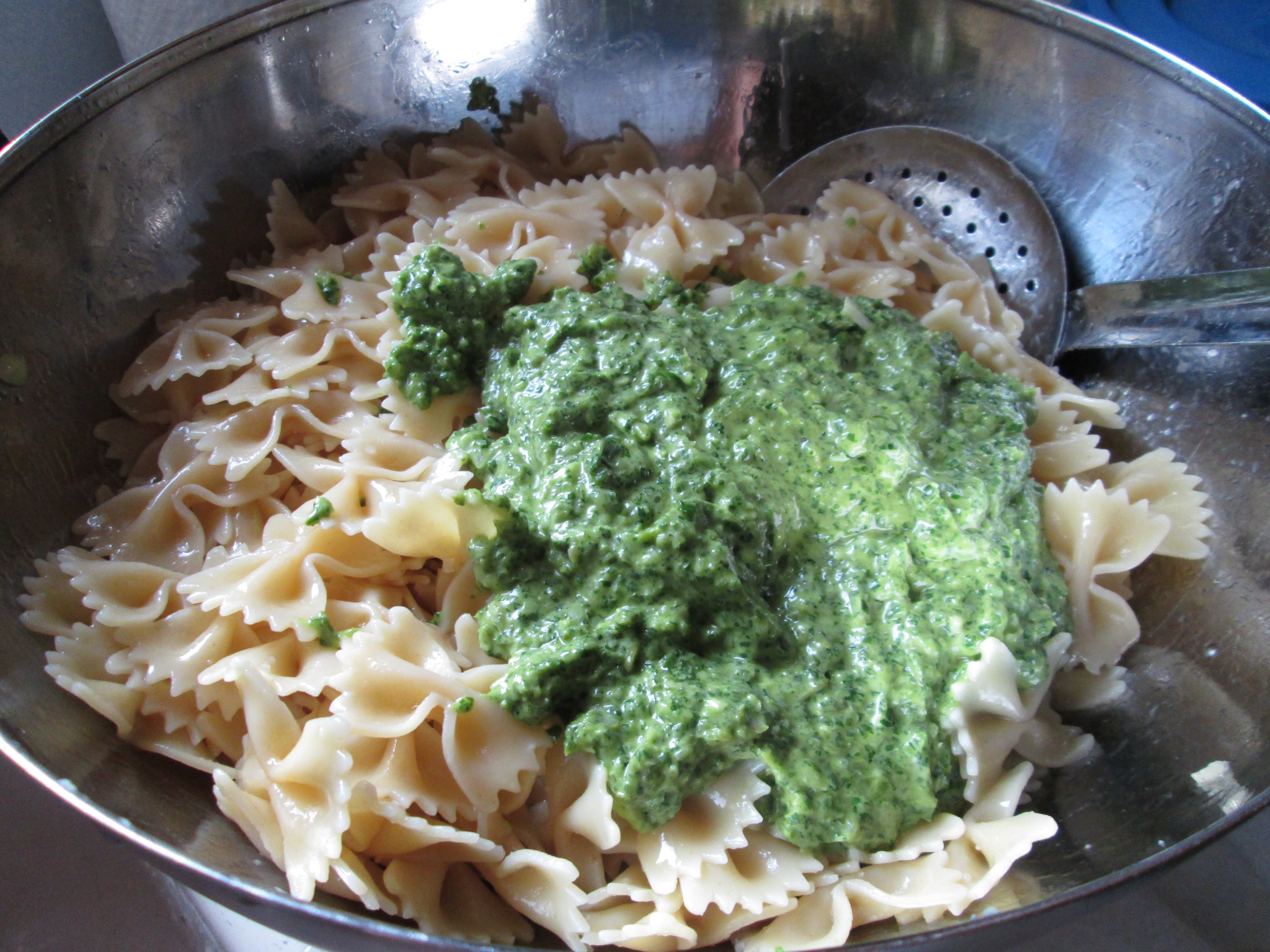
8. When pasta has cooled but is still slightly warm, add the sauce and mix well. Add the green pepper, the chopped broccoli, onion, cooked zucchini, peas, remaining string beans, and remaining scallions. Mix well. Blend in parsley. Taste and adjust for seasoning. Add whatever herbs or spices you like.
IMG_0436Makes 14 servings.

IMG_0443


Leave a comment

Cassava Bread

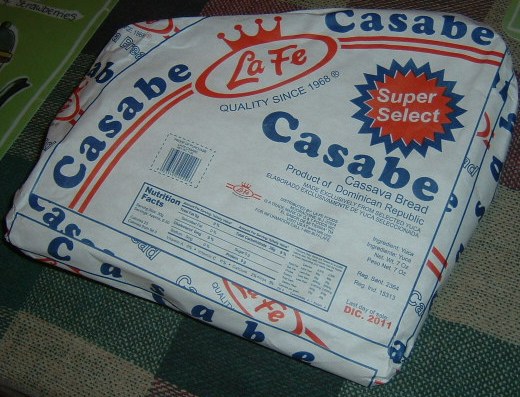
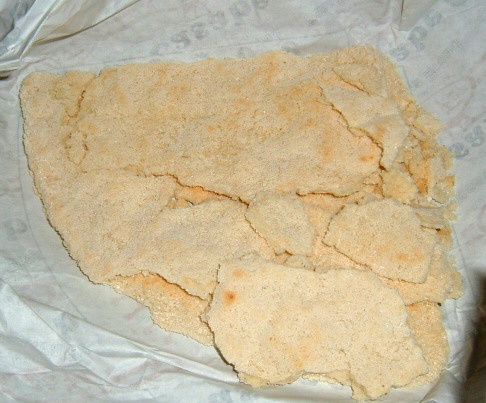
cassava bread 1 cassava bread  2I’m always finding new products to try, and this week, it was cassava bread.

Prior to buying this product, I had seen, and even made, bread made out of cassava, but it was not what is known on the market as “cassava bread.” This particular bread—a typical product in the Dominican Republic—is dry, flat, and cracker-like. It’s quite plain and meant to be eaten as an accompaniment to meats and stews. (What’s funny is that the store where I bought it had it stacked on a shelf in the produce aisle. Um, sure. You know, plantains, potatoes, and cassava bread all go together, right?)

I asked a Dominican friend at work about it when I brought back from the store during my lunch breadk. She warned me that it’s very plain, and she was right. The texture was dry and hard, and the flavor (if it can be called that) is that of saltless toast. But that makes sense. When eating a spicy stew or sauce-covered meat, this bread is probably just right as a counter balance. I tried mine with tomatoes and olive oil, like a bruschetta. It wasn’t bad. It probably does better when left to soak up stew juices, though.

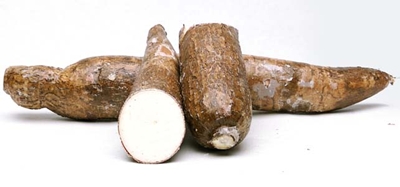
yuca

Photo: Melissa’s Produce

Cassava, by the way, also goes by the names yuca, manioc, and tapioca. It’s a staple food for South America, the Caribbean, Southeast Asia, and Africa, and it can be used fresh (i.e., the root) or as a flour (sometimes called tapioca starch). It’s a creamy white root, very starchy, and pretty bland. But it cooks up like a potato and is extremely versatile. It’s not the prettiest root in town, but it’s filling and is a great vehicle for all kinds of flavors. And it’s gluten free!

And, yes, it’s the same tapioca they use to make tapioca pearls from. That’s what you need for pudding and bubble tea. 🙂

Have you ever eaten cassava bread? How did/do you eat it? I love to learn about how ethnic foods are eaten, so please share.


Leave a comment

Beet-Apple-Chia Salad

Laugh if you will, but chia seeds are the new superfood. Well, not so new, since they’ve been around since ancient times.

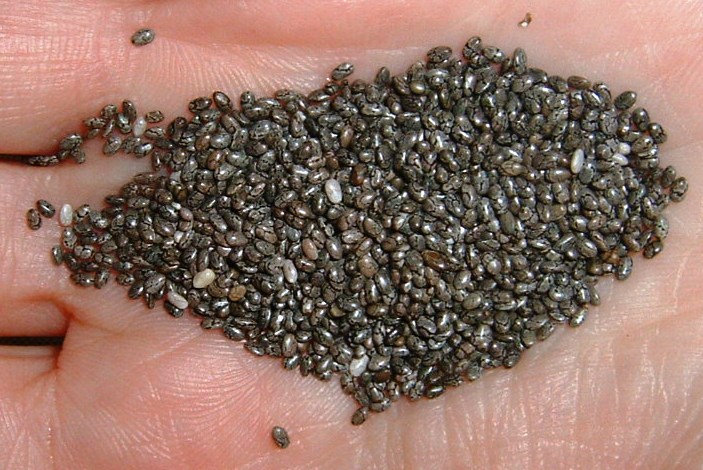
Chia Seeds

Chia Seeds

Yes, I’m talking about the same chia seeds that get watered on a head or little kitties and grows into a little mini landscape. Those seeds contain antioxidants, essential minerals, such as phosphorus, manganese, calcium, potassium, more iron than spinach, and more omega-3 fatty acids than salmon.  (Don’t use the ones that come in the Chia Head packages for consumption, though.)

Like quinoa, chia seeds are one of the few plant-based sources of complete protein, and have been used for hundreds of years for sustained energy. They were once a staple of Native American diets of both North and South America. In fact, I’ve read that “chia” is a Mayan word for “strength.”

Chia seeds purportedly increase strength and energy, helps retain hydration, and aids in weight loss. It’s great for diabetics because it lowers blood sugar levels. It’s also been said that chia seeds help in relieving thyroid conditions, IBS, acid reflux, hypoglycemia, and even Celiac disease.

You can use chia seeds in just about anything you would use flax seeds in: salad dressings, smoothies, yogurt, or just sprinkled on top of any dish. If you’re looking to replace eggs in baked goods, grind chia (or flax) seeds and use that in place of the eggs. The quantity depends on how many eggs are called for in the recipe, but here’s a general formula:

To replace 1 egg:
1 tablespoon chia or flax seeds—grind in a spice grinder
Mix with 3 tablespoons water

Note that products made with seeds instead of eggs will have a chewier consistency, so be judicious about what products you use them in.DSCF0002

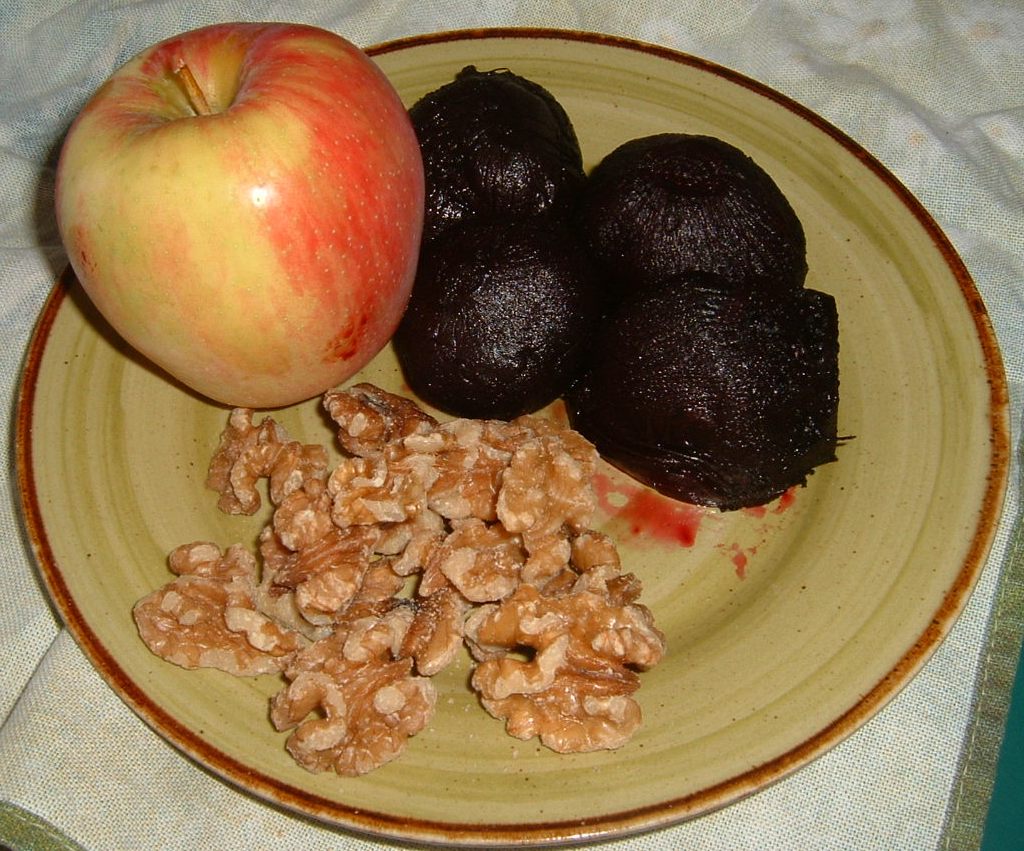
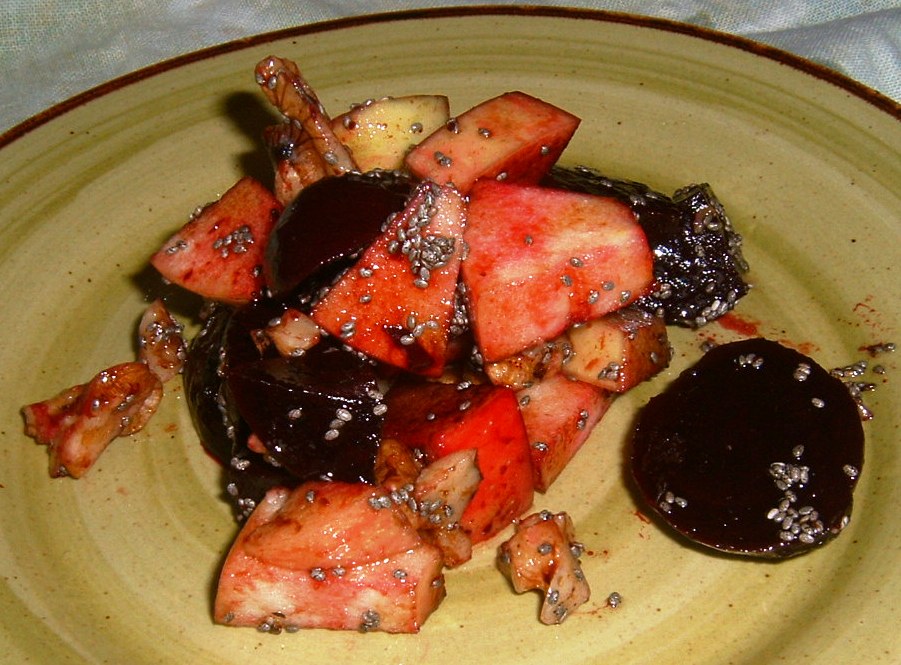
This is my recipe for Beet-Apple-Chia Salad, which I like to have for lunch. Between the walnuts and chia seeds, there’s enough protein in here to get you through the afternoon. It makes 2 portions if you’re making it to serve alongside something else. But for lunch, I eat the whole enchilada.

Beet-Apple-Chia Salad

4 small beets, roasted or boiled, peeled
1 tart apple, cored but not peeled
1/3 cup coarsely chopped walnuts
1/2 tablespoon chia seeds*
1 tablespoon extra-virgin olive oil
1 tablespoon balsamic vinegar
Salt and pepper to taste

Cut the beets and apples into bite-sized pieces. Combine them in a bowl, along with the walnuts, chia seeds, oil, and vinegar. Mix well. Season with salt and pepper, if desired.

Makes 2 servings.

DSCF0007

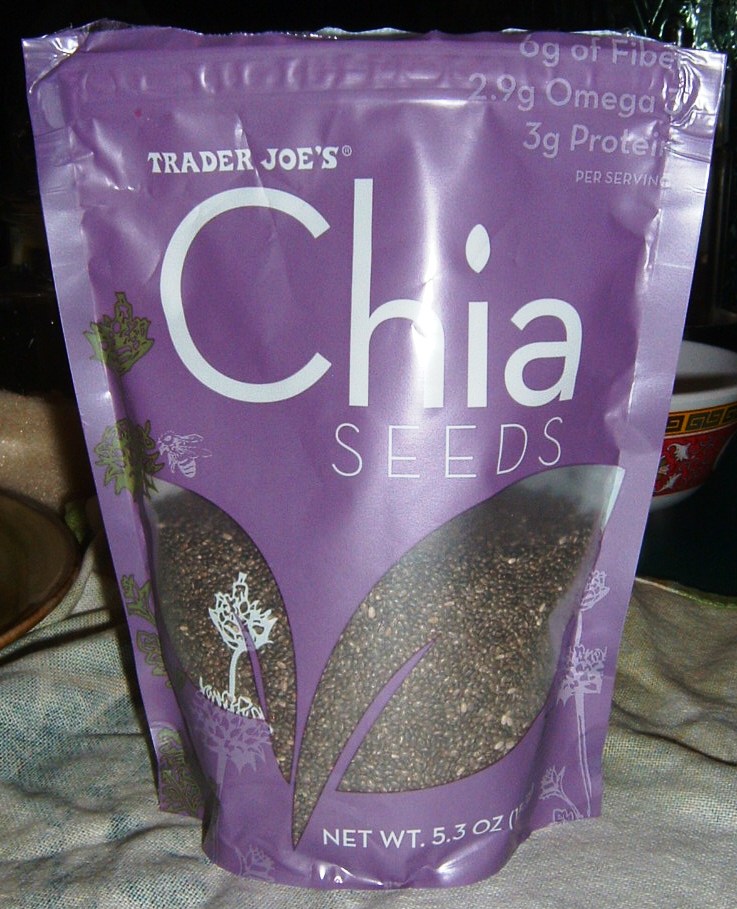
*Chia seeds can be purchased in natural/health food stores, but may also be found in larger supermarkets with an organic/natural food selection. I found my bag at Trader Joe’s.DSCF0003


Leave a comment

Romanesco Cauliflower

I don’t know if you’ve ever seen a romanesco cauliflower, or broccoli, but it’s a gorgeous vegetable. Its shape is what they call “fractal.” Merriam-webster.com defines fractal as “any of various extremely irregular curves or shapes for which any suitably chosen part is similar in shape to a given larger or smaller part when magnified or reduced to the same size.” I’ll just say that it’s amazing. I mean, take a look at it.Romanesco

Also known as broccoflower and Roman cauliflower, romanesco is part of the brassica family, which includes cruciferous vegetables (cauliflower, broccoli, cabbage, bok choy, Brussels sprouts, etc.) and was first seen in Italy around the 16th century. Although its color is closer to broccoli, its texture and flavor is that of cauliflower.

It’s such a visually stunning vegetable that whenever I see it, I can’t pass it up. Nature is a wonderous thing.Romanesco

This is a very simple old Italian recipe that usually uses regular cauliflower, but romanesco is easily substituted.

Pasta with Romanesco Cauliflower and Pignoli

1 small head romanesco cauliflower
1/2 pound whole wheat spaghetti
3 teaspoons kosher salt plus more
2 large garlic cloves, minced
1/4 cup olive oil
1/3 cup pignoli,  toasted
1 teaspoon paprika
Freshly ground black pepper to taste
Extra virgin olive oil (optional)
Grated parmigiano or pecorino romano

Bring a large pot of water to a boil. Add pasta and 3 teaspoons salt; and cook until al dente, about 10 to 12 minutes. Drain well.

Meanwhile, cut up cauliflower into florets. Heat olive oil in a large pan; add garlic and saute for one minute; sprinkle in paprika then immediately add cauliflower. Sauté over medium heat, stirring occasionally, for about 5 minutes. Add 1/4 cup water; cover the pan, lower the heat to medium-low, and cook until tender but firm, about another 5 minutes. Uncover and stir in the pignoli and salt to taste.

When the pasta is cooked, drain well and transfer to a serving bowl. Pour the cauliflower mixture on top and mix. If the pasta seems dry, drizzle some extra virgin olive oil on top and mix. Sprinkle some parmigiano or pecorino over the top and serve hot.

Makes 2 servings.