

Emilia-Romagna
Welcome back to my Regions Italy project, based on La Cucina—The Regional Cooking of Italy by Accademia Italiana della Cucina (The Italian Academy of Cuisine). This is another stop in Emilia-Romagna, which, as I said last time, is in northern Italy. In the northern part of the country, they use rice a lot in their cuisines (pasta is more popular in the south). In fact, risotto was born in Milan, which a major city in the north (but not Emilia-Romagna). So, this time around, I offer you Riso con la Zucca, or Rice with Squash.
On the face of it, this recipe is squash risotto, which is not an usual recipe. I’ve made butternut squash risotto. You’ve probably made butternut squash risotto. But what makes this recipe different from typical risottos is that rather than using broth, it calls for milk. And instead of adding the liquid a little at a time, it’s added all at once.
The result is a thick, hearty dish. Personally I prefer traditional risotto (made with broth), but this was nice for a change of pace. And I get the feeling that this particular risotto will go over well with kids. The recipe is straightforward and pretty simple, so there’s nothing really to explain…except maybe one thing.
The instructions say to cook the rice until it’s all’onda. Since this term is not as ubiquitous as al dente, you may not be familiar with it. Onda means “wave,” so something cooked all’onda is “wavy.” When you tilt the pan, the rice should ripple like waves in the ocean. What that essentially means is that it’s creamy—moist but not liquidy.
You can use any type of hard winter squash, including butternut, kabocha, sweet dumpling, pumpkin, etc. Regarding the rice, it specifically calls for Carnaroli, which is a short-grained rice. I’m not sure why they call for that specific strain of rice, but if you can’t find it, you can substitute Arborio, Vialone Nano, or even sushi rice. The recipe calls for a tablespoon of sugar. I don’t really think it’s necessary because winter squash is sweet on its own, but it’s up to you if you want to include it or not.
Riso con la Zucca
Rice with Squash
Makes 6 servings
6 tablespoons unsalted butter
1 small onion, minced
2¼ pounds winter squash (butternut, kabocha, etc.), peeled, seeded, coarsely chopped
3 teaspoons kosher salt, plus extra
1 tablespoon sugar
6 cups milk
1½ cups Carnaroli rice
¼ cup grated Parmigiano-Reggiano
Freshly ground black pepper to taste
Melt 4 tablespoons of the butter in a large saucepan. Add the onion and sauté until it’s soft and translucent, about 3 to 4 minutes.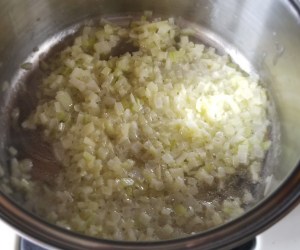 Add the squash, 3 teaspoons salt, and sugar. Mix and cook, stirring occasionally over medium-low heat until the squash “cooks to a puree.” (Note: the squash will not break down into a puree on its own. Basically, you want it soft enough so that when you stir it, it falls apart.) Stir the squash around and break it up, but don’t mash it; you want it somewhat chunky. This should take about 20 to 25 minutes.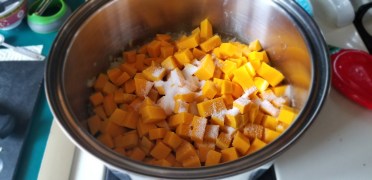
 Pour in the milk and bring it to a boil. The moment it comes to a boil, add the rice and stir. Cook over low heat, partially covered, until the liquid has been mostly absorbed and the rice is creamy and smooth. If the liquid is absorbed and the rice is still not fully cooked, add water, a little at a time, until it is cooked.
 Turn off the heat. Stir in the Parmigiano-Reggiano, black pepper, and the remaining butter (optional). Taste for salt and add more if necessary. Serve immediately.
The rice will thicken as it cools and will become stiff. To heat up leftovers, stir in some water to loosen it up.


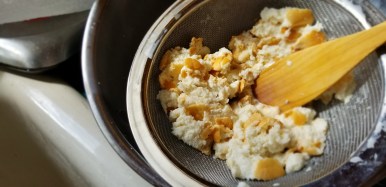








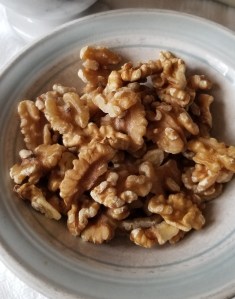


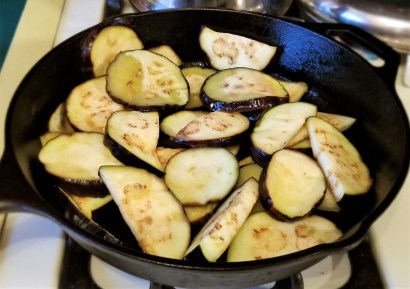
 Meanwhile, in another large pan or Dutch oven, heat the remaining oil. Add the peppers, potatoes, and a pinch of salt and sauté until the potatoes start to take on color. (This could take anywhere from 8 to 15 minutes, depending on the size of your pan and how spread out the potatoes are. In my case, it took longer because I chose to make the stew in my 2-quart Le Creuset Dutch oven, which is my new favorite pot and I look for any reason to use it. One of these days, when my ship comes in, I will splurge on that 5-quart Le Creuset.) Stir frequently, as potatoes want to stick to pots and pans.
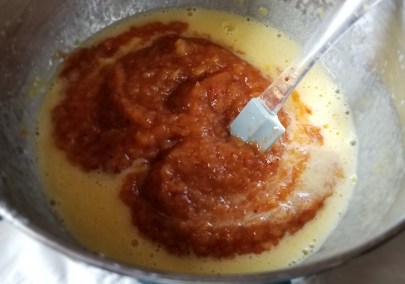
  Add the puree and stir to combine.
 Mix in the eggplant. Add the garlic and continue sautéing another minute. If the bottom of the pot looks like it’s burning, add a little liquid (water, broth, wine) and scrape the browned bits up.
  Lower the heat to medium-low, cover the pot, and cook until a thick stew forms, about 40 to 50 minutes. Stir often and scrape up brown bits from the bottom of the pot as it forms. Taste for salt and add more, if needed.
 Serve this stew with fresh, crusty Italian or French bread.

 Miz Chef