Miz Chef

Cooking Up a Healthy Life


Leave a comment

Jamaican Black Cake, aka Christmas Cake

As stunned as I am that it’s late September, I have to face the fact that summer is over. With that comes the realization that it’s time to start my Jamaican black cake, which is also called Christmas cake.

Jamaican Black Cake

Jamaican Black Cake

Several years ago, a co-worker, who was from Jamaica, introduced me to black cake and I asked her for a recipe, which I shared on Epicurean.com. It’s a tradition in Jamaica (and other parts of the West Indies) to serve this cake at Christmas, as well as weddings and other special occasions.

The problem is that in order to get a really good black cake, you have to begin the process at least several weeks in advance, and who’s thinking about Christmas in September? (Okay, well, many of you probably start your Christmas shopping in July, but the way my life has been going the past several years, my thoughts about Christmas have had me on the brink of nervous breakdowns trying to find gifts on Christmas Eve.)

Black cake/Christmas cake is also sometimes called plum pudding because it’s derived from the traditional British Christmas cake of the same name. Plum pudding is basically fruit cake and it was soaked in brandy to keep it fresh on long voyages across the seas. (Plum pudding is traditionally lit aflame at presentation time. I suspect that this was done the first time by accident as a result of being so soused in brandy and someone getting too close to it with a candle or something.) When the British began trading through the Caribbean, the plum pudding went with them. But rum, rather than brandy, was the liquor available on the islands, and sugar and molasses became the sweeteners. The addition of allspice and nutmeg are more Island touches on the old recipe.

It is said that the original recipe for plum pudding dates to Medieval times, when it called for 13 ingredients—1 for Jesus Christ and 12 for his apostles—and was to be made on Christmas Eve. Since then, it’s become a more elaborate affair. As with other fruit cakes, a black cake contains various dried fruits that are macerated in rum and, sometimes, port wine for weeks. The ideal time to bake it is a couple of weeks before Christmas, and as the days go by, it’s periodically basted with more booze.

The photos here are from last year, so that you can see the process from start to finish. So, in September, I put my fruit—raisins, golden raisins, plums, figs, dates, and cranberries—in a large container with a cover and poured in a wee bit of rum and port wine and let that sit until December. About a week before Christmas (I couldn’t get around to it before then), I baked the cake, basted it a few times, and brought it for Christmas Eve dinner. It came out really, really good. It’s not like any fruit cake you’ve ever had, I guarantee it. Normally, black cake is served as is, but I wanted it to look a little more festive so I iced it with a basic powdered sugar icing (which eventually melted). The only thing was that my cake was not as dark as it should be (it is called black cake, after all). I was told to increase the amount of browning or molasses. This recipe contains the increased amounts. (Browning is also known as burnt sugar and can be found in West Indian markets.)

Give it a shot. This is one fruit cake that will not get passed around. Enjoy!

Christmas Cake (Jamaican Black Cake)

4 cups mixed dried fruits (raisins, currants, prunes, citron, cherries, dates)
3 cups port wine
3 cups white rum (preferably Appleton)
1/2 lb. butter
1 cup brown sugar
6 eggs
12 oz. all-purpose flour
2 tbsp baking powder
2 tbsp browning
1/4 molasses
1 tsp Benjamin vanilla extract
1 tsp almond extract
1 tsp nutmeg
1 tsp ground allspice
2 tsp lemon juice

Preparing Fruits for Baking:

Wash fruit well. Soak fruits in 2 cups port wine and 2 cups rum for at least 4 weeks before baking.

Soaking the fruit

Soaking the fruit

To bake the cake:

1. Preheat oven to 350 degrees F.

2. Grease a 10-inch baking tin with butter or margarine. Line the tin with wax paper.

3. Mix butter and sugar until light and fluffy.

4. Add eggs, one at a time, and continue beating until mixture is smooth.
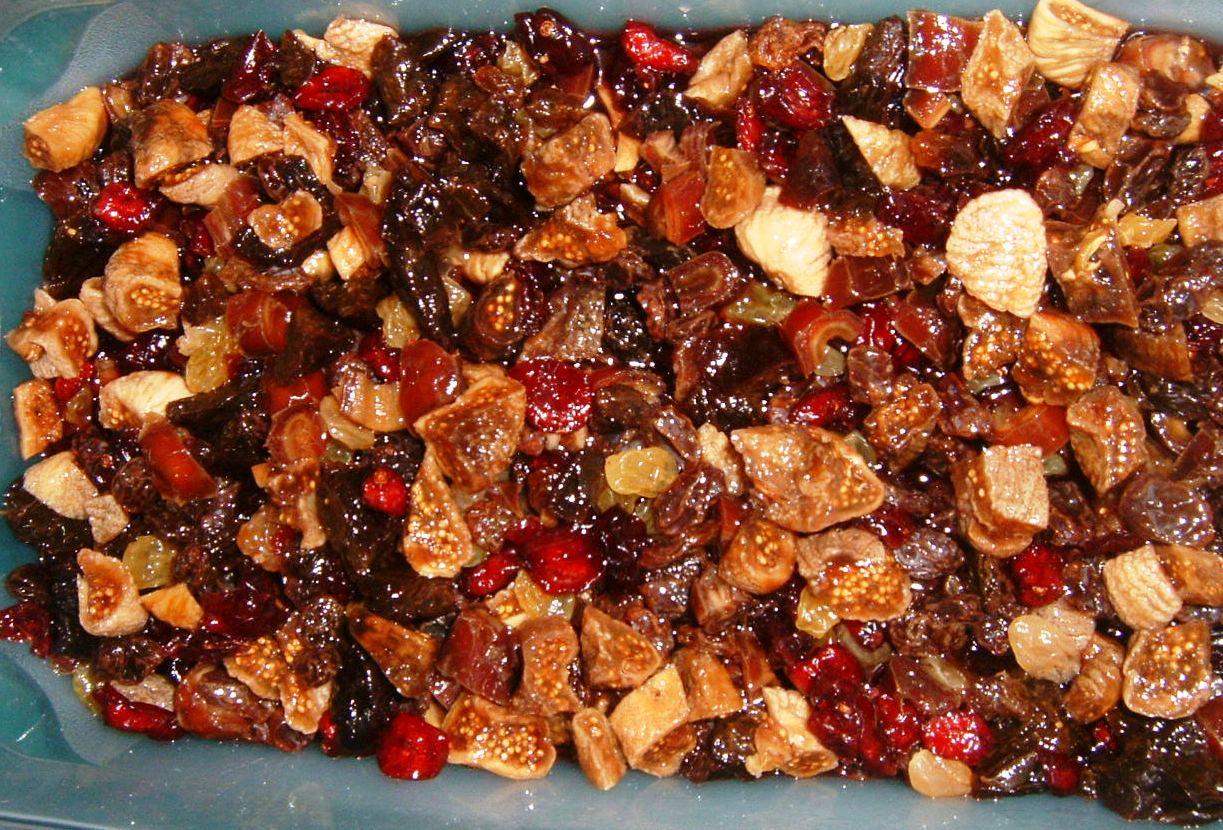
Dried fruit after soaking several weeks

Dried fruit after soaking several weeks

5. Add flour and baking powder and continue to mix.

6. Blend in browning, molasses, vanilla, almond, nutmeg, allspice, and lemon juice.

7. In a blender or processor, grind fruits and add to mixture.

8. Add 1 cup rum and 1 cup wine and mix well. Place in oven.
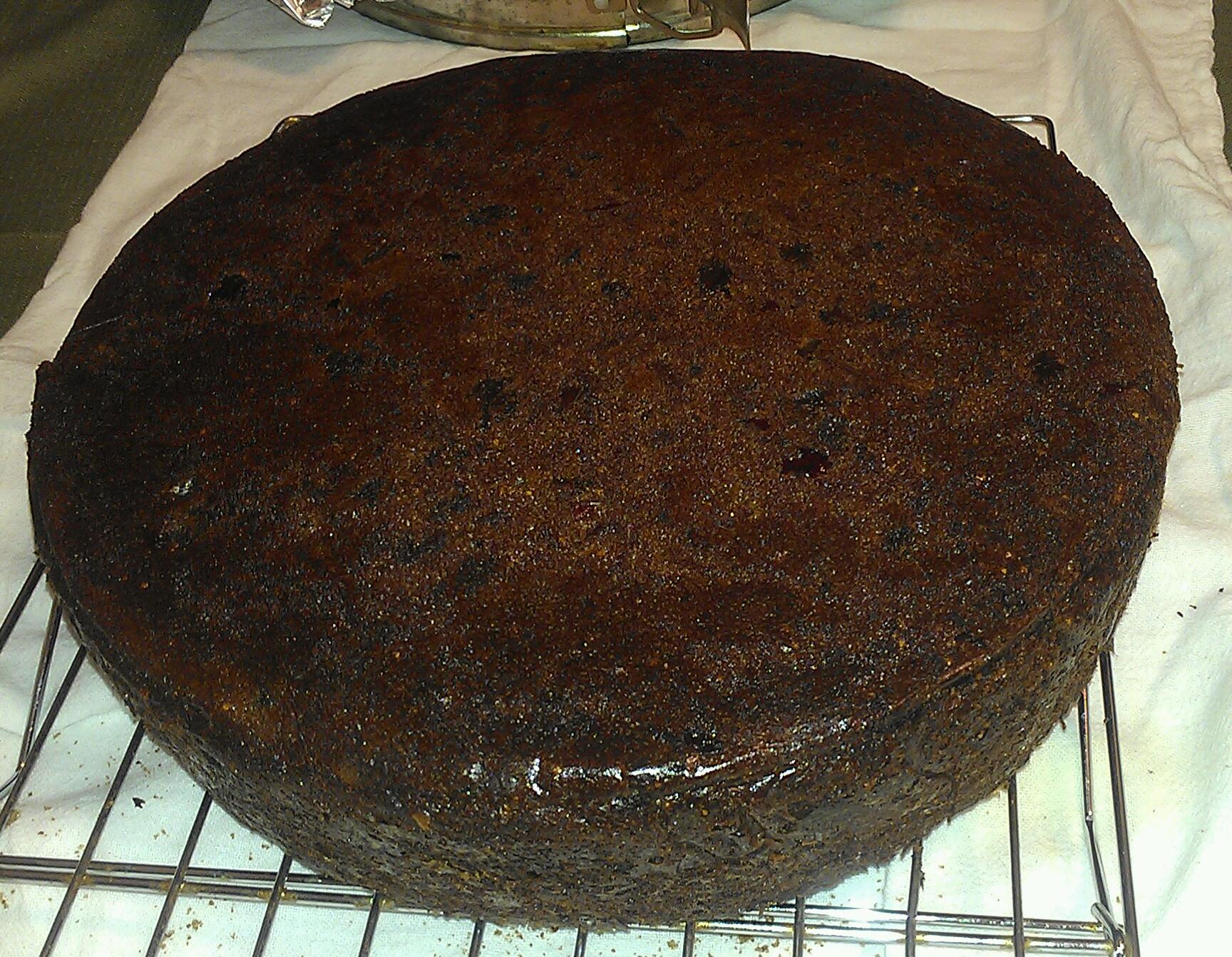
Baked Black Cake

Baked Black Cake

Cake is baked when a knife is inserted into center of cake and comes out clean. Check cake after an hour. This will make approximately 4 lbs. of cake. If you’re baking it weeks or months in advance, continue basting it periodically with wine. Decorate if you wish, but it can be served as is.

3 Comments

Minty Peach Salsa

Summer is almost over. Technically, we have until September 22, but the kids are back in school, the stores are already displaying holiday merchandise, and my neighbor’s trees have red leaves in them. As much as I love autumn, I’m always sad when the summer comes to a close. It’s never long enough, is it?

Minty Peach Salsa

Minty Peach Salsa

But there’s still time to enjoy some summer activity and summer deliciousness, including the wonderful stone fruit that are still available. And if you grow your own mint, it’s probably out of control by now. Here’s a way to use both: Minty Peach Salsa.

This salsa was inspired by a peach salsa I bought at a farmer’s market in Virginia. I set out to replicate it and made a few modifications to make it a little less sweet and a bit spicier. It’s very simple and perfect for those last summer picnics or barbecues. It also makes a great condiment for grilled veggies, chicken, or fish.

You can substitute the peach with nectarines, plums, or apricots, but I find that peach works the best. It has the right flavor and texture to complement the other ingredients.

Enjoy the salsa and what’s left of summer!

Minty Peach Salsa

Makes about 2 ½ cups.

2 cups chopped peaches
1/3 cup chopped shallot or finely chopped Vidalia onion
¾ cup chopped red pepper
1 small jalapeno, minced
2 tablespoon minced mint
1 tablespoon apple cider vinegar
½ teaspoon sea salt
½ teaspoon sugar
½ teaspoon garlic powder
1/2 teaspoon chili powder
2 teaspoon spiced rum (optional)

1. Combine all ingredients in a medium bowl. Refrigerate for an hour before serving to allow the flavors to blend.

2. Taste for seasoning and adjust, if necessary, before serving. Serve with tortilla or pita chips.


Leave a comment

Cucumber Mango Mint Shooter

I can’t believe it, but tomorrow is Labor Day. This summer was a non-summer, what with all the rain and cold days. Then again, there have been some gorgeous weekends recently, so I guess it wasn’t all bad.

Doesn’t change the fact that the summer is over. I can hear the Friday night fireworks at Coney Island from my house and this past Friday was the last one of the season. When I hear that final, cacophonous thunder that marks the end of not only of the week’s display but of the summer’s, it always makes me a little sad.

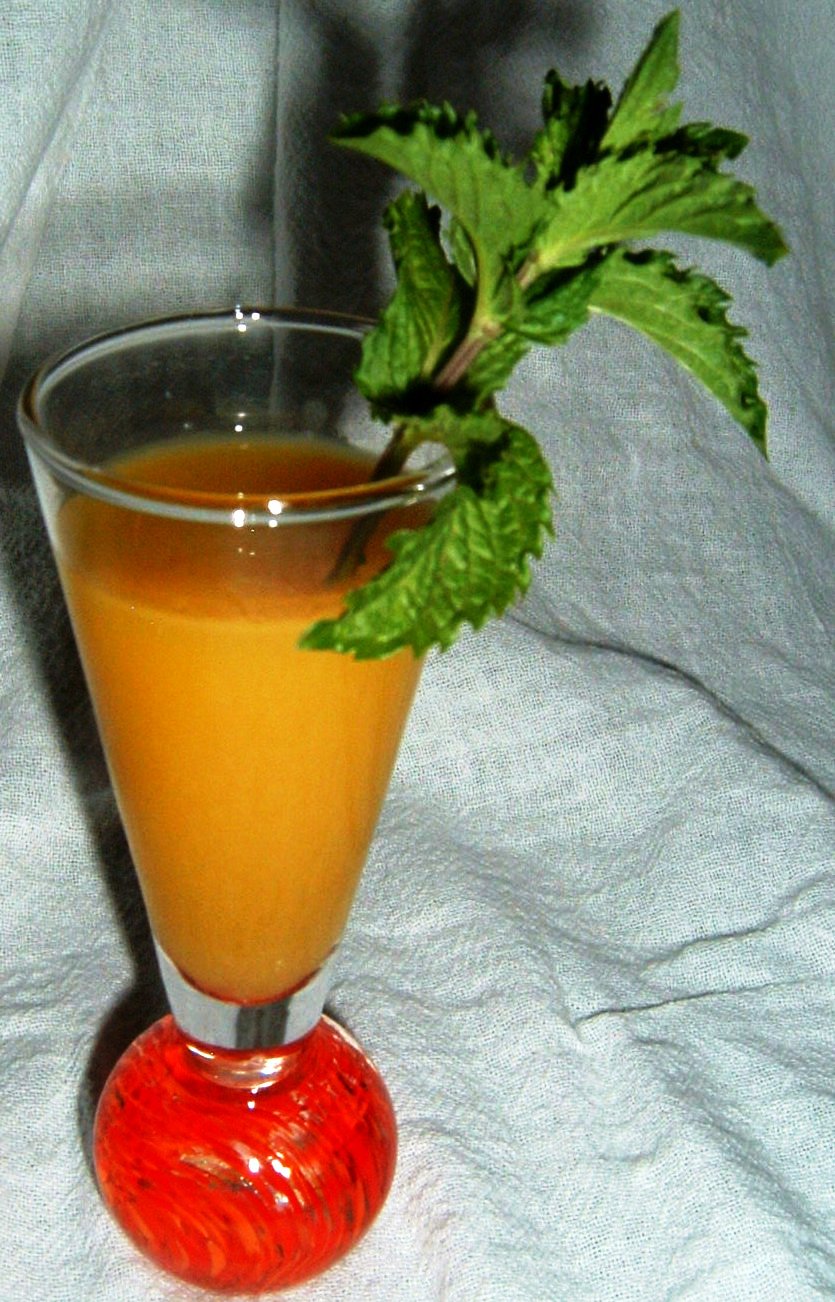
Cucumber Mango Mint Shooter

Cucumber Mango Mint Shooter

But Americans do not go gently into that goodbye of summer. Labor Day means picnics, barbecues, beach parties, and lots of food and fun. And I have just the cocktail to go with it all. It makes use of summer goodies, like cucumber, mango, and mint, but it makes a great cocktail for the coming holidays, too. And because cucumber and mint are also considered a restorative and a digestive, respectively, it makes a great after-dinner cocktail for Thanksgiving and Christmas.

Cheers!

Cucumber Mango Mint Shooter

Makes 4.

1 medium cucumber, peeled and seeded
1 mango, coarsely chopped
1 tablespoon mint leaves
1 teaspoon maple syrup
1 teaspoon lime juice
¼ cup melon liqueur
4 mint sprigs (optional)

1. Place cucumber, mango, mint, maple syrup, and lime juice in a food processor or blender. Process until fully pureed.

2. Set a fine mesh strainer over a bowl. Pour mixture into strainer and let it drip through. Press down on pulp with a rubber spatula to strain as much liquid out as possible. Whisk in  liqueur.

3. Pour into shot glasses, top with mint sprig, and serve.


2 Comments

September is Better Breakfast Month

How many times have you heard that breakfast is the most important meal of the day? A million times since you were a kid, right?

I’ve never been much of a breakfast person. I can’t really eat first thing in the morning. My stomach just will not accept food when I first get up. It amazes me to know that some people roll out of bed, shuffle into their kitchens, and start eating. My routine is, I go to work, have a cup of coffee, and right around 10:30 or so, I’m ready to eat a little something. I know that’s not a great way to start my day, but it’s the best I can do.

IMG_0158

Multigrain Morning Porridge

What I do try to do, however, is to make it a good, energy-inducing breakfast: oatmeal with walnuts or pecans; yogurt with fruit and seeds (sunflower, pumpkin, chia, and flax); whole grain bread with some kind of nut butter. Lately, I’ve been doing a lot of green smoothies. The point is not only to curb hunger but to give your body and brain the proper fuel to do what it needs to do throughout the day. It appalls me to see people eating doughnuts, crullers, sugary muffins, and soda for breakfast. (I think muffins are good if they have nutritional components to them, like high-protein flours, nuts, and natural sugar alternatives.)

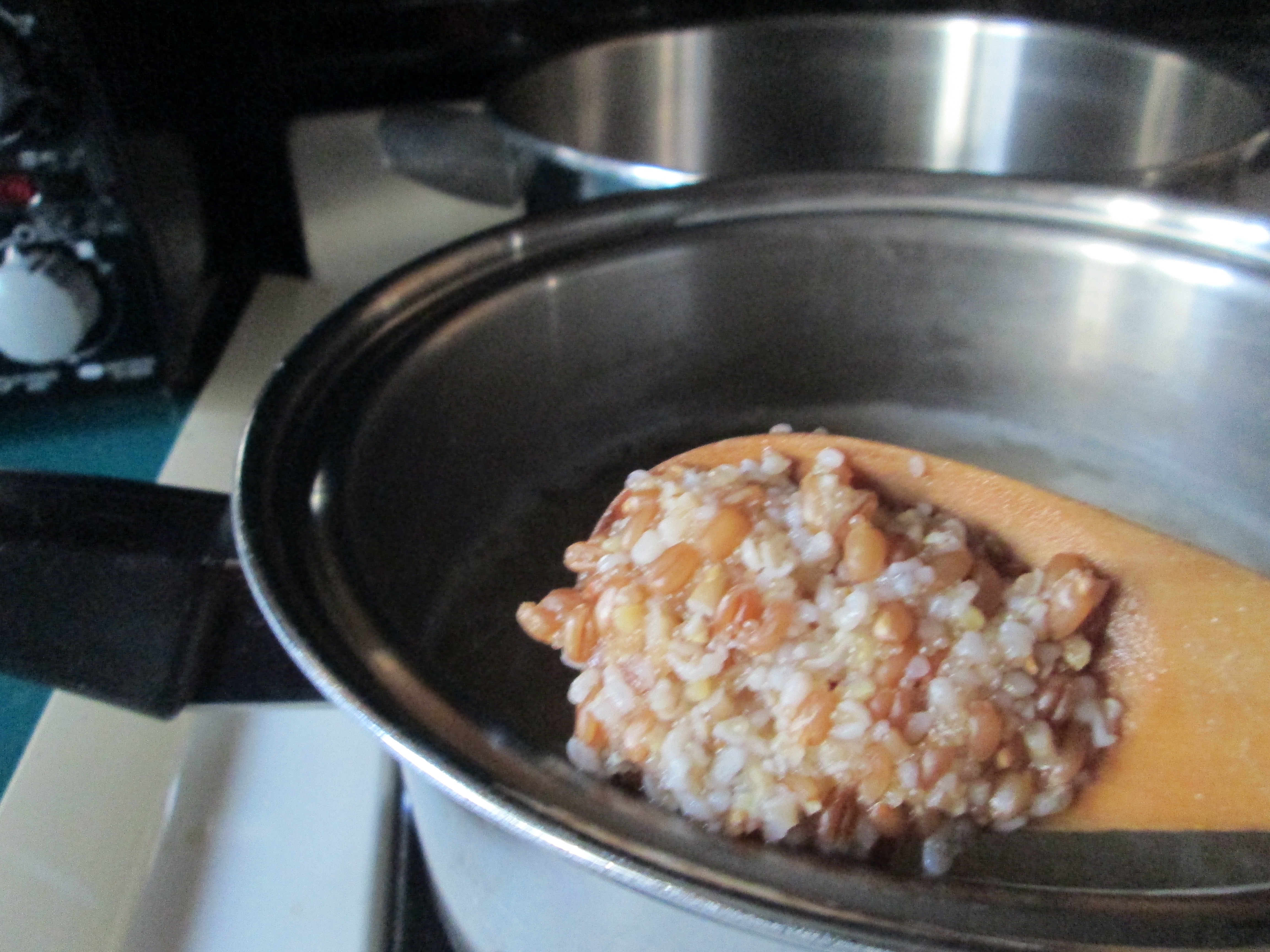
Breakfast porridges are a great choice and can be made with any grain you like, such as steel-cut oats, quinoa, millet, and barley. Below is my recipe for multi-grain porridge. I had the original recipe for this porridge in my collection for a while but never gave it a try. Not because it didn’t appeal to me (otherwise, I wouldn’t have clipped it), but because I so rarely make homemade porridge for breakfast. During the week, I never eat breakfast at home—I prepare whatever it is I’m going to have the night before and take it to work. On the weekends, I still don’t have time and usually just grab leftovers from the fridge. But whenever I can, I’ll make some kind of porridge. IMG_0151

I made some modifications to the recipe, based on what I had on hand and my personal preferences. The good thing is that this stays well in the fridge for a few days, so I can make a big batch and just reheat it.

Clockwise from upper right: Wheat berries, grits, amaranth, oats.

Mulitgrain Morning Porridge

Adapted from “Multigrain Breakfast Porridge” by
Bruce Weinstein and Mark Scarbrough, Cooking Light, Oct. 2007

½ cup wheat berries, rinsed
¾ teaspoon sea salt
1/3 cup steel-cut oats
3 tablespoons regular grits
¼ cup amaranth
¾ cup coconut or almond milk
¼ maple syrup
¼ cup dried blueberries or other dried fruit
½ cup chopped walnuts or other nuts

Bring 5 cups water to a boil. Add the wheat berries and salt; reduce the heat to medium-low and simmer, partially covered until almost tender, 20 to 30 minutes.IMG_0153

Add the oats, grits, and amaranth and stir. Continue simmering until all grains are tender, about 15 minutes, stirring frequently. Stir in coconut milk, maple syrup, and fruit and cook another 2 minutes, stirring frequently. Stir in nuts. Serve hot.

IMG_0155

This porridge will keep for several days in the refrigerator. To reheat, stir in a little more coconut milk or water until it reaches the desired consistency. Heat over medium-low heat or in the microwave for 1 to 2 minutes.

Makes 4 servings.


Leave a comment

Enter the Green Goddess

I can’t believe that summer is almost over. How can that be possible? With the crazy weather we’ve had this year, it seems as though our summer was given to us in short spurts, and people are scrambling to enjoy what’s left of it. Everyone seems to be making end-of-summer getaway plans, throwing impromptu barbecues, and packing in those picnics that didn’t happen earlier in the season.

So what do you bring for the stop-over during the car ride? What can you easily make to bring to that last-minute barbecue or picnic? Pasta salad is always a good choice. It’s easy to make and people love it.

There are so many ways to make pasta salad, so many ingredients to choose from. And so many dressing you can use. This time around, why not use green goddess dressing?

Green goddess dressing, as you might imagine, is so name because of the green ingredients, chopped up finely and sparkling like gems throughout the dressing. It’s traditionally made with mayonnaise, sour cream, chives, tarragon, parsley, lemon juice, anchovies, and, depending on who you ask, chervil. Many people have taken to using avocado in their green goddess, which enhances its green color and lends it a buttery creaminess. I’m all for that.

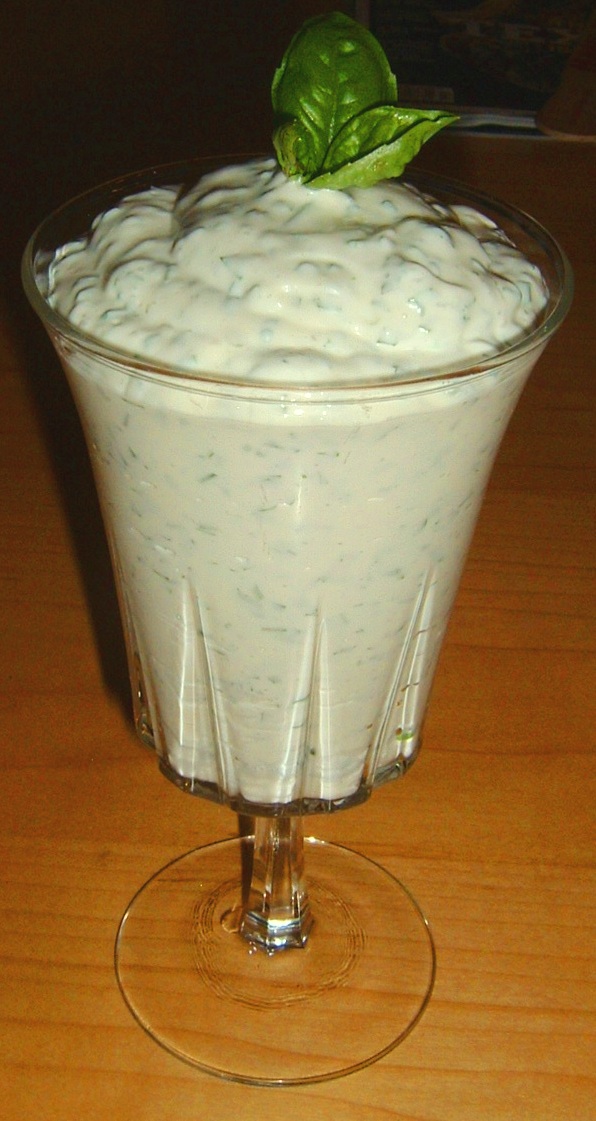
My Green Goddess Dressing

My Green Goddess Dressing

The creation of green goddess dressing is attributed to the Palace Hotel, built in 1875, in San Francisco. Now known as the Sheraton-Palace, it is considered San Francisco’s first “grand” hotel. As the story goes, in 1923, actor George Arliss was in the City by the Bay to star in a play called The Green Goddess, by writer/critic William Archer. Arliss starred in the 1923 silent film adaptation of the play, also called The Green Goddess. Then it was remade in 1930—Arliss reprised his role—and was one of the first “talkie” films ever made. The 1923 version is only one of three of Arliss’ silent films that are known to have survived.

Meanwhile, back at the ranch…

The executive chef at the Palace, Philippe Roemer, wanted to make something special for the banquet that was being prepared in honor of Arliss, so he created the green goddess dressing. It’s actually a variation of an already established dressing created by a chef of the Court of King Louis XIII of France in the 17th century. The sauce was indeed green, hence its name—au vert—but was served with seafood, particularly eel. There’s even a recipe for it in the iconic epicurean tome Larousse Gastronomique, by Prosper Montagne, first published in 1938.

In the 1970s, Seven Seas (now part of the Kraft company) came out with a bottled version of green goddess, and Annie’s Naturals has a vegetarian version (i.e., no anchovies). It’s still a popular dressing on the West Coast.

Below is my (anchovy-less) recipe for Green Goddess Dressing. Because fresh tarragon may be hard to find if you’re not close to a really good market or not, say, living in Provence, I make mine with basil. (On that note, tarragon is one of those herbs that are worth growing yourself.)

This is what I mean whenever I say that food is steeped in history (which I say often in my cookbook, What, No Meat? Traditional Italian Cooking the Vegetarian Way). It’s closely intertwined with politics, folklore, culture, social mores, war, economics, psychology, geography, and superstitions. What we eat did not just land on our plates one day. It took a journey—sometimes a short, uneventful one, sometimes a long, complex one. This is the stuff I share in my book. It’s really amazing what we take for granted.

Next time you have a salad with green goddess dressing, remember what a grand debut in the world it had. Cherish it. Praise it. Kiss it. Okay, don’t do that. Just appreciate the food you have and how lucky you are to have it. Not everyone in the world is that lucky.

Have a great week, and may Mother Nature take pity on us and give us a good rest of the summer.

Roberta’s Green Goddess Dressing

1 cup mayonnaise
1/2 cup sour cream
1/4 cup minced chives
1/4 cup minced parsley
2 tbsp minced basil
1 tbsp fresh lemon juice
1 tbsp white wine vinegar
Kosher or sea salt to taste
White pepper to taste (preferably freshly ground)

Whisk together all ingredients until well blended. Refrigerate until needed. If it’s too thick, thin it out with a little water or canola oil.


7 Comments

Vegetarian Paella and New Beginnings

There so many new things going on in my life, and this blog is one of them. I have moved my blog over from one server to another, and although I already made one post, this is my first one since the official switch-over (I was still in transition when I posted the last one).

Vegetarian Paella

Vegetarian Paella

Another new thing happening is my cookbook. After speaking with my publisher, I’ve decided to revamp my cookbook, What, No Meat? Traditional Italian Cooking the Vegetarian Way. It’s going to have a new design, new cover, and even a new title. When I first published it on my own in 2008, and then with Bedazzled Ink in 2010, it seemed to work as it was. But a few years down the road, I decided that it was time for a change. I was no longer happy with my book’s appearance, and I don’t really think my publisher was, either.

So, now I’m in the process of editing it. I’m removing material and recipes and taking photos for the interior. It’s been a more complicated process that I had anticipated for various reasons, but I’m getting there. I hope to have the new one ready in the next couple of months.

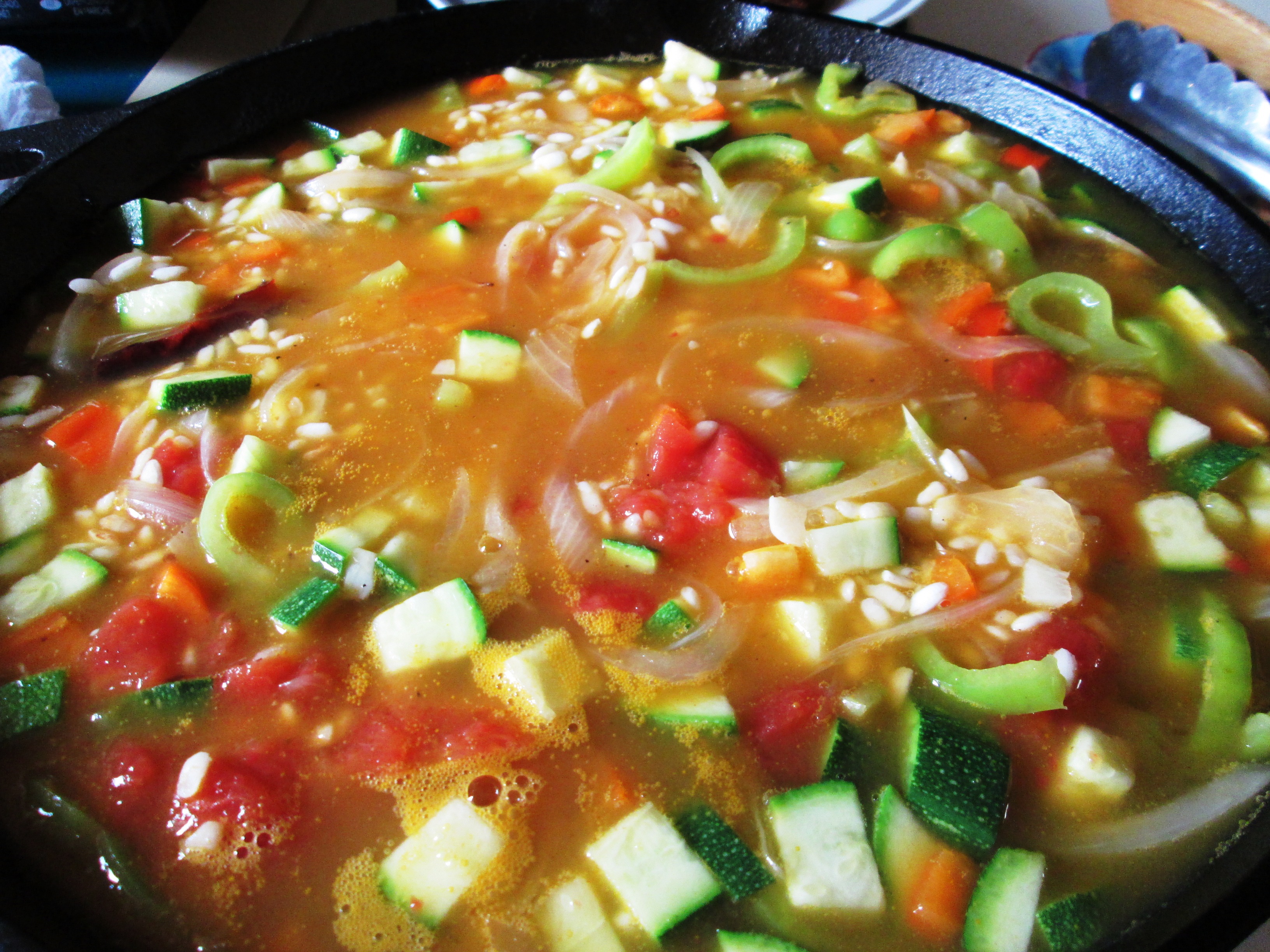
In the meantime, I wanted to share my recipe for Vegetarian Paella. Those flat, paddle-shaped leaves you see in the photo is a type of fresh oregano, but since fresh oregano is hard to find for many people, I use dry oregano in the recipe. Enjoy!

Vegetarian Paella

2 tablespoons olive oil
1 or 2 vegetarian chorizo sausages, sliced into ¼-inch-thick pieces
1 medium onion, finely chopped
2 teaspoons kosher salt
4 cloves garlic, minced
1 red bell pepper
1 green bell pepper
1 ½ cups Arborio rice, rinsed and drained
Pinch saffron
2 large ripe tomatoes, seeded and diced
1 medium zucchini diced
1 teaspoon dried oregano
4 cups vegetable stock
2 cups chopped kale
1 cup peas
Freshly ground black pepper to taste
¼ cup minced parsley
Lemon or lime wedges

IMG_0793

1. Heat 1 tablespoon oil in a large skillet. Add the chorizo and brown on both sides. Remove to a plate.

Vegetarian chorizo

Vegetarian chorizo

2. Add the remaining oil to the pan and heat. Add the onion and 1 teaspoon salt and sauté until translucent. Add garlic and red and green peppers. Saute until softened. Add rice and saffron; stir to combine and stir-fry to toast a little.

IMG_07983. Mix in tomatoes, zucchini and oregano. Cover and cook 5 minutes. Add stock and kale; cover and simmer 20 minutes. (If rice is not fully cooked, add a little more stock or water and continue simmering until done.) Stir in peas and cook another 5 minutes. Add the remaining salt if desired and season with pepper.

IMG_0799IMG_0800

4. Return the chorizo back to the pan and mix in, along with the parsley. Transfer to a serving platter and garnish with lemon or lime wedges.

IMG_0811


4 Comments

A New Beginning

Hi, everyone! Welcome to my new blog site.

The last few years have brought many new things for me: a new job in a completely new environment; a new relationship; another branch of education and another degree; new publications; and entree into a whole new world of events and areas of participation.

IMG_0676

Pear-raspberry-kale smoothie

I decided that, in keeping with this trend, it was time for a new blog site. I’ve migrated over from another server and am basically starting from scratch. You might see a few blog posts that look familiar, but I’m going to add lots of new, fresh content. So, I hope you’ll stay with me and visit regularly.

I’ve also just begun a new diet/detox/exercise regimen, and thanks to my beautiful new Vitamix, I’m able to make some wonderful green smoothies. My first one is a pear-raspberry-kale smoothie.

The recipe comes from The Beginner’s Guide to Green Smoothies, by Sharon Daniels.

I feel healthier already. 🙂