Miz Chef

Cooking Up a Healthy Life


Leave a comment

Going Flakey with Quinoa

IMG_3478

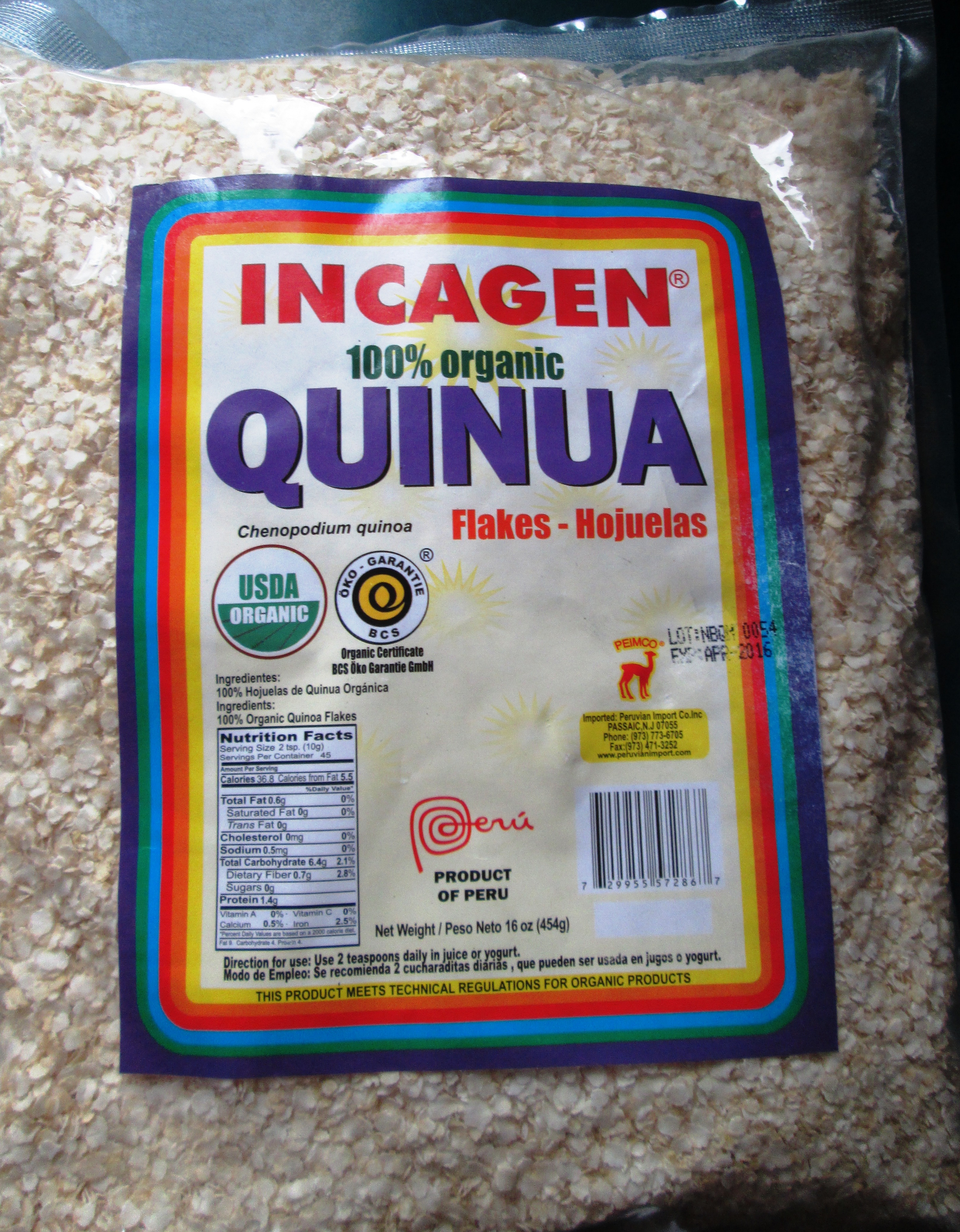
I call Jackson Heights, Queens, the United Nations because half of the world’s cultures, nationalities, and identities can be found there. And where there are ethnic enclaves, there are markets that cater to those enclaves.IMG_3474

This New York neighborhood is home to just about every Central and South American nation you can find on the map, and I’m always going home with some new product I’ve never seen or tried before.

My forays into various ethnic markets have introduced me to many different grains in many different forms, from rice flakes to lotus nut puffs (okay, not technically a grain) to cracked corn. This past week, I found quinoa flakes.

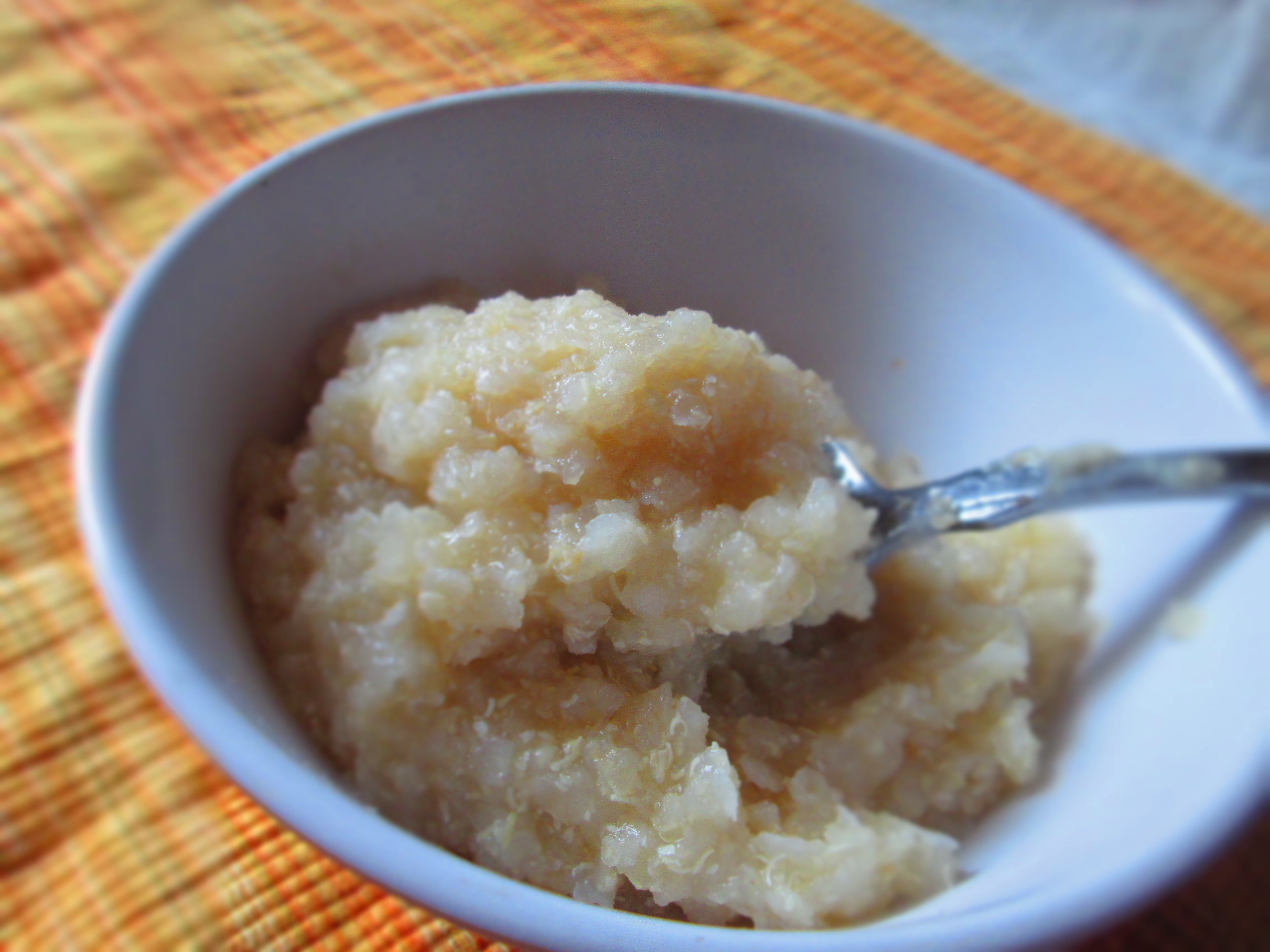
The package recommends putting a couple of tablespoons into a smoothie or yogurt, and I’ve read suggestions to put it in baked goods in place of flour or oats. But I figured it would make a good breakfast porridge, too. I cooked a small quantity by itself, just to see what it was like. It tasted like…well…quinoa. It even had the little signature “strings” of cooked quinoa. But I found it to be a bit blah. Kind of like baby food.IMG_3484

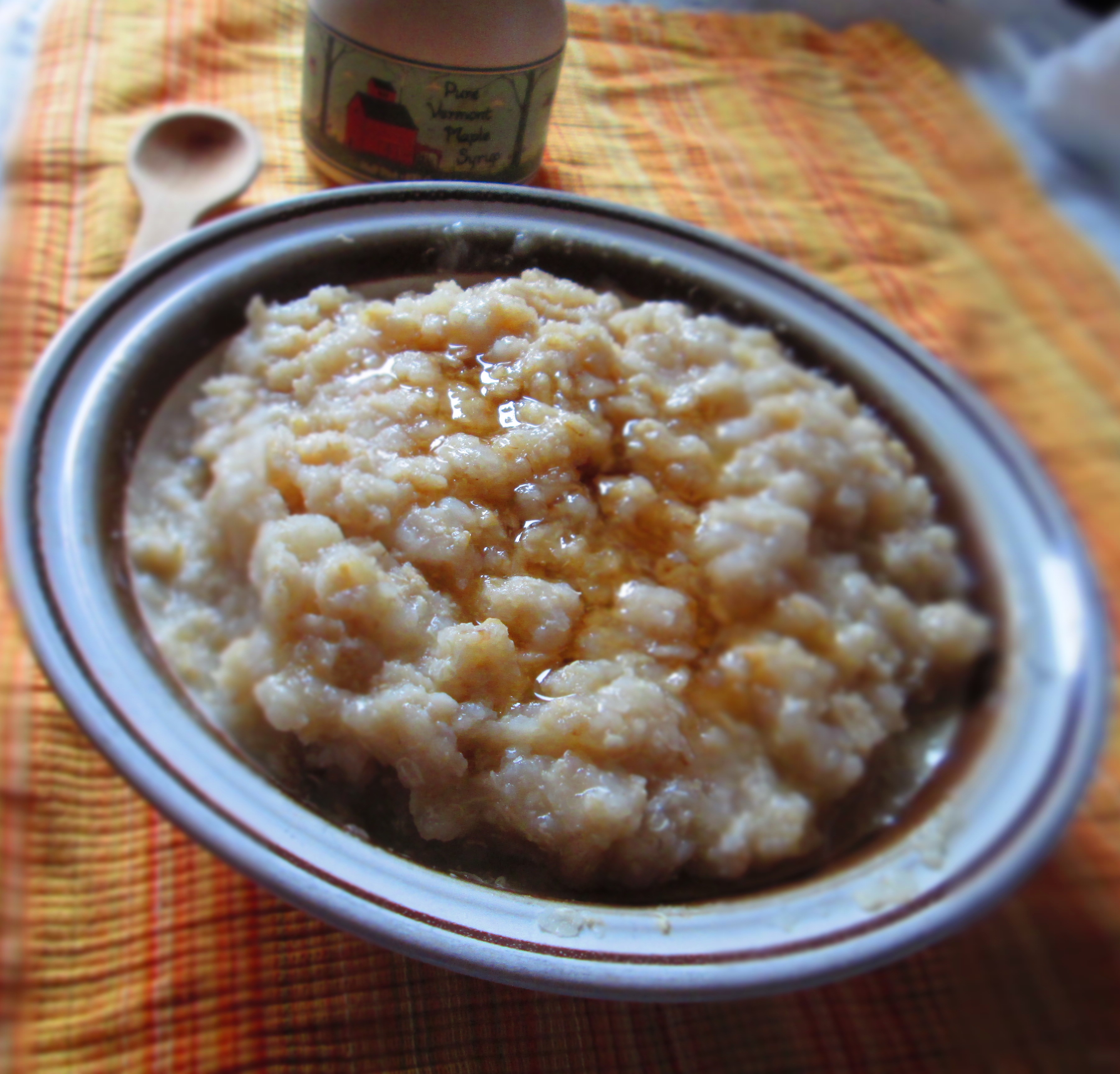
So then I blended it with rolled oats and made a half-and-half porridge. I added some maple syrup to give it some flavor, and topped it off with some chopped pecans for texture. It turned out much lighter than regular oatmeal, but because quinoa has protein, it’s filling nevertheless. And because it’s lighter, I think it would make a great breakfast for someone who is sick or has stomach issues.

Here’s the recipe for my preparation:

IMG_3488

Quinoa-Oat Porridge

½ cup quinoa flakes
½ cup rolled oats
Pinch salt

Optional toppings:
Maple syrup
Honey
Chopped nuts
Fruit

Bring 2 cups water to a boil in a small pot. Add quinoa flakes, oat, and salt; lower heat, cover, and simmer 5 minutes, or until desired thickness. You can add more water if you want it looser.

Transfer to 2 bowls. Top with whatever toppings you like.


Leave a comment

Kale-Bean Soup with Amaranth

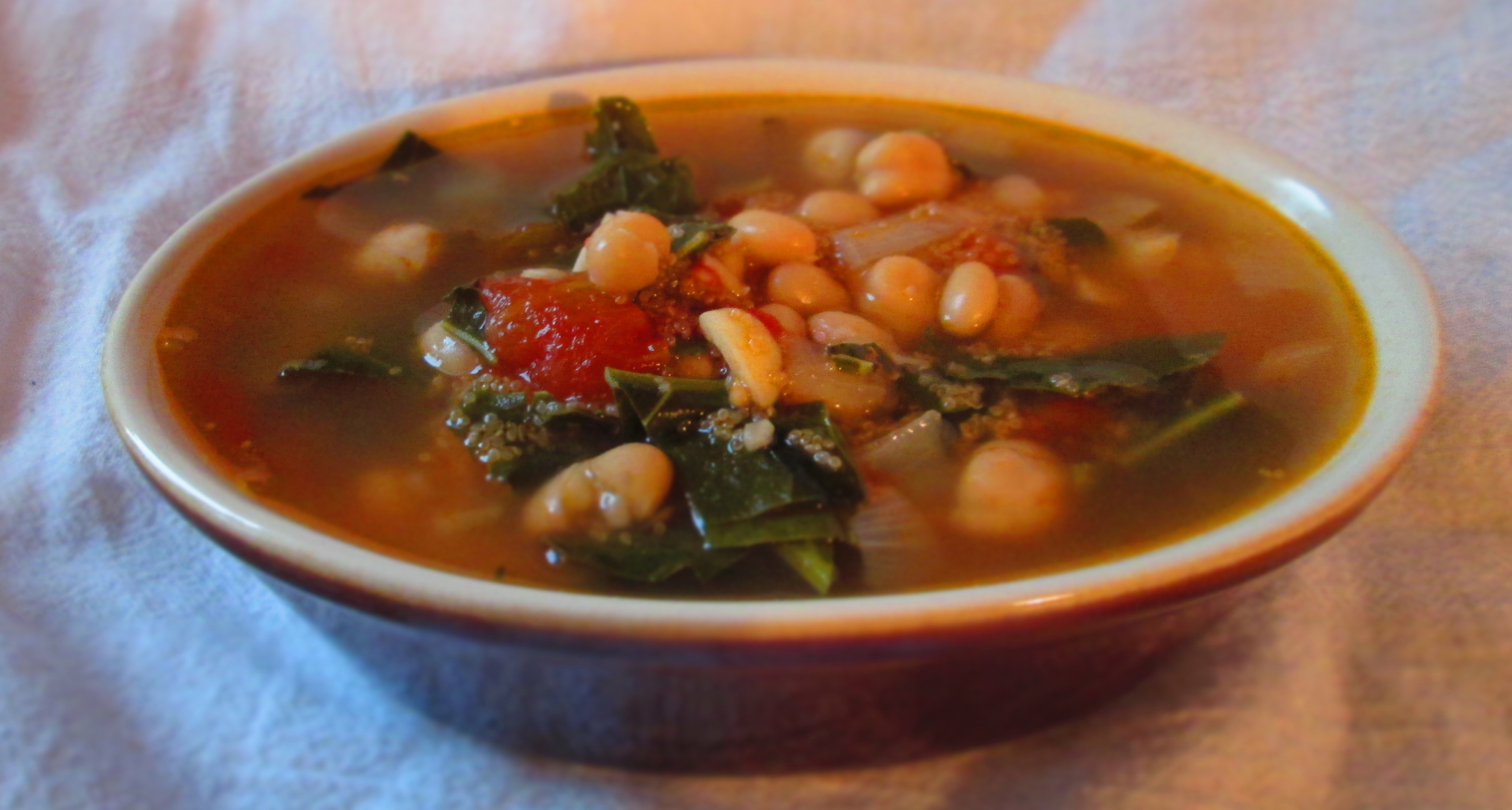
IMG_3431With all the greens flourishing right about now, I’ve been having a craving for bean soup with greens. Why in the world would I crave soup in the dead heat of summer, you ask. I can have soup any time of the year. I absolutely love it. Yes, it can be warm and comforting in winter, but summer also calls for comfort of a different sort.

Plus, studies have shown that eating warming dishes such as soup can actually acclimate you better to the heat by elevating your body temperature, thereby making the weather more tolerable.

Anyway, someone gave me a tiny little bunch of kale and I thought that it was the perfect opportunity to make that beans-and-greens soup. I decided to add some amaranth to it—I love pasta and grains in my soup and amaranth is an exceptionally healthy choice.

Amaranth has been grown in Central and South America and consumed by the regional people for hundreds of years. It’s been an important source of protein for the indigenous people of those regions, and it is less expensive and, consequently, less controversial than quinoa.

Amaranth is a very rich source of protein, and it is more digestible than that of other grains. It’s also an excellent source of lysine, an important amino acid. Amaranth has the most calcium of any grain next to teff. It also is a better source than other grains of magnesium, iron, copper, and fiber. Amaranth is a good source of zinc, potassium, phosphorus, folate, niacin, and riboflavin, and vitamins A, C, E, K, B5, and B6, as well as antioxidants, which fight cancer. It has been shown to lower cholesterol and blood pressure, reduce inflammation, boost the immune system, and—don’t hold me to this—helps prevent premature graying. For carb counters, it’s lower in carbs than other grains and it’s gluten free.

So, here’s my impromptu recipe for Kale-Bean Soup with Amaranth. These are approximate amounts, so use however much you like of anything. Soup is very forgiving where quantities of ingredients are concerned. Enjoy.

Kale-Bean Soup with Amaranth

Makes 4 servings.

1 small bunch kale
2 teaspoons olive oil
¼ cup diced onion
3 large garlic cloves, minced
1 teaspoon kosher salt
½ cup diced tomatoes
2 cups vegetable broth (or 2 cups water + 2 bouillon cubes)
¼ cup amaranth
1 cup cooked beans (whichever you prefer)

Wash the kale and remove thick stems. Chop into bite-sized pieces.

In a medium pot, heat oil; add onion, garlic, and salt. Sauté until onion is translucent, about 2 or 3 minutes.

IMG_3419

Add tomatoes and sauté another minute.

IMG_3421

Pour in broth and let it come to a boil. Add amaranth; lower heat to medium-low and simmer until is cooked, about 10 minutes.

IMG_3425

Add kale and beans and continue cooking until kale is tender (this can take anywhere from 5 to 10 minutes, depending on the size and “toughness” of the kale). Adjust seasoning to taste.

Serve as is or with grated cheese and/or crusty bread.


Leave a comment

Creamless Broccoli-Gouda Soup

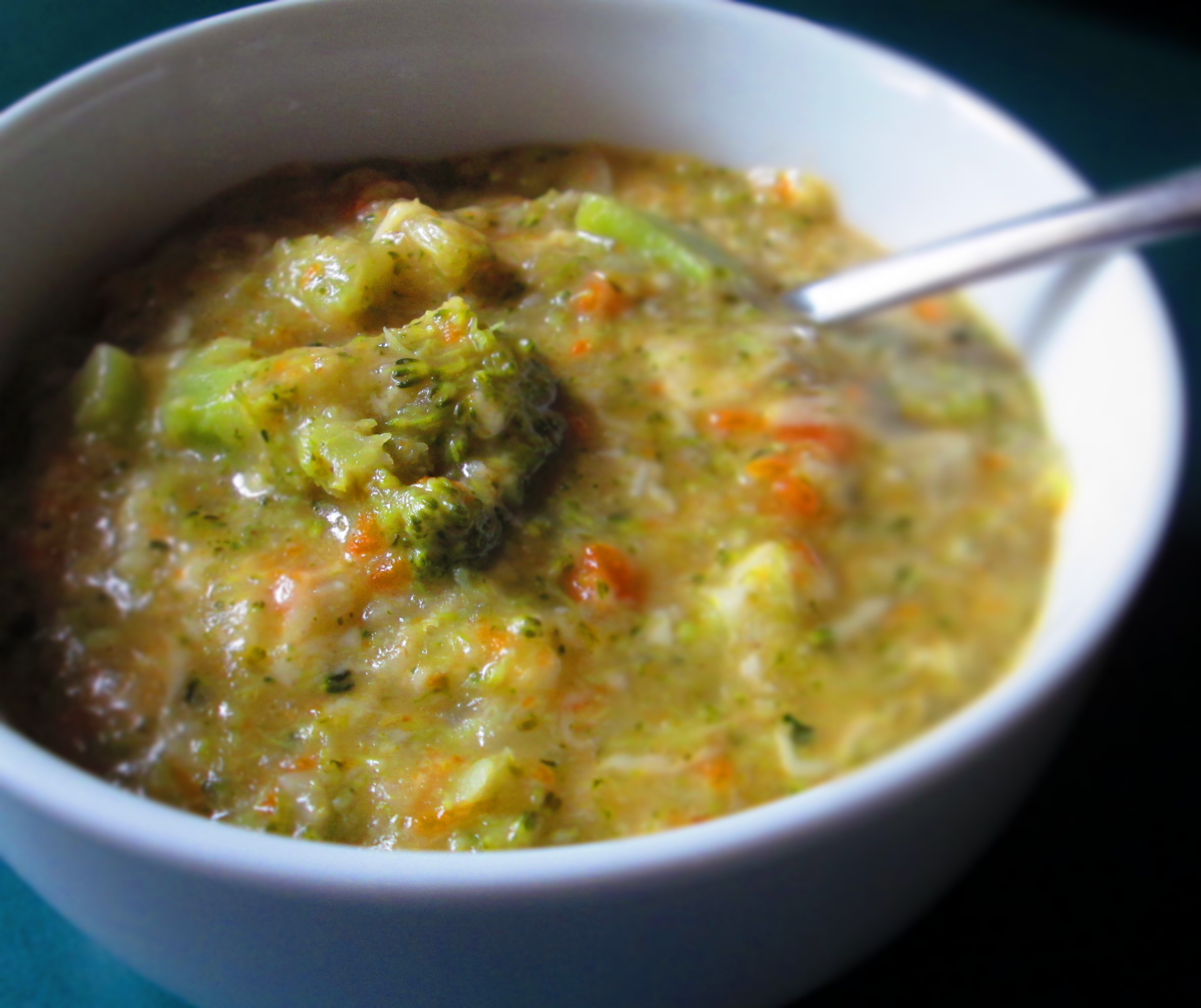
Broccoli-Gouda Soup

Broccoli-Gouda Soup

This is one of those recipes that came from wanting to satisfy a craving with what was already at hand. I had purchased a head of broccoli because I wanted some in a veggie quesadilla. But there’s only so much broccoli you can put in a quesadilla.

I looked at the leftover broccoli and cheddar cheese (also purchased for the quesadilla) and I instantly thought “broccoli-cheddar soup.” Then I remembered that I had a piece of Gouda cheese that needed to be used and I thought, “Okay, broccoli-Gouda soup.”

Traditionally, broccoli-cheese soup uses milk or half-and-half, but I didn’t want to use any dairy (apart from the cheese). So I thought to use a technique I learned in culinary school for thickening cream soups: oats. It thickens it up without adding the extra fat and calories and keeps the soup light and filling without being overly rich.

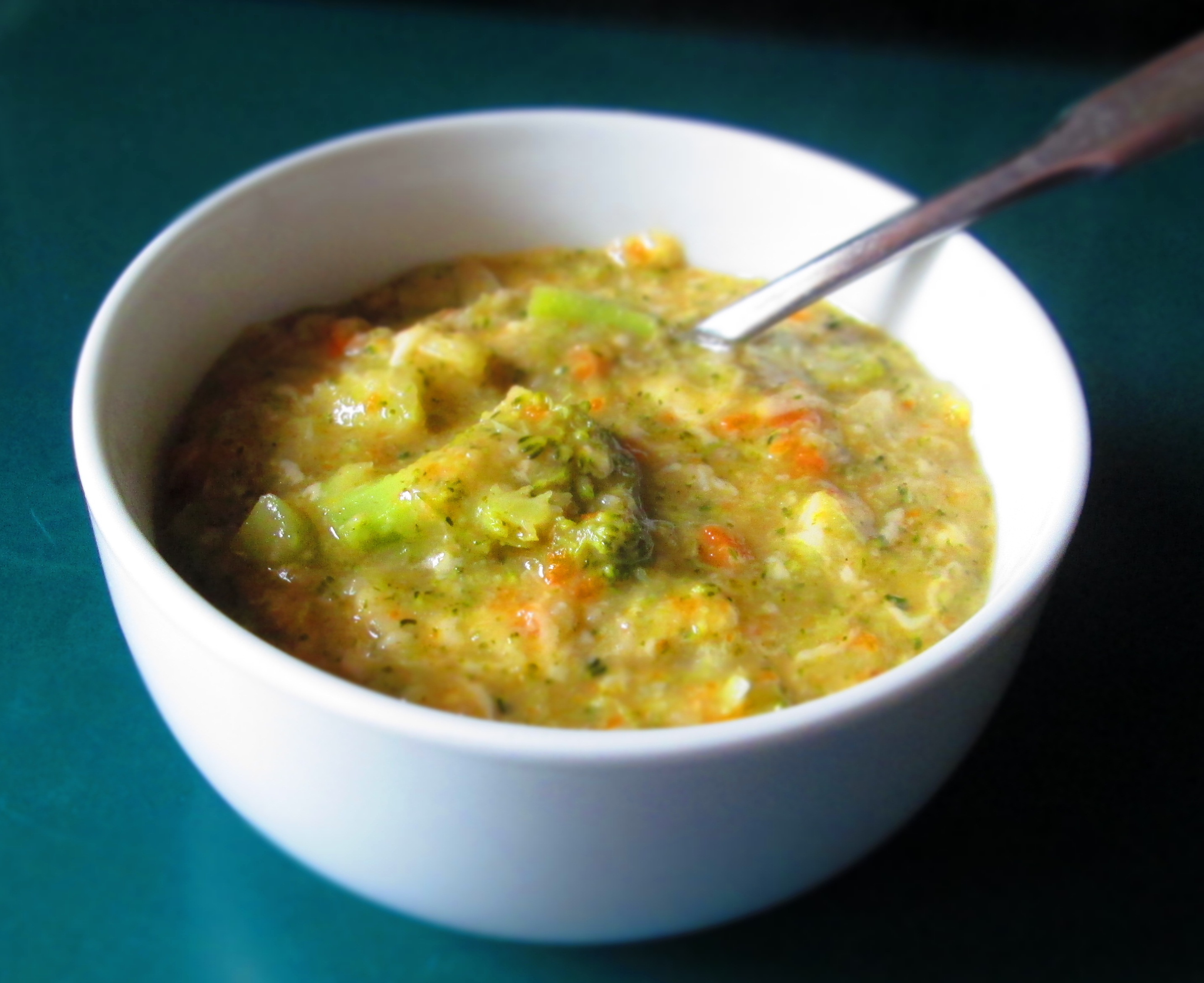
I just threw all these ingredients together and I was immensely pleased with the result. This soup is hearty and filling, but less heavy than cream-based soups as well as healthier. The flavor is deep and pleasing, and it looks really appetizing. It would be well complemented by croutons or toast, and a side of green or bean salad.

By the way, if you want to go completely dairy-free, the soup was already delicious even before I stirred in the cheese. So go ahead and omit it—you’ll enjoy it just the same.

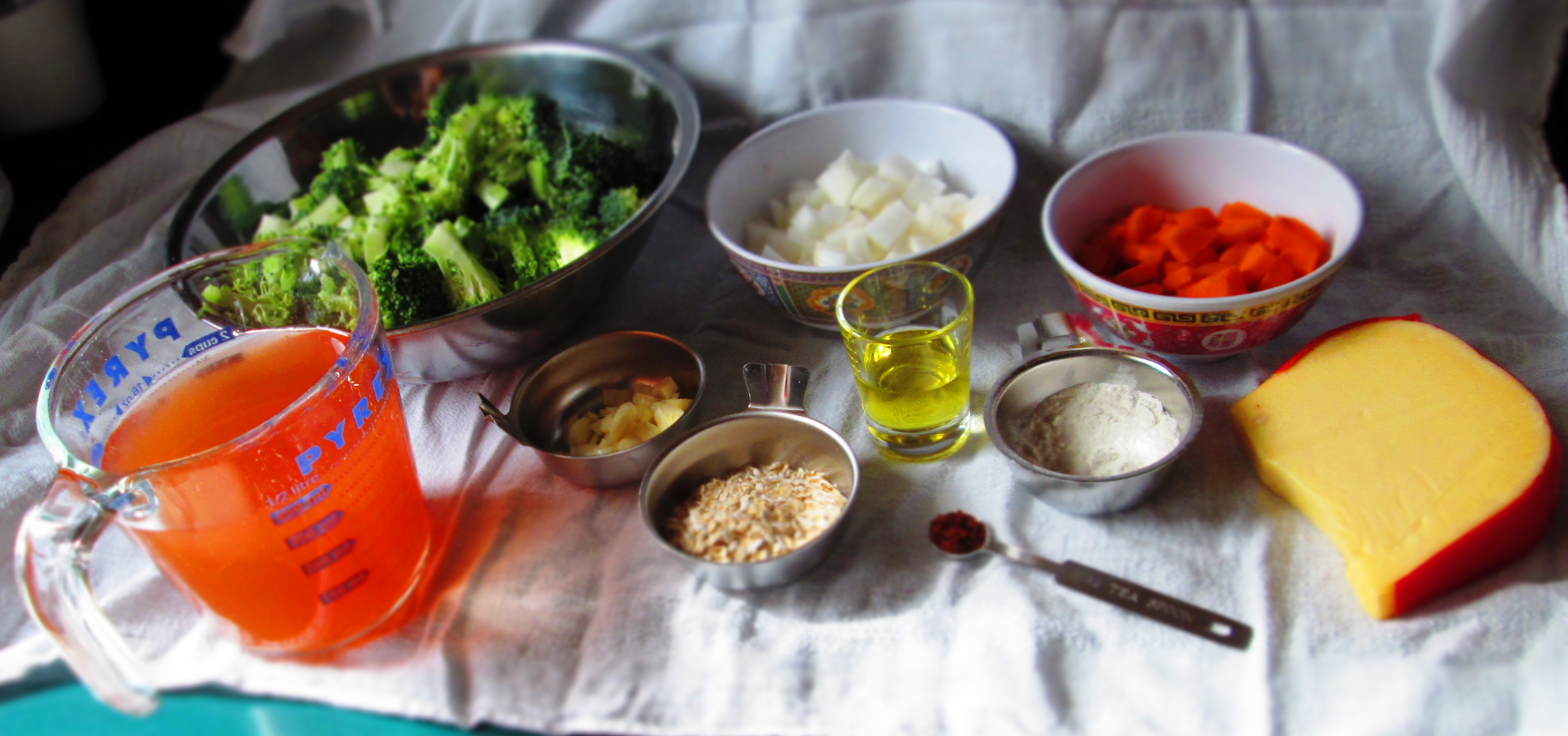
Creamless Broccoli-Gouda Soup

Makes 4 servings.

1 tablespoon olive oil
1 cup coarsely chopped white onion
4 large cloves garlic, finely chopped
¼ teaspoon nutmeg
1 medium head broccoli, chopped (florets and tender stems)
1 small carrot, coarsely chopped
1 teaspoon kosher salt
Freshly ground black pepper to taste
2 cups vegetable broth
2 tablespoons quick-cooking oats
2 tablespoons flour
4 oz. Gouda, shredded

IMG_3157

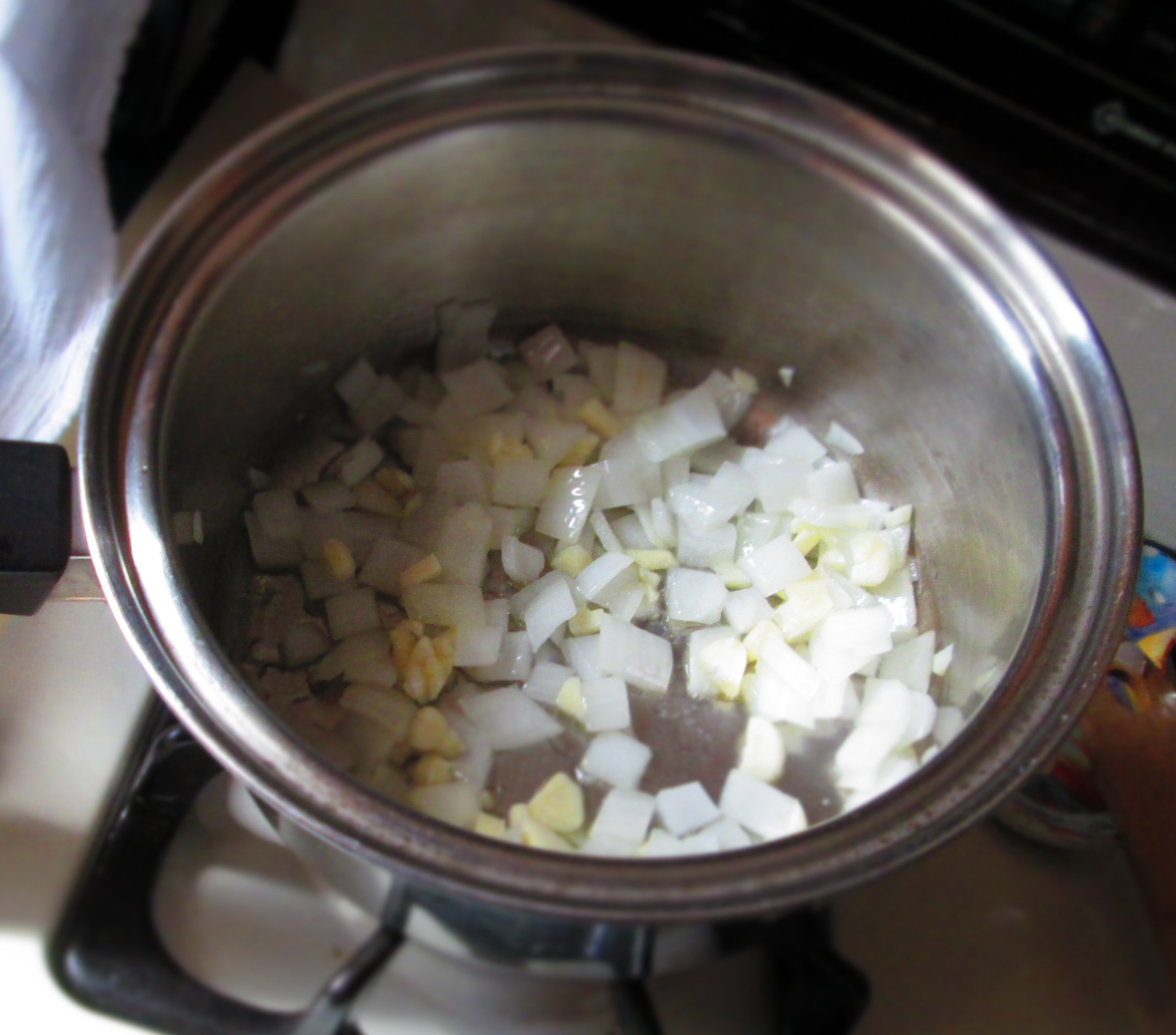
Heat 1 teaspoon oil in a medium pot. Add onion and saute over medium heat until soft and translucent. Add garlic and nutmeg and saute another minute.

IMG_3160

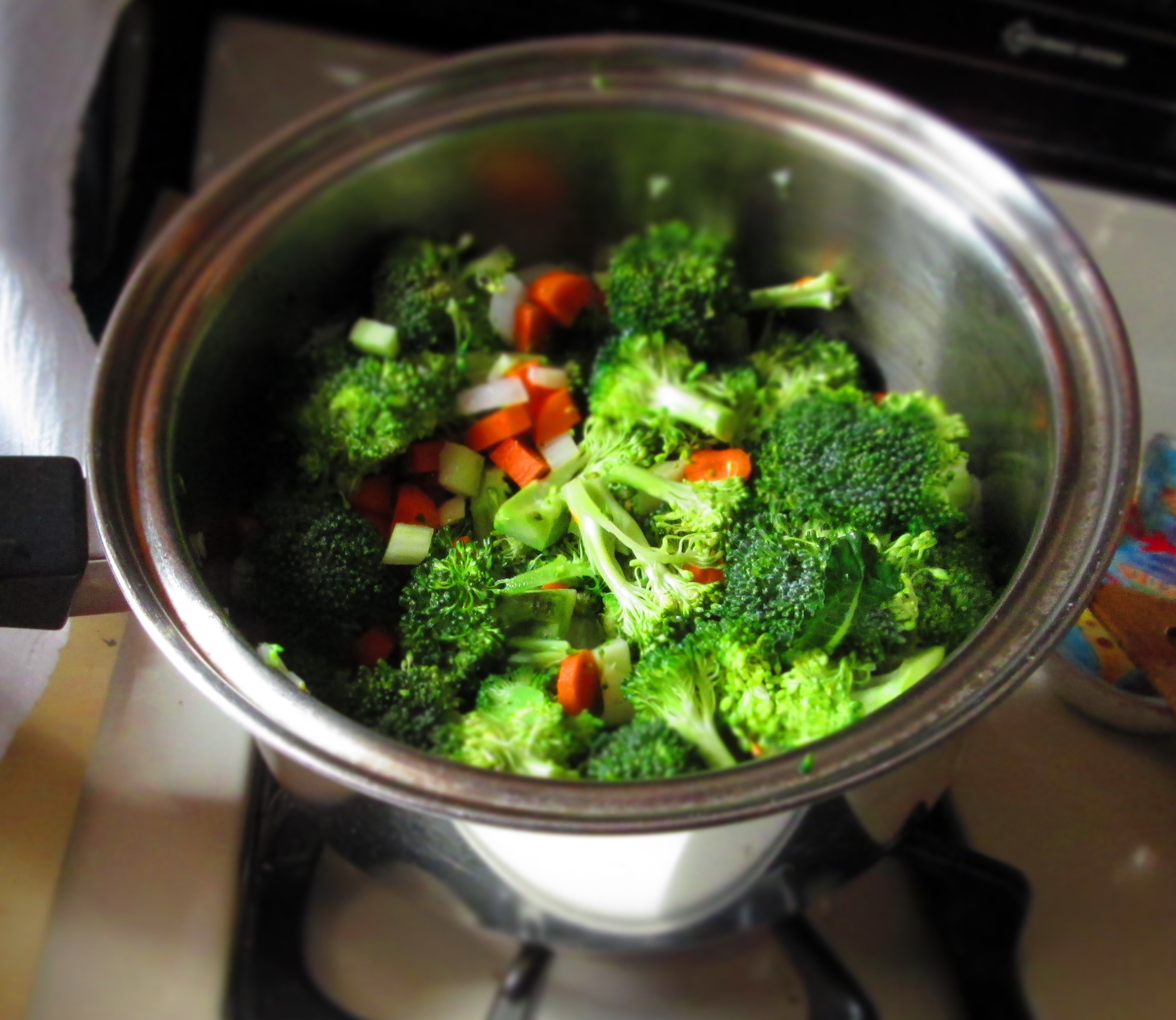
Add broccoli, carrot, salt, and black pepper to taste and cook, stirring often, until broccoli turns bright green.

IMG_3161

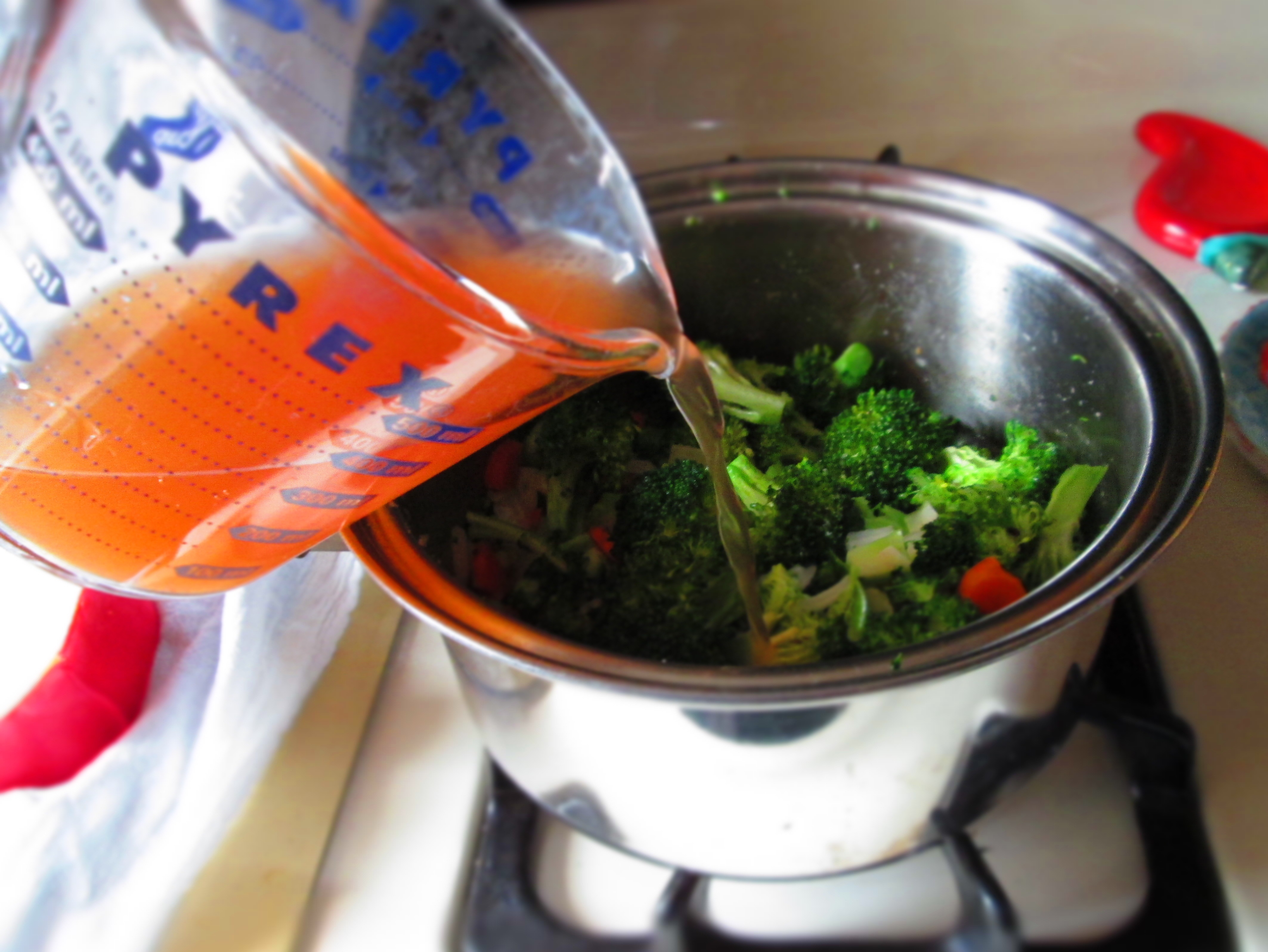
Add broth and oats; stir and bring to a boil over medium-high heat. Lower heat, cover, and simmer until tender, about 10 minutes.

IMG_3165

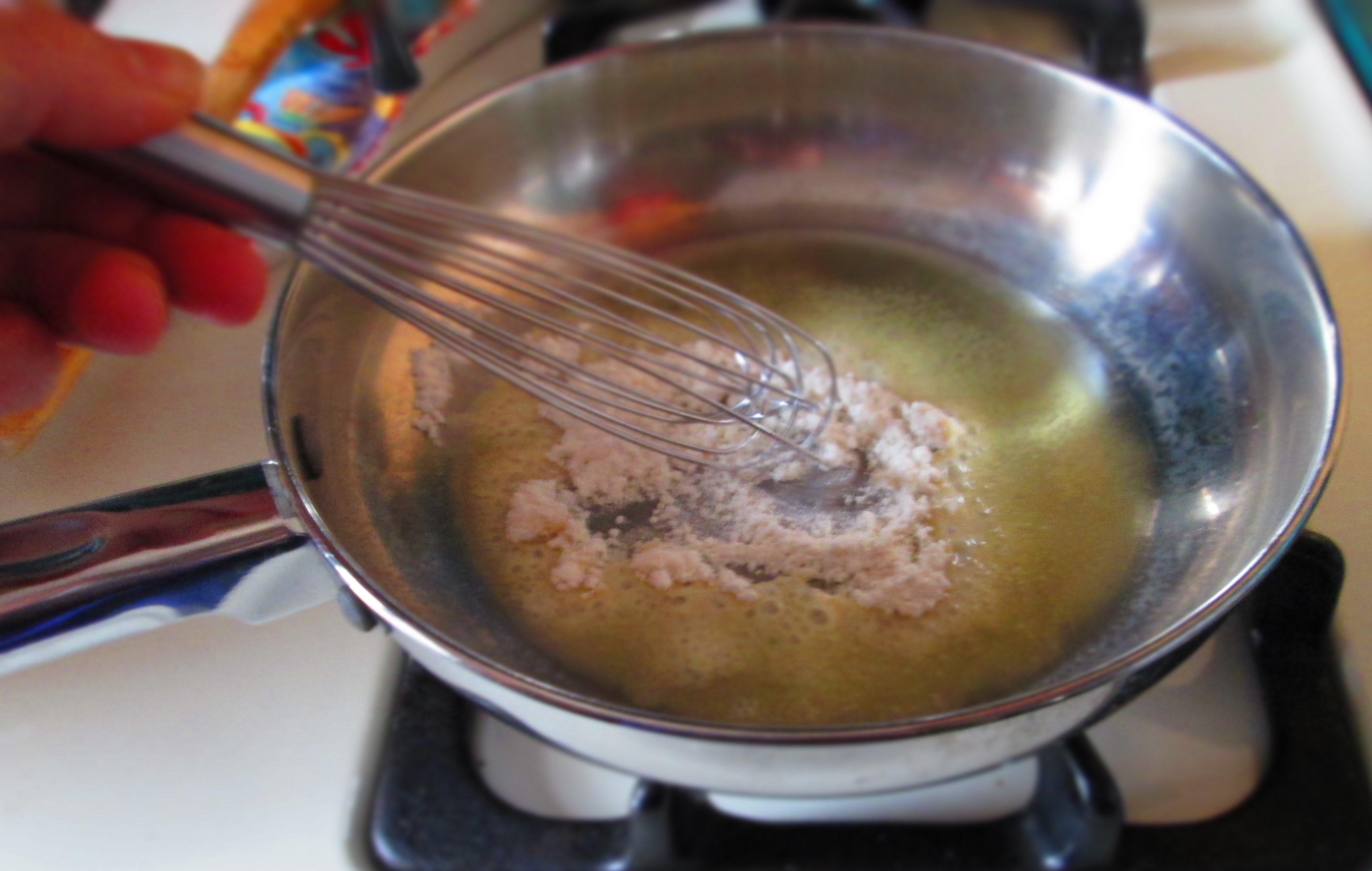
Make a roux by heating the remaining oil in a small skillet. Sprinkle in flour and whisk until it cakes up and becomes slightly stiff. Keep whisking until it turns a nutty brown. This will take only a minute or so.

IMG_3166

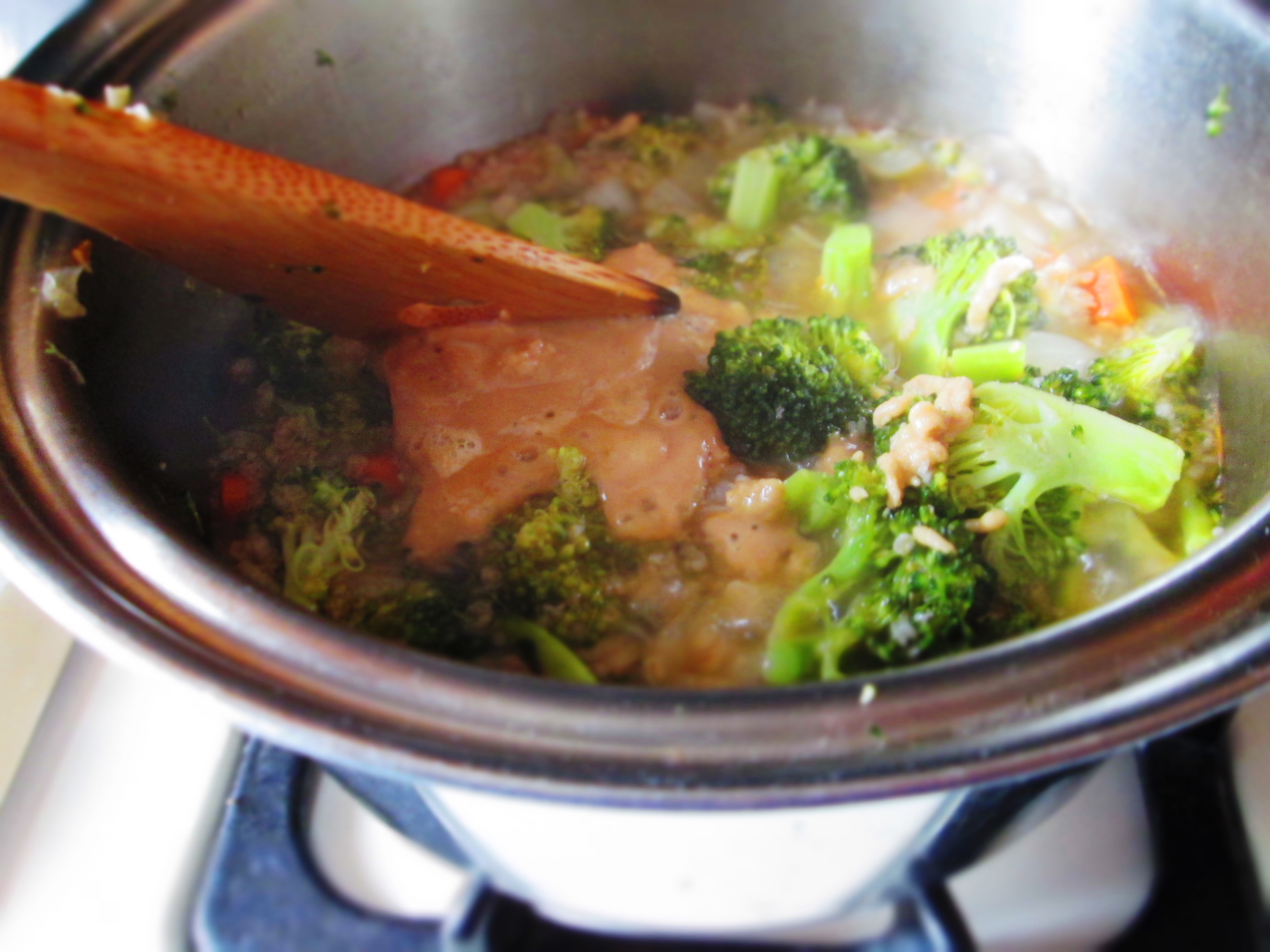
Stir it into the soup until it’s well blended.

IMG_3167

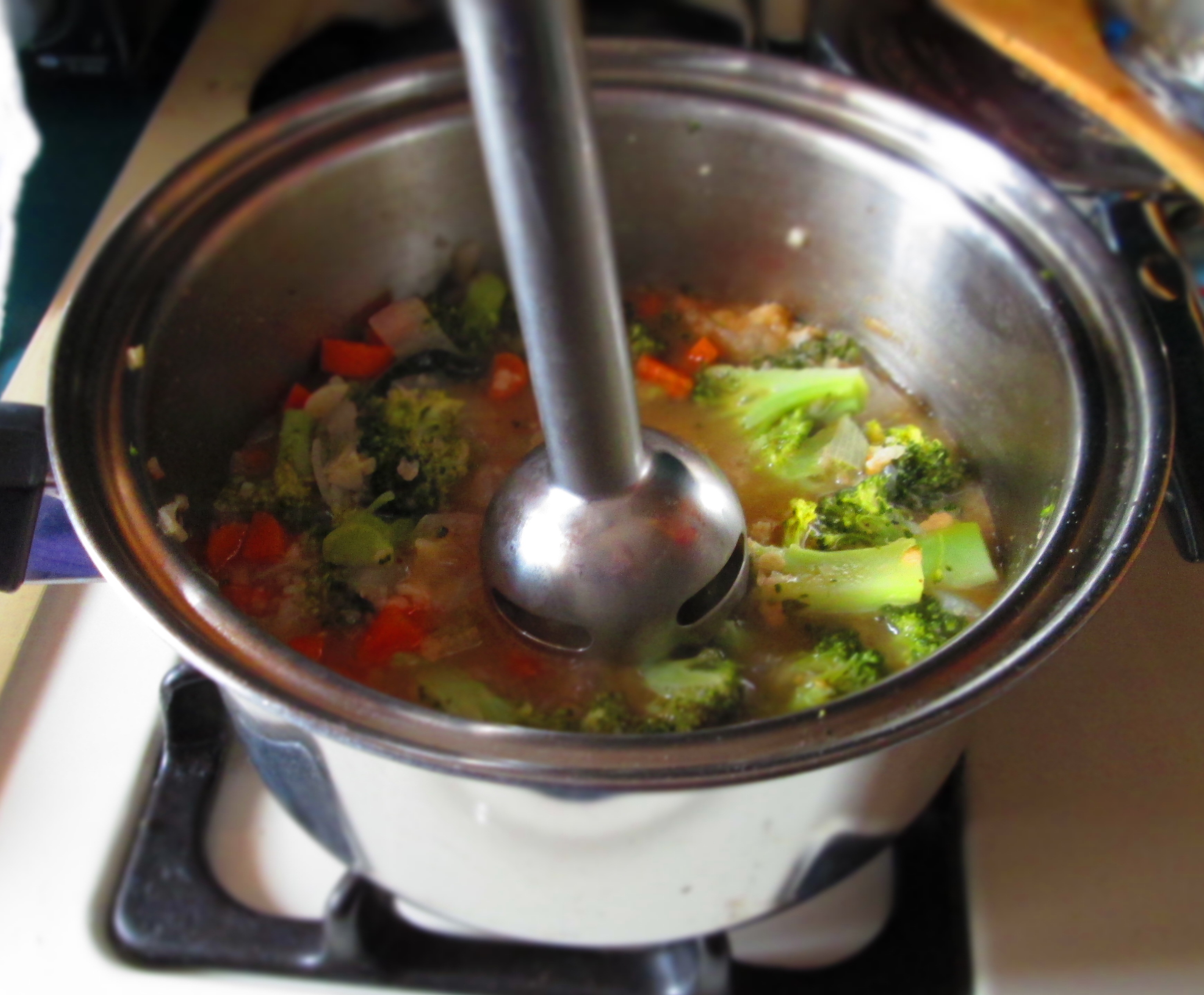
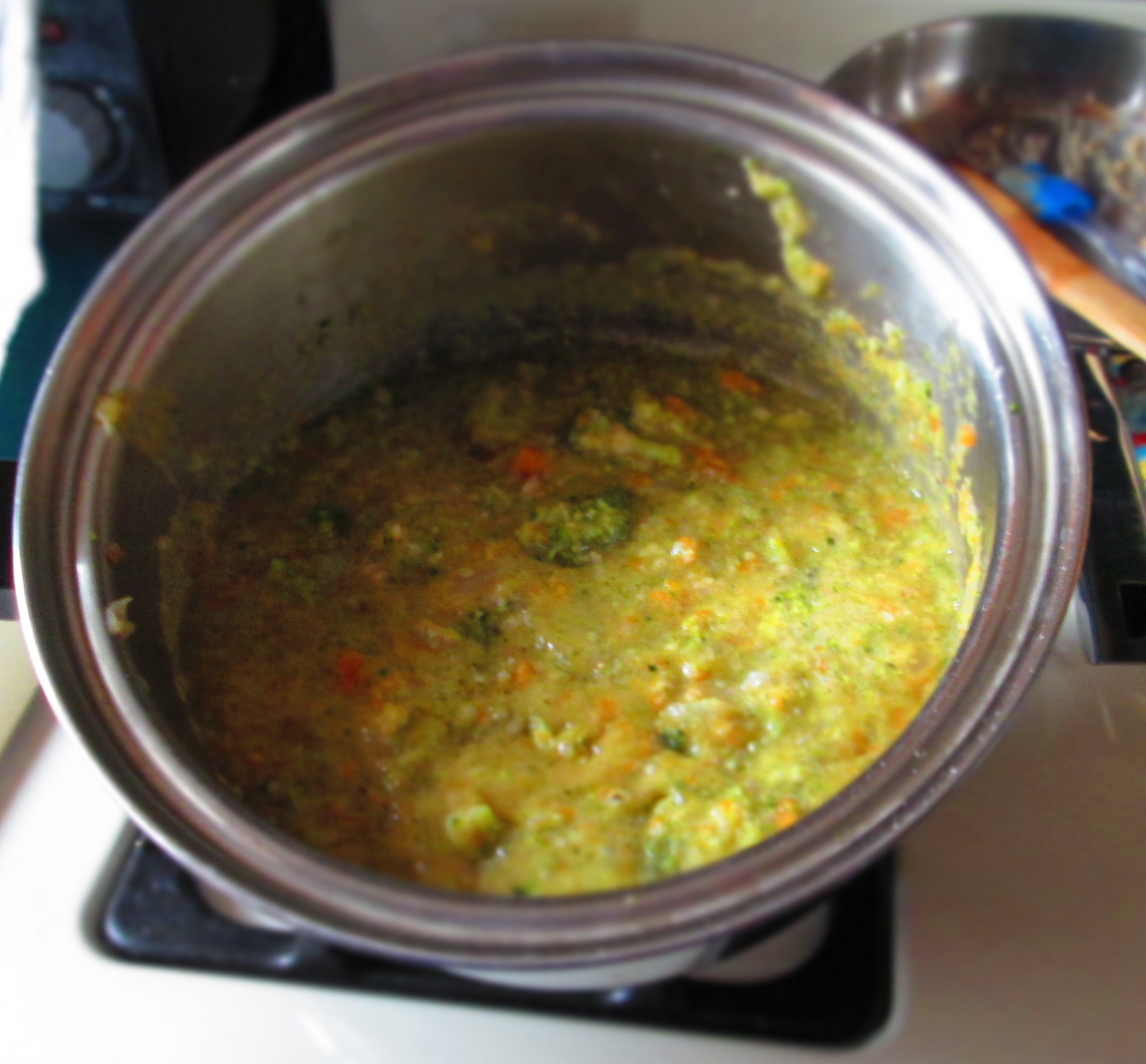
Puree the soup, either in a blender with an immersion blender, to the consistency that you like―fully blend for a smooth soup, or leave some pieces for a chunkier soup (I like it chunky). If you’ve used a blender, pour it back into the pot.

IMG_3168IMG_3171


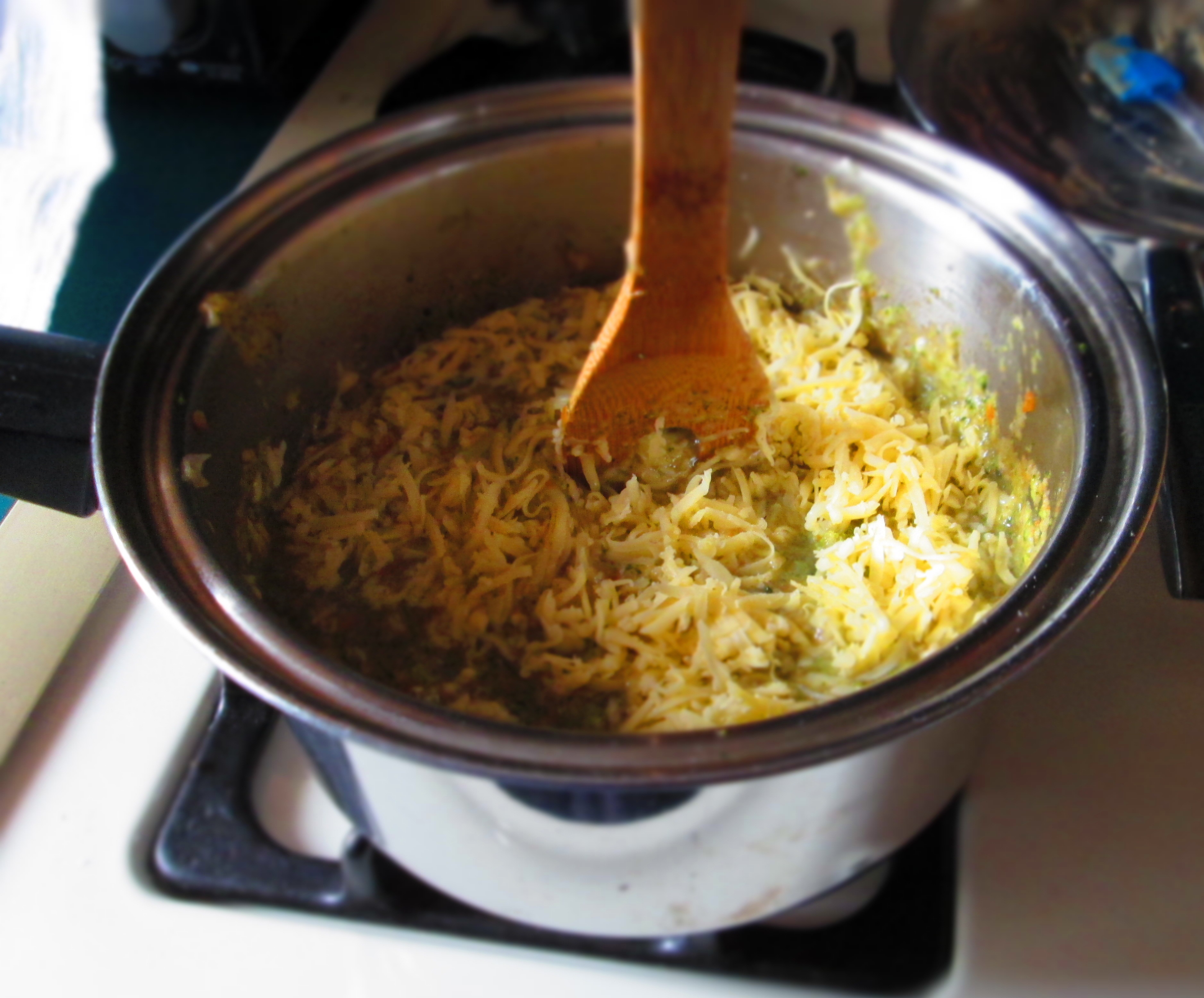
Stir in the cheese and continue stirring over low heat until it’s melted in. Check for seasoning and adjust, if desired.

IMG_3172

Serve hot.

IMG_3173


2 Comments

Sorghum Stir-Fry

When I step back momentarily from my hectic life, I realize that I’ve packed so much into my days, weeks, and months that lose control of what’s happening. I lose my grip on the reins and things just go all cray-cray.

Sorghum Stir-Fry

Sorghum Stir-Fry

And it’s because of this cray-cray-ness that it’s been such a struggle for me lately to blog regularly. I keep vowing that I will get back on track—and I always mean it—but I succumb to the insanity again and again.

Sorghum

Sorghum

One of the consequences is that I haven’t been able to cook much. I mean, I cook to test recipes or photograph for my cookbooks, but not simply for the pleasure of it. So, I have all these products in my pantry that have been just sitting there, particularly grains. But last weekend, I was determined to pull something out of the pantry and use it. It turned out to be sorghum.

Sorghum is a great gluten-free grain to have as a substitute for rice. It has a firm, meaty texture and it’s difficult to overcook. It can tend to be dry, but paired with the right ingredients, it works really well for an alternative grain fix. I prepared it on its own, then added it to a stir-fry in place of rice and the result was excellent. Now, I chose to use some cooked veggies that I had in the refrigerator, but you can use whatever vegetables you want. If you don’t pre-cook them, then make sure you stir-fry them until tender before adding the beans.

Sorghum Stir-Fry

½ cup sorghum
1 tablespoon coconut or other cooking oil
2 teaspoons sesame oil
½ small onion, sliced
2 large garlic cloves, sliced
1½ cups chopped roasted squash
1 small cooked Japanese yam, peeled and diced
½ cup chopped roasted eggplant
1 (15-oz) can white beans
1 cup frozen peas, thawed
2 tablespoon soy sauce

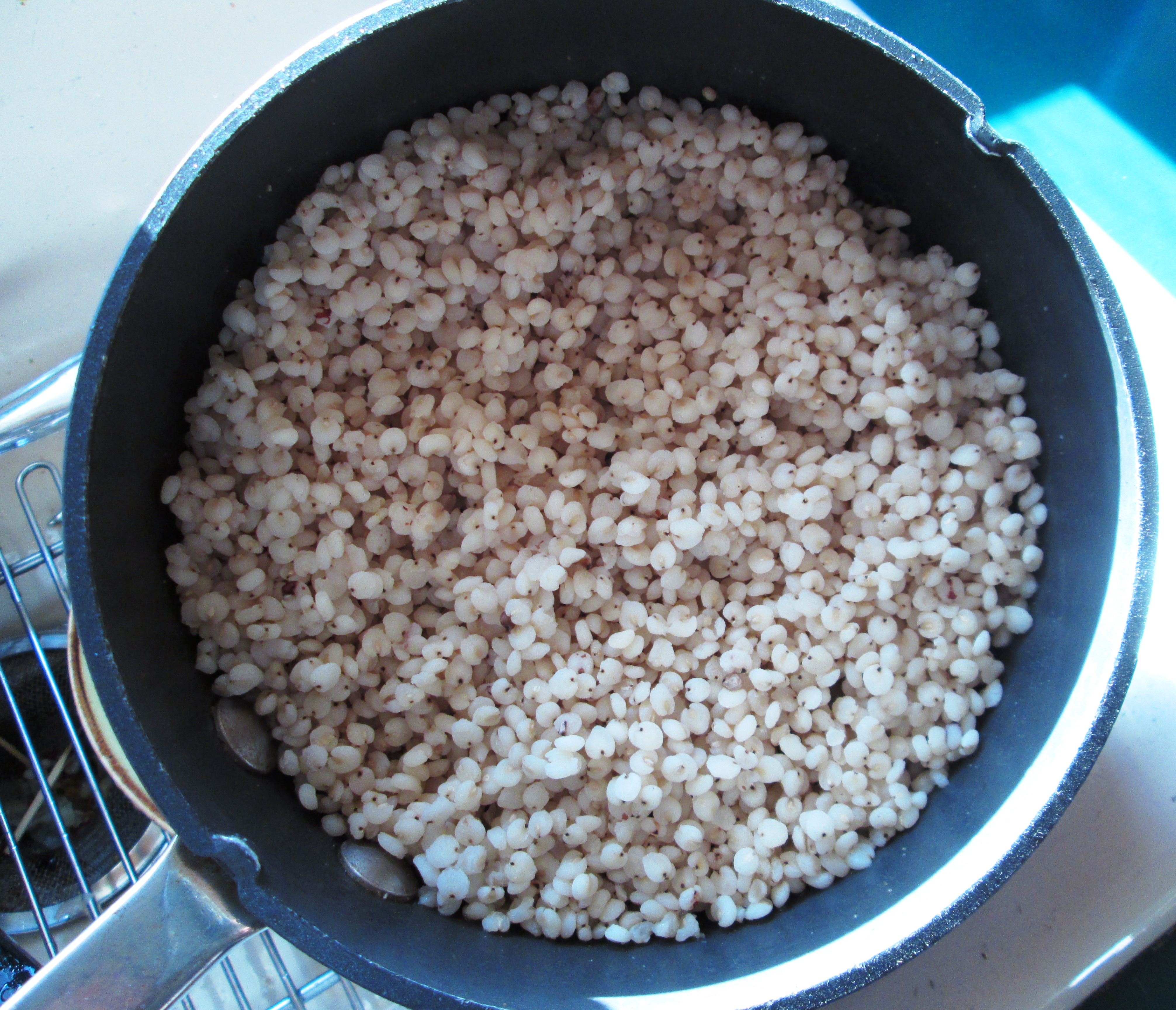
Bring 1¼ cups water to a boil. Add sorghum; lower the heat, cover, and cook for about 20-25 minutes, or until sorghum is tender but firm. If water is absorbed but sorghum still seems hard, add a little more water and keep cooking until tender.

IMG_2526

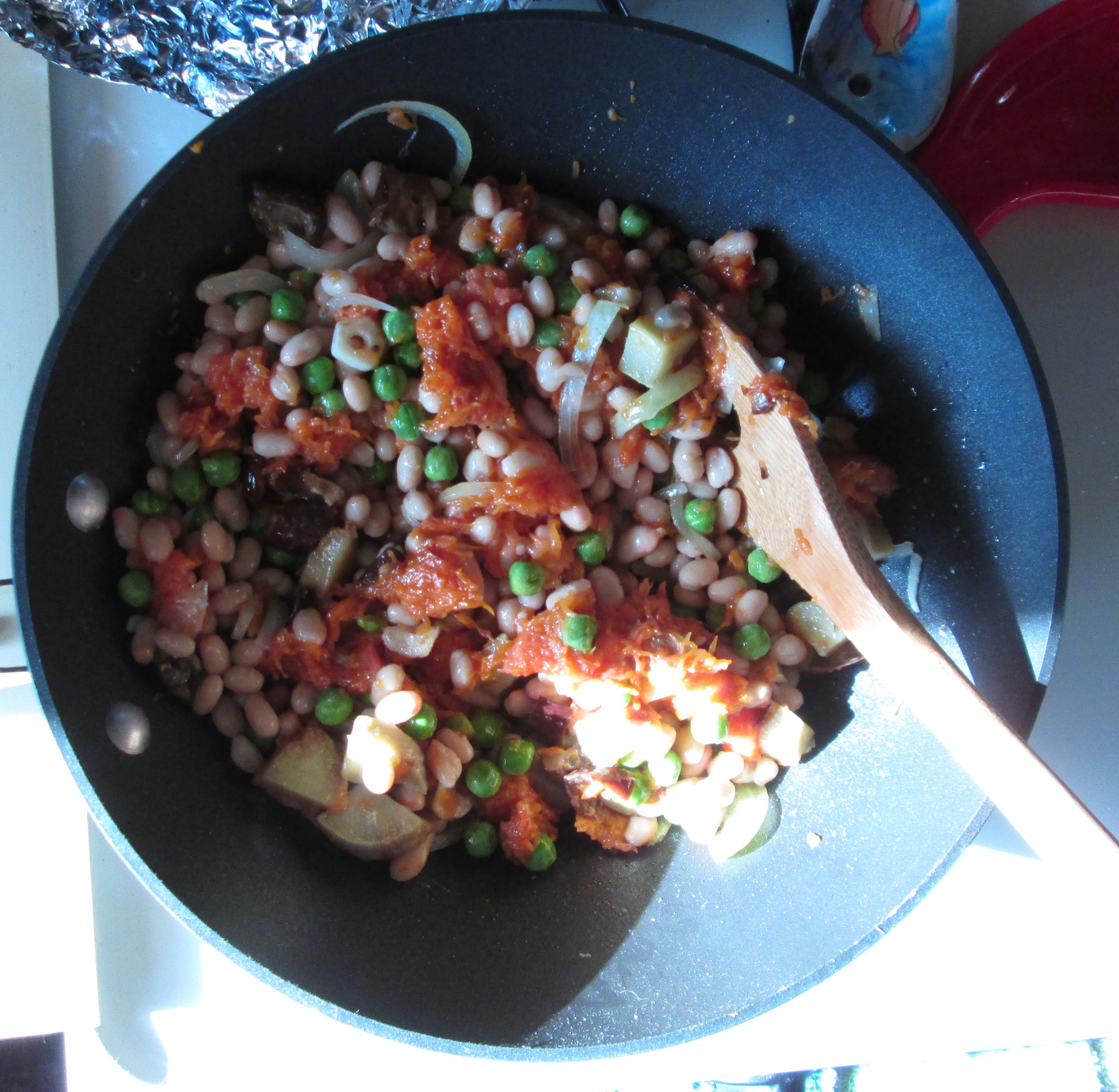
Heat coconut oil and 1 teaspoon sesame oil in a wok or large frying pan. Add onion and garlic and sauté until softened. Add squash, yam, and eggplant and stir-fry for 5 minutes. Add beans and peas; mix in well.

IMG_2529

Add soy sauce and remaining sesame oil and stir in. Add sorghum and mix well. Cook for 5 minutes. Add salt if desired.

IMG_2531

Makes 4 big servings.


Leave a comment

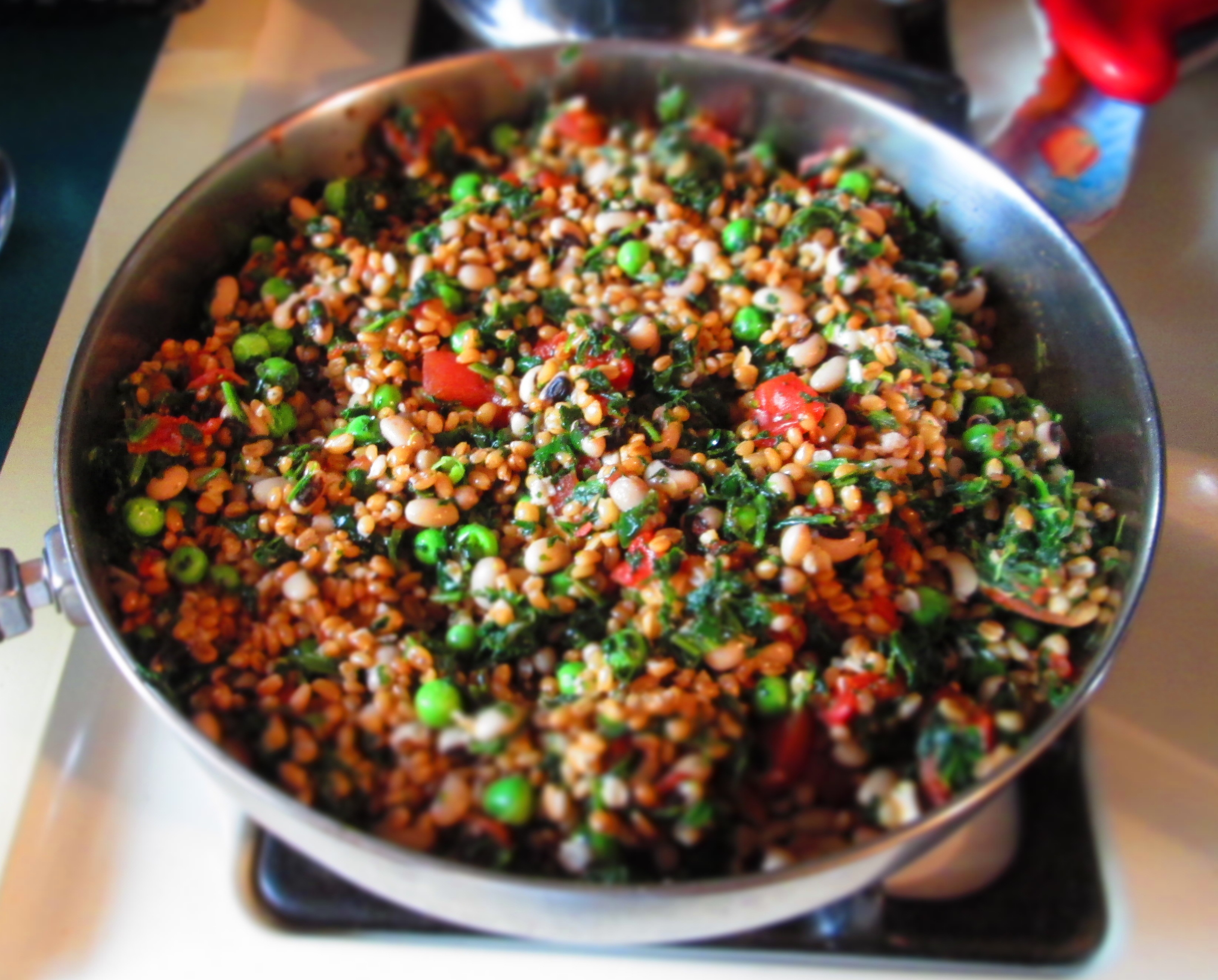
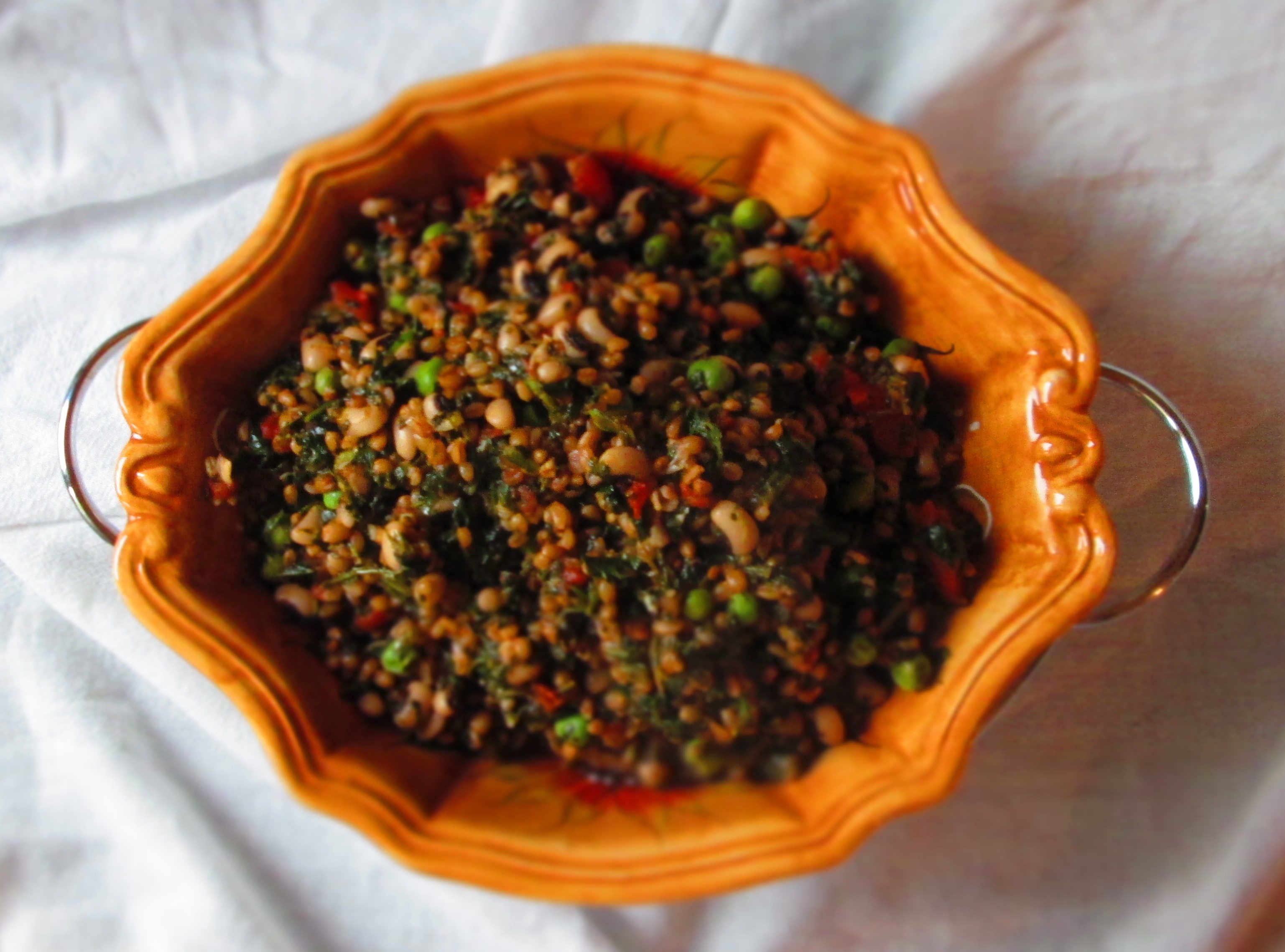
Warm Black-eyed Pea-Spinach Wheat Berry Salad

It’s been a kooky few months for me. I’ve been really busy cooking and photographing my food for volume two of my revised cookbook, now called Vegetarian Italian: Traditions. The Kindle version of volume one is currently on Amazon, and I’m waiting VegItalCover FINAL_Page_1for the print version to be available.

The thing is, all other cooking has been put on the back burner (no pun intended). I’ve even put off photographing dishes for my next cookbook, just to get volume two of Vegetarian Italian done.

Well, I’m almost there. I actually have one dish left to photograph, and this weekend, I found myself able to cook a little for the fun of it—something I haven’t done in a very long time.

I had some cooked wheatberries in the freezer, left over from a batch I had made a couple of months ago, as well as some black-eyed peas, and decided to use them.

A wheat berry is the entire wheat kernel (except for the hull)–meaning, it has its bran, germ, and endosperm intact. That makes them healthy whole grains. There are several varieties: winter and spring, hard and soft, red and white. Soft wheat is considered to have higher protein and, thus, less gluten. So, if you have wheat sensitivities (as opposed to Celiac disease) and want to use wheat berries, you’re better off using soft wheat. 

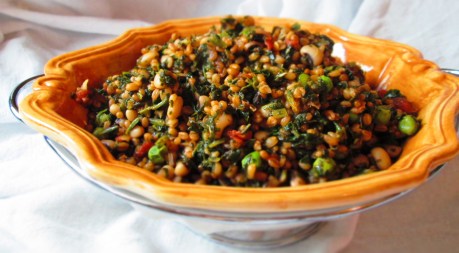
In the end, I wanted to do something simple but tasty, and this is what I came up with. I hope you like it.IMG_2509

Warm Black-eyed Pea-Spinach Wheat Berry Salad

2 teaspoons olive oil
2 cloves garlic, minced 3 cups cooked wheat berries
½ teaspoon paprika
6 plum tomatoes, chopped
2 cups cooked, chopped spinach
1 ½ cups cooked black-eyed peas
1 cup peas
2 teaspoons kosher salt
1 teaspoon freshly ground black pepper
1 tablespoon walnut oil

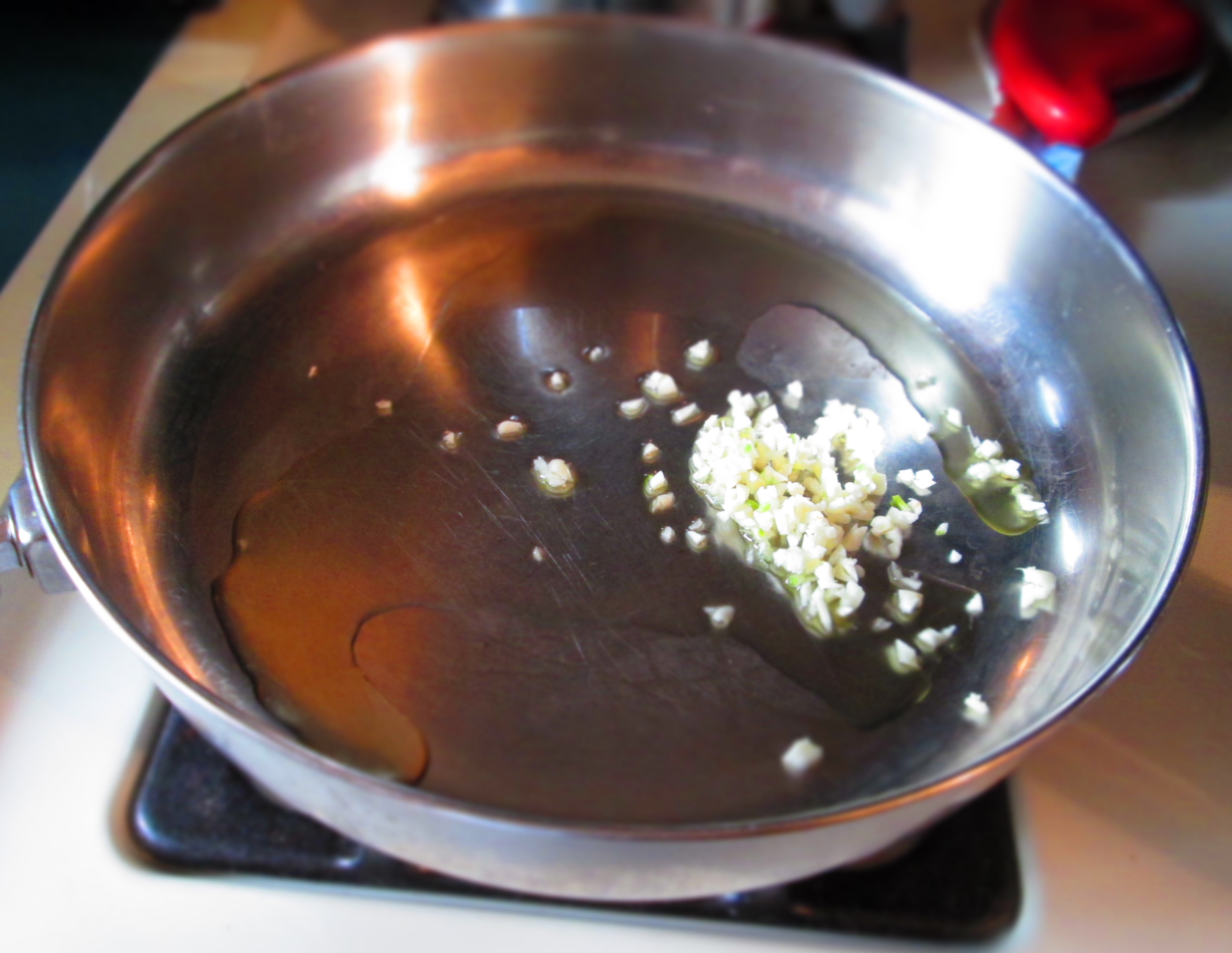
Heat the oil in a wide pan; add the garlic and sauté until fragrant, about one minute.

IMG_2502

Sprinkle in the paprika, then immediately add the tomatoes. Stir and sauté 2 or 3 minutes.

IMG_2503
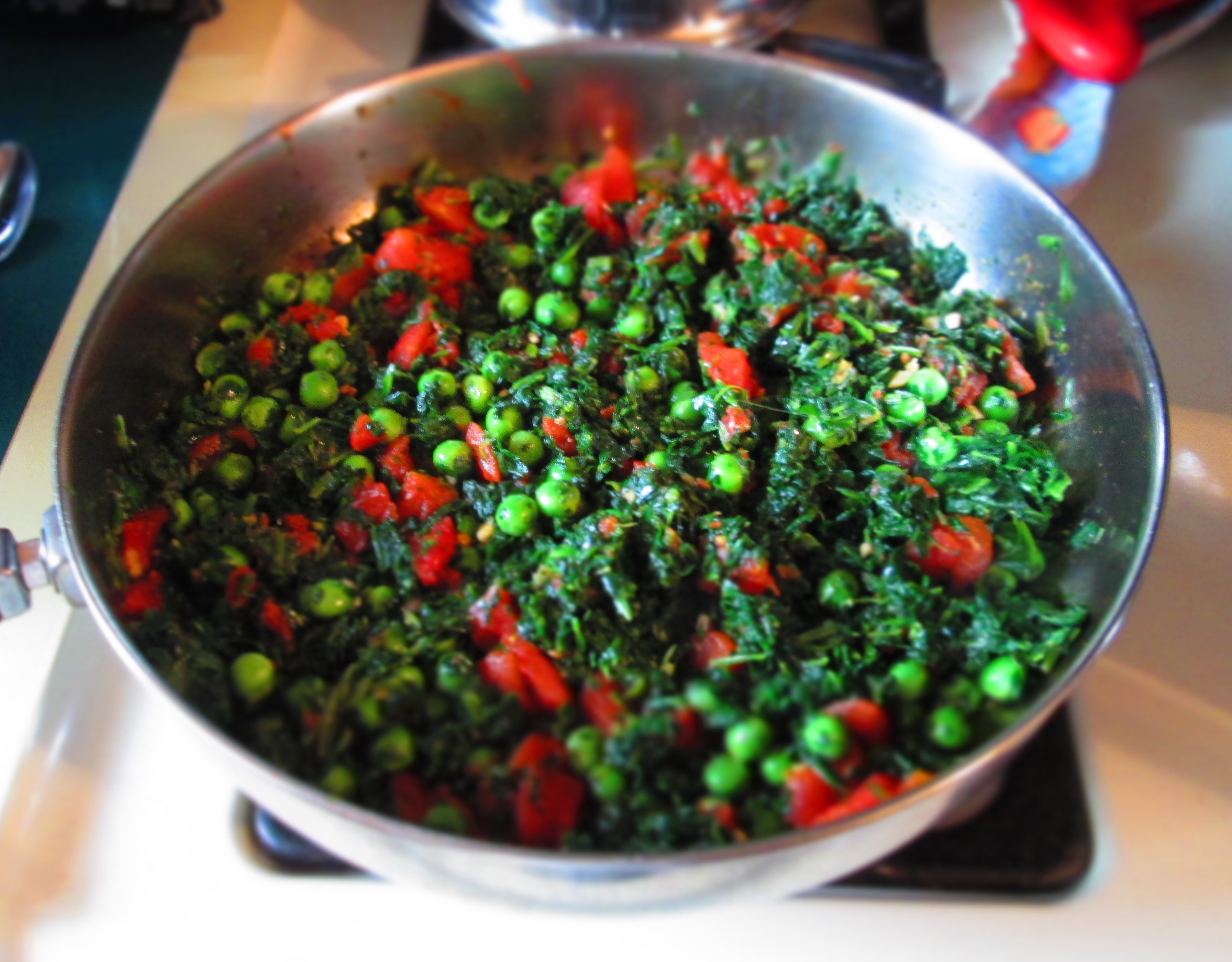
Stir in the spinach, black-eyed peas, and peas and sauté another 3 minutes.

IMG_2504

Add the wheat berries and peas, mix and continue cooking until heated through. Season with salt and pepper; adjust to your taste.

IMG_2505

Transfer to a serving bowl; drizzle walnut oil over the top.

Makes 6 servings.IMG_2507


1 Comment

Chocolate Cake with Avocado Mousse

This week, I wanted to offer my recipe for Chocolate Cake with Avocado Mousse. It received raves when I made it and I’m finally getting around to posting it.

The first ingredients is a chocolate sheet cake. You can certainly make it from scratch, but if you’re pressed for time, you can go and buy one from the store.

Rich chocolate cake paired with a zesty avocado mousse makes a luscious sweet-tart flavor combo. The white chocolate chips give it a gratifying chewy element without competing with the cake. Besides, with antioxidants in chocolate and omega-3 fatty acids in avocado, who can argue that this is a decadent dessert with health benefits? And it’s vegan!

Chocolate Cake with Avocado Mousse

1 chocolate sheet cake (9×13”)
2 Haas avocados
1/4 cup lime juice
1 teaspoon vanilla extract
1 tablespoon honey
1 tablespoon citrus zest (orange, lemon, lime or a combo)
1 teaspoon maple crystals
1/3 cup white chocolate chips

1. Trim off about 1 inch from each end of the cake. Split the cake in half, lift off the top half, and set aside.

DSCF0016

2. Combine avocados, lime juice, vanilla, honey, citrus zest, and maple crystals in a food processor and process until completely smooth. (Stop the machine and push down the mixture with a rubber spatula, if necessary.)

3. Spread the avocado mixture evenly over the bottom half of the cake. Sprinkle the chips evenly over the avocado. Replace the top half of the cake.

DSCF0022

4. Cut into 12 squares, or use a 2 1/2-inch ring mold to cut out circles. Serve as is or sprinkle powdered sugar over the top.

Makes 12.

DSCF0026DSCF0027


1 Comment

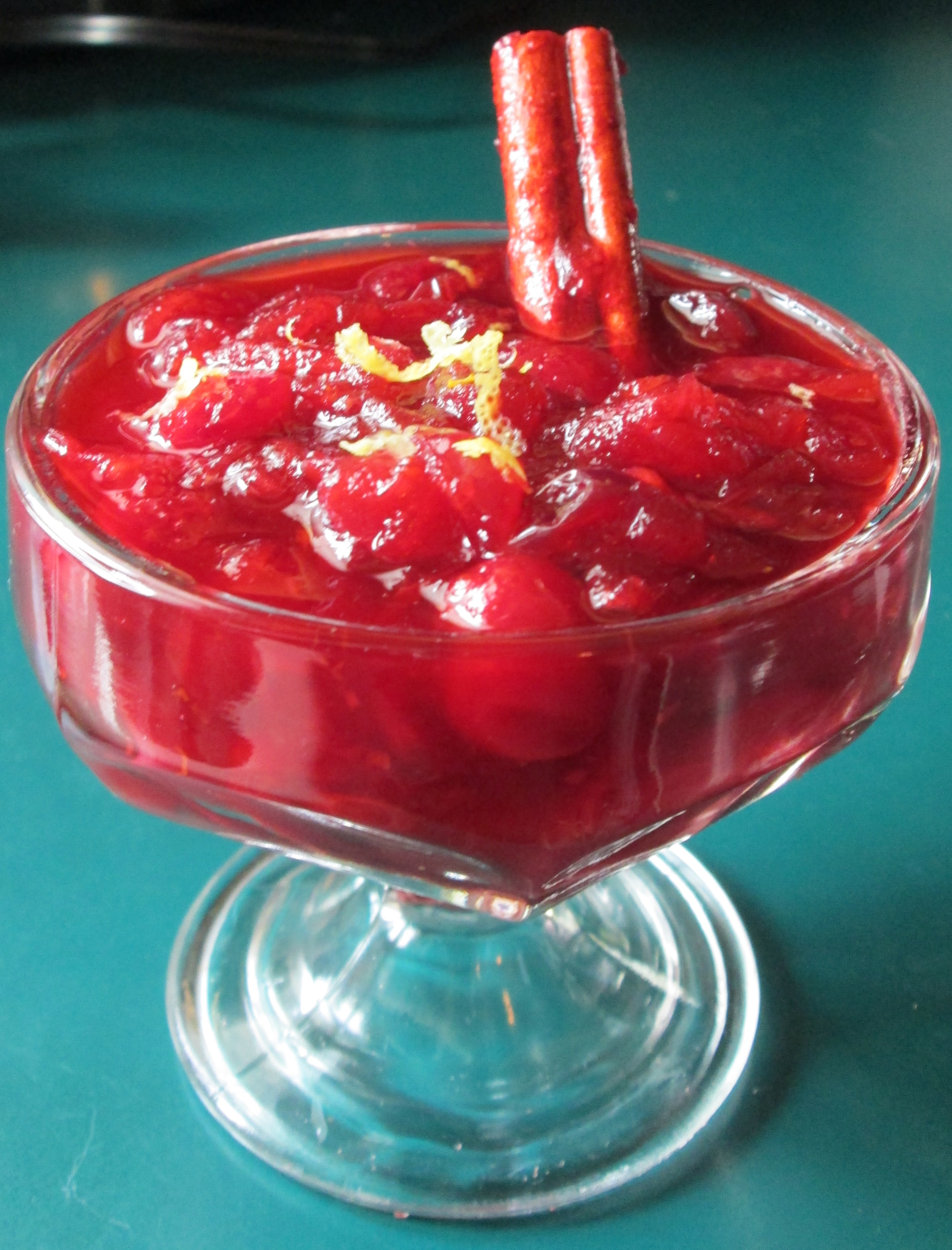
Cranberry Sauce with a Sorghum Twist

cranberry enhancedWell, here we are again, preparing for that iconic American holiday, the Most Important Meal of the Year: Thanksgiving.

Every year, I make fresh cranberry sauce. Some people prefer the canned variety to freshly made, but when I see that gelled log with can rings around it, I can’t help but feel that I can do better. In fact, anyone can. Fresh cranberry sauce is extremely simple, and the end product is so much better than the canned log. (Although, I know some of you feel like it’s truly not a traditional Thanksgiving without that log with the rings around it, so I say, whatever floats your boat.)

Cranberries are a tart fruit and cranberry sauce requires plenty of sugar to make it palatable enough for most people. But I always cringe a little when I start dumping the amount of sugar that most recipes call for into my pot of cranberries. So, this year, I decided to try some of the sorghum molasses that I brought up from a trip to the South.

The recipe I’ve always used calls for 2 cups granulated sugar. That’s a lot of sugar. So, I started with 1 cup brown sugar. Brown sugar is a nicer product to use than granulated sugar because it lend the sauce a delicate molasses flavor and it thickens it up better. My sauce was still a little too tart, but I really didn’t want to add any more sugar, so I reached for the sorghum molasses. I started with 2 tablespoons and I liked the results. However, I knew that most people would want it sweeter (I don’t have a big sweet tooth), so I added 2 more tablespoons. It worked wonderfully.

Sorghum molasses is a Southern staple, but it can be found in specialty stores elsewhere in the U.S. If you can’t find it, substitute brown rice syrup, barley malt syrup, or honey (the honey will be sweeter than the others).

If you’re looking for that cloying candy-sweet taste of canned cranberry sauce, this isn’t it. But if you want something that is a little more complex, texturally pleasing, and not as loaded with refined sugar, give this a try.

IMG_0022

Cranberry Sauce with a Sorghum Twist

Makes 3 cups

1 16-oz. package fresh cranberries
1 cup loosely packed brown sugar
¼ cup sorghum molasses
1 teaspoon grated orange zest
1 teaspoon grated lemon zest
1 cinnamon stick
¼ teaspoon nutmeg or ground cloves
1 whole star anise
Tiny pinch sea salt

Combine all ingredients with 1 ½ cups water in a 2-quart pot. Bring to a boil; lower the heat to low and simmer until cranberries start to pop. Continue simmering and stirring for about 5 minutes, smashing the cranberries along the sides of the pot (you can leave some whole). Taste and adjust sweetener level to your taste.

Remove from heat and let cool. Transfer to a jar or bowl and refrigerate until needed. Remove the cinnamon stick and star anise before serving or use them for garnish.

Variation: Add a tablespoon of raspberry or cherry liqueur or ½ teaspoon vanilla extract.


Leave a comment

GF Pumpkin-Coconut-Walnut Cupcakes

’Tis the season for pumpkin.

As we enter November, everyone loves finding new recipes that use pumpkin. And when the recipes are gluten-free, that makes a whole lotta people happy.

A friend of mine asked me to make cupcakes to bring to a bridal shower. This friend has health issues that necessitate her to be on a gluten-free diet and she asked that I make the cupcakes gluten free, and she specifically requested pumpkin. I came up with this recipe, and they were a hit.

I took the basic combination of ingredients for pumpkin cake and altered the recipe to make it less sweet than most cakes and, of course, gluten free. Actually, I should probably say “low gluten” instead because I substituted all-purpose flour with spelt flour. Spelt is a low-gluten wheat variant, so most people with wheat sensitivities can tolerate spelt, but those with full-blown Celiac Disease usually cannot.

I also wanted to make it lower in sugar, so I cut back on the amount called for in most pumpkin cake recipes. And because I substituted brown sugar for white, it made it a little fluffier and more flavorful.

Now here’s where I had to make a decision between a whole-food/holistic diet versus a weight loss diet. In the first category lies the basic tenet that you should eat foods in their whole forms—i.e., all its edible parts. In the case of dairy, that means with full fat. When fat is removed from dairy, the enzymes which make it digestible are also removed, making it a bigger issue for lactose-intolerant people than full-fat dairy would be.

BUT everyone is concerned about their weight, cholesterol, etc. My friend was concerned about bringing the cupcakes to the shower in the first place because the bride is overweight. She asked me if I could make them even lower in sugar than the samples I brought her. I told her that if I took out any more sugar, they would taste like nothing. Then she asked me if I could keep the frosting off, and I explained that cupcakes without frosting are muffins and hardly party fare. At first, I offered to try and experiment with alternate sweeteners (honey, applesauce, maple syrup, maple crystals) but I was faced with a time crunch. Experimenting like that—substituting ingredients that are vastly different than the original—often takes multiple tries to get right. I didn’t have the luxury of time in which to do that.

So, to compensate, I made the decision to use low-fat cream cheese for the frosting. My teachers at the Natural Gourmet Institute would tsk-tsk me, I’m sure. But I think they would also agree that we have to compromise sometimes—they themselves taught me that we can’t be “good” one hundred percent of the time. All we can do is do our best as often as possible. So, here’s my recipe for a gluten-free, low-sugar, low-fat (not vegan) but really delicous (no, really!) Pumpkin-Coconut-Walnut Cupcakes with cream cheese frosting.

IMAG0280

Pumpkin-Coconut-Walnut Cupcakes

Yield: 20 cupcakes

3 cups spelt flour
2 teaspoons baking powder
1 teaspoon baking soda
1 teaspoon cinnamon
½ teaspoon nutmeg
¼ teaspoon salt
1 cup unsalted butter, softened
1 to 2 cups brown sugar (depending on how sweet you want it)
4 eggs
1 (15-oz. can) pumpkin
2 teaspoons vanilla or almond extract
½ cup desiccated (unsweetened) coconut
¾ cup chopped walnuts

Frosting

¾ cup unsalted butter, room temperature
2 (8-oz.) packages low-fat cream cheese, room temperature
4 cups powdered sugar, sifted
2 teaspoons vanilla extract

1. Heat oven to 350 degrees. Place 20 paper muffin cups into muffin tins.

2. In a medium bowl, whisk together the flour, baking powder, baking soda, cinnamon, nutmeg, and salt.

3. In a stand mixer, beat the butter until smooth. Add the sugar and beat until light and fluffy, about 3 or 4 minutes. Add the eggs, one at a time, beating in each one before adding the next. Add the pumpkin and vanilla and beat until well blended. (The mixture will look curdled but that’s okay.)

4. At low speed, add the flour mixture, a little at a time, to the pumpkin mixture. Increase speed and beat until well blended. Fold in the coconut and walnuts.

5. Place about ¼ cup of the batter into each paper cup. (Pour water into any empty muffin wells, about ¼ of the way up, to prevent them from scorching.)

6. Bake for about 30 minutes, or until a toothpick inserted into the center comes out clean. Remove from oven and let cool for 5 minutes, then transfer them to racks and let cool completely. Meanwhile make the frosting.

7. Beat the butter until white and fluffy. Beat in the cream cheese and then the vanilla. Begin adding the sugar a little at a time; alternate beating at low speed (when first adding the sugar) and high speed (to blend it in well). Stop adding when you’ve reached the consistency you want. Continue beating until completely smooth.

8. When cupcakes have cooled, spread or pipe on the frosting. Decorate as desired.


2 Comments

September is Better Breakfast Month

How many times have you heard that breakfast is the most important meal of the day? A million times since you were a kid, right?

I’ve never been much of a breakfast person. I can’t really eat first thing in the morning. My stomach just will not accept food when I first get up. It amazes me to know that some people roll out of bed, shuffle into their kitchens, and start eating. My routine is, I go to work, have a cup of coffee, and right around 10:30 or so, I’m ready to eat a little something. I know that’s not a great way to start my day, but it’s the best I can do.

IMG_0158

Multigrain Morning Porridge

What I do try to do, however, is to make it a good, energy-inducing breakfast: oatmeal with walnuts or pecans; yogurt with fruit and seeds (sunflower, pumpkin, chia, and flax); whole grain bread with some kind of nut butter. Lately, I’ve been doing a lot of green smoothies. The point is not only to curb hunger but to give your body and brain the proper fuel to do what it needs to do throughout the day. It appalls me to see people eating doughnuts, crullers, sugary muffins, and soda for breakfast. (I think muffins are good if they have nutritional components to them, like high-protein flours, nuts, and natural sugar alternatives.)

Breakfast porridges are a great choice and can be made with any grain you like, such as steel-cut oats, quinoa, millet, and barley. Below is my recipe for multi-grain porridge. I had the original recipe for this porridge in my collection for a while but never gave it a try. Not because it didn’t appeal to me (otherwise, I wouldn’t have clipped it), but because I so rarely make homemade porridge for breakfast. During the week, I never eat breakfast at home—I prepare whatever it is I’m going to have the night before and take it to work. On the weekends, I still don’t have time and usually just grab leftovers from the fridge. But whenever I can, I’ll make some kind of porridge. IMG_0151

I made some modifications to the recipe, based on what I had on hand and my personal preferences. The good thing is that this stays well in the fridge for a few days, so I can make a big batch and just reheat it.

Clockwise from upper right: Wheat berries, grits, amaranth, oats.

Mulitgrain Morning Porridge

Adapted from “Multigrain Breakfast Porridge” by
Bruce Weinstein and Mark Scarbrough, Cooking Light, Oct. 2007

½ cup wheat berries, rinsed
¾ teaspoon sea salt
1/3 cup steel-cut oats
3 tablespoons regular grits
¼ cup amaranth
¾ cup coconut or almond milk
¼ maple syrup
¼ cup dried blueberries or other dried fruit
½ cup chopped walnuts or other nuts

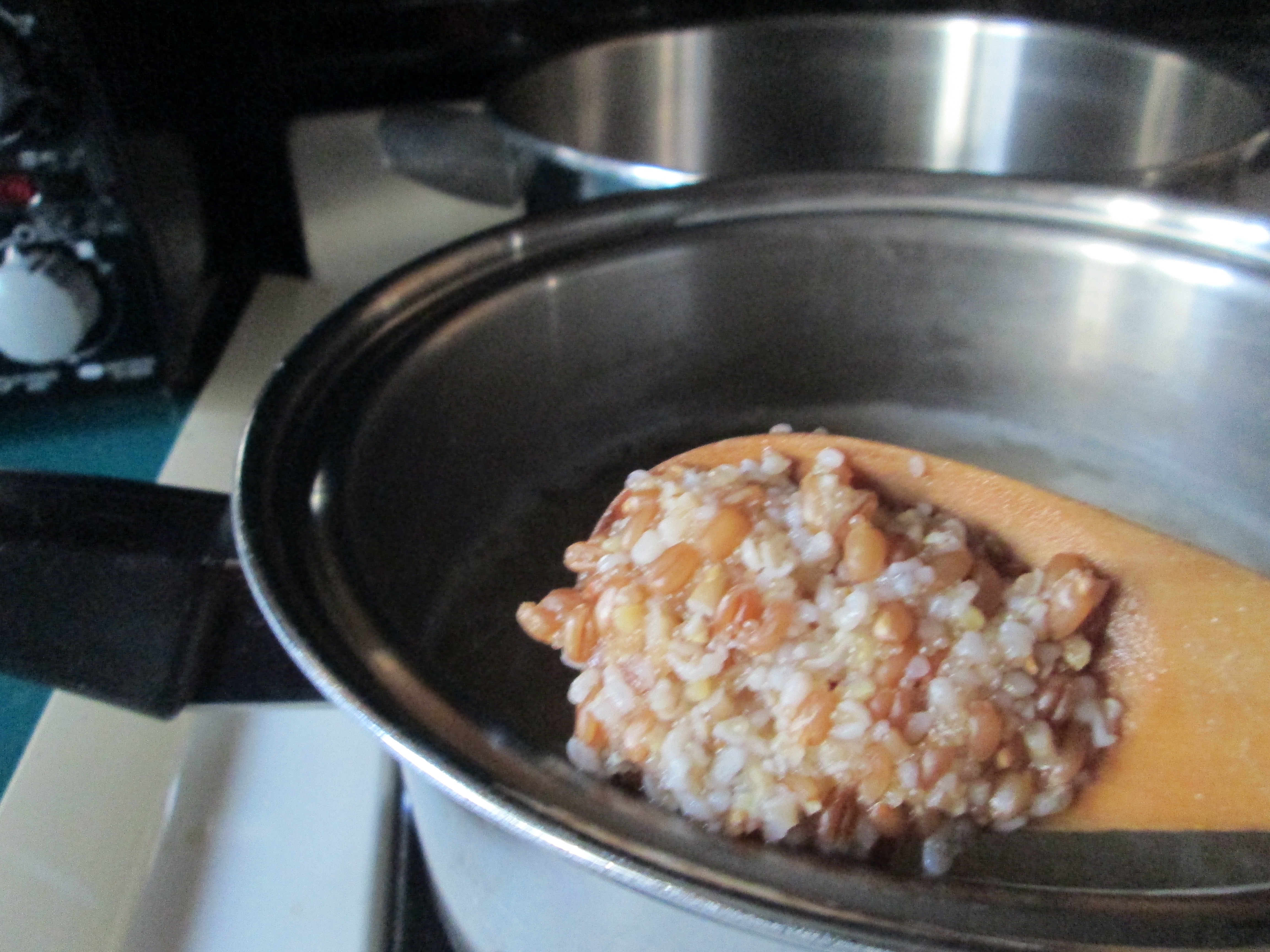
Bring 5 cups water to a boil. Add the wheat berries and salt; reduce the heat to medium-low and simmer, partially covered until almost tender, 20 to 30 minutes.IMG_0153

Add the oats, grits, and amaranth and stir. Continue simmering until all grains are tender, about 15 minutes, stirring frequently. Stir in coconut milk, maple syrup, and fruit and cook another 2 minutes, stirring frequently. Stir in nuts. Serve hot.

IMG_0155

This porridge will keep for several days in the refrigerator. To reheat, stir in a little more coconut milk or water until it reaches the desired consistency. Heat over medium-low heat or in the microwave for 1 to 2 minutes.

Makes 4 servings.