Miz Chef

Cooking Up a Healthy Life


1 Comment

Cranberry Sauce with a Sorghum Twist

cranberry enhancedWell, here we are again, preparing for that iconic American holiday, the Most Important Meal of the Year: Thanksgiving.

Every year, I make fresh cranberry sauce. Some people prefer the canned variety to freshly made, but when I see that gelled log with can rings around it, I can’t help but feel that I can do better. In fact, anyone can. Fresh cranberry sauce is extremely simple, and the end product is so much better than the canned log. (Although, I know some of you feel like it’s truly not a traditional Thanksgiving without that log with the rings around it, so I say, whatever floats your boat.)

Cranberries are a tart fruit and cranberry sauce requires plenty of sugar to make it palatable enough for most people. But I always cringe a little when I start dumping the amount of sugar that most recipes call for into my pot of cranberries. So, this year, I decided to try some of the sorghum molasses that I brought up from a trip to the South.

The recipe I’ve always used calls for 2 cups granulated sugar. That’s a lot of sugar. So, I started with 1 cup brown sugar. Brown sugar is a nicer product to use than granulated sugar because it lend the sauce a delicate molasses flavor and it thickens it up better. My sauce was still a little too tart, but I really didn’t want to add any more sugar, so I reached for the sorghum molasses. I started with 2 tablespoons and I liked the results. However, I knew that most people would want it sweeter (I don’t have a big sweet tooth), so I added 2 more tablespoons. It worked wonderfully.

Sorghum molasses is a Southern staple, but it can be found in specialty stores elsewhere in the U.S. If you can’t find it, substitute brown rice syrup, barley malt syrup, or honey (the honey will be sweeter than the others).

If you’re looking for that cloying candy-sweet taste of canned cranberry sauce, this isn’t it. But if you want something that is a little more complex, texturally pleasing, and not as loaded with refined sugar, give this a try.
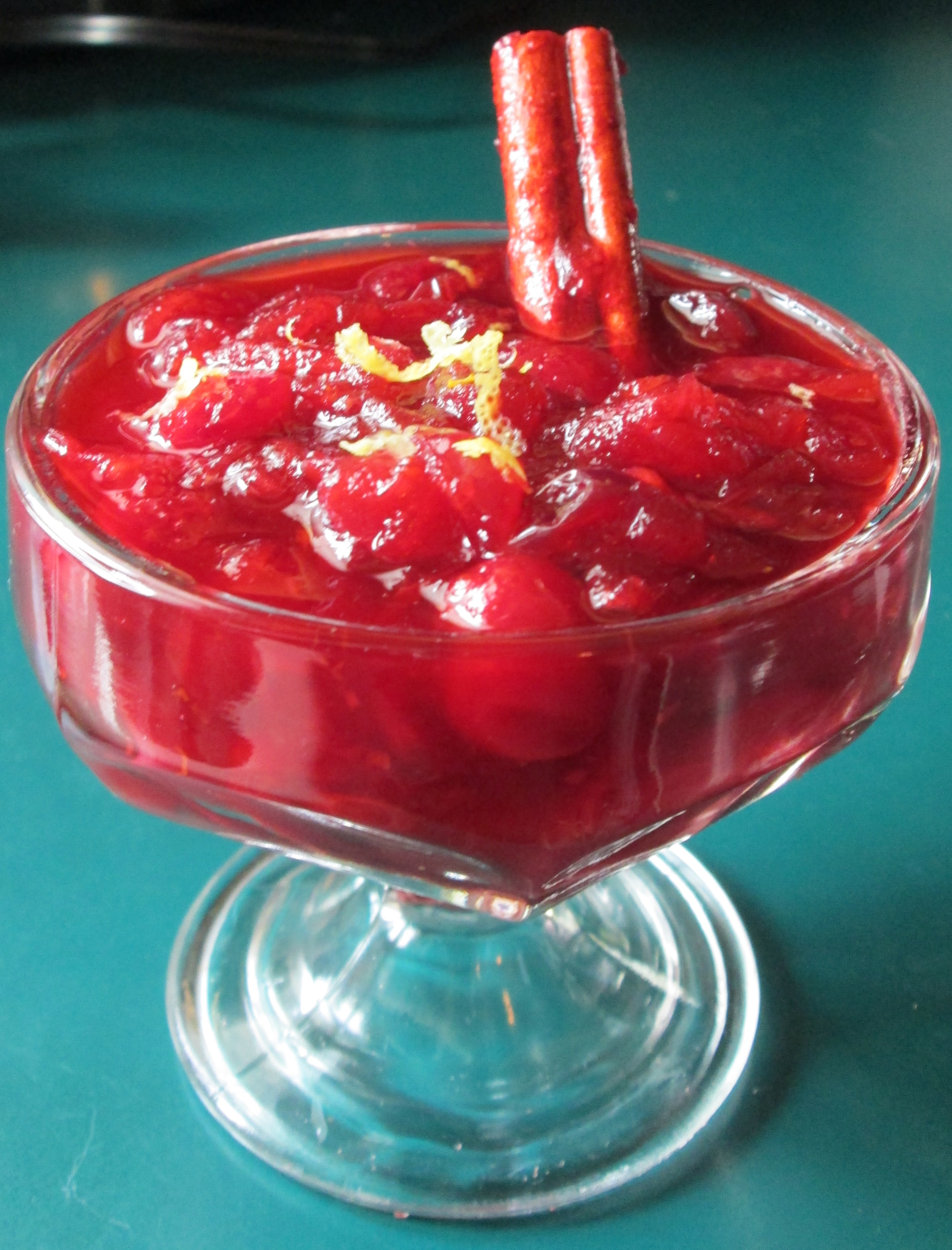
IMG_0022

Cranberry Sauce with a Sorghum Twist

Makes 3 cups

1 16-oz. package fresh cranberries
1 cup loosely packed brown sugar
¼ cup sorghum molasses
1 teaspoon grated orange zest
1 teaspoon grated lemon zest
1 cinnamon stick
¼ teaspoon nutmeg or ground cloves
1 whole star anise
Tiny pinch sea salt

Combine all ingredients with 1 ½ cups water in a 2-quart pot. Bring to a boil; lower the heat to low and simmer until cranberries start to pop. Continue simmering and stirring for about 5 minutes, smashing the cranberries along the sides of the pot (you can leave some whole). Taste and adjust sweetener level to your taste.

Remove from heat and let cool. Transfer to a jar or bowl and refrigerate until needed. Remove the cinnamon stick and star anise before serving or use them for garnish.

Variation: Add a tablespoon of raspberry or cherry liqueur or ½ teaspoon vanilla extract.

Leave a comment

Beet-Apple-Chia Salad

Laugh if you will, but chia seeds are the new superfood. Well, not so new, since they’ve been around since ancient times.

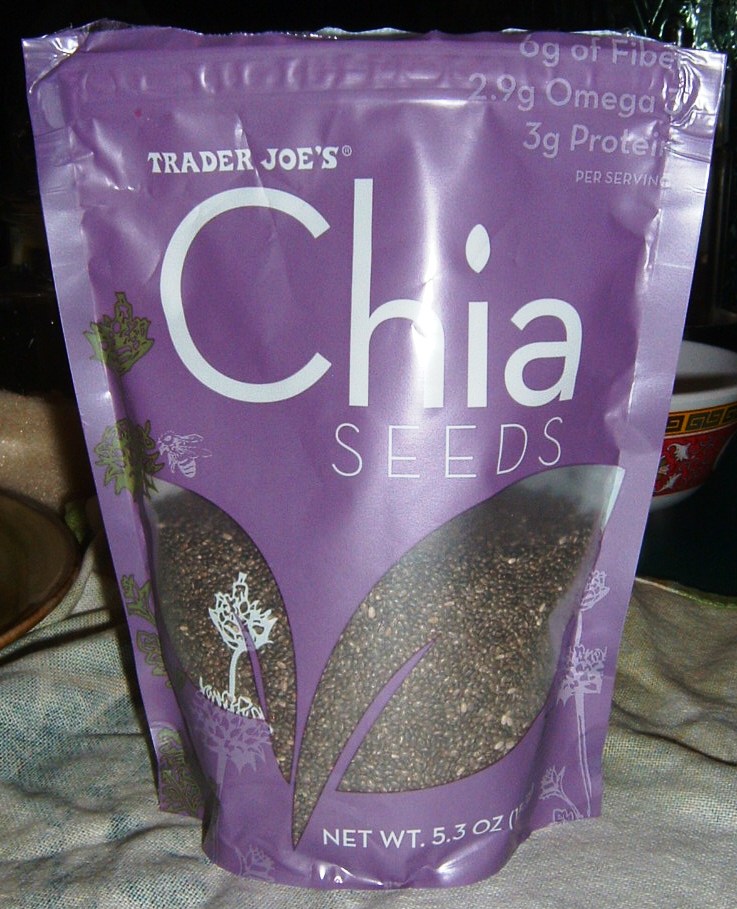
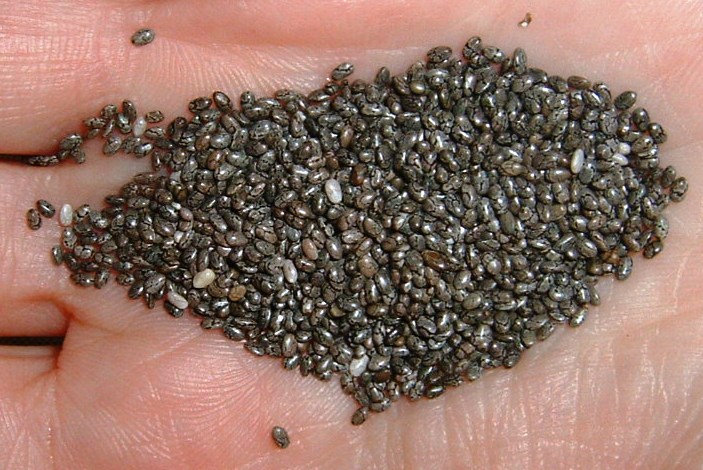
Chia Seeds

Chia Seeds

Yes, I’m talking about the same chia seeds that get watered on a head or little kitties and grows into a little mini landscape. Those seeds contain antioxidants, essential minerals, such as phosphorus, manganese, calcium, potassium, more iron than spinach, and more omega-3 fatty acids than salmon.  (Don’t use the ones that come in the Chia Head packages for consumption, though.)

Like quinoa, chia seeds are one of the few plant-based sources of complete protein, and have been used for hundreds of years for sustained energy. They were once a staple of Native American diets of both North and South America. In fact, I’ve read that “chia” is a Mayan word for “strength.”

Chia seeds purportedly increase strength and energy, helps retain hydration, and aids in weight loss. It’s great for diabetics because it lowers blood sugar levels. It’s also been said that chia seeds help in relieving thyroid conditions, IBS, acid reflux, hypoglycemia, and even Celiac disease.

You can use chia seeds in just about anything you would use flax seeds in: salad dressings, smoothies, yogurt, or just sprinkled on top of any dish. If you’re looking to replace eggs in baked goods, grind chia (or flax) seeds and use that in place of the eggs. The quantity depends on how many eggs are called for in the recipe, but here’s a general formula:

To replace 1 egg:
1 tablespoon chia or flax seeds—grind in a spice grinder
Mix with 3 tablespoons water

Note that products made with seeds instead of eggs will have a chewier consistency, so be judicious about what products you use them in.DSCF0002

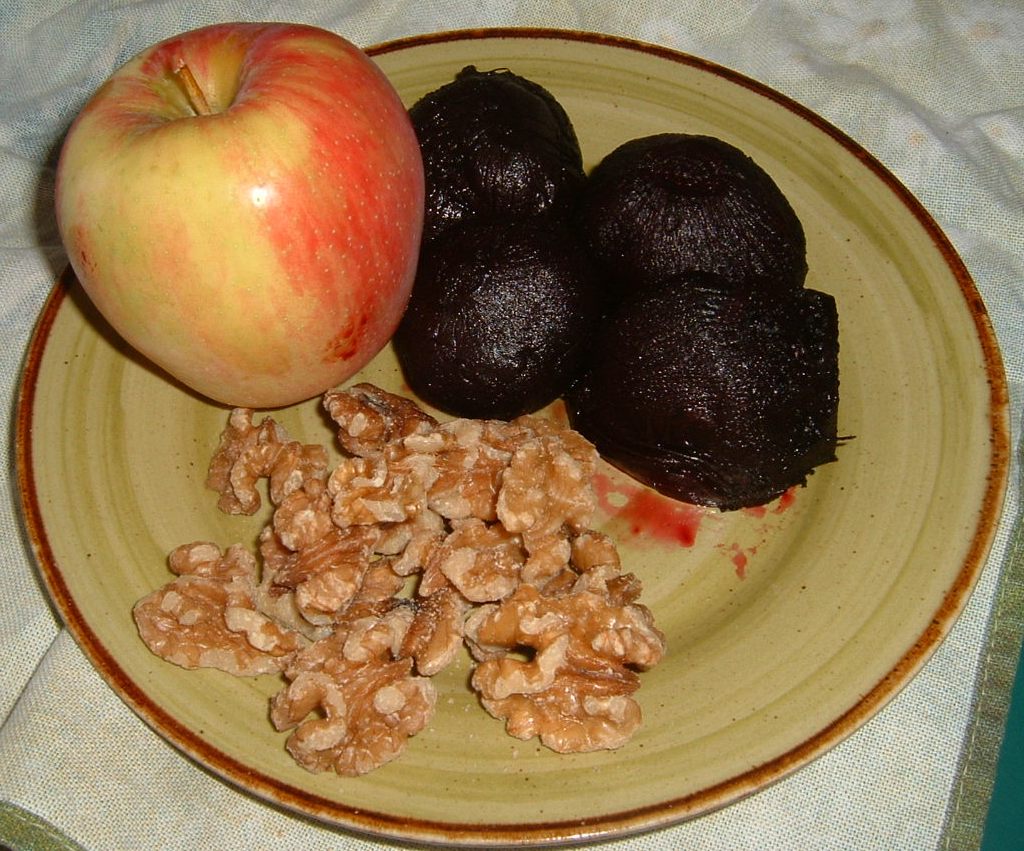
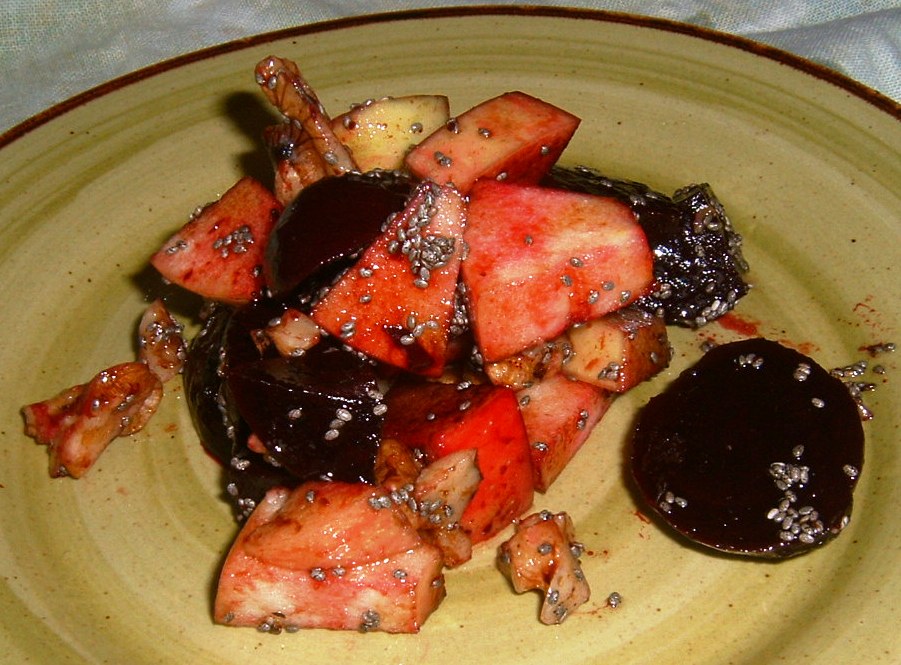
This is my recipe for Beet-Apple-Chia Salad, which I like to have for lunch. Between the walnuts and chia seeds, there’s enough protein in here to get you through the afternoon. It makes 2 portions if you’re making it to serve alongside something else. But for lunch, I eat the whole enchilada.

Beet-Apple-Chia Salad

4 small beets, roasted or boiled, peeled
1 tart apple, cored but not peeled
1/3 cup coarsely chopped walnuts
1/2 tablespoon chia seeds*
1 tablespoon extra-virgin olive oil
1 tablespoon balsamic vinegar
Salt and pepper to taste

Cut the beets and apples into bite-sized pieces. Combine them in a bowl, along with the walnuts, chia seeds, oil, and vinegar. Mix well. Season with salt and pepper, if desired.

Makes 2 servings.

DSCF0007

*Chia seeds can be purchased in natural/health food stores, but may also be found in larger supermarkets with an organic/natural food selection. I found my bag at Trader Joe’s.DSCF0003


Leave a comment

GF Pumpkin-Coconut-Walnut Cupcakes

’Tis the season for pumpkin.

As we enter November, everyone loves finding new recipes that use pumpkin. And when the recipes are gluten-free, that makes a whole lotta people happy.

A friend of mine asked me to make cupcakes to bring to a bridal shower. This friend has health issues that necessitate her to be on a gluten-free diet and she asked that I make the cupcakes gluten free, and she specifically requested pumpkin. I came up with this recipe, and they were a hit.

I took the basic combination of ingredients for pumpkin cake and altered the recipe to make it less sweet than most cakes and, of course, gluten free. Actually, I should probably say “low gluten” instead because I substituted all-purpose flour with spelt flour. Spelt is a low-gluten wheat variant, so most people with wheat sensitivities can tolerate spelt, but those with full-blown Celiac Disease usually cannot.

I also wanted to make it lower in sugar, so I cut back on the amount called for in most pumpkin cake recipes. And because I substituted brown sugar for white, it made it a little fluffier and more flavorful.

Now here’s where I had to make a decision between a whole-food/holistic diet versus a weight loss diet. In the first category lies the basic tenet that you should eat foods in their whole forms—i.e., all its edible parts. In the case of dairy, that means with full fat. When fat is removed from dairy, the enzymes which make it digestible are also removed, making it a bigger issue for lactose-intolerant people than full-fat dairy would be.

BUT everyone is concerned about their weight, cholesterol, etc. My friend was concerned about bringing the cupcakes to the shower in the first place because the bride is overweight. She asked me if I could make them even lower in sugar than the samples I brought her. I told her that if I took out any more sugar, they would taste like nothing. Then she asked me if I could keep the frosting off, and I explained that cupcakes without frosting are muffins and hardly party fare. At first, I offered to try and experiment with alternate sweeteners (honey, applesauce, maple syrup, maple crystals) but I was faced with a time crunch. Experimenting like that—substituting ingredients that are vastly different than the original—often takes multiple tries to get right. I didn’t have the luxury of time in which to do that.

So, to compensate, I made the decision to use low-fat cream cheese for the frosting. My teachers at the Natural Gourmet Institute would tsk-tsk me, I’m sure. But I think they would also agree that we have to compromise sometimes—they themselves taught me that we can’t be “good” one hundred percent of the time. All we can do is do our best as often as possible. So, here’s my recipe for a gluten-free, low-sugar, low-fat (not vegan) but really delicous (no, really!) Pumpkin-Coconut-Walnut Cupcakes with cream cheese frosting.

IMAG0280

Pumpkin-Coconut-Walnut Cupcakes

Yield: 20 cupcakes

3 cups spelt flour
2 teaspoons baking powder
1 teaspoon baking soda
1 teaspoon cinnamon
½ teaspoon nutmeg
¼ teaspoon salt
1 cup unsalted butter, softened
1 to 2 cups brown sugar (depending on how sweet you want it)
4 eggs
1 (15-oz. can) pumpkin
2 teaspoons vanilla or almond extract
½ cup desiccated (unsweetened) coconut
¾ cup chopped walnuts

Frosting

¾ cup unsalted butter, room temperature
2 (8-oz.) packages low-fat cream cheese, room temperature
4 cups powdered sugar, sifted
2 teaspoons vanilla extract

1. Heat oven to 350 degrees. Place 20 paper muffin cups into muffin tins.

2. In a medium bowl, whisk together the flour, baking powder, baking soda, cinnamon, nutmeg, and salt.

3. In a stand mixer, beat the butter until smooth. Add the sugar and beat until light and fluffy, about 3 or 4 minutes. Add the eggs, one at a time, beating in each one before adding the next. Add the pumpkin and vanilla and beat until well blended. (The mixture will look curdled but that’s okay.)

4. At low speed, add the flour mixture, a little at a time, to the pumpkin mixture. Increase speed and beat until well blended. Fold in the coconut and walnuts.

5. Place about ¼ cup of the batter into each paper cup. (Pour water into any empty muffin wells, about ¼ of the way up, to prevent them from scorching.)

6. Bake for about 30 minutes, or until a toothpick inserted into the center comes out clean. Remove from oven and let cool for 5 minutes, then transfer them to racks and let cool completely. Meanwhile make the frosting.

7. Beat the butter until white and fluffy. Beat in the cream cheese and then the vanilla. Begin adding the sugar a little at a time; alternate beating at low speed (when first adding the sugar) and high speed (to blend it in well). Stop adding when you’ve reached the consistency you want. Continue beating until completely smooth.

8. When cupcakes have cooled, spread or pipe on the frosting. Decorate as desired.


Leave a comment

Romanesco Cauliflower

I don’t know if you’ve ever seen a romanesco cauliflower, or broccoli, but it’s a gorgeous vegetable. Its shape is what they call “fractal.” Merriam-webster.com defines fractal as “any of various extremely irregular curves or shapes for which any suitably chosen part is similar in shape to a given larger or smaller part when magnified or reduced to the same size.” I’ll just say that it’s amazing. I mean, take a look at it.Romanesco

Also known as broccoflower and Roman cauliflower, romanesco is part of the brassica family, which includes cruciferous vegetables (cauliflower, broccoli, cabbage, bok choy, Brussels sprouts, etc.) and was first seen in Italy around the 16th century. Although its color is closer to broccoli, its texture and flavor is that of cauliflower.

It’s such a visually stunning vegetable that whenever I see it, I can’t pass it up. Nature is a wonderous thing.Romanesco

This is a very simple old Italian recipe that usually uses regular cauliflower, but romanesco is easily substituted.

Pasta with Romanesco Cauliflower and Pignoli

1 small head romanesco cauliflower
1/2 pound whole wheat spaghetti
3 teaspoons kosher salt plus more
2 large garlic cloves, minced
1/4 cup olive oil
1/3 cup pignoli,  toasted
1 teaspoon paprika
Freshly ground black pepper to taste
Extra virgin olive oil (optional)
Grated parmigiano or pecorino romano

Bring a large pot of water to a boil. Add pasta and 3 teaspoons salt; and cook until al dente, about 10 to 12 minutes. Drain well.

Meanwhile, cut up cauliflower into florets. Heat olive oil in a large pan; add garlic and saute for one minute; sprinkle in paprika then immediately add cauliflower. Sauté over medium heat, stirring occasionally, for about 5 minutes. Add 1/4 cup water; cover the pan, lower the heat to medium-low, and cook until tender but firm, about another 5 minutes. Uncover and stir in the pignoli and salt to taste.

When the pasta is cooked, drain well and transfer to a serving bowl. Pour the cauliflower mixture on top and mix. If the pasta seems dry, drizzle some extra virgin olive oil on top and mix. Sprinkle some parmigiano or pecorino over the top and serve hot.

Makes 2 servings.


2 Comments

Meskouta (Moroccan Orange-Almond-Yogurt Cake)

The past few months, I’ve been working on a special project, which led me down the road of Moroccan cuisine and ended up at Meskouta. Meskouta is a traditional cake, usually made with yogurt (although I’ve seen a few recipes that did not use it). This is also known as “butterless cake” because it was created during the French/Spanish colonization in the early part of the 20th century, a period when butter was scarce and expensive.

There are many variations, the most popular of which is an orange version, which also seemed to frequently be the one that did not have yogurt in it. I also found some recipes that used almond flour and others that did not.

In the end, I took the elements that I wanted and created an entirely new version. Here it is.

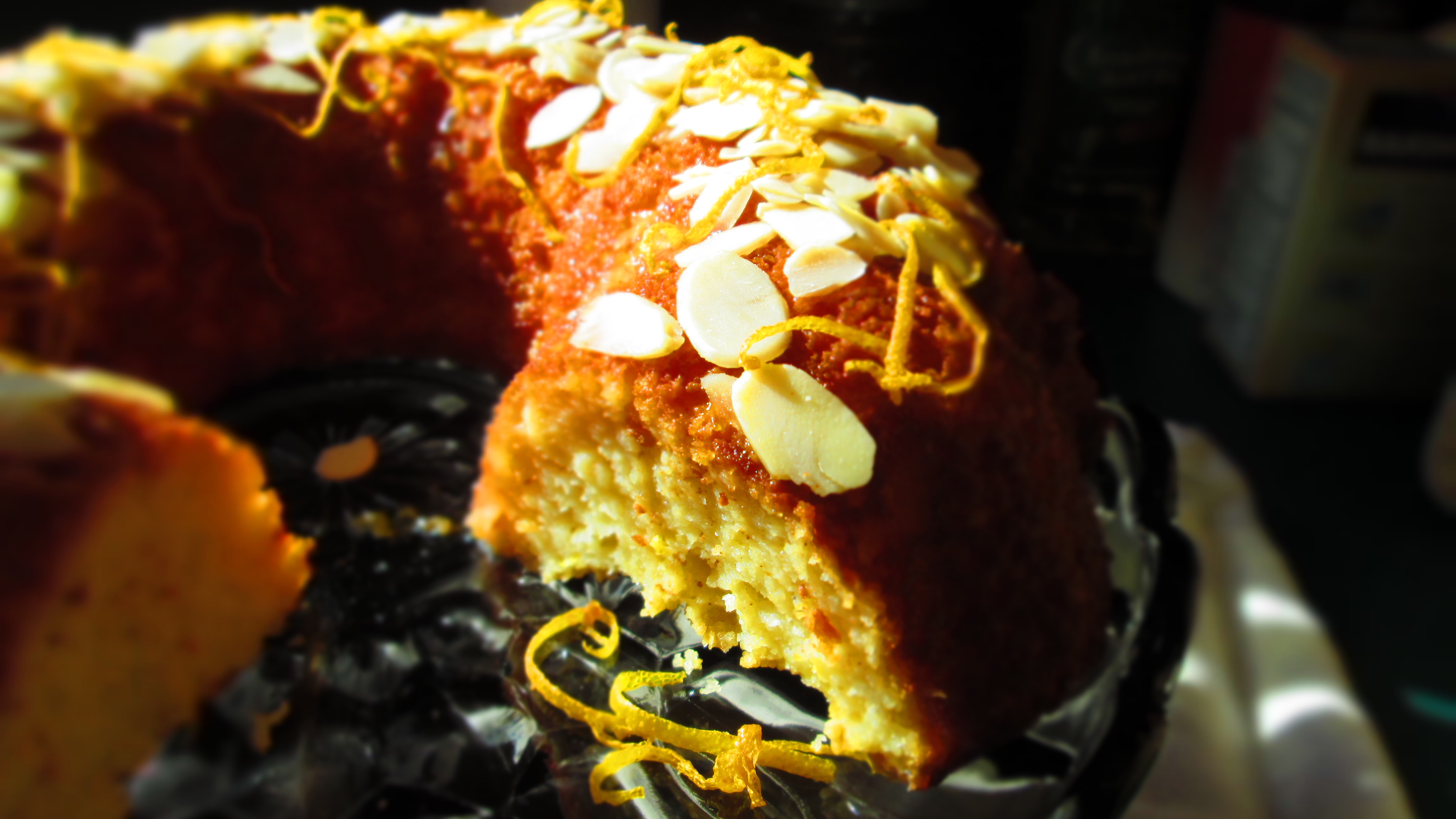
Meskouta (Orange-Almond-Yogurt Cake)

 Makes 8 to 10 servings.

Meskouta

Meskouta

1 cup all-purpose flour
1/3 cup finely ground almonds
2 teaspoons baking powder
¼ teaspoon cardamom
¼ teaspoon salt
2 large eggs
¾ cup sugar
¼ cup olive oil (not extra virgin)
1 cup plain yogurt
¼ cup freshly squeezed orange juice
1/2 teaspoon orange blossom water or orange extract
1 tablespoon orange zest

Orange Syrup:
¼ cup freshly squeezed orange juice
¼ teaspoon cinnamon
2 tablespoons sugar

Garnish:
Orange strips
¼ cup almond slivers

Grease an 8- or 9-inch Bundt pan and set aside. Preheat oven to 350 degrees F.

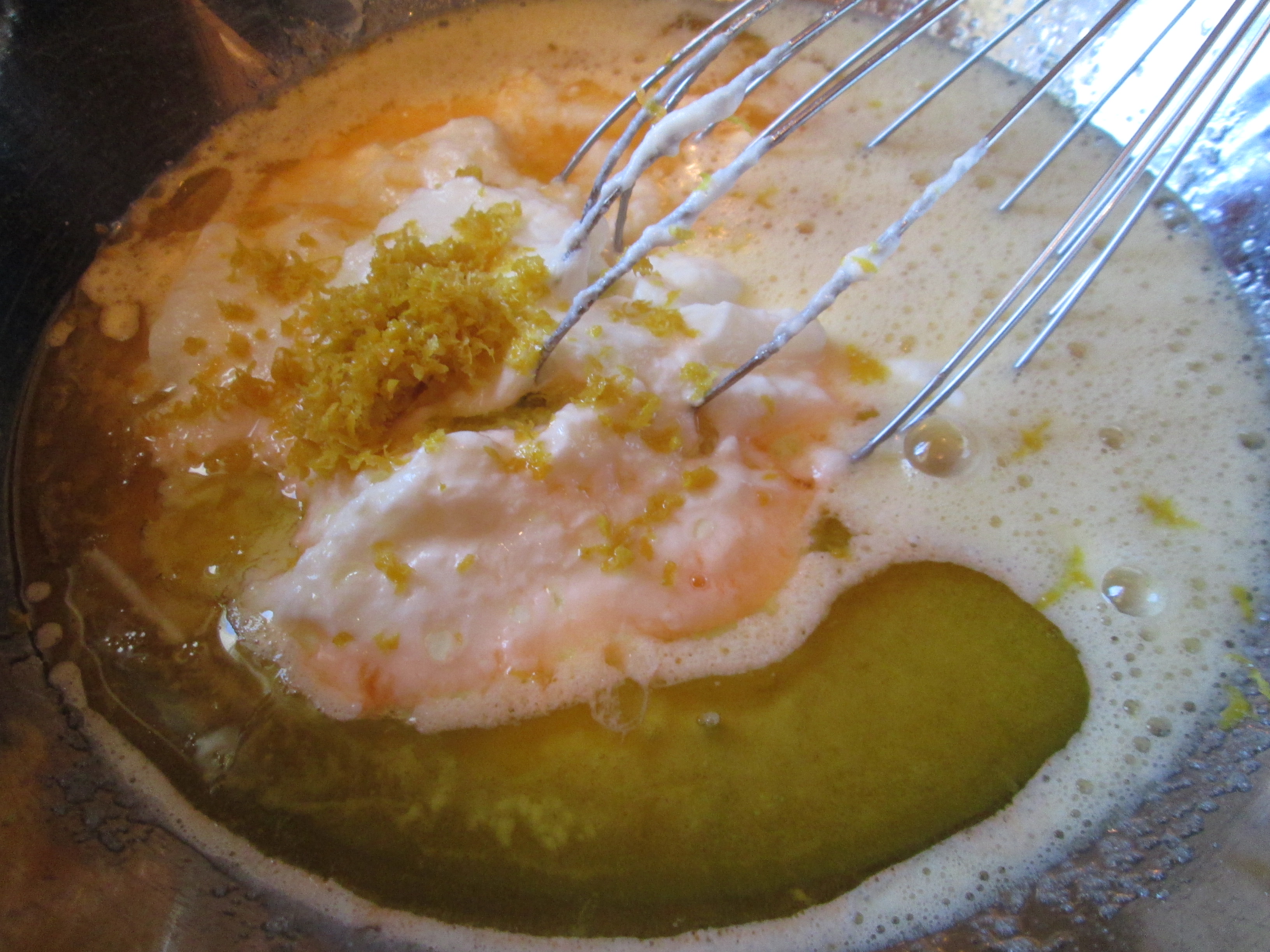
In a medium bowl, whisk together flour, almonds, baking powder, cardamom, and salt. In a large bowl, whisk together eggs and sugar; add oil and yogurt, then add orange juice, blossom water or extract, and zest and blend.

IMG_1166IMG_1167

Add dry ingredients to wet and mix just until fully blended.

IMG_1169

Pour into Bundt pan and bake 45 to 60 minutes. A toothpick inserted into the center should come out clean. Remove from oven and let cool 5 minutes. Invert it onto a cooling rack and let cool completely.

IMG_1170IMG_1172

Meanwhile, make the syrup. Whisk together juice, cinnamon, and sugar in a small bowl.

When cake is cooled, poke holes all over the top with a toothpick or skewer. Pour syrup over the cake, letting it absorb. Sprinkle almond slivers over the top and decorate with orange slivers, if you like.

Refrigerate leftovers.

IMG_1188


2 Comments

Kantola Secret

Okay, that was a very bad play on words. Forgive me. But kantola is a secret, at least to the Western world.

Kantola

Kantola

Kantola, also known as spiny gourd, is a member of the gourd family and is used mainly in India and parts of South Asia. I saw them in my favorite Indian market and was fascinated. I bought a few and looked up how to use them.

Most recipes I found called for slicing and frying them, or, occasionally, boiling them. I decided to fry them for my first experiment, but kept the spices to a minimum, since I wanted to taste their natural flavor. I added a little salt, a bit of crumbled chile flakes, and a dash of turmeric, since that seems to be the spice de rigueur for this vegetable. Some sources said to peel them, while others said not to peel them. I peeled a couple and found it to be tedious because they’re so small. In the end, the skin was not an issue.IMG_1254

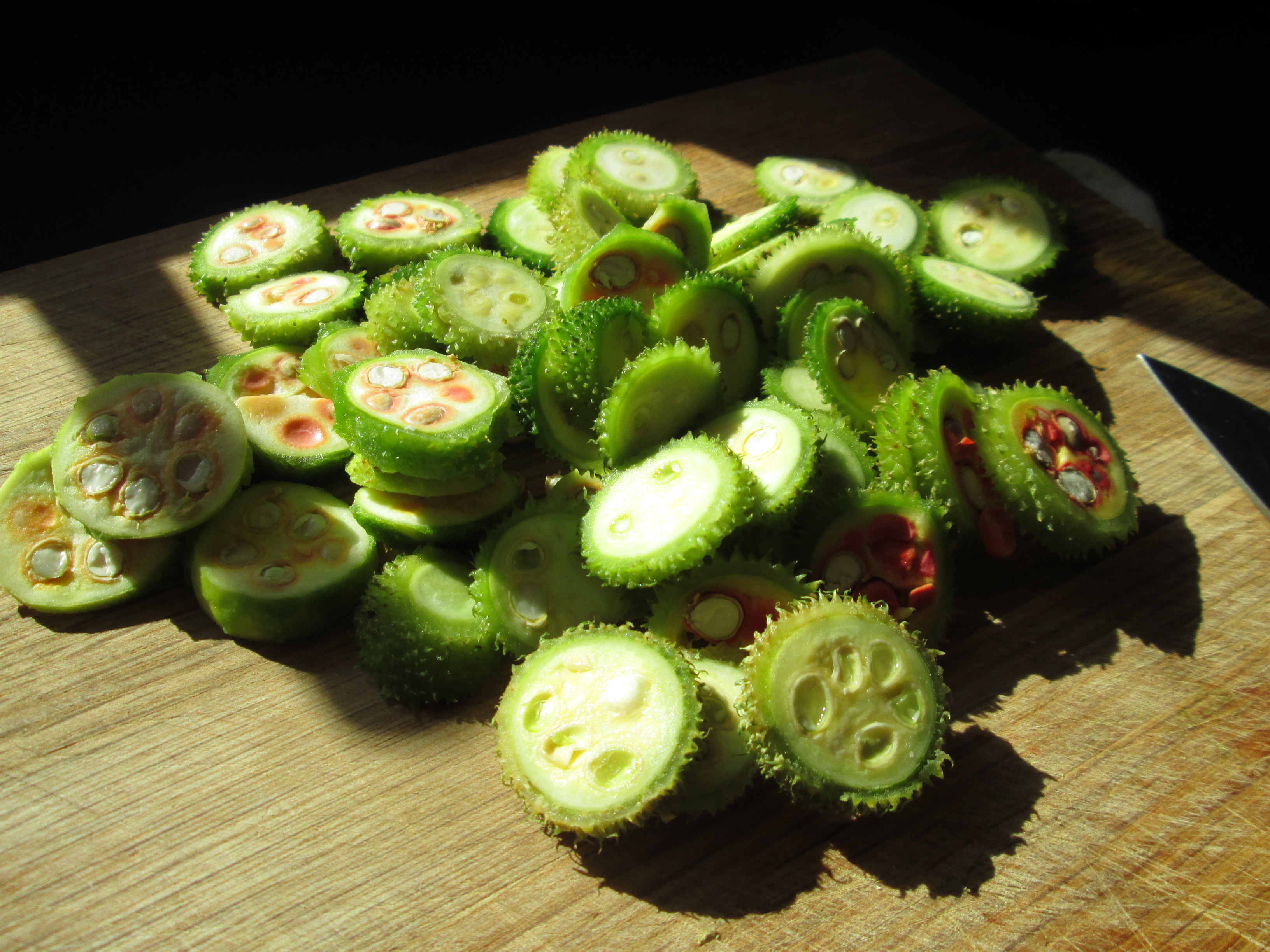
So, I sliced up the kantola and, as you can see, they have seeds very much like squash or cucumber (also part of the gourd family).IMG_1256

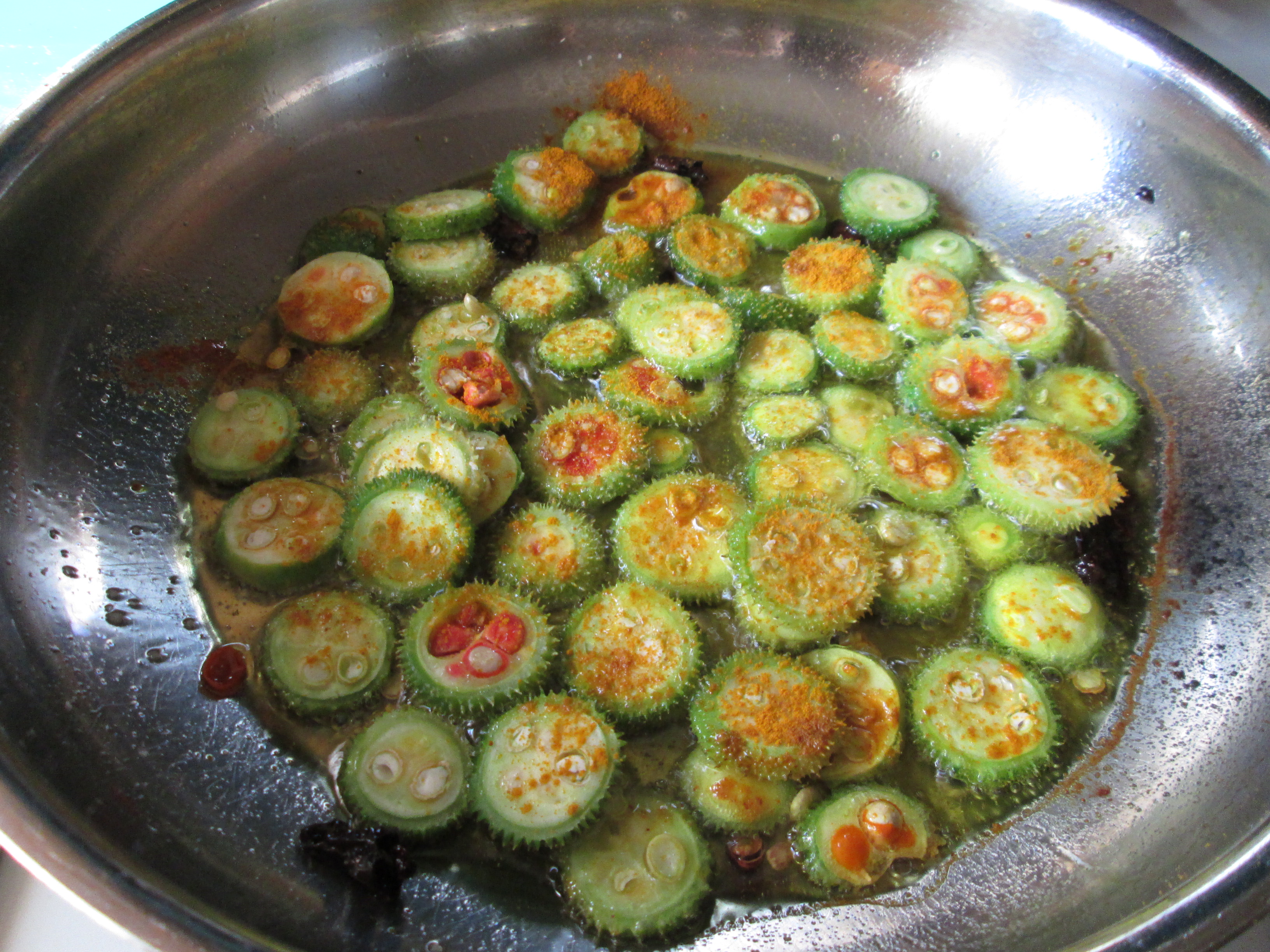
I heated up some oil (I found this extra virgin olive oil-sunflower oil and I wanted to give I a try). I toasted the chile flakes, then added the kantola and, after a minute, the seasonings. Then I transferred them to a paper towel to drain.IMG_1257

And you know what? They tasted like—surprise—fried squash. The flavor was very mild, although a few had a slightly bitter aftertaste, but it wasn’t unpalatable.

IMG_1258

So, that was my timid first adventure with kantola. I’m going to go get some more and just go crazy. Maybe I’ll even mix them with other ingredients!


Leave a comment

Jamaican Black Cake, aka Christmas Cake

As stunned as I am that it’s late September, I have to face the fact that summer is over. With that comes the realization that it’s time to start my Jamaican black cake, which is also called Christmas cake.

Jamaican Black Cake

Jamaican Black Cake

Several years ago, a co-worker, who was from Jamaica, introduced me to black cake and I asked her for a recipe, which I shared on Epicurean.com. It’s a tradition in Jamaica (and other parts of the West Indies) to serve this cake at Christmas, as well as weddings and other special occasions.

The problem is that in order to get a really good black cake, you have to begin the process at least several weeks in advance, and who’s thinking about Christmas in September? (Okay, well, many of you probably start your Christmas shopping in July, but the way my life has been going the past several years, my thoughts about Christmas have had me on the brink of nervous breakdowns trying to find gifts on Christmas Eve.)

Black cake/Christmas cake is also sometimes called plum pudding because it’s derived from the traditional British Christmas cake of the same name. Plum pudding is basically fruit cake and it was soaked in brandy to keep it fresh on long voyages across the seas. (Plum pudding is traditionally lit aflame at presentation time. I suspect that this was done the first time by accident as a result of being so soused in brandy and someone getting too close to it with a candle or something.) When the British began trading through the Caribbean, the plum pudding went with them. But rum, rather than brandy, was the liquor available on the islands, and sugar and molasses became the sweeteners. The addition of allspice and nutmeg are more Island touches on the old recipe.

It is said that the original recipe for plum pudding dates to Medieval times, when it called for 13 ingredients—1 for Jesus Christ and 12 for his apostles—and was to be made on Christmas Eve. Since then, it’s become a more elaborate affair. As with other fruit cakes, a black cake contains various dried fruits that are macerated in rum and, sometimes, port wine for weeks. The ideal time to bake it is a couple of weeks before Christmas, and as the days go by, it’s periodically basted with more booze.

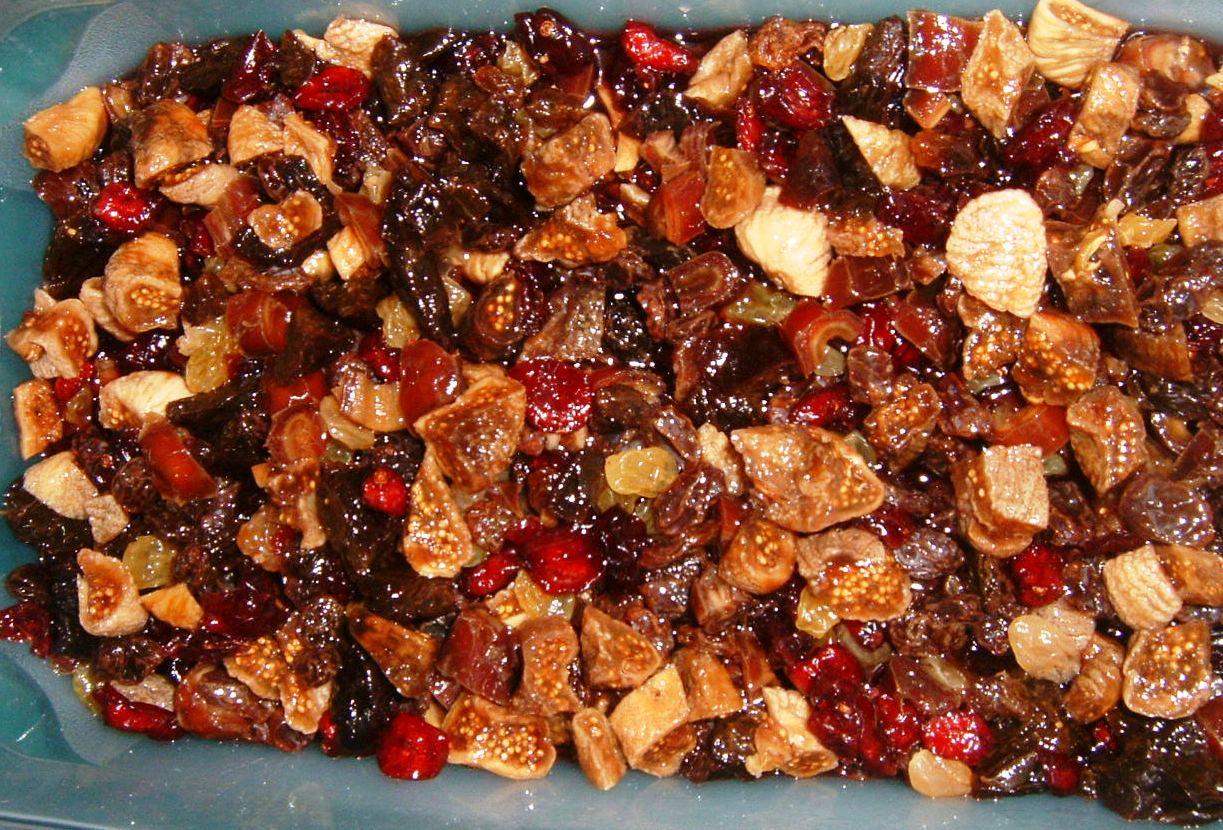
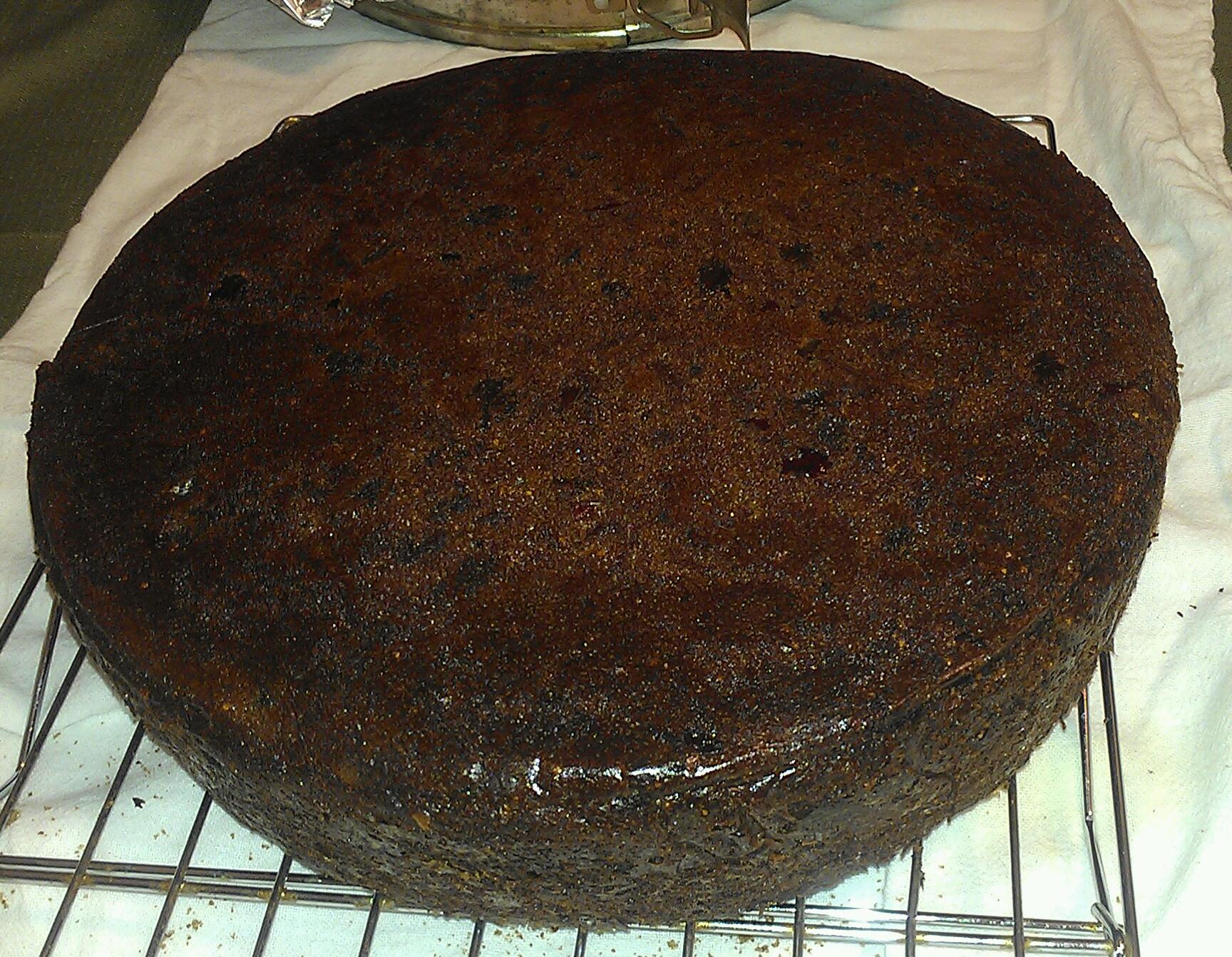
The photos here are from last year, so that you can see the process from start to finish. So, in September, I put my fruit—raisins, golden raisins, plums, figs, dates, and cranberries—in a large container with a cover and poured in a wee bit of rum and port wine and let that sit until December. About a week before Christmas (I couldn’t get around to it before then), I baked the cake, basted it a few times, and brought it for Christmas Eve dinner. It came out really, really good. It’s not like any fruit cake you’ve ever had, I guarantee it. Normally, black cake is served as is, but I wanted it to look a little more festive so I iced it with a basic powdered sugar icing (which eventually melted). The only thing was that my cake was not as dark as it should be (it is called black cake, after all). I was told to increase the amount of browning or molasses. This recipe contains the increased amounts. (Browning is also known as burnt sugar and can be found in West Indian markets.)

Give it a shot. This is one fruit cake that will not get passed around. Enjoy!

Christmas Cake (Jamaican Black Cake)

4 cups mixed dried fruits (raisins, currants, prunes, citron, cherries, dates)
3 cups port wine
3 cups white rum (preferably Appleton)
1/2 lb. butter
1 cup brown sugar
6 eggs
12 oz. all-purpose flour
2 tbsp baking powder
2 tbsp browning
1/4 molasses
1 tsp Benjamin vanilla extract
1 tsp almond extract
1 tsp nutmeg
1 tsp ground allspice
2 tsp lemon juice

Preparing Fruits for Baking:

Wash fruit well. Soak fruits in 2 cups port wine and 2 cups rum for at least 4 weeks before baking.

Soaking the fruit

Soaking the fruit

To bake the cake:

1. Preheat oven to 350 degrees F.

2. Grease a 10-inch baking tin with butter or margarine. Line the tin with wax paper.

3. Mix butter and sugar until light and fluffy.

4. Add eggs, one at a time, and continue beating until mixture is smooth.

Dried fruit after soaking several weeks

Dried fruit after soaking several weeks

5. Add flour and baking powder and continue to mix.

6. Blend in browning, molasses, vanilla, almond, nutmeg, allspice, and lemon juice.

7. In a blender or processor, grind fruits and add to mixture.

8. Add 1 cup rum and 1 cup wine and mix well. Place in oven.

Baked Black Cake

Baked Black Cake

Cake is baked when a knife is inserted into center of cake and comes out clean. Check cake after an hour. This will make approximately 4 lbs. of cake. If you’re baking it weeks or months in advance, continue basting it periodically with wine. Decorate if you wish, but it can be served as is.


3 Comments

Minty Peach Salsa

Summer is almost over. Technically, we have until September 22, but the kids are back in school, the stores are already displaying holiday merchandise, and my neighbor’s trees have red leaves in them. As much as I love autumn, I’m always sad when the summer comes to a close. It’s never long enough, is it?

Minty Peach Salsa

Minty Peach Salsa

But there’s still time to enjoy some summer activity and summer deliciousness, including the wonderful stone fruit that are still available. And if you grow your own mint, it’s probably out of control by now. Here’s a way to use both: Minty Peach Salsa.

This salsa was inspired by a peach salsa I bought at a farmer’s market in Virginia. I set out to replicate it and made a few modifications to make it a little less sweet and a bit spicier. It’s very simple and perfect for those last summer picnics or barbecues. It also makes a great condiment for grilled veggies, chicken, or fish.

You can substitute the peach with nectarines, plums, or apricots, but I find that peach works the best. It has the right flavor and texture to complement the other ingredients.

Enjoy the salsa and what’s left of summer!

Minty Peach Salsa

Makes about 2 ½ cups.

2 cups chopped peaches
1/3 cup chopped shallot or finely chopped Vidalia onion
¾ cup chopped red pepper
1 small jalapeno, minced
2 tablespoon minced mint
1 tablespoon apple cider vinegar
½ teaspoon sea salt
½ teaspoon sugar
½ teaspoon garlic powder
1/2 teaspoon chili powder
2 teaspoon spiced rum (optional)

1. Combine all ingredients in a medium bowl. Refrigerate for an hour before serving to allow the flavors to blend.

2. Taste for seasoning and adjust, if necessary, before serving. Serve with tortilla or pita chips.


Leave a comment

Cucumber Mango Mint Shooter

I can’t believe it, but tomorrow is Labor Day. This summer was a non-summer, what with all the rain and cold days. Then again, there have been some gorgeous weekends recently, so I guess it wasn’t all bad.

Doesn’t change the fact that the summer is over. I can hear the Friday night fireworks at Coney Island from my house and this past Friday was the last one of the season. When I hear that final, cacophonous thunder that marks the end of not only of the week’s display but of the summer’s, it always makes me a little sad.

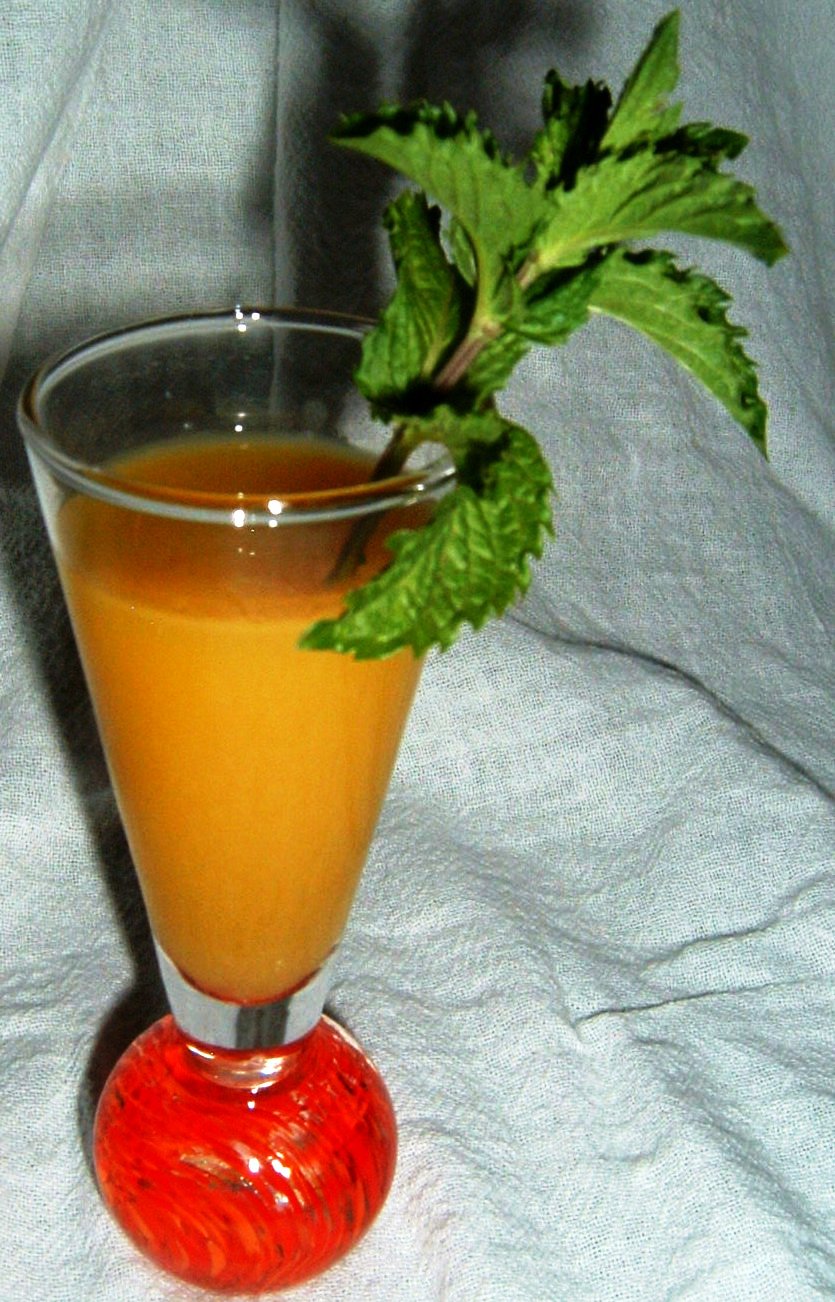
Cucumber Mango Mint Shooter

Cucumber Mango Mint Shooter

But Americans do not go gently into that goodbye of summer. Labor Day means picnics, barbecues, beach parties, and lots of food and fun. And I have just the cocktail to go with it all. It makes use of summer goodies, like cucumber, mango, and mint, but it makes a great cocktail for the coming holidays, too. And because cucumber and mint are also considered a restorative and a digestive, respectively, it makes a great after-dinner cocktail for Thanksgiving and Christmas.

Cheers!

Cucumber Mango Mint Shooter

Makes 4.

1 medium cucumber, peeled and seeded
1 mango, coarsely chopped
1 tablespoon mint leaves
1 teaspoon maple syrup
1 teaspoon lime juice
¼ cup melon liqueur
4 mint sprigs (optional)

1. Place cucumber, mango, mint, maple syrup, and lime juice in a food processor or blender. Process until fully pureed.

2. Set a fine mesh strainer over a bowl. Pour mixture into strainer and let it drip through. Press down on pulp with a rubber spatula to strain as much liquid out as possible. Whisk in  liqueur.

3. Pour into shot glasses, top with mint sprig, and serve.


2 Comments

September is Better Breakfast Month

How many times have you heard that breakfast is the most important meal of the day? A million times since you were a kid, right?

I’ve never been much of a breakfast person. I can’t really eat first thing in the morning. My stomach just will not accept food when I first get up. It amazes me to know that some people roll out of bed, shuffle into their kitchens, and start eating. My routine is, I go to work, have a cup of coffee, and right around 10:30 or so, I’m ready to eat a little something. I know that’s not a great way to start my day, but it’s the best I can do.

IMG_0158

Multigrain Morning Porridge

What I do try to do, however, is to make it a good, energy-inducing breakfast: oatmeal with walnuts or pecans; yogurt with fruit and seeds (sunflower, pumpkin, chia, and flax); whole grain bread with some kind of nut butter. Lately, I’ve been doing a lot of green smoothies. The point is not only to curb hunger but to give your body and brain the proper fuel to do what it needs to do throughout the day. It appalls me to see people eating doughnuts, crullers, sugary muffins, and soda for breakfast. (I think muffins are good if they have nutritional components to them, like high-protein flours, nuts, and natural sugar alternatives.)

Breakfast porridges are a great choice and can be made with any grain you like, such as steel-cut oats, quinoa, millet, and barley. Below is my recipe for multi-grain porridge. I had the original recipe for this porridge in my collection for a while but never gave it a try. Not because it didn’t appeal to me (otherwise, I wouldn’t have clipped it), but because I so rarely make homemade porridge for breakfast. During the week, I never eat breakfast at home—I prepare whatever it is I’m going to have the night before and take it to work. On the weekends, I still don’t have time and usually just grab leftovers from the fridge. But whenever I can, I’ll make some kind of porridge. IMG_0151

I made some modifications to the recipe, based on what I had on hand and my personal preferences. The good thing is that this stays well in the fridge for a few days, so I can make a big batch and just reheat it.

Clockwise from upper right: Wheat berries, grits, amaranth, oats.

Mulitgrain Morning Porridge

Adapted from “Multigrain Breakfast Porridge” by
Bruce Weinstein and Mark Scarbrough, Cooking Light, Oct. 2007

½ cup wheat berries, rinsed
¾ teaspoon sea salt
1/3 cup steel-cut oats
3 tablespoons regular grits
¼ cup amaranth
¾ cup coconut or almond milk
¼ maple syrup
¼ cup dried blueberries or other dried fruit
½ cup chopped walnuts or other nuts

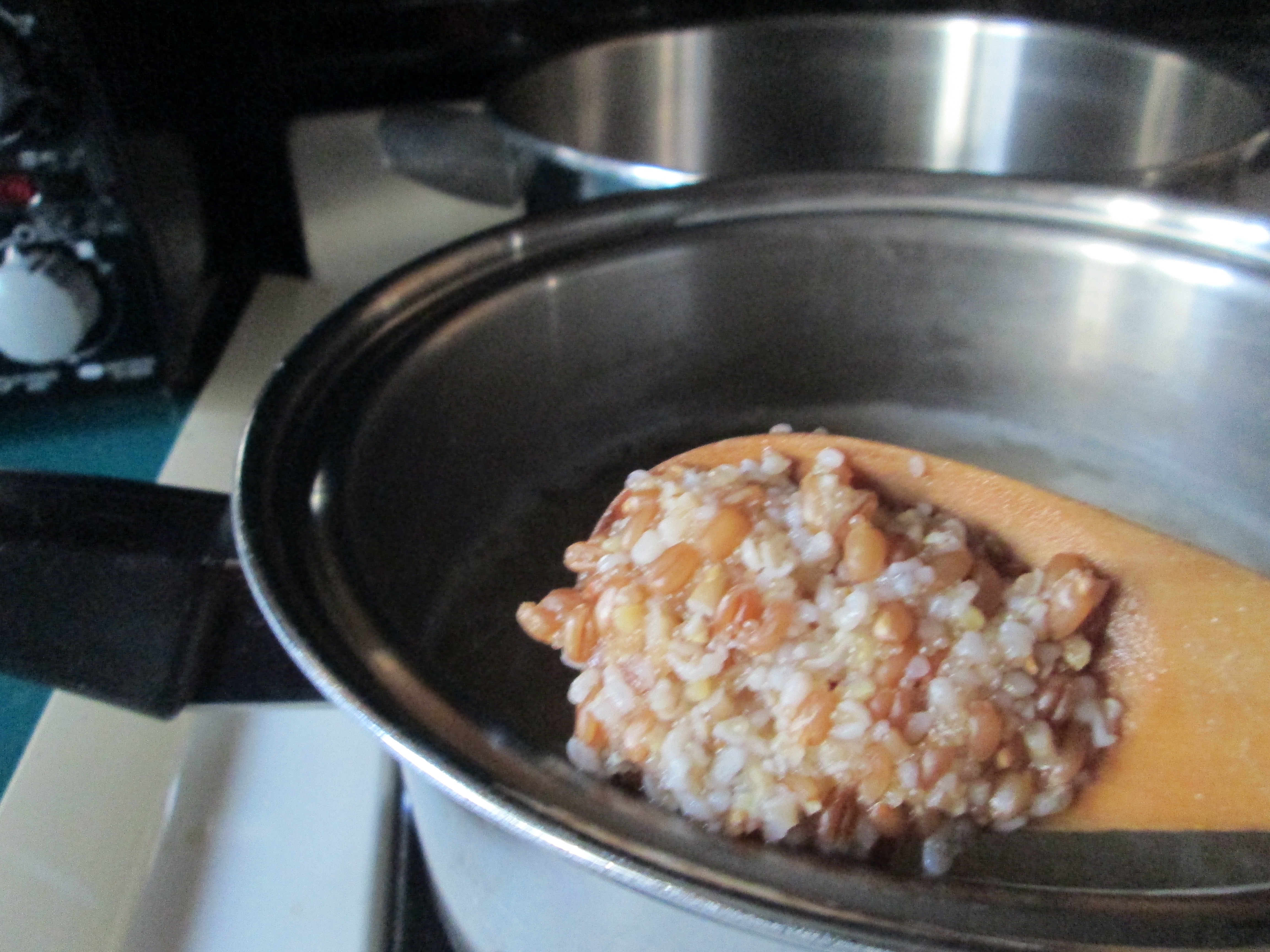
Bring 5 cups water to a boil. Add the wheat berries and salt; reduce the heat to medium-low and simmer, partially covered until almost tender, 20 to 30 minutes.IMG_0153

Add the oats, grits, and amaranth and stir. Continue simmering until all grains are tender, about 15 minutes, stirring frequently. Stir in coconut milk, maple syrup, and fruit and cook another 2 minutes, stirring frequently. Stir in nuts. Serve hot.

IMG_0155

This porridge will keep for several days in the refrigerator. To reheat, stir in a little more coconut milk or water until it reaches the desired consistency. Heat over medium-low heat or in the microwave for 1 to 2 minutes.

Makes 4 servings.