Well, for those of us in the Northern hemisphere, summer is coming to a close. Garden aficionados are gathering up the final crops of their summer vegetables and herbs, and are preparing their autumn and winter larders.
But there’s still time to enjoy some summer savory dishes. Pick some tomatoes and snap off a cucumber (or get them at the farmers’ market) to make this simple, yet savory, classic dish. Plan one last picnic or barbecue, soak in the warm sun while it lasts, and serve this to hold you over until next year. Pretty soon, it will be time for pumpkins, fireplaces, and warm fleece blankets. And that’s a different kind of joy.
Summer Tomato-Cucumber Salad
1 cup cherry or pear tomatoes, halved ½ medium cucumber, sliced 2 tablespoons extra virgin olive oil ¼ teaspoon sea salt Freshly ground black pepper to taste Few leaves fresh basil
Place all the ingredients in a medium bowl. Mix well. Taste for seasoning and adjust, if necessary.
Serve at room temperature. You can make this a few hours ahead of time. Keep it stored tightly sealed in the refrigerator.
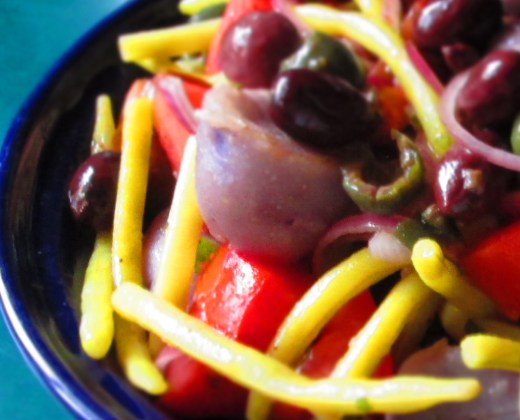
One of the dishes that I remember my mother always making is a cold potato and green bean salad. I considered it such a standard of my mother’s repertoire that I included it in my cookbook, Vegetarian Italian: Traditions. (That book, by the way, is now out of print, but those recipes, including the one below, are available in individual ebooks. This recipe appears in the volume called “Antipasti.”)Anyway, at the farmers’ market, I found one of my favorite things, purple potatoes. I bought some, not really knowing what I was going to do with them. Then, as I moved on down the stalls, I found wax beans, the yellow variety of green beans. I didn’t know what I was going to do with those either, but they were so beautiful, I bought a small bagful.Then I found chocolate tomatoes, which I can never resist (I’m not sure if it’s their color that draws me, or because they’re called “chocolate”). It then hit me what I was going to do with these ingredients—I would combine them to make what I consider to be a classic dish. I got a red onion, and I had the typical, and yet different, ingredients for this salad. You can most certainly make this dish with standard potatoes, ordinary red tomatoes, and average, everyday green beans, and it will be delicious. But using variations on these ingredients, such as the ones I suggest below, will give the dish just a little pop for a fun party or barbecue dish.
Enjoy!
Wax Bean and Purple Potato Salad
2 lbs. purple potatoes 1 lb. wax beans, trimmed 1½ lbs. tomatoes ½ medium red onion, thinly sliced ¼ cup extra virgin olive oil 2 teaspoons kosher salt Freshly ground pepper to taste ½ cup olives (such as Kalamata, black cured, or Gaeta
Cut the potatoes as necessary so that the pieces are roughly the same size.Place them in a medium pot and cover them with water. Bring to a boil; lower the heat and simmer until tender, about 10 to 12 minutes (but start checking them earlier). Drain them in a colander and set aside to cool. When they’re cool enough to handle, peel and place them in a large bowl.Meanwhile, place the beans in a medium pot and cover with water. Bring to a boil; lower the heat and simmer until tender, about 8 to 10 minutes.Combine the potatoes with the beans, tomatoes, onion, oil, salt, and pepper. Mix gently. Add the olives and mix again. Taste for seasoning and adjust if needed. If it seems dry, add a little more olive oil. Transfer the salad to a serving bowl and serve.
In summer, along with the abundance of zucchini comes the bounty of squash blossoms, a unique delicacy. In Italian, they’re called fiori di zucca.
You might be wondering, if they’re so fabulous, why don’t they sell them at the produce store or in supermarkets? The reason is that they’re highly perishable. As soon as they’re picked, they begin to deteriorate immediately. The best way to get them, therefore, is to grow zucchini( or any other type of squash) yourself, or get them from a gardening neighbor. Barring that, you can often find them at farmers’ markets.
When you do get a batch of blossoms, make sure you handle them gently and use them quickly, preferably within 2 days. To clean them, cut off the stems close to the base. Open them gently with your fingers and check for insects. If you see insects, shake them out. If necessary, run them under a fine stream of running water and then shake them out gently. If you can, remove the stamens (the long piece inside) as they can harbor insects.
Let them sit on paper towels to dry. If you’re not using them right away, place them in a plastic bag and close it loosely. Store them in the refrigerator.
Squash Blossom Frittata
Makes 4 servings
4 or 5 squash blossoms
5 medium eggs 1 tablespoon parmigiano ¼ teaspoon sea salt Freshly ground black pepper to taste
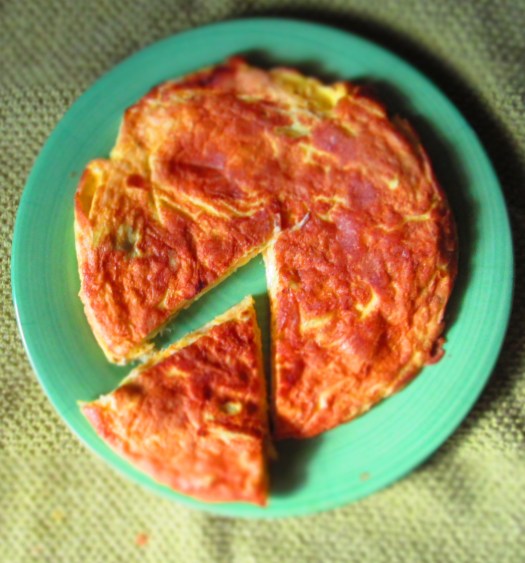
Clean the squash blossoms. Open them up very gently and check for insects. Remove the stamens from inside and rinse carefully under a thin stream of water. Place them on a paper towel to dry.In a medium bowl, beat the eggs well with the parmigiano, salt, and pepper.Heat a small nonstick skillet (approximately 6 inches). (If you don’t have a nonstick skillet, use a regular skillet and heat 1 tablespoon butter or olive oil.) Pour in the eggs and arrange the squash blossoms across the top. Cover and cook over medium heat until the underside has browned. Remove the cover. Place a plate that’s wider than the skillet over the top and (using pot holders or kitchen towels!), carefully flip the frittata over onto the plate. Then slide it back into the pan and continue cooking until the underside has browned, another 2 or 3 minutes.Slide the frittata onto a plate or cutting board and cut into wedges. Serve with fresh bread. Enjoy.
Last week, I mentioned that the great people at the French Cheese Board were kind enough to get me some cheese samples. I created a recipes with one of my new favorite cheeses, Mimolette. That recipe was Caramelized Onion Rings with Chipotle Cream and Mimolette. This week, I’m featuring Abondance cheese.
Abondance is a semi-hard, unpasteurized cow’s milk cheese. It has a creamy texture, similar to Swiss cheese, and has a natural rind that tends to have a granular residue (it kind of looks like sawdust). It’s quite fragrant and has a nutty, buttery flavor. Although it’s yielding, it hold up well in this pear-walnut salad, where it blends beautifully with the nuts and fruits.
Pear, Walnut and Abondance Salad
2 Bartlett or Anjou pears, ripe but still firm
1 lemon
¼ cup extra virgin olive oil
1 tablespoon honey
1 tablespoon Dijon mustard
1 tablespoon balsamic vinegar
Pinch sea salt
Freshly ground white pepper
1 cup walnuts, toasted and coarsely chopped
¼ cup dried cranberries
8 oz. Abondance cheese, cubed
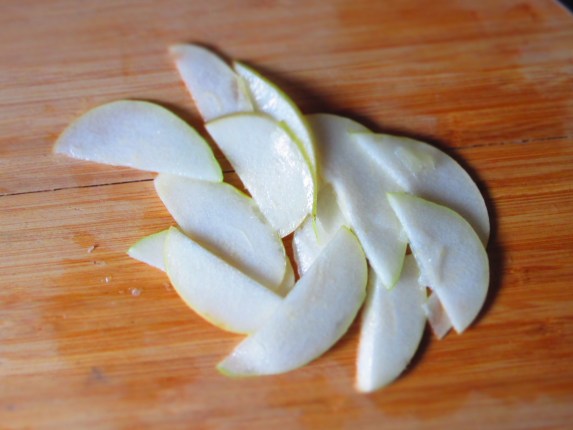
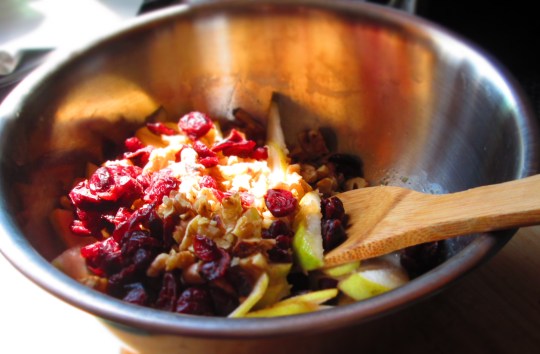
Slice or cube the pears, depending on how you want your presentation to be. Place them in a bowl and spritz lemon over them and toss gently. (This is to keep them from browning.)In a medium bowl, combine the oil, honey, balsamic, salt, and pepper. Whisk until well blended.Add the pears, walnuts, and cranberries to the dressing and toss gently.Add the cheese and stir again.Arrange on a platter, if that’s how you’re serving it. Otherwise, transfer to a clean bowl. Serve.
So, I’ve been fortunate enough to attend several events hosted by The French Cheese Board in New York City. This past month, I attended a soiree at their new location in in Little Italy. (Although, judging from the hip space and chic crowd, I’m tempted to call it a Soho party.) There was an amazing selection of cheeses and I had my fill, for sure.
Anyway, the very nice people at The French Cheese Board were gracious enough to offer me some cheeses to experiment with. And who am I to turn down such generosity? No one, that’s who. I requested three kinds of cheeses, and below is the first recipe I came up with. This one uses one of my new favorite cheeses, Mimolette.
Mimolette is a sharp cheese, and has nutty, fruity undertones. It’s easily spotted within a selection of French cheeses because it’s the color of cheddar (except more vibrant), and has a thick, granular-looking crust.
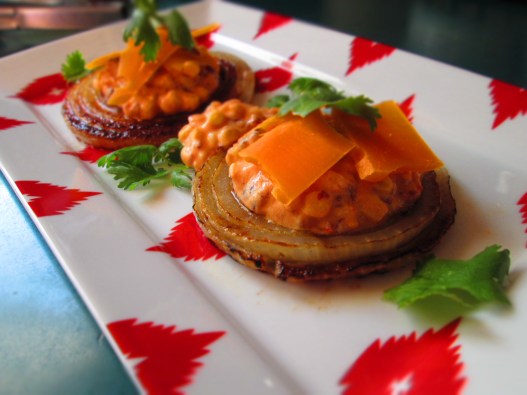
I thought that both the color and flavor would go well with vegetables, so I decided to make Caramelized Onion Rings with Chipotle Cream and Mimolette. Caramelized onions are incredibly divine, but if you’re not a fan, try this with grilled asparagus or grilled or roasted sweet potatoes slices. Continue reading →
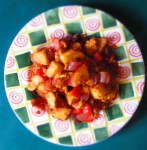
Hash is one of those kitchen sink recipes—it can be made with anything you have on hand—but usually requires potatoes to be considered hash. It used to be a way for restaurants to salvage scraps of food, leftovers from other dishes. And while it’s still a utilitarian dish that helps people use up scraps, it’s become standard dish in its own right. It’s become a breakfast staple with many variations. This is a healthy version because it features tempeh.
Originally from Indonesia, tempeh is a fermented soybean cake. Indonesians consider it a meat substitute and, in fact, it is high in protein. It makes the perfect meat alternative for vegetarian dishes, as it does in this hash recipe. Have it for breakfast, or any other meal.
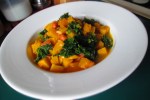
So, after I made Butternut-Black Bean Tacoslast week, I had some butternut squash left over. There were many things I could have done with it, but after finding a beautiful head of kale, I decided to make butternut and kale soup.
This soup is packed with nutrients and it’s just plain delicious. Enjoy.Continue reading →
Why butternut and black bean tacos? Why not? Butternut squashes are fabulous. Anything inside a taco is fabulous. So butternut squash in a taco is…well…doubly fabulous.
Butternut squash is my favorite squash because it’s so versatile, and its flavor is so delicately sweet. It’s not fun to peel, but once you get past that part, you can do pretty much anything with it. So for this recipe, I’ve paired it with black beans, not just for the protein but because the two ingredients make such a beautiful contrast. Throw in some red bell pepper and it’s a sight to behold.
I love cooking with quinoa. It’s not only one of the most nutritious grains—a so-called “superfood”—it’s also deliciously nutty and the texture is slightly crunchy, even while it’s tender.
If you’re already cooking with quinoa, and other nutritious grains, such as amaranth and millet, you’re doing a good deed for your body. Quinoa is one of the only grains that has protein and, of course, it’s gluten free. But if you want to take your healthy ways a step further you might want to incorporate sprouted grains into your diet. You may or may not have heard about sprouted grains, but they are now available as uncooked grains, in dried pastas, and breads, as well as other products.
So what’s the deal with sprouted grains?
Grains contain phytic acid, which is also referred to as an “antinutrient” because of its tendency to block absorption of certain minerals. Phytic acid binds to such nutrients as calcium, magnesium, iron, copper, and zinc. So, while quinoa is a good source of these nutrients, the phytic acid can block them from being aborbed into your system.
Sprouting neutralizes phytic acids, as well as enzyme inhibitors, making the grains’ nutrients more bioavailable. Essential amino acids, such as lysine, also get blocked. Quinoa is one of the few grains on earth that contains lysine, so sprouting quinoa, in particular, is advantageous. Plus, germination produces vitamin C and increases the grain’s (or bean’s or seed’s) B vitamins. Sprouted quinoa looks and tastes just like regular quinoa, except with the added benefits.
You can find packages of sprouted quinoa in health food stores, but considering how much standard supermarkets’ shelves have expanded to include products for health-conscious consumers, who knows, you might be able to find sprouted quinoa in your neighborhood supermarket—if not now, then in the near future.
Sprouted Quinoa with Roasted Vegetables and Roasted Garlic Dressing
Makes 6 servings.
1½ cups diced eggplant 3 cups diced zucchini ¼ cup + 1 teaspoon olive oil 1 teaspoon + a pinch kosher salt Freshly ground black pepper 3 large plum tomatoes 4 garlic cloves, skin on 1 cup sprouted quinoa ¼ cup extra virgin olive oil 2 teaspoons Dijon mustard 1 teaspoon sherry vinegar
¼ teaspoon sea salt ¼ cup chopped Italian parsley
Preheat the oven to 350 degrees F. Grease a large baking sheet, or line it with foil or parchment paper. Do the same with a small baking sheet.
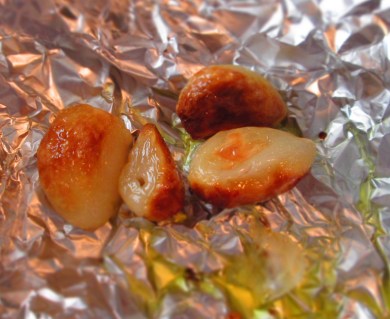
Combine the eggplant and zucchini in a bowl. Pour in 3 tablespoons olive oil, 1 teaspoon kosher salt, grind in some black pepper, and toss to coat. Spread the vegetables out on the large baking sheet. (You can line the sheet with aluminum foil or parchment, if you like.)Roast, stirring occasionally, until tender and browned, about 20 to 30 minutes.Cut the tomatoes in half and removed the seeds. Dice the tomatoes and place in a medium bowl. Toss with 1 tablespoon oil and a pinch of kosher salt. Lay the tomatoes out on the small baking sheet and roast, stirring occasionally until tender and browned, about 30 minutes.Place the garlic cloves on a piece of aluminum foil. Pour 1 teaspoon olive oil on them, and wrap the foil. Place on a small baking sheet (you can place the packet on one of the baking sheets the other vegetables are on).Roast until soft, about 20 minutes.While the vegetables are roasting, combine the quinoa with 2 cups water and a pinch of salt in a small saucepan. Bring to a boil; lower the heat to medium-low and simmer, half covered, until the water is absorbed, about 10 to 15 minutes. Remove from the heat and let sit for 5 minutes. Fluff with a fork.Unwrap the garlic. When it’s cool enough to handle, squeeze the garlic out of the skin into a small bowl. Add the extra virgin olive oil, mustard, vinegar, and sea salt. Whisk until well blended.
In a large bowl, combine the eggplant, zucchini, tomatoes, and quinoa. Add the dressing and mix well. Mix in the parsley. Taste for seasoning and adjust if needed.
Pancit bihon noodles are long, thin noodles made from cornstarch and are used widely in Philippine cuisine. They’ve got a nice firm texture and can be used in pretty much any recipe that calls for long, spaghetti-like noodles. And they are gluten free.
Noodles were introduced to the Philippines by the Chinese. It’s said that the word pancit comes from Hokkien, a southern Chinese dialect: pian e sit, which means “something conveniently cooked.” Pancit noodles became a staple—in fact, national—dish of the Philippines.
The recipe I offer here today is a basic Asian noodle dish, and you can add or remove anything you like. Look for pancit bihon in Asian markets.
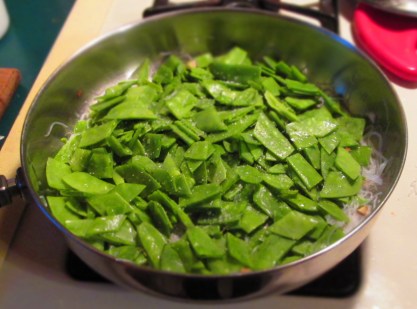
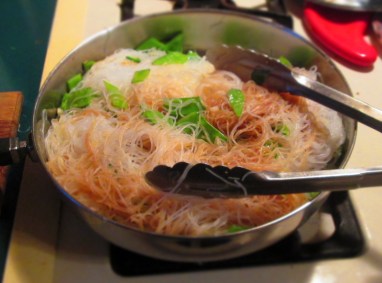
Pancit Bihon Noodles with Snow Peas
Makes 4 to 6 servings.
½ lb. snow peas 8 oz. pancit bihon noodles 2 teaspoons cooking oil (such as grapeseed or sunflower) 3 large garlic cloves, minced 1 tablespoon sesame oil 1 tablespoon soy sauce Sea salt, if desired
Trim the snow peas and either cut into strips or just chop coarsely.Bring a medium-large pot of water to a boil. Add the noodles and stir them in. Cook until tender, about 5 to 7 minutes.Drain in a colander and run under cool water to stop the cooking. Set aside.In a wok or wide frying pan, heat the cooking oil, then add the garlic and sauté until fragrant. Add the snow peas and sauté a few minutes until softened but still crisp.Add the noodles, sesame oil, and soy sauce. Mix well with tongs.Taste for seasoning and add a little salt, if needed. Serve hot.


 Well, for those of us in the Northern hemisphere, summer is coming to a close. Garden aficionados are gathering up the final crops of their summer vegetables and herbs, and are preparing their autumn and winter larders.



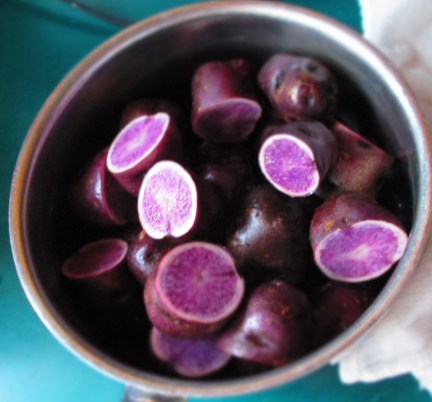 Place them in a medium pot and cover them with water. Bring to a boil; lower the heat and simmer until tender, about 10 to 12 minutes (but start checking them earlier). Drain them in a colander and set aside to cool. When they’re cool enough to handle, peel and place them in a large bowl.
 Meanwhile, place the beans in a medium pot and cover with water. Bring to a boil; lower the heat and simmer until tender, about 8 to 10 minutes.
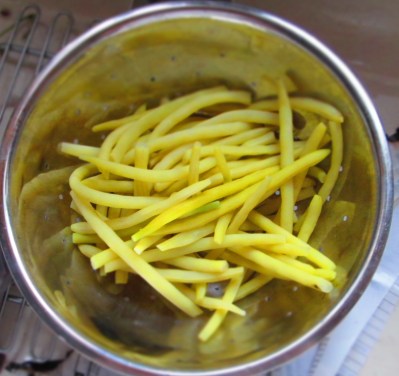 Combine the potatoes with the beans, tomatoes, onion, oil, salt, and pepper. Mix gently. Add the olives and mix again. Taste for seasoning and adjust if needed. If it seems dry, add a little more olive oil. Transfer the salad to a serving bowl and serve.

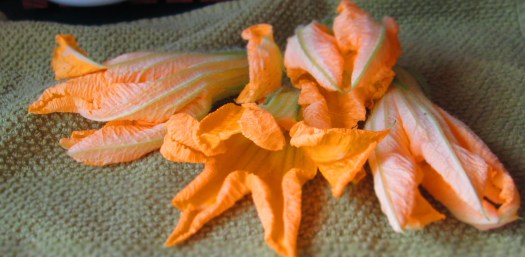 When you do get a batch of blossoms, make sure you handle them gently and use them quickly, preferably within 2 days. To clean them, cut off the stems close to the base. Open them gently with your fingers and check for insects. If you see insects, shake them out. If necessary, run them under a fine stream of running water and then shake them out gently. If you can, remove the stamens (the long piece inside) as they can harbor insects.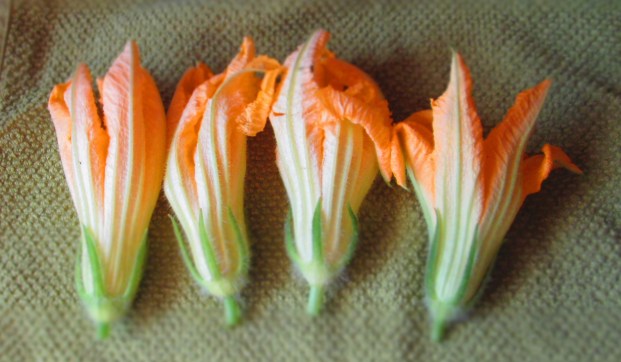
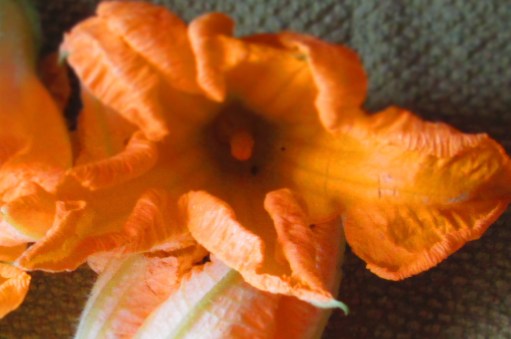 In a medium bowl, beat the eggs well with the parmigiano, salt, and pepper.
 Heat a small nonstick skillet (approximately 6 inches). (If you don’t have a nonstick skillet, use a regular skillet and heat 1 tablespoon butter or olive oil.) Pour in the eggs and arrange the squash blossoms across the top.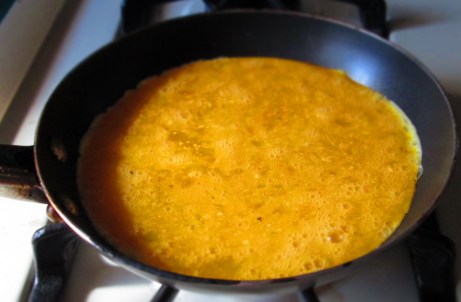
 Cover and cook over medium heat until the underside has browned. Remove the cover. Place a plate that’s wider than the skillet over the top and (using pot holders or kitchen towels!), carefully flip the frittata over onto the plate.
 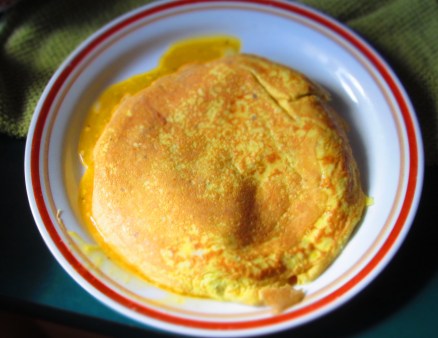 Then slide it back into the pan and continue cooking until the underside has browned, another 2 or 3 minutes.
 Slide the frittata onto a plate or cutting board and cut into wedges. Serve with fresh bread. Enjoy.











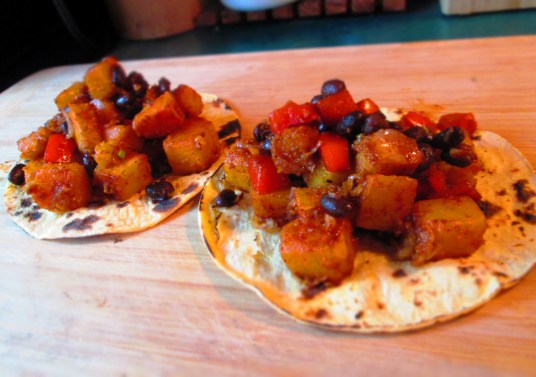 Why butternut and black bean tacos? Why not? Butternut squashes are fabulous. Anything inside a taco is fabulous. So butternut squash in a taco is…well…doubly fabulous.





 Miz Chef