Miz Chef

Cooking Up a Healthy Life


Leave a comment

The Dark Mistress of Valentine’s Day…and Pudding Hearts

IMG_4491

It’s kind of fascinating how you can point to any holiday on the calendar at any time of the year and, invariably, there will be food associated with that holiday. And if it’s not about the things you should eat, then it’s the things you should not eat. Or, it’s that you should not eat at all (as in fasting).

Personally, I think holidays are just excuses for eating lots of delicious things that we normally stay away from, or otherwise berate ourselves for indulging in when there’s no holiday to make it permissible.

Photo: André Karwath

Photo: André Karwath

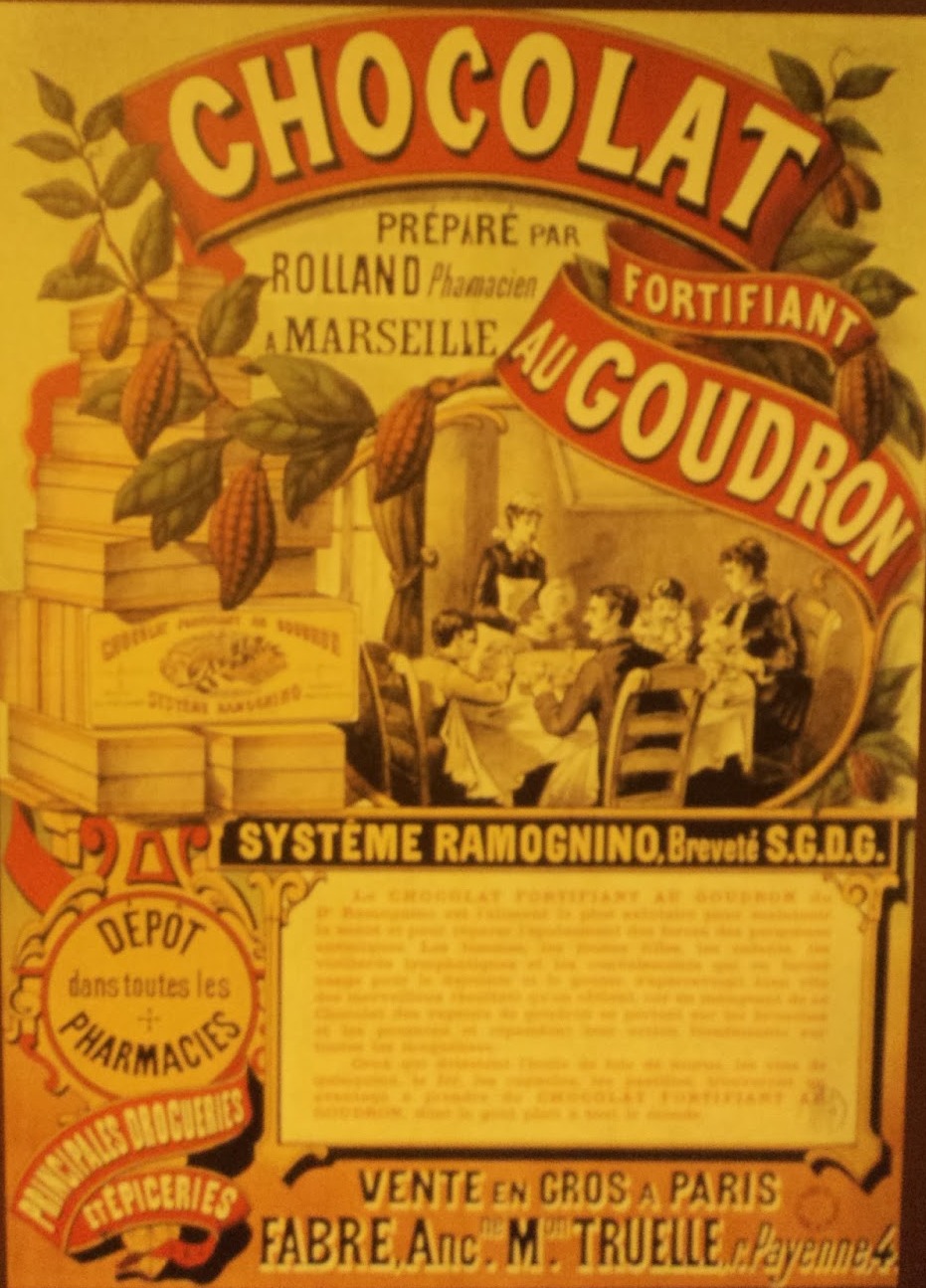
St. Valentine’s Day is no exception. The number one food for V-Day, of course, is chocolate. What would this lovers’ holiday be without the sweet, dark mistress of passion? And a mistress she is—when she calls you, you come running, even if you have to jump hurdles to get to her. She seduces you with her aroma and her flavor, and when you get a taste of her, you savor her, letting her linger on your palate. And once she whips you into submission, she makes you beg for more. There’s a reason why the Aztecs called it the food of the gods.Choco Story Museum in Bruges Belgium (9)

Continue reading


Leave a comment

Cooking with Cambrays

IMG_4422

Cambray onions, also known as spring onions, are related to scallions. In fact, they look like a cross between scallions and Texas onions—long green stems with big round bulbs.

I’d seen them before but had never purchased them, so when I saw them this past week, I grabbed a few. I learned that they are a popular onion in Latin cuisine (in which they are referred to as cebollitas de Cambray or cebolla Cambray), and almost always appear on mixed grill platters.

They can be used in many types of preparations, from salads to onion tarts to tacos. Being that this was the first time I was eating them (to my knowledge, anyway), I did what I often do with a new-to-me vegetables—I roasted them. I like to do this because it allows me to sample the new vegetable in its basic form with no added ingredients, besides olive oil, salt, and pepper. Plus, once you’ve grilled a vegetable, you can then add it into many other dishes.

So, I roasted the Cambrays until they were caramelized and tasted one by itself. It was sweet and creamy and I could imagine throwing them, cut up, into a dish of pasta or adding them to a stew or chili. I put a few pieces on some flat bread, drizzled some extra virgin olive oil over it, sprinkled a little more salt and pepper, and finished it with some grated Parmigiano-Reggiano. Very simple and very good.

IMG_4430Roasted Cambray Onions

Several Cambray onions
1/4 cup olive oil
1 teaspoon sea salt
Freshly ground black pepper

Preheat oven to 350 degrees.

Trim onions by slicing off roots and removing outer layers that look brown or funky.

Lay onions on a baking sheet. Drizzle oil over onions and rub them to coat with oil. Sprinkle on salt and pepper.IMG_4423Roast about 15 minutes; turn them over and roast another 10 minutes, or until both sides are golden brown.IMG_4427


Leave a comment

Avocado Pineapple Cake

IMG_4411

This weekend was my mother’s birthday. She just turned 81. She’s very spry for her age and still sharp in mind, and I’m thankful every day for that.

She’s also set in her ways. She likes what she likes, and doesn’t like what she doesn’t. She’s never liked going out to restaurants much, since, in her opinion, restaurant food lacks in many departments. The one and only time she was ever really excited to go to a restaurant was when my brother and I took my parents to Felidia, Lidia Bastianich’s place in Manhattan. She’s a huge fan of Lidia and just being in her world was a thrill for Mom. (One of my regrets is not getting a picture with Lidia when I met her at the James Beard House when I was interning there. She treasures the picture of me with Jacques Pepin and I think one of me with Lidia would have made her swoon.)

Continue reading


Leave a comment

Remembrances of Meals Past

…and why it’s a good thing to give in to your cravings once in a while.

Disclaimer: What you are about to read is not scientific fact or founded on anything logical or reasonable. They are just my own conclusions based on excruciating experience.

It’s the start of a new year and millions of people all over the world are now beginning that never-ending quest to lose weight and get in shape by going on a diet. So, in honor of that, I’d like to offer my own personal tip, a lesson that I learned by doing it.The_Ricotta_eaters-Vincenzo_Campi-MBA_Lyon_H673-IMG_0324

It’s an established fact that if you are on a diet but allow yourself to have a bit of what you crave, it will satisfy that itch, help you to stop thinking about it, and allow you to move on. And I have found that to be true.

Continue reading


Leave a comment

Italian Vegetable Crackers

IMG_4189

Want to do something different for that  Christmas party? Why don’t you try making your own crackers? They’re really not that difficult.

Crackers have been around for thousands of years—the ancient Romans made them! The word “cracker” comes from the Medieval word craken, meaning “to resound,” which describes the sound they made when broken.

Italians love to put vegetables in everything, and crackers are no exception. These crackers are a nice blend of herbs and fresh greens. Fava beans, in particular, are very popular in Italy and this recipes utilizes fava bean flour. Not only does it eliminate at least a little bit of the white flour, but it lends the crackers a more complex, vaguely nutty flavor.

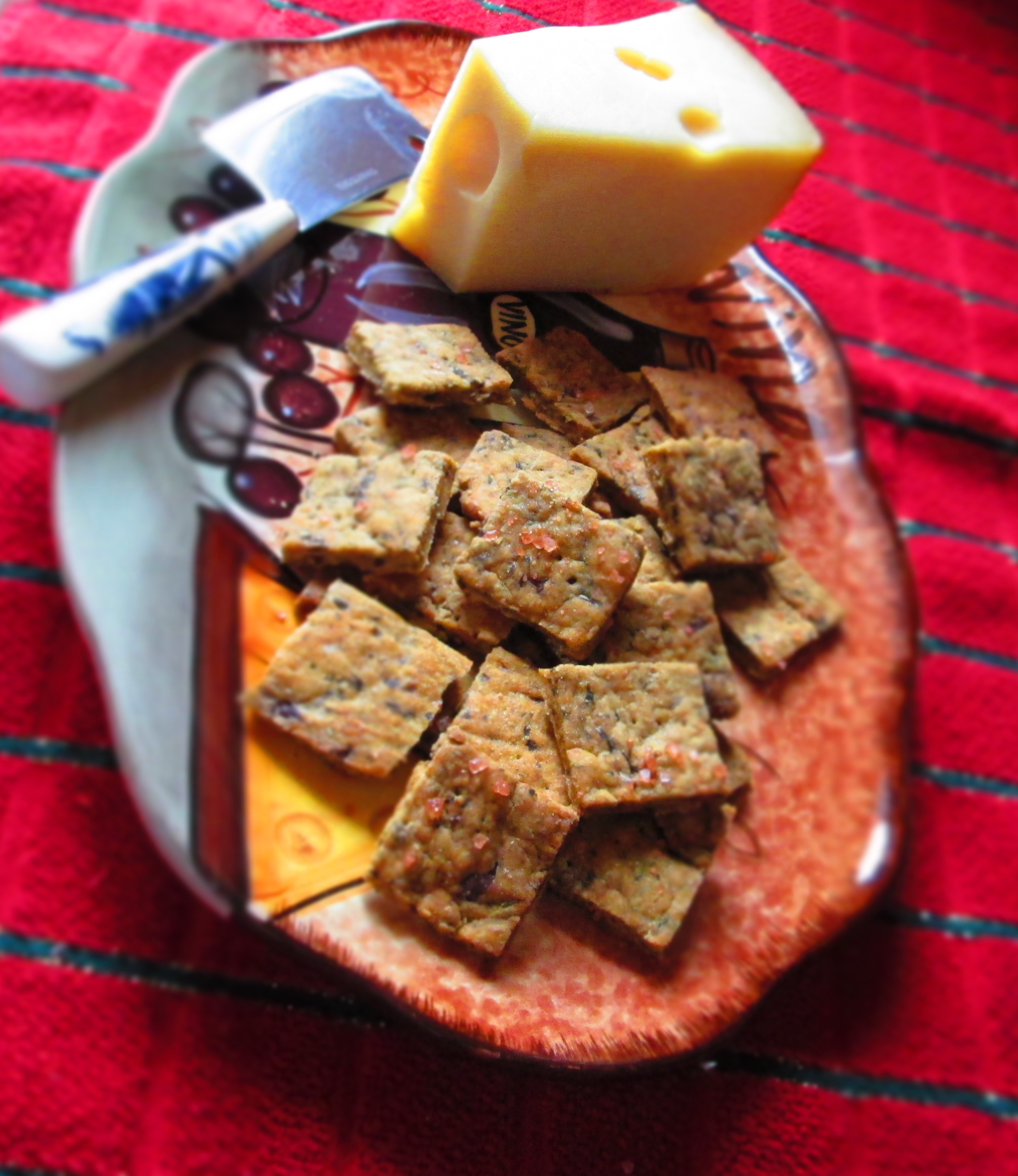
Put these out with cheese, dips, salsa, or even guacamole. But they’re tasty enough to enjoy on their own.

Enjoy!

Italian Vegetable Crackers

Makes approximately 7 dozen crackers.

½ cup chopped greens (spinach, kale, chard, etc.)
¼ cup +2 teaspoons olive oil
½ cup fava bean flour (or chick pea flour)
1 ½ cups all-purpose flour
1 teaspoon ground rosemary
1 teaspoon oregano
1 teaspoon paprika
1 teaspoon garlic powder
1 teaspoon kosher salt
½ teaspoon ground fennel seed
¼ teaspoon freshly ground black pepper
¼ cup parmesan cheese
Hawaiian sea salt or other finishing salt (optional)

Preheat oven to 375 degrees F.

Place greens and 1 teaspoon oil in a food processor and process until very finely chopped. Set aside.

In a medium bowl, whisk together flours, rosemary, oregano, paprika, garlic powder,  kosher salt, fennel seed, pepper, and parmesan. IMG_4165

Add ¼ cup oil and mix until a dough forms. If necessary, add water, a little at a time, until all ingredients come together.IMG_4166IMG_4167

Place a piece of parchment paper down on a clean surface. Place  dough on the parchment and roll out as thinly as possible. IMG_4169

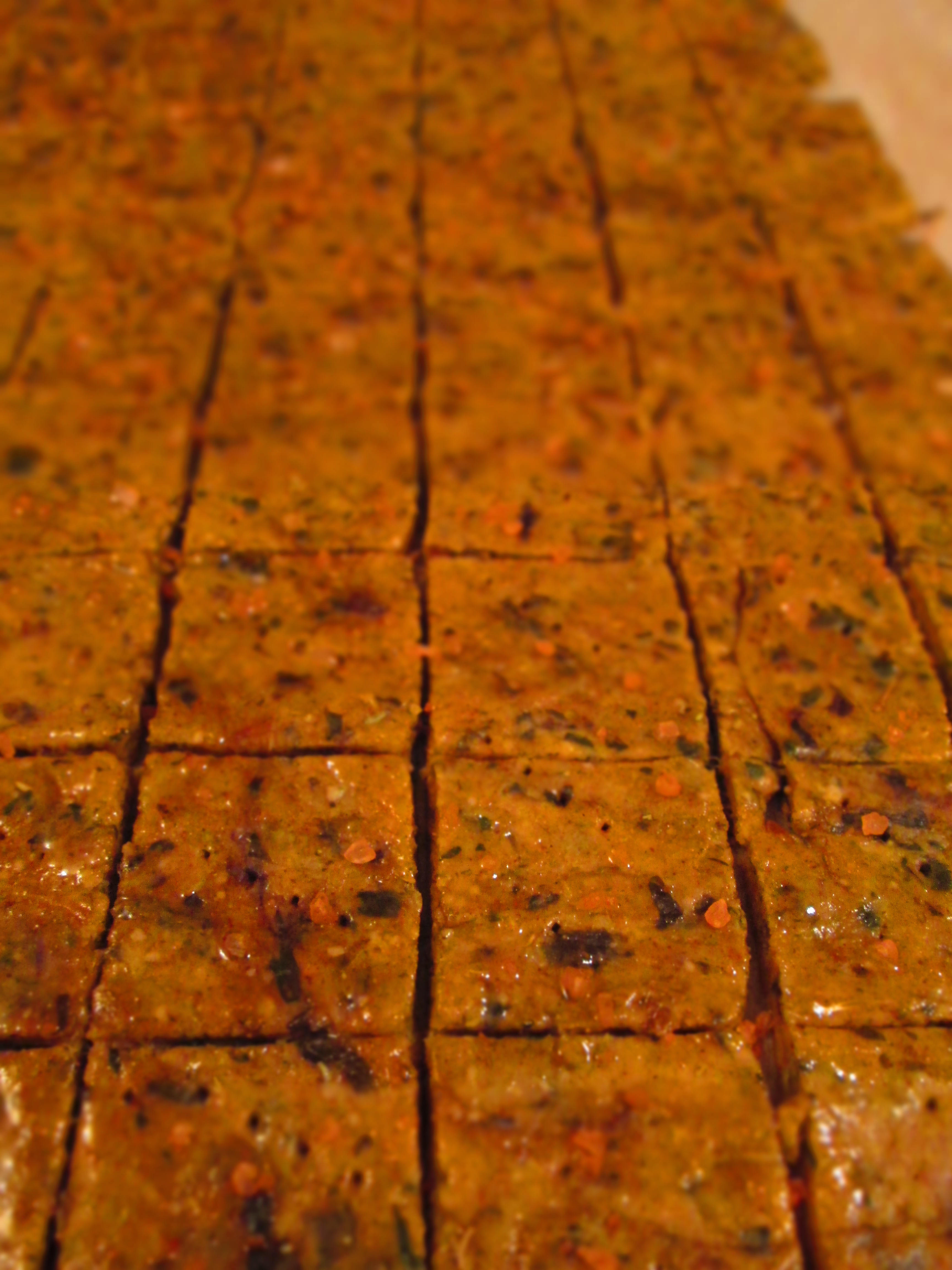
Cut off the edges to make straight lines. With a ruler, score 1 inch rows down and then across. IMG_4171

Brush top with remaining oil; sprinkle with finishing salt, if desired.IMG_4174

Bake until firm and lightly browned, about 25 minutes. Remove from oven and let cool 5 minutes. Then move parchment to a cooling rack. Separate crackers and let cool completely.

Store in a tin.

IMG_4182


4 Comments

Broccoli Rabe and Cheese-Stuffed Bread

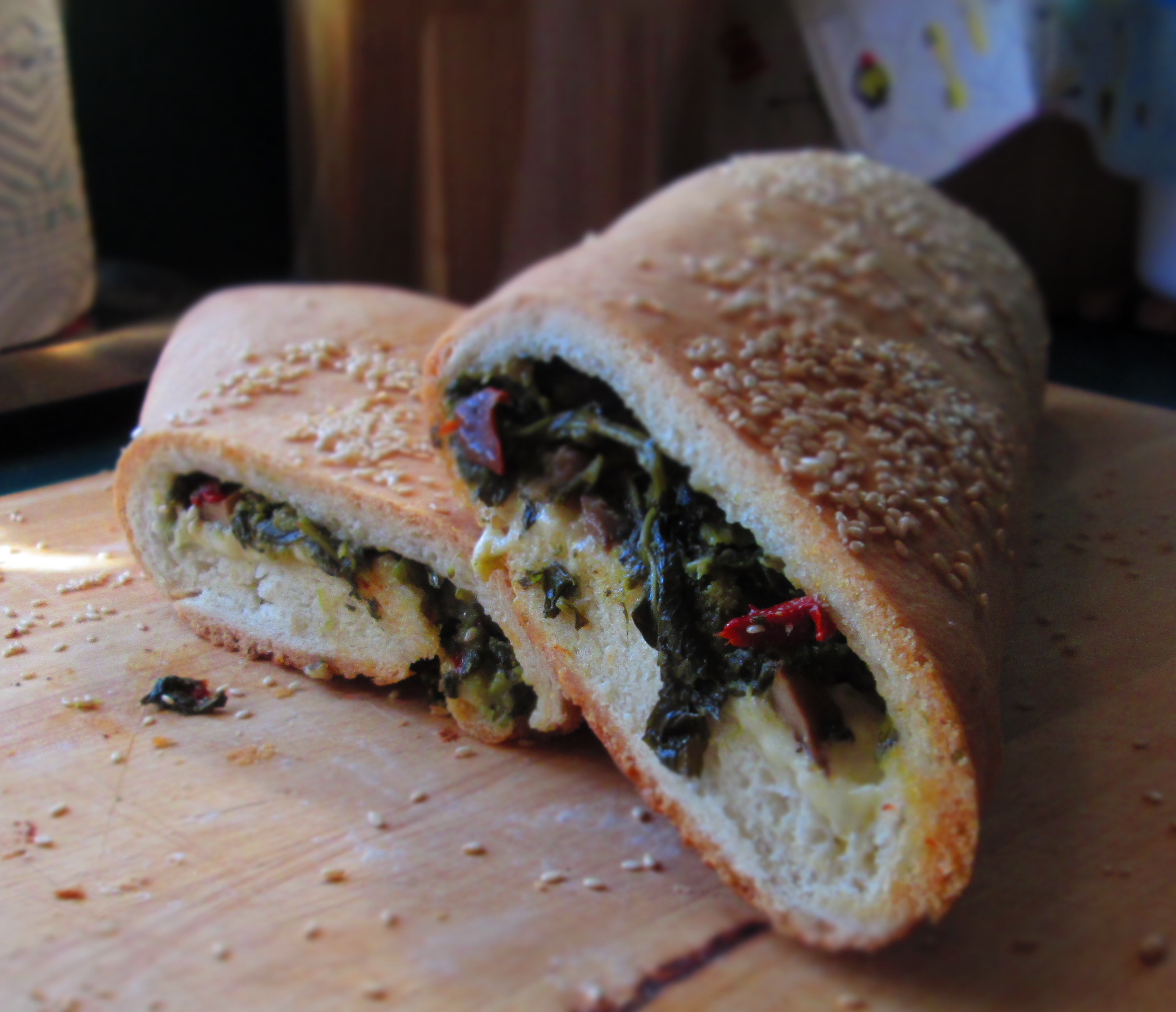
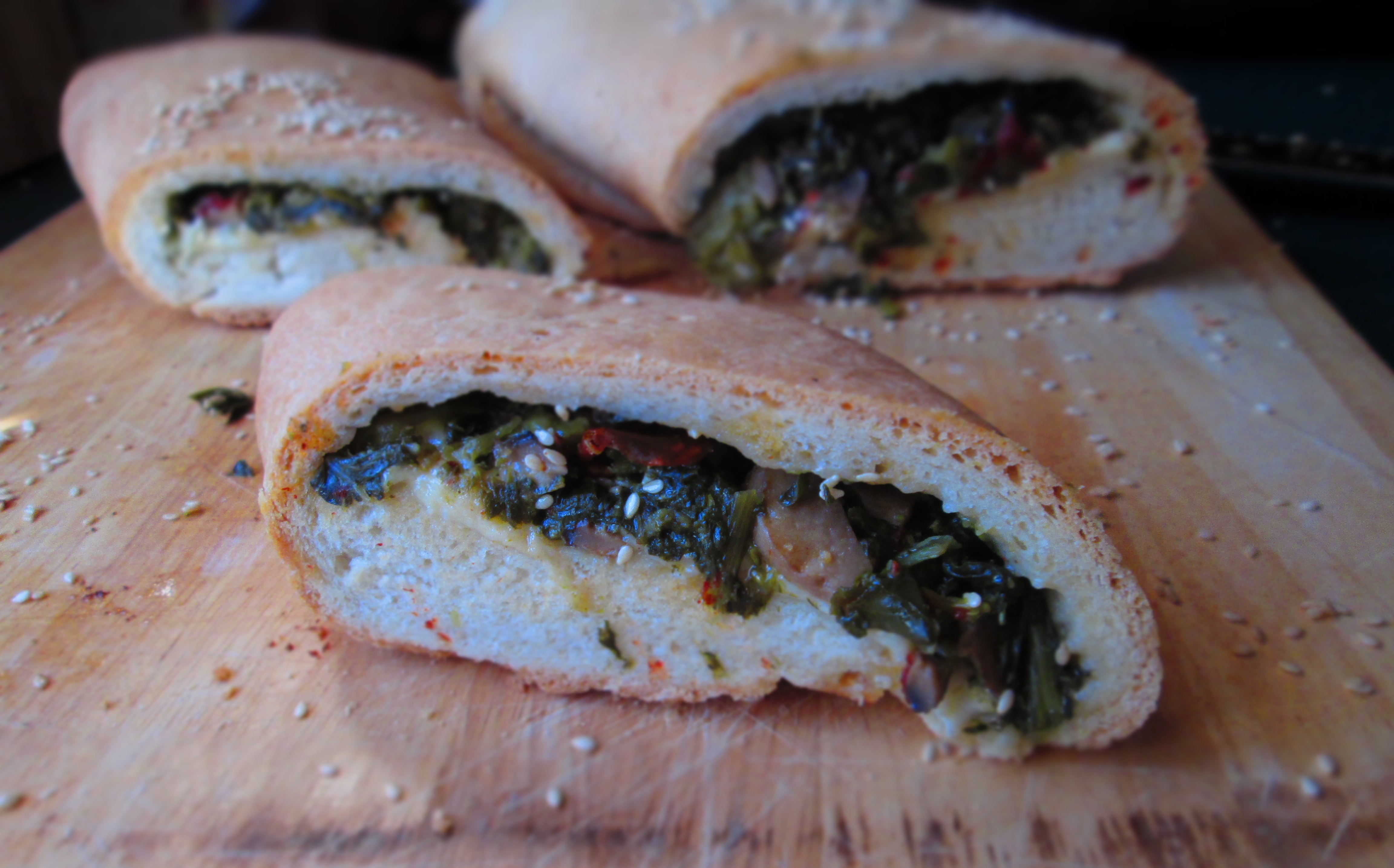
IMG_4110What happens when you have the urge to bake bread and have some broccoli rabe in the refrigerator? You make broccoli rabe bread, of course. Or, more specifically, broccoli rabe and cheese-stuffed bread.

Stuffed bread is an age-old delicacy and Italian cuisine is known for many kinds. In this one, the pleasant bitterness of the broccoli rabe is tamed by the rustic bread. The addition of cheese lends a salty sharpness to it. You can use whatever cheese you want. I used a blend of Fontina and Jarlsberg. If you like, you can add a sprinkle of parmesan cheese as well.

I just bought a big ol’ package of yeast, so I think I’m going to be on a bread-baking kick for a while. We’ll see. In the meantime, try this one out for breakfast, lunch, or a snack. By the way, it goes great with wine.

Broccoli Rabe and Cheese-Stuffed Bread

Bread:

2 teaspoons dry active yeast
½ teaspoon sugar
2 ½-3cups all-purpose flour
1 teaspoon kosher salt
1 tablespoon butter, melted
½ cup milk
2 teaspoon olive oil

Broccoli Rabe-Cheese Filling:

1 teaspoon olive oil
2 large garlic cloves, sliced
½ cup chopped mushrooms
1 teaspoon sea salt
1 large head broccoli rabe, chopped
1 teaspoon red pepper flakes
1 cup shredded cheese
1 egg, well beaten (optional)
2 tablespoons sesame seeds (optional)

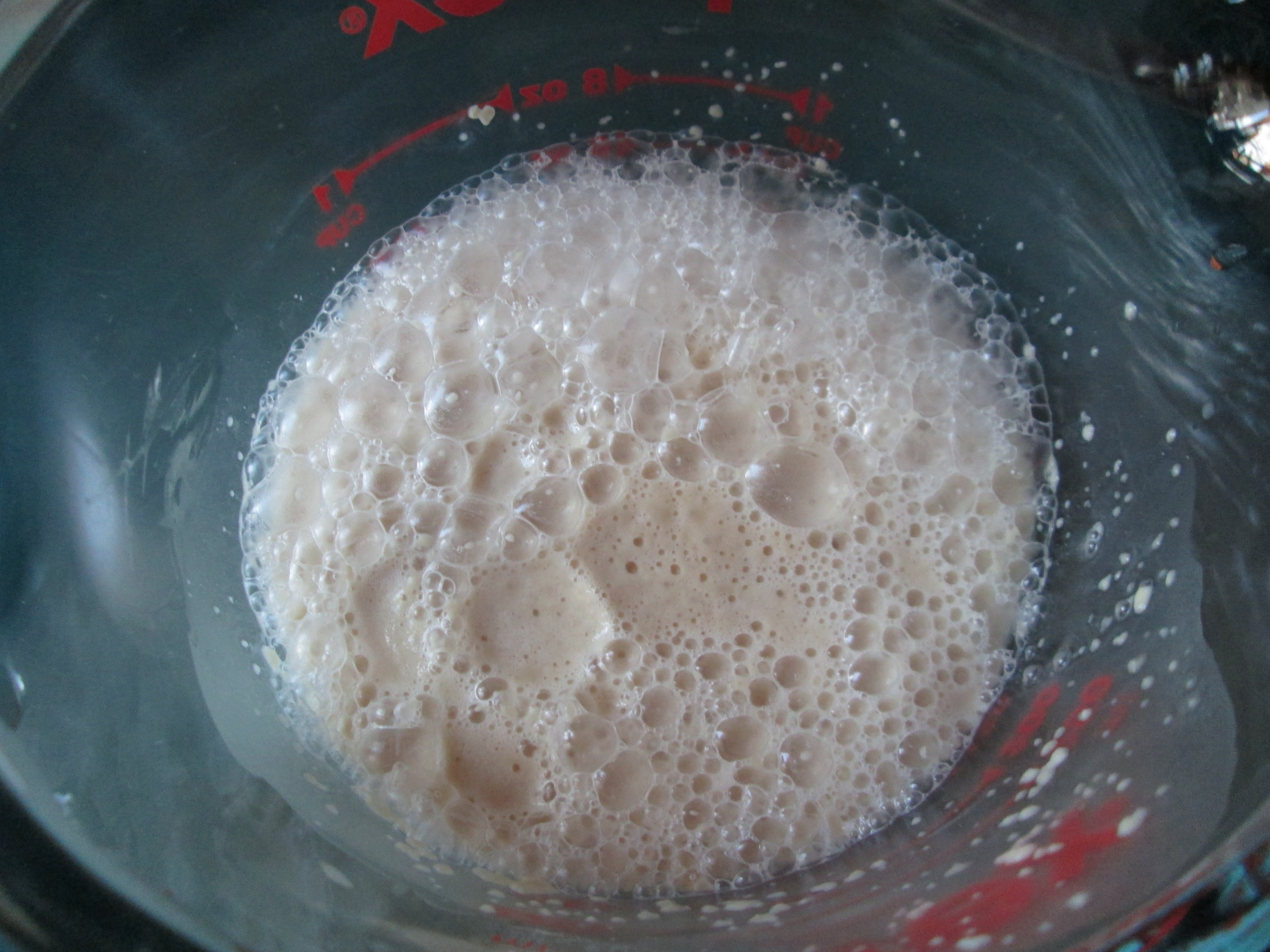
Combine the yeast with sugar and ¼ cup very warm water. Stir until dissolved and let sit for 5 minutes until it bubbles and foams.

IMG_4075

Combine 2½ cups flour and salt in the bowl of a stand mixer with the dough hook attached. Add the yeast and butter and begin mixing on medium speed. Begin adding milk a little at a time, then increase speed until dough comes together. Continue mixing for a couple of minutes.

IMG_4078IMG_4079

Transfer dough to a lightly floured board and knead for 2 or 3 minutes. Place oil in bottom of mixer bowl; place dough in oil then turn it over so that all of dough is coated. Cover with a clean towel and place in a warm, draft-free place and let rise for 1 hour.

IMG_4080

Meanwhile, make filling. Heat oil in a wide pan. Add garlic and saute for 1 minute. Add mushrooms and ½ teaspoon salt and sauté until they start to brown, about 10 minutes. Add broccoli rabe, red pepper flakes, and remaining salt; cover and let cook until tender, about 5 minutes. If pan dries out, add a little water, white wine, or broth.

IMG_4086

When dough has risen for an hour, place on lightly floured board again. Roll out into a rectangle about 8 x 15 inches. (It doesn’t have to be perfect, as my picture can attest.) Place the broccoli rabe along the center of the dough, then spread on the cheese. Roll up dough and pinch the seam together. Tuck in the ends and pinch together. Place on a baking sheet lined with parchment paper. Cover with the cloth and let rise again for another hour.

IMG_4093

Preheat oven to 375 degrees.

Prick the dough with a fork in several places. If you want to add sesame seeds, brush the top with egg and sprinkle on the sesame seeds.

IMG_4094IMG_4098

Bake for about an hour, or until golden brown and bottom sounds hollow when thumped.

IMG_4101

Move to a cooling rack and let sit for 5 minutes before cutting into it.

IMG_4114

Enjoy!


2 Comments

Black Bean Flour Bread with Herbs

IMG_4064

Over the past few years, I’ve experimented with quite a few gluten-free flours and I thought I’d seen, or at least heard about, most of them. Then, recently, I found a new one: black bean flour (or powder). The reason I hadn’t seen it before? It was in the coffee and tea aisle in an Asian market.IMG_4031

See, the coffee and tea aisle in an Asian market is not like the coffee and tea aisle in other markets. In an Asian market, next to the Folger’s and Maxwell House and Lipton and Celestial Seasonings, you’ll find an enormous assortment of beverage mixes to which you would add hot water. The teas, of course, include herbal “health” teas, but next to the coffees, you’ll find beverages made of grains, roots, and beans. These are all drunk in various Asian countries for various health purposes. In the case of bean flours, they provide protein.

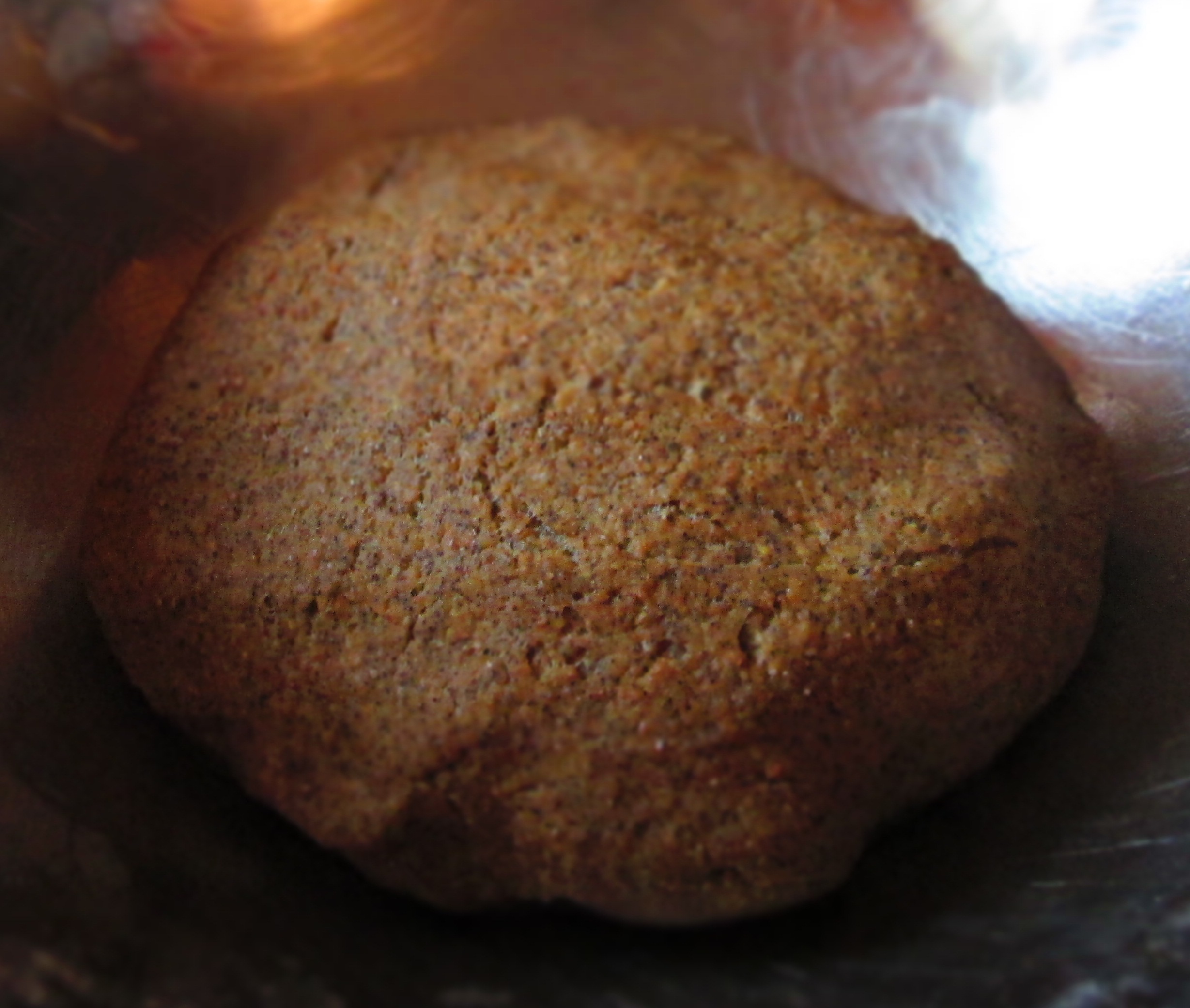
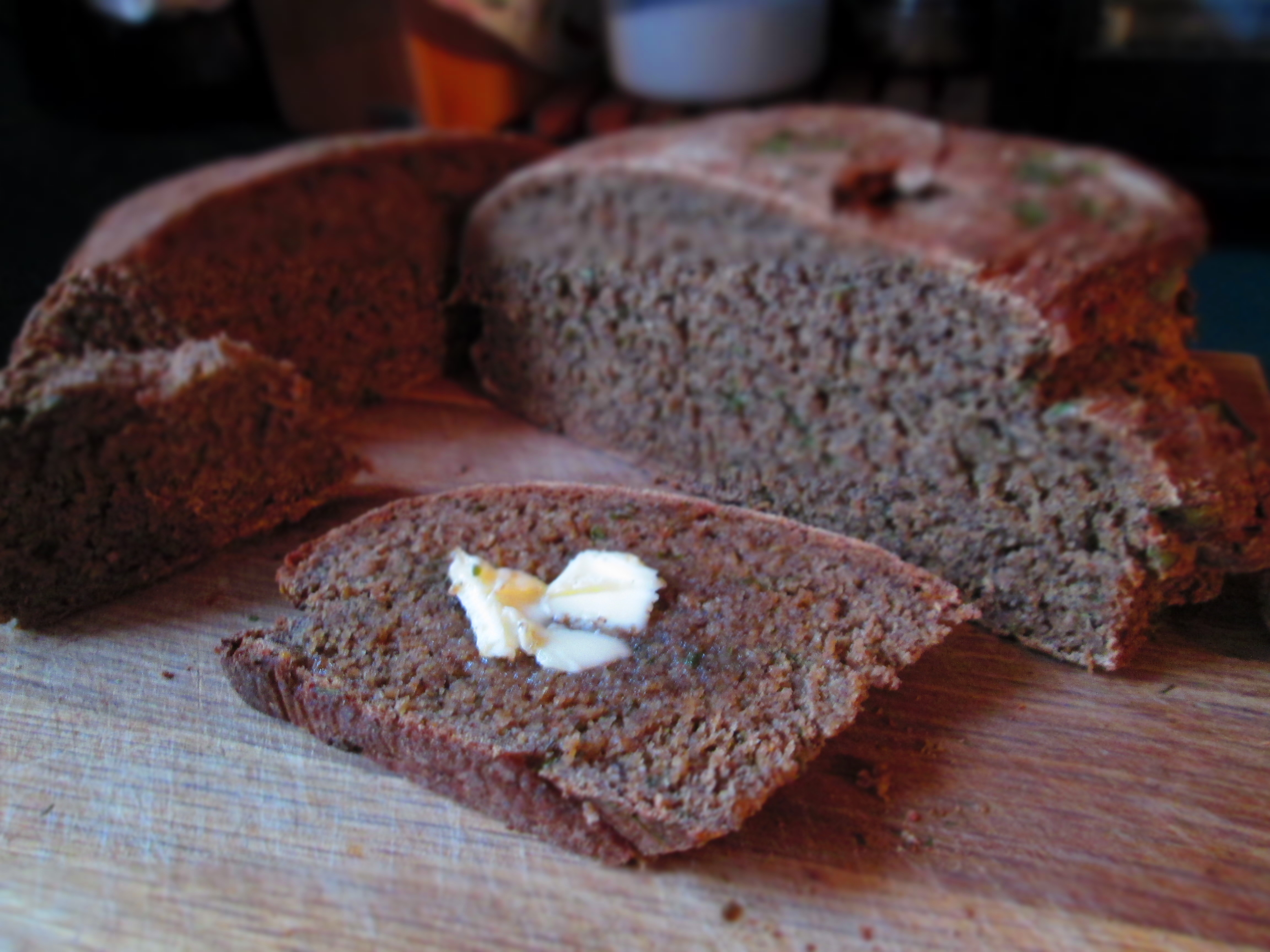
Black bean flour lends a dark color to whatever you add it to, so it’s generally added to breads, chocolate cakes, or dark vegetable dishes, such as black bean quesadillas. I decided to try my hand at bread. It turned out very well, and I’m going to try incorporating it into a gluten-free loaf next time.IMG_4032

Black bean flour has an unusual flavor and takes a bit to get used to. But after I processed the first bite, I found the taste to be pleasant. I think it makes a great snacking bread with butter or jam to accompany coffee or tea. But I think it would also make a good hearty sandwich bread—any kind that you would make with a pumpernickel or dark European-style loaf.

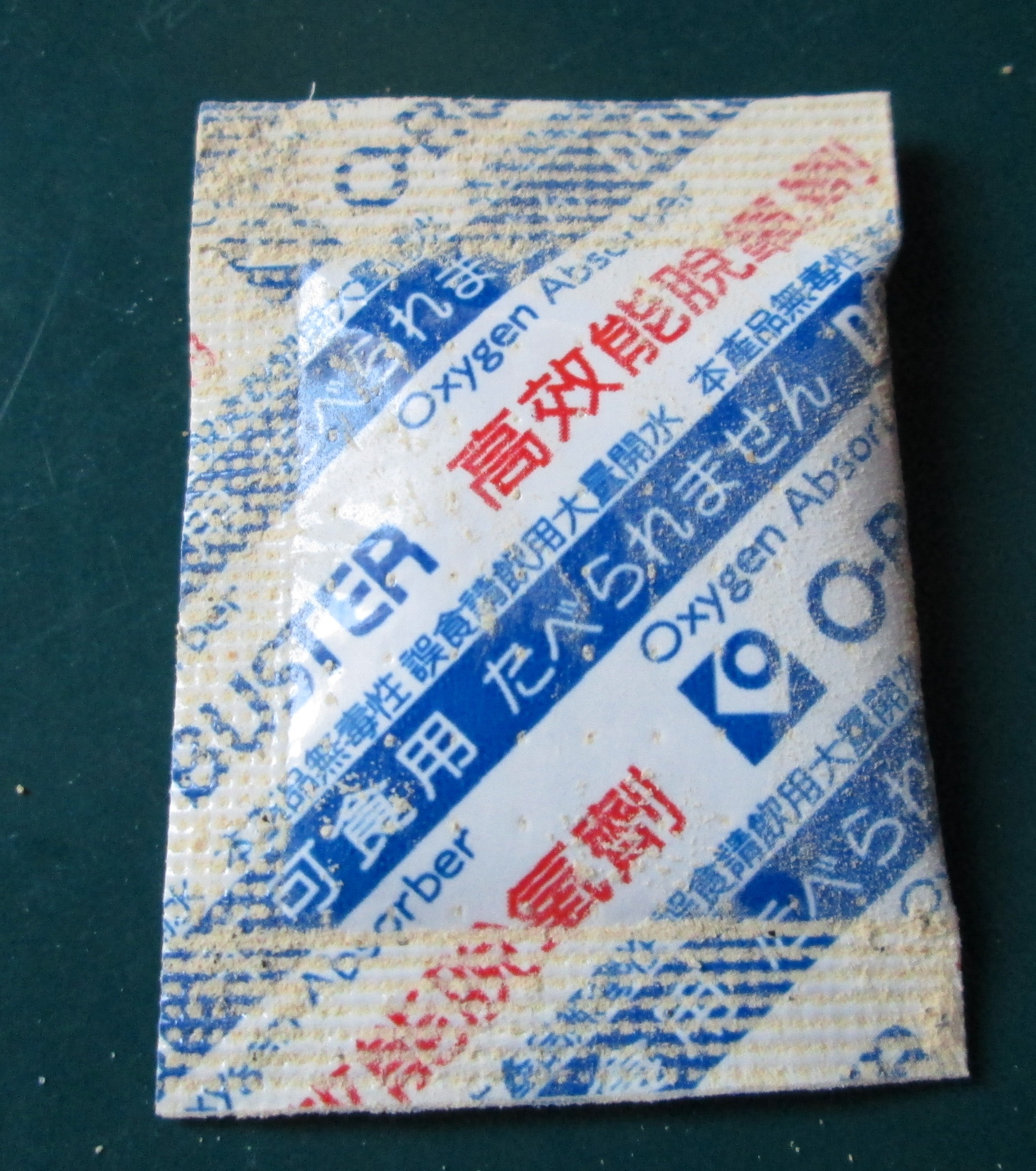
If you want to give it a try, look for black bean flour in an Asian IMG_4033market or Whole Foods. If you can’t find it, Bob’s Red Mill has it (they seem to only have one size, though—6.5 lbs.). Oh, and be careful–I found one of those preservative packets in mine (oddly named “oxygen absorber”).

Black Bean Flour Bread with Herbs

1 tablespoon dry active yeast
1 teaspoon sugar
1 cup black bean flour
1 cup whole wheat flour, plus more for dusting
1 cup all-purpose flour
2 teaspoons kosher salt
2 teaspoons olive oil
¼ cup chopped parsley
¼ chipped dill

In a small bowl, stir yeast and sugar in ¼ very warm water until dissolved. Let sit 5 minutes until foamy.

IMG_4034

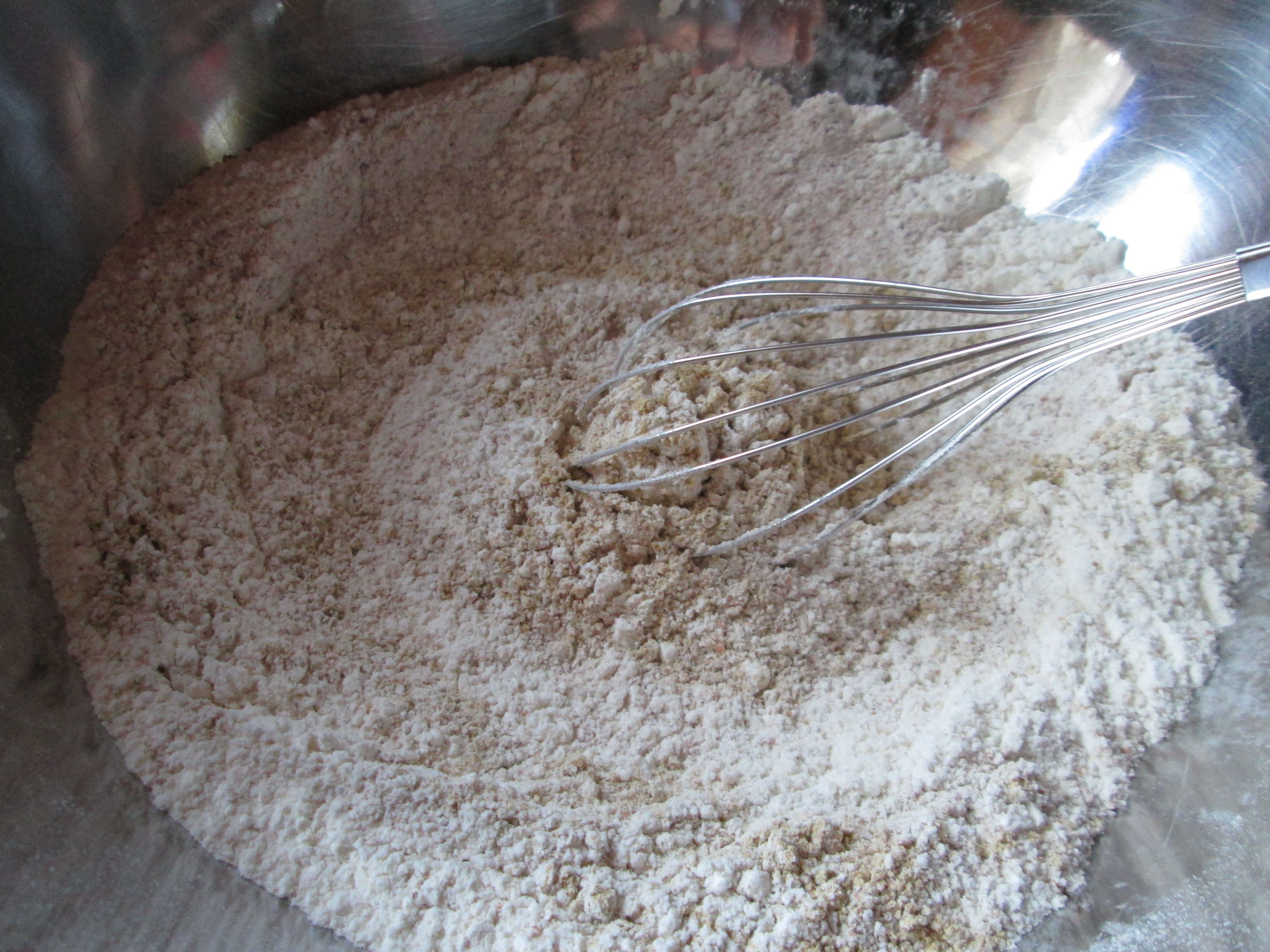
Whisk together the flours and salt.

IMG_4036

(If you have a mixer with a dough hook, you can use that. You can also use a food processor. Otherwise, mix the flours and salt together in a large bowl.)

Pour in the yeast along with another cup of very warm water. Mix until all ingredients are well blended. Unlike most yeast breads, you don’t have to knead this. This will be a moist, somewhat sticky dough. Add a little more warm water if it seems dry.

IMG_4038

Coat the bottom of a large bowl with the oil; place dough in bowl and turn it over until completely coated with oil. Cover with a towel and set in a warm, draft-free place and let rise for 2 hours.

IMG_4055

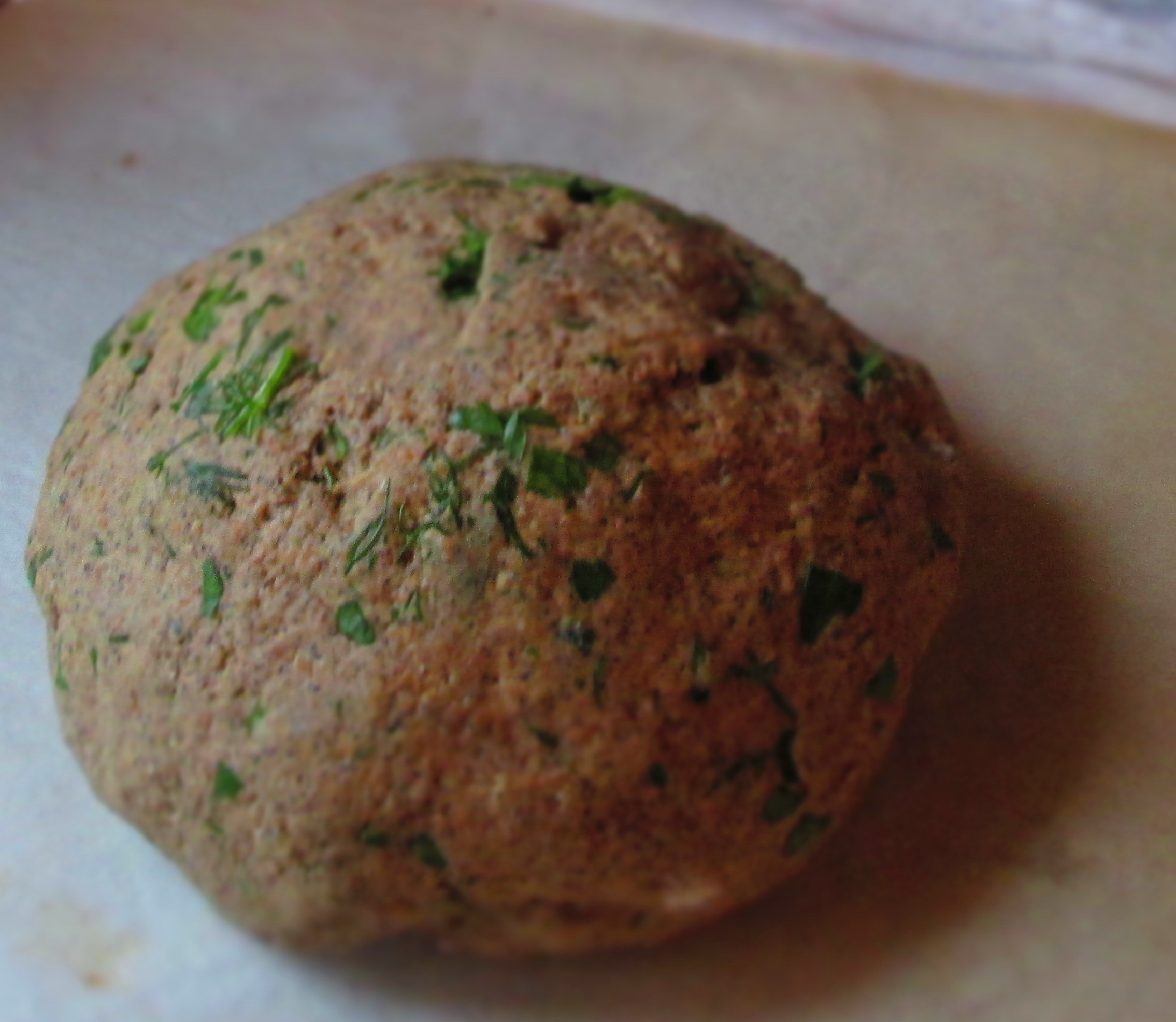
Lightly dust a board with flour and turn the dough out. Flatten it a little. Add the chopped parsley and dill and begin folding it in. When herbs are well incorporated, stop working the dough.

IMG_4059

Place on a baking sheet lined with parchment paper. Cover again with the towel and let rise another hour. (You can divide the dough into 2 loaves, or make 1 big loaf.)

Preheat oven to 400 degree F. Bake bread until it sounds dense when you thump it, about 40 minutes for smaller loaves, 45-60 minutes for a larger loaf.

IMG_4069


6 Comments

Gluten-Free Pumpkin-Coconut Cake with Apple Cider-Bourbon Glaze

IMAG2374

One of my favorite things about the autumn holidays is baking with pumpkin. Every year, I try at least one or two new pumpkin recipe. This one is an homage to the people in my life who have gluten issues.

I call this recipe gluten-free but be aware that the flour I chose to use is spelt. If you have a gluten sensitivity, you’re probably able to eat spelt. But if you have Celiac Disease, this isn’t the recipe for you.

Pumpkin is a strong flavor and usually trumps any other flavors that it’s combined with. I wanted to make the coconut in this cake as bold as I could, so I used coconut in several forms: coconut sugar, coconut flour, coconut milk, coconut rum, and shredded coconut. This cake is dense but moist with a nice little crunch from the shredded coconut. And best of all, those of you with gluten issues don’t have to miss out on the pumpkin goodness at the holidays.

Enjoy and have a safe, healthy, happy Thanksgiving.

Gluten-Free Pumpkin-Coconut Cake with Apple Cider-Bourbon Glaze

1 cup spelt flour
1 cup coconut flour
2 teaspoons baking powder
2 teaspoons baking soda
1 teaspoon cinnamon
½ teaspoon nutmeg
¼ teaspoon salt
2 cups unsweetened shredded coconut
1 cup coconut rum
1 cup butter, softened
1 cup coconut (palm) sugar
4 large eggs
1 15-oz can pumpkin puree
½ cup coconut milk
½ cup applesauce
1 teaspoon vanilla extract
1/2 cup chopped pecans, almonds, or walnuts

Glaze
1 cup confectioners’ sugar
2 teaspoons bourbon
2 teaspoons apple cider

Grease and flour a 10-inch cake pan. Preheat the oven to 375.

In a medium bowl, whisk together the spelt and coconut flours, baking powder, baking soda, cinnamon, nutmeg, salt. Place shredded coconut in a small bowl and pour rum over it. Mix and let sit.

Cream together the butter and coconut sugar until fluffy. Add eggs one at a time, incorporating each one. Beat in pumpkin puree, coconut milk, applesauce, and vanilla.

Gradually add flour mixture and mix until well blended. Fold in shredded coconut and nuts.

Pour into cake pan and bake 1 hour and 15 minutes, or until a knife inserted in center comes out fairly clean (the knife will be slightly wet but you don’t want to see raw batter coming out). Place on a cooling rack and let cool completely in pan, then invert onto a plate. The cake will be fragile while it’s hot.

Make Apple Cider Glaze:

Place confectioner’s sugar in a medium bowl. Add 1 teaspoon each bourbon and cider, then a little more at a time until it reaches the right consistency. Pour over cake. Decorate as desired.

IMAG2373


Leave a comment

Pan-Fried Indian Eggplant

IMG_3981

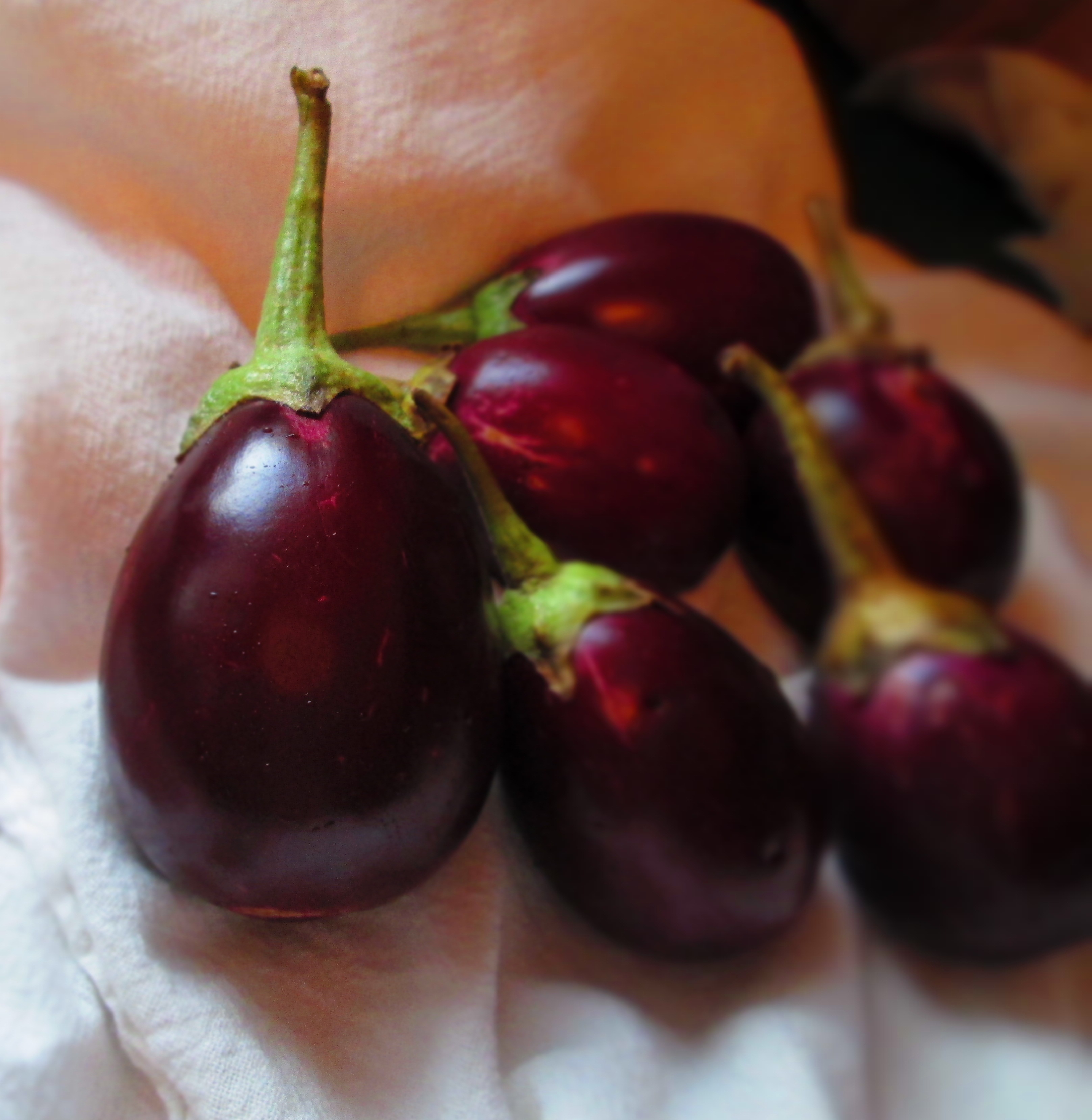
Simple ingredients call for simple preparations. I could have turned  this beautiful Indian eggplant I found into so many wonderful dishes: ratatouille, vegetable chili, eggplant lasagna, pasta with roasted eggplant, etc., etc.

Instead, I wanted to keep this pretty vegetable pretty by just pan frying it. It’s the easiest thing in the world. Have this on the side with a protein or other vegetables, over rice, tossed with pasta, or (like I did) on homemade pizza.

Pan-Fried Indian Eggplant

1 1/2 lbs. Indian (or baby or Japanese) eggplant
1/4 cup oil (olive, sunflower, grapeseed)
1/2 teaspoon sea salt
Freshly ground black pepper

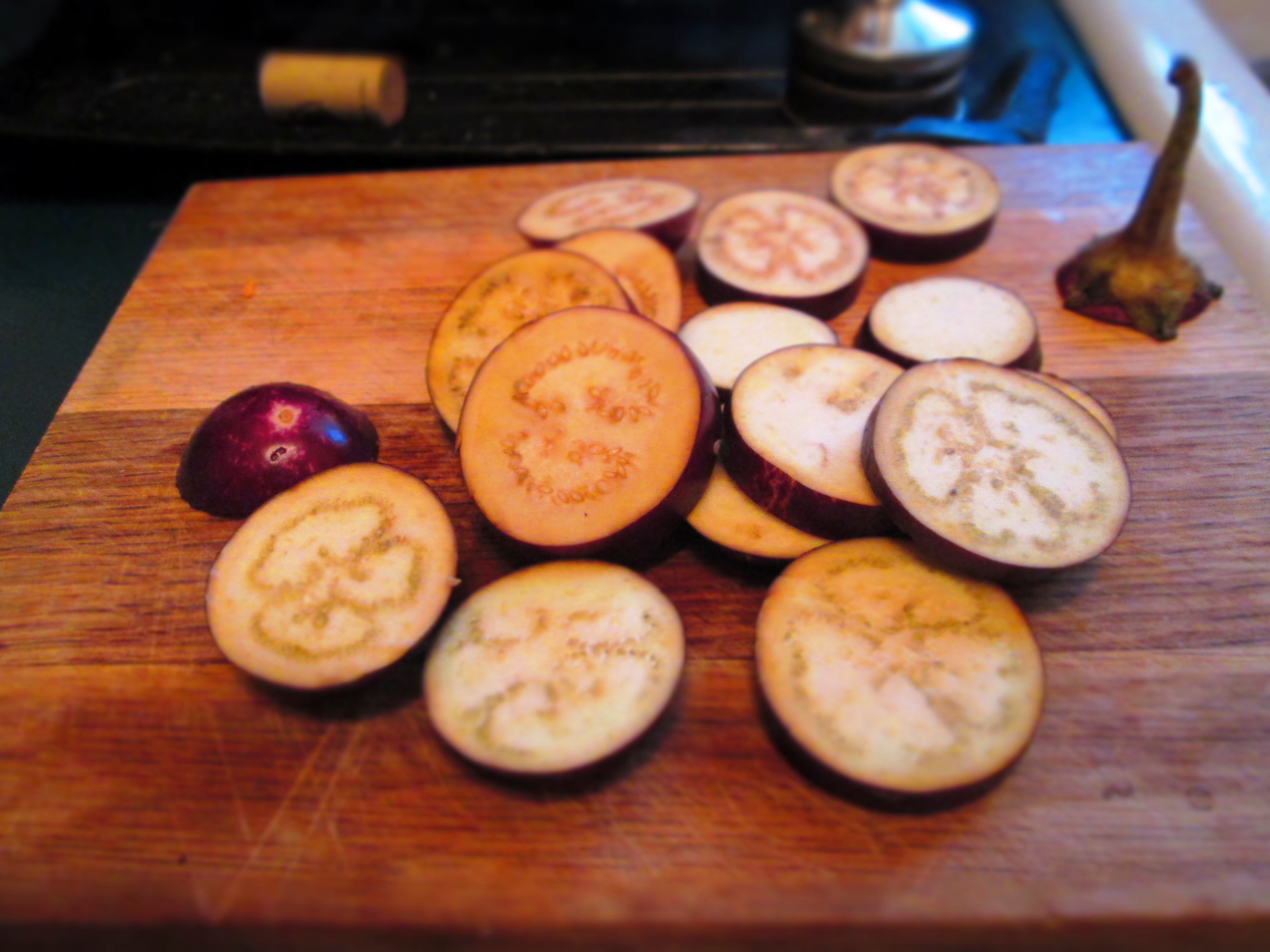
IMG_3984Slice the eggplant into 1/4-inch-thick rounds. Heat half the oil in a frying pan. Add some of the eggplant (don’t crowd the pan). Cook, turning them over once, until browned on both sides. Transfer to paper towels.

Repeat with remaining eggplant, adding more oil to the pan as needed (eggplant soaks up oil quickly). Sprinkle the salt over the eggplant. Enjoy!


IMG_3987


2 Comments

My Exploding Nuts (Ginkgo, that is)

IMG_4028

I went to an Asian market the other day with a list in hand. I had specific things that I needed to buy and a short amount of time in which to shop, and I wasn’t looking for anything unusual or new, the way I usually do. I had grabbed my items and was just about to head to the check-out lines when something caught my eye. They were in the refrigerated case, where Asian markets generally keep the more perishable produce, such as mushrooms, water chestnuts, chili peppers, and a host of other delicate items.IMG_4016

Tucked between packages of freeze-dried ginkgo nuts and little cartons of quail eggs and 100-year-old duck eggs were small red mesh bags with these little white things in them. Curiosity got to me and I picked one up. They looked like pistachio nuts. I looked at the sign, which read, “Ginkgo nuts.”

Interesting. I’d had the freeze-dried ones before in a a stir fry, but I’d never seen the raw, unshelled nuts before. So, yes, I bought them.IMAG2360
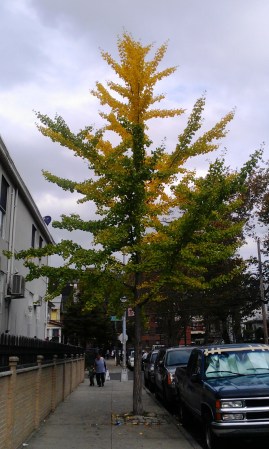
Ginkgo trees are the oldest living trees on earth, unchanged for more than 200 million years. Evidence shows that Chinese began cultivating it more than 1,000 years ago. Last week, I unknowingly encountered a ginkgo tree. Because it’s, its leaves were turning yellow from the top down. I thought it was so pretty that I took a photo of it, but when I got near it, I was repelled by an odor of urine. I thought, “Great, some asshole ruined the beauty of this tree by peeing on it.” I posted it on Facebook and was told by one of my former NGI classmates that this was a gingko tree and the smell is natural. It’s believed that this odor was attractive to animals at some point.

What a coincidence that I would buy ginkgo nuts the same week. I asked my friend at work how to use them and she told me that I should boil them, shell them, and peel off the skin that’s on each one. While I trusted her advice, I wondered if there were any other methods. I read that another common way to prepare them is pan frying. I decided to try both. I put half in a pot of water and boiled them for about 15 minutes, and pan fried the other half in a little bit of sunflower oil.

After placing them both on the stove, I went into the other room to check on an email. There I was, scrolling through my mail, when I hear this loud POP. As I walked back into the kitchen, there was another big POP. I had a suspicion about what was happening, so I cautiously approached the stove and sure enough, those suckers were popping right out of the pan and shooting across the room. They had become oily little projectiles and little pieces of shell landed on my counter and floor like shrapnel. I shielded my face as I approached the stove because I didn’t want to become a casualty of detonating ginkgo nuts. At arm’s length, I turned off the flame and moved the pan to the back at a safe distance. The whole thing was rather ridiculous, but I pictured getting a sharp piece of shell in my eye and wasn’t thrilled by the thought. In fact, I did get a shot of hot oil right near my eye.

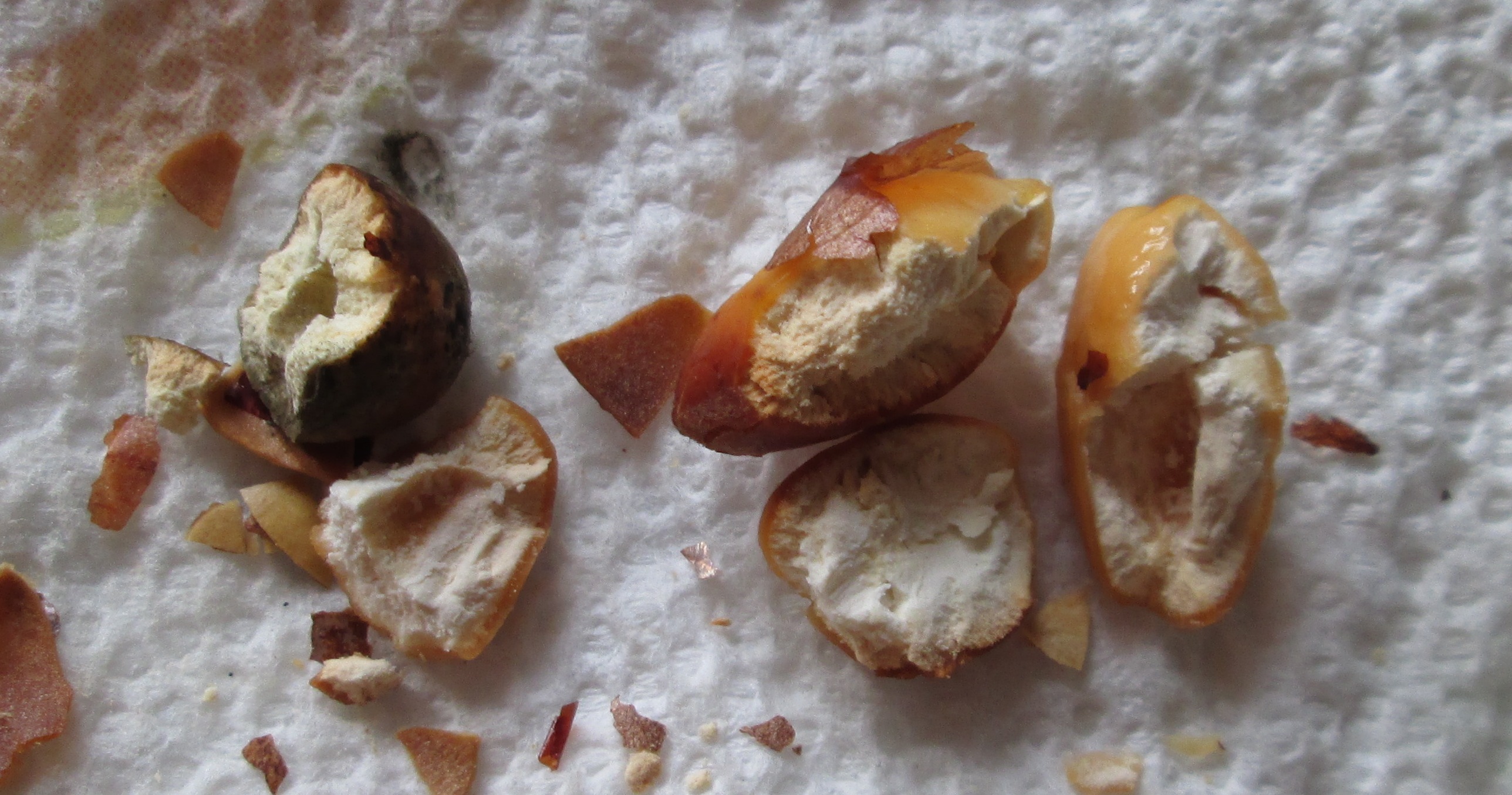
IMG_4023IMG_4027While both methods turned out perfectly fine ginkgo nuts, there were a few differences. The fried ones came out with a nice golden yellow color, while the boiled ones had a smooth creamy look to them. (Pictured above, on the left are the boiled nuts; on the right are the pan fried nuts.) That one is a personal choice. However, I don’t think anyone would argue that struggling to peel skin from a nut is not a fun task. The skins, for the most part, slid off the pan fried nuts, while they stuck a little to the boiled ones. I mean, it wasn’t as difficult as removing skin from, say, hazelnuts or Brazil nuts, but I did struggle a tiny bit. A few came out looking like plaster, crumbling into dust—I assumed those were rotten. IMG_4025

To avoid the missile launch from your frying pan, I think timing the cooking would help. I had them in there for approximately 8 to 10 minutes before they started exploding, so maybe keeping them in the pan for about 5 minutes would do the trick. And cracking them first would probably prevent the fireworks, too.

I also discovered that the pan fried nuts were less bitter than the boiled nuts. So if you’re going to eat them out of hand, I suggest pan frying them. Ultimately, they just tasted better.

All of this pertains to ginkgo nuts that have been removed from the fruit. If you have access to the fruit, handle them carefully. The fruit contains urushiol, the same element that’s found in poison ivy, and may cause a skin reaction. Also, your hands will smell like cheese, I’ve been told. You should wear gloves and remove the flesh from around the nuts. The upside is that ginkgo nuts are known to stimulate the brain, staving off memory loss and Alzheimer’s Disease. They’re also used in Chinese culture to help with breathing/lung problems, such as asthma and bronchitis. Chinese also believe them to be aphrodisiacs.

Whether you boil or fry them, whack them gently with a mallet (or meat tenderizer or blade of a knife, or whatever you’ve got handy). Or you can crack each one with a nut cracker. Don’t whack or crack them too hard as the nuts are rather delicate. Sprinkle them with a little sea salt and enjoy. Or add them to stir fries, soups and stews, or just about anything you would add nuts to.

The medical warnings about ginkgo nuts is that adults shouldn’t have more than 8 in one day and children should have a maximum of 5. And word on the street is that if you are allergic to cashews or mangoes, you should avoid them altogether.

Anyway, that’s the story of my exploding nuts. So, just let my stupid experience be your guide when trying this Asian specialty. Here’s hoping your nuts don’t explode.

IMG_4028

Ginkgo Nuts for Snacking

1 small bag ginkgo nuts
1 teaspoon cooking oil
Sea salt

Rinse nuts under running water.

If frying:
Lay the nuts out on paper towels to dry.
Heat the oil in a small frying pan. Add the nuts and cook, stirring occasionally, for about 5 minutes. Remove from heat and let cool until you can handle them.

If boiling:
Place nuts in a small pot and cover with water. Bring to a boil and cook about 10 minutes. Drain and let cool.

Lay the nuts on a dish towel. Gently whack the nuts with a mallet (or other object) so that crack. Remove the shells and skins (a paper towel may help you rub the skins off more easily).
Sprinkle with salt and enjoy (in moderation!).