Having grown up in a traditional Italian family, pasta was part of my natural landscape. But today, pasta comes in many varieties. I don’t mean just shapes—those have always been. I mean ingredients. And because so many people are carb conscious, and/or avoid wheat, pasta manufacturers have come out with pasta made from wheat flour alternatives. It is now made of quinoa, farro, corn, kamut, black bean flour, and other ingredients.
For this recipe, I found a beautiful red lentil pasta. It’s made with 100% red lentil flour in place of regular flour, so it’s completely gluten free. Its flavor is earthy and nutty, and it pairs very well with sautéed mushrooms. Unfortunately, like any brightly colored foods, they lose their pretty pinkish hue once cooked. I found this particular bag at Eataly in Manhattan, but you can find “alternative” flour pastas in large supermarkets, Italian markets, gourmet shops, and, of course, online.
Enjoy!
Red Lentil Pasta with Sauteed Mushrooms
1 tablespoon olive oil 8 oz. baby bella or cremini mushrooms 2 teaspoons kosher salt 8 oz. red lentil pasta ½ tablespoon salt Freshly ground black pepper to taste ¼ cup grated or shredded parmesan cheese
Heat the oil in a wide skillet, preferably cast iron. Add the mushrooms and 2 teaspoons kosher salt and sauté over medium-high heat, stirring occasionally, until the mushrooms have browned. This will take anywhere from 20 to 30 minutes.Fill a medium saucepan three-quarters with water and bring it to a boil. Add the pasta and ½ tablespoon salt and cook, stirring often, until it’s al dente, about 10 minutes. Drain and transfer to a bowl.If the mushrooms have cooled off, reheat them briefly. Add them to the pasta and season with pepper. Mix in the parmesan. Serve hot.
Hello, everyone! As we approach the end of another year, many cultures around the world begin their preparations for carrying out traditions that will ensure good luck, good health, and prosperity in the new year (at the very least, they can’t hurt). Food always—pretty much without exception—plays a part in these rituals.
Soba Noodles
In Japan, for example, it is customary to eat soba noodles during the New Year’s celebration to ensure a long life, symbolized by the long noodles. In Spain, 12 grapes are eaten at midnight on New Year’s Eve—one for each month of the year—and it is hoped that the grapes are sweet, which is considered a harbinger of a sweet year ahead. In Austria and Germany, they eat little marzipan pigs, which are considered good luck. In the Philippines, they make a lot of noise on New Year’s Eve, banging pots and pans, to ward off evil spirits. In Greece, they smash a pomegranate at the front door to spill the seeds, symbolically spreading wealth.
In many countries, legumes are popular for New Year’s because they swell when cooked, symbolizing increased financial prosperity. Lentils are used in Italy and Brazil because they are round like coins. In the United States, black-eyed peas are popular (the musical group and the legume) and Hoppin’ John, which features that particular legume, is a staple New Year’s dish in the South.
Recipes for Hoppin’ John first began appearing in cookbooks in the 1840s, but the origins are a little murky, and possibly a little unfortunate. Black-eyed peas are native to West Africa, and it’s believed that they were brought over by slave traders as part of their cargo. Naturally, the crops were planted in the South, and became an important commodity. Some believe that eating black-eyed peas for New Year’s is actually a carryover of a 1500-year-old tradition of consuming them by Sephardic Jews on Rosh Hashanah, the Jewish New Year.
The beans themselves represent coins, and there’s one version of this tradition that calls for hiding an actual coin in the Hoppin’ John—bringing the finder good luck—as well as filling a bowl with beans and coins and leaving it on the table for some benevolent spirit in exchange for granting good fortune.
But why is it called Hoppin’ John? There are several stories. One says that there was an old man who hobbled around and sold peas on the streets of Charleston, and the dish was named after him. Another says that children would hop around the dinner table, eagerly anticipating the serving of this dish. A more likely story is that it comes from a French term, pois pigeons, meaning pigeon peas, which are a big part of Caribbean culture.
Hoppin’ John is traditionally made with pork and served with rice. In many countries, pork, for some reason, is considered lucky to eat on New Year’s (marzipan is not the only kind of pig that Austrians and Germans eat for New Year’s). Rice flourished in the hot, steamy South (it was dubbed at one point Carolina Gold). Bring all three of these elements together, you’ve got one lucky dish. Also, Hoppin’ John is often served together with collard greens, because it represents money. Cornbread, too, is considered lucky because of its “golden” color (you get the idea).
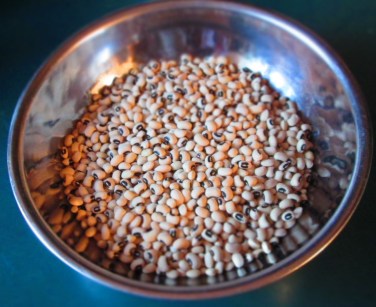
I’ve made different versions of Hoppin’ John, with and without greens, with and without meat, with rice and with other grains… This is probably the simplest version I’ve cooked. The nice thing about it is that you can make it ahead of time and freeze it, then defrost it in time for New Year’s Day. By the way, unlike other dried beans, black-eyed peas do not need to be pre-soaked. You can, if you want to cut down cooking time, do a quick-soak method by bringing the peas to a boil in a pot of water, letting them boil for 2 minutes, then letting them sit in the water for an hour off heat. But, frankly, if you’re going to do all of that, you’re not really saving any time, unless you want to do this the day before. In my opinion, not worth it. Just let the Hoppin’ John cook for an hour, and it’s a done deal.
Whatever traditions you have for New Year’s—or whether you have any at all—I’m wishing you all a healthy, happy, prosperous New Year. I wish for peace and tranquility, honor and compassion, and above all, respect for all living beings.
Hoppin’ John
Makes 6 servings.
1 tablespoon olive oil 1 medium red onion, chopped 1 tablespoon kosher salt 4 garlic cloves, minced
1 tablespoon tomato paste 6 cups vegetable broth 1 small green bell pepper, chopped 1 cup coarsely chopped carrot 2 large celery ribs, chopped 1 cup chopped tomatoes, liquid reserved 3 cups dried black-eyed peas 1 or 2 dried bay leaves Freshly ground black pepper ¼ cup minced fresh parsley
2 teaspoons fresh minced thyme or rosemary (or both), optional
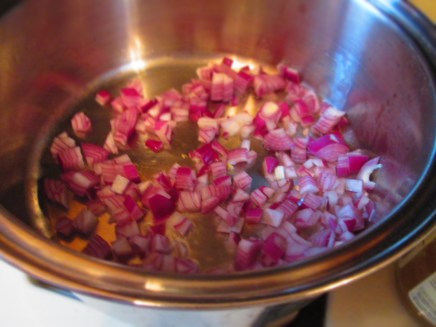
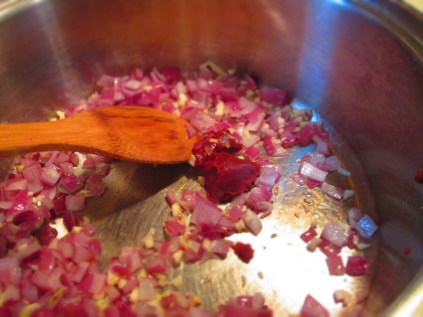
Heat the oil in a Dutch oven or large saucepan. Add the onion and ¼ teaspoon of the salt, and sauté over medium-high heat until soft and translucent.Add the garlic and sauté until fragrant, 1 to 2 minutes. Drop in the tomato paste and stir it in until it’s well blended, then let it cook for a minute or two, until the bottom of the pot starts to brown.Pour in a little bit of the broth to deglaze the pot and scrape up the brown bits with a wooden spoon. Let this cook until the liquid has evaporated.Add the bell pepper, carrot, celery, and ½ teaspoon of the salt and sauté until all the vegetables have softened but are still firm.Pour the liquid from the tomatoes into a measuring cup and add enough water to make 1 cup. Add this to the pot. Pour in the broth, and add the beans, bay leaves, remaining salt, and black pepper. Mix well.Bring this to a boil; lower the heat to medium-low and simmer, partially covered, about 1 hour, or until the beans are tender but not mushy. If the pot dries out before the beans are cooked, add more water or broth and stir it in. Stir in the parsley and other herbs and taste for seasoning. Add more salt and/or pepper, if you like.
Remove the bay leaves and serve with rice or cornbread, or on its own.
Every season brings with it its own special delicious crops. One of my favorite autumn vegetables is Brussels sprouts. Earthy, cabbage-y, and slightly bitter, Brussels sprouts have traditionally been underrated, and even reviled. Even the words “Brussels sprouts” can bring a look of revulsion to some people’s faces.
O ye, of little faith. You poor honeys just haven’t had them cooked right.
I have used Brussels sprouts in many dishes, but I had never made them in a frittata. Until now. I loved it.
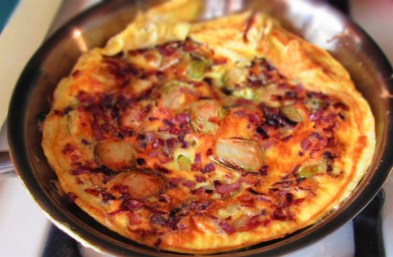
Frittatas, in general, are very forgiving. You can add just about anything and it will taste good. Brussels sprouts are no exception. Paired with red onions, they make this frittata hearty, flavorful, and elegant enough to serve others.
Enjoy!
Brussels Sprouts-and-Red Onion Frittata
Makes 4 servings.
½ lb. Brussels sprouts, trimmed and halved 2 tablespoons olive oil 1 teaspoon kosher salt
1/3 cup finely chopped red onion 3 large eggs 1 tablespoon grated parmesan cheese Freshly ground black pepper
Preheat the oven the 350 degrees F/176 degrees C.Place the Brussels sprouts in a medium bowl. Add 1 tablespoon of the oil and ½ teaspoon of the salt. Toss until all the sprouts are coated. Spread them out on a baking sheet and roast until nicely browned and tender when pierced with the tip of a knife.Beat the eggs in a medium bowl with the remaining salt, parmesan, and black pepper.
Heat the remaining oil in a small skillet. Add the onion and sauté until they’ve softened and just start to brown, about 2 minutes. Add the Brussels sprouts and spread them out evenly (try to face them cut side down for a nice presentation). Pour the eggs evenly over the onion and sprouts. Lower the heat to low and cover the pan. Cook until the underside of the frittata is browned, about 5 to 7 minutes. (You can check by lifting the frittata on one side with a spatula and peeking underneath.)
Place a plate that is wider than the skillet over the top and a carefully (using a dry kitchen towel or potholder!), flip the frittata over onto the plate. Then slide the frittata back into the skillet.Continue cooking a few more minutes, uncovered, until the frittata is cooked through and the underside has browned.
Remove it from the pan and cut into 4 wedges. Serve hot, warm, or cold.
I love butternut squash soup. There’s a savory sweetness to it that’s like nothing else. There are various ways to make it—smooth or chunky; with only broth or with cream; cream or almond milk; plain or with other ingredients, such as greens or beans; etc.
I chose to make this batch a plain bisque with only broth…but with additions. I decided to try roasting snow peas because roasting is my favorite way to prepare vegetables. I’d never roasted snow peas, however, and had no idea how they would turn out. I was pleased at the result. They have a roasty smokiness with just a hint of a pleasant bitterness. I thought they would make a nice topper to the bisque. And caramelized mushrooms? I don’t really think I need to sell that.
Butternut Bisque with Roasted Snow Peas and Caramelized Mushrooms
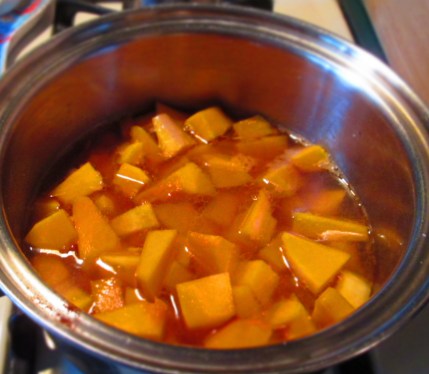
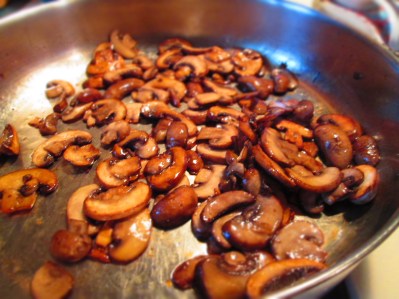
Heat 1 tablespoon of the oil in a medium saucepan. Add the garlic and sauté until fragrant, about 1 minutes. Sprinkle in the paprika. Add the squash and 1 teaspoon of the salt and cook, stirring occasionally, for 3 or 4 minutes. Pour in the broth. Bring to a boil. Lower the heat to medium-low and simmer until the squash is tender, about 20 minutes.Meanwhile, combine the snow peas with 1 tablespoon of the oil and one teaspoon of the salt and spread them out in a baking pan. Roast until nicely brown, about 20 to 25 minutes. Stir them halfway through cooking time.Heat the remaining oil in a medium skillet. Add the mushrooms and remaining salt. Sauté over medium-high heat until the mushrooms are golden brown, about 20 to 25 minutes. They will release water after about 6 or 7 minutes; after the liquid evaporates, the mushrooms will begin to brown.When the squash is done, puree it by either with a stick blender or by putting the contents of the saucepan into a blender. Stir in the black pepper. Taste the soup for seasoning and adjust, if necessary.Ladle the soup into 2 bowls. Arrange some of the snow peas and mushrooms on top and serve.
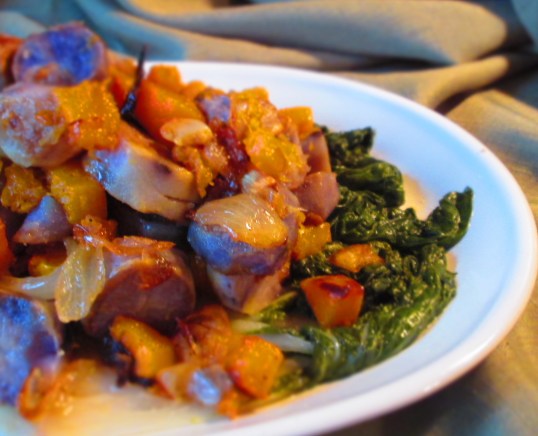
Roasting is my favorite way to cook almost any vegetable, but it’s definitely the way to go with root vegetables and squashes. Because it’s so easy, this is the perfect dish to serve at any weeknight meal. But because it’s easily doubled or tripled, it’s ideal for the Thanksgiving table, or for any special autumn or winter meal. Enjoy.
Roasted Squash and Purple Potatoes with Baby Bok Choy
Makes 4 to 6 servings.
6-7 large garlic cloves, peeled 2 cups cubed butternut or other winter squash 2 cups cubed purple potatoes (about 1½ pounds) 1 small onion, sliced 3 tablespoons + 1 teaspoon olive oil 3 teaspoons kosher salt ½ pound baby bok choy Preheat the oven to 375 degrees F.
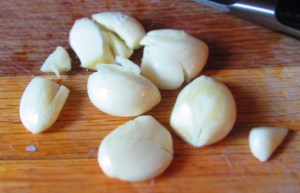
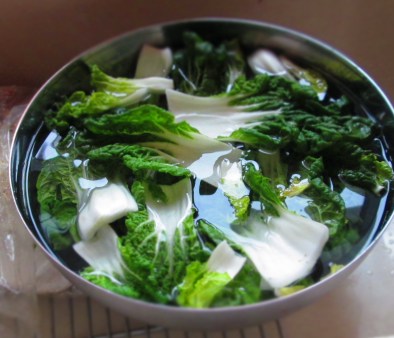
Slice 1 garlic clove and set aside. Smash the rest with the flat side of a knife blade (hit your palm CAREFULLY down on the blade).Combine the squash, potatoes, onions, and smashed garlic in a medium bowl. Add 3 tablespoons of the oil and 2 teaspoons of the salt and mix well. Transfer to a baking sheet and roast until the vegetables are tender and golden brown, about 40 to 45 minutes. Stir halfway through.Meanwhile, make the bok choy. Slice off the root end and separate the leaves. Soak the leaves in a bowl of cool water for about 10 minutes. Remove the bok choy and rinse them.Heat the remaining oil in a medium skillet. Add the sliced garlic and sauté until fragrant, about 1 to 2 minutes. Add the bok choy and remaining salt and cook, covered, for 5 minutes. Uncover the pan and continue cooking over medium heat until tender. Taste for seasoning and adjust if needed.Place the bok choy neatly on a platter. Spoon the squash and potatoes over the bok choy. Serve hot.
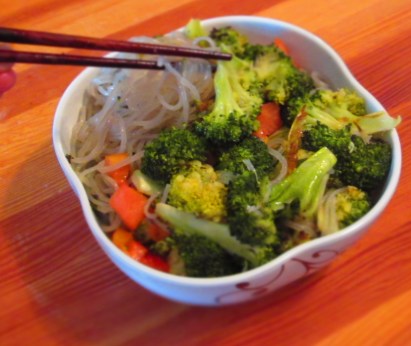
Sweet potato noodles are made from sweet potato flour. When cooked, they have a chewy, firm texture and a vaguely sweet-ish flavor. Paired with broccoli, it makes a savory, fun meal. The tomato gives the dish a fresh dimension, and a splash of soy sauce at the end rounds out the flavors with a burst of salty sweetness.
You can find sweet potato noodles in Asian markets. They look similar to rice noodles with their lovely translucency. If the brand you choose has the noodles in coils or long ropes rather than sticks (like spaghetti), I suggest breaking them up because they can be really long and difficult to eat, and because they tend to cling to each other for dear life, you might end up with huge mouthfuls of noodles.
These noodles are, of course, gluten free, and vegan, so they’re perfect for anyone on a gluten-free diet, Paleo, Keto (a little, according to their site), etc. The whole family is covered here. They’re inexpensive as well. Give them a try sometime.
Sweet Potato Noodles with Roasted Broccoli and Tomato
Makes 4 servings.
1 small head broccoli, cut into florets 2 tablespoons olive oil 3 teaspoons kosher salt 6 ounces sweet potato noodles ½ cup chopped tomato 1 tablespoon soy sauce
Freshly ground black pepper to taste
Preheat the oven to 375 degrees F.
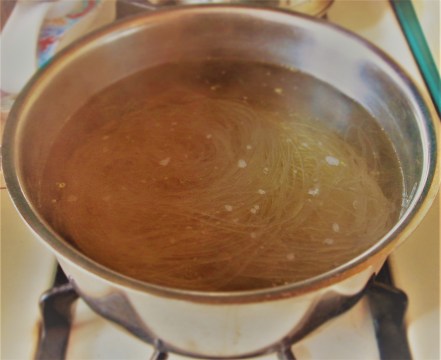
Toss the broccoli with 1 tablespoon of the oil and 2 teaspoons of the salt. Spread the florets out on a baking sheet and roast 10 minutes. Stir and roast another 10 minutes, or until the florets are tender and browned.Bring a medium pot of water to a boil. Add the noodles and simmer over medium heat, stirring occasionally, until they’re tender, about 5 to 7 minutes. Drain.In a medium bowl, combine the noodles with the broccoli, tomato, soy sauce, remaining oil, remaining salt, and black pepper. Mix well. Add more oil, if necessary (the noodles will want to clump together).Serve hot. Heat leftovers in a wok or pan with a little water in the bottom, covered. Enjoy!
Shishito peppers are a hot culinary ingredient right now. And I mean “hot” in a trendy way, not the spicy way. They’re a mild chile pepper, small, elongated, and thin-walled. They’re sweet with a fruity note; however, every once in a while, you might actually get a hot one. There’s no way to recognize a hot one, though—it’s completely random.
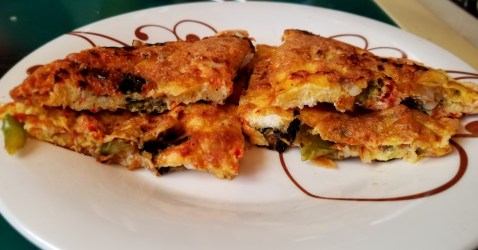
Shishitos are easy to cook and work with, and are very versatile. I bought a bunch of them and tried them in various ways. Here I used them in a frittata for a delicious breakfast, lunch, or dinner. Give it a try.
Shishito Pepper and Garlic Frittata
Makes 4 servings.
5 to 6 shishito peppers 3 large eggs 1 teaspoon seasoning of your choice 1 teaspoon kosher salt 1 teaspoon olive oil 4 to 5 large garlic cloves, minced
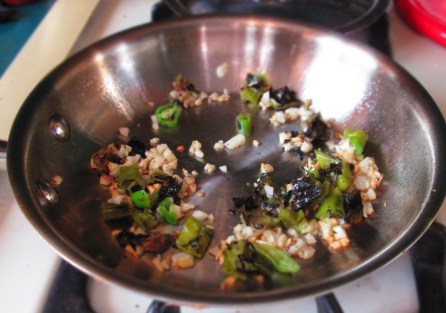
Broil the peppers or grill them over an open flame until lightly charred. Scrape away any excessively charred skin. Cut off the stems and coarsely chop the peppers. Set aside.In a small bowl, beat the eggs together with seasonings and ½ teaspoon salt.
Heat the oil in a small skillet over medium heat. Add the garlic and heat just until fragrant, about 30 seconds. Don’t let the garlic burn.Add the chopped peppers and remaining salt and sauté a minute. Pour the eggs evenly over the peppers. Lower the heat to low and cover the pan.Cook until the underside of the frittata is browned, about 5 minutes. (You can check by lifting the frittata on one side with a spatula and peeking underneath.)
Place a plate that is wider than the skillet over the top and a carefully (using a dry kitchen towel or potholder!), flip the frittata over onto the plate. Then slide the frittata back into the skillet.Continue cooking a few more minutes, uncovered, until the frittata is cooked through and the underside has browned.
Remove it from the pan and cut into 4 wedges. Serve hot, warm, or cold.
This recipe is a combination of two classic Italian pasta dishes: aglio e olio (garlic and oil) and asparagus with lemon-pepper sauce. (Both individual recipes, by the way, can be found in my pasta edition of the Vegetarian Italian: Traditions ebook series.)
One night after work, I was contemplating dinner. I wanted to do something a little different, but I wanted to keep it easy, and not stray too far from familiarity (I was tired and irritated from work, so simplicity and comforting were my top criteria).
Pasta is always easy, always comforting, and I had just happened to buy a bunch of pencil-thin asparagus. I also had lemons…and so I came up with this. Two savory Italian classics in one delicious dish, and the combo is not any more work than just one recipe alone.
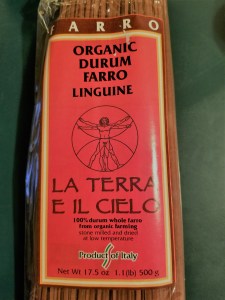
Farro is an ancient Italian grain that is related to spelt and emmer, but is not actually spelt, as some believe. It’s commonly used in Italy, but is becoming more available in the U.S. Farro pasta is nutty, nutritious, low in calories, and is often well tolerated by people with gluten sensitivity (although those with Celiac disease should avoid it). Farro pasta can be found in Italian groceries, as well as gourmet shops. And, of course, online. Try it—I think you’ll find it an addicting alternative to whole wheat pasta.
Enjoy.
Farro Linguine with Asparagus and Lemon-Pepper Sauce
1 pound asparagus 1/3 cup olive oil 1 tablespoon kosher salt, plus more to taste ½ lb. farro linguine (or other long pasta)
2 large garlic cloves, sliced ½ teaspoon paprika Freshly ground black pepper to taste
Zest from 1 small lemon Grated parmesan cheese
Extra virgin olive oil for drizzling
Preheat the oven to 350 degrees F.
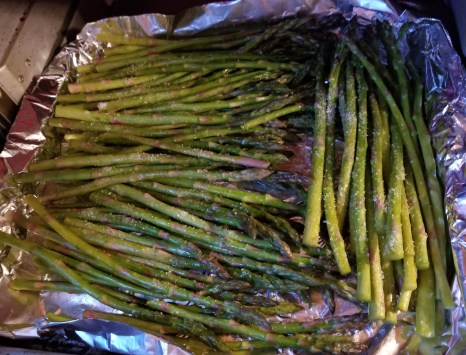
Snap or cut off the woody bottom stems of the asparagus and discard. Place the asparagus on a platter, drizzle with half the oil, sprinkle with half the salt, and gently toss. Try to keep the asparagus all facing the same direction (this will make it easier to handle).Place the asparagus on a baking sheet lined with foil and roast until tender and lightly browned (the time will vary depending on the thickness of the asparagus, but anywhere from 10 to 20 minutes). Remove them from oven and chop them into bite-size pieces.Bring a medium pot of water to a boil. Add the pasta and remaining salt and bring it to a boil, stirring often, until al dente, about 8 to 10 minutes. Drain. Transfer the pasta to a serving platter. Add the chopped asparagus.Pour the remaining olive oil in a small pan with the garlic. Heat until the garlic is fragrant and just starts to color, about 2 to 3 minutes. Sprinkle in the paprika, swirl it, then immediately pour it over the pasta. Season with more salt and grind on as much black pepper as you like.Sprinkle the lemon zest over it. Top with the grated parmesan and drizzle a little extra virgin olive oil. Serve.
All of my life, I never liked tomato soup. It always tasted like watered-down ketchup to me. Granted, my experience with tomato soup had been the canned variety, but I also had once or twice tried it in a restaurant or catered affair situation (I can’t remember which) and thought it was equally distasteful.
Then, I found a recipe for tomato soup using fresh tomatoes…and it changed my world. Now I knew what tomato soup was supposed to taste like. And I never looked back.
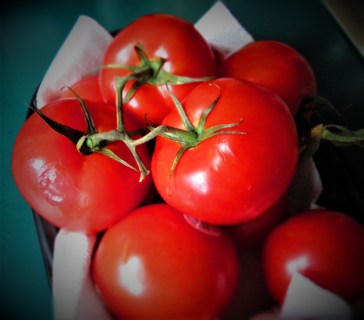
This is my recipe for fresh tomato soup. The ingredients are extremely simple and the focus is on the tomatoes. It’s best to make this in summer, when tomatoes are at their peak. It doesn’t much matter which variety you choose, as long as they’re ripe and fresh. Enjoy!Continue reading →
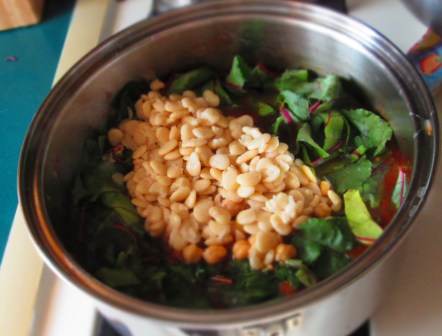
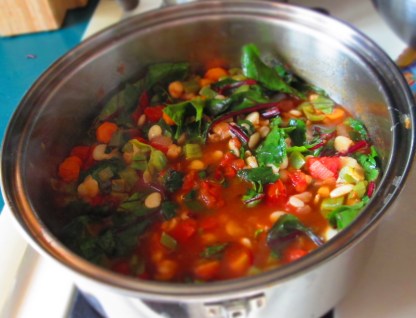
Very often, my stews and chilis are built on whatever produce is in season and available at the farmers’ markets. I’ll be honest—I don’t get everything at farmers’ markets. I’d be constantly broke. But I’ll find one or two or three items that are in season, sometimes only briefly, and that look particularly good. In this case, I had some gorgeous greens from a couple of bunches of beets, beautiful red onions, and bright, fresh out-of-the-ground carrots. I gathered a few more vegetables and assembled this stew.
But the beautiful thing about vegetable stew is that it’s wide open to ingredients. You can use whatever vegetables you like, whatever beans you like, and whatever herbs and spices you like. Or omit any of those things.
I had the good fortune of having several cloves of garlic in the refrigerator that I had pan roasted. I chopped those up and added them. If you want to add an extra depth of flavor, you can pan roast a few cloves before you begin the stew.
Vegetable-Bean Stew with Spaghetti Squash
1 small spaghetti squash 2 teaspoons olive oil 1 cup chopped red onion 3 to 5 garlic cloves, chopped 2 tablespoons tomato paste ¼ cup red wine, broth, or water 2 cups chopped green pepper 2 cups chopped, seeded tomatoes 1 ½ cups chopped carrots 4 cups vegetable broth or water 3 cups beans of your choice (such as Great Northern, pinto, cannellini, etc.) 4 cups (cleaned) chopped greens (such as beet greens, kale, chard, etc.) 1 teaspoon kosher salt* Freshly ground black pepper to taste ¼ cup freshly chopped herbs of your choice (basil, parsley, oregano, thyme, etc.)
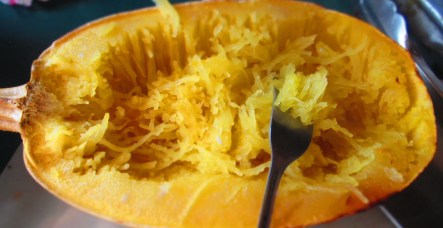
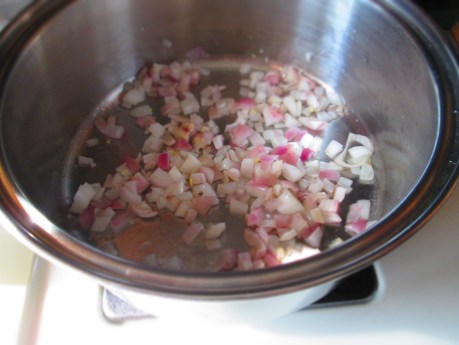
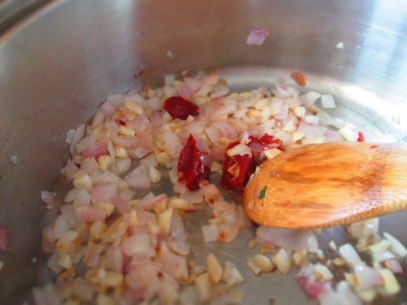
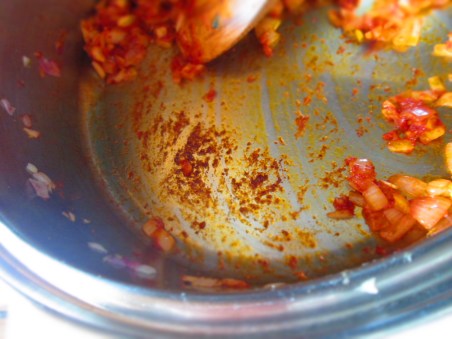
Preheat the oven to 400 degrees F. Split the spaghetti squash in half lengthwise and scoop out the seeds and strings from the center. Place the halves face down on a baking sheet. Roast until the tip of a knife goes through the flesh easily, about 20 to 30 minutes. Remove them from the oven. When they’re cool enough to handle, use a fork to scrape out the flesh. Place it in a bowl and set it aside.Heat the oil in a large pot. Add the onion and sauté until translucent, about 3 o 4 minutes. Add the garlic and sauté until fragrant, 1 to 2 minutes.Add the tomato paste and stir it in until it’s well blended. Cook the mixture, stirring occasionally, for 2 to 3 minutes. When the bottom of the pot starts to get dark streaks, pour in the wine and stir it in. Scrape up the dark bits from the bottom of the pot.Add the green pepper, tomatoes, and carrots. Stir and cook 5 minutes. Pour in the broth and bring it to a boil. Lower the heat to medium-low and simmer, partially covered, until the vegetables are tender but still firm, about 10 to 13 minutes. Add the beans, greens, salt, and black pepper. Stir and cook another 5 minutes, or until the greens are tender. Stir in the herbs. Taste for seasoning and adjust, if necessary.*Salting is best done in stages. Add a little bit of salt whenever you add a new ingredient. This gives each item a chance to absorb the salt, and it builds layers of flavor. This kind of instruction is difficult to impart in a recipe, but I have faith in you, my dearest readers.


 Fill a medium saucepan three-quarters with water and bring it to a boil. Add the pasta and ½ tablespoon salt and cook, stirring often, until it’s al dente, about 10 minutes. Drain and transfer to a bowl.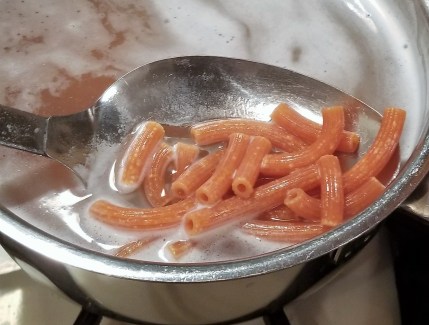
 If the mushrooms have cooled off, reheat them briefly. Add them to the pasta and season with pepper. Mix in the parmesan. Serve hot.









 Pour in the broth. Bring to a boil. Lower the heat to medium-low and simmer until the squash is tender, about 20 minutes.
 Meanwhile, combine the snow peas with 1 tablespoon of the oil and one teaspoon of the salt and spread them out in a baking pan.
  Roast until nicely brown, about 20 to 25 minutes. Stir them halfway through cooking time.
 Heat the remaining oil in a medium skillet. Add the mushrooms and remaining salt. Sauté over medium-high heat until the mushrooms are golden brown, about 20 to 25 minutes. They will release water after about 6 or 7 minutes; after the liquid evaporates, the mushrooms will begin to brown.
 When the squash is done, puree it by either with a stick blender or by putting the contents of the saucepan into a blender. Stir in the black pepper. Taste the soup for seasoning and adjust, if necessary.
 Ladle the soup into 2 bowls. Arrange some of the snow peas and mushrooms on top and serve.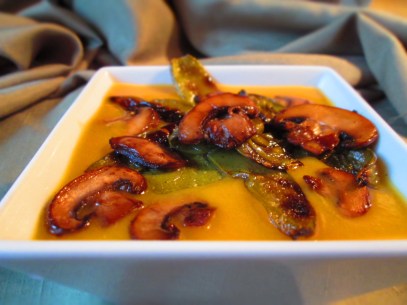


 H
H


















 Miz Chef