
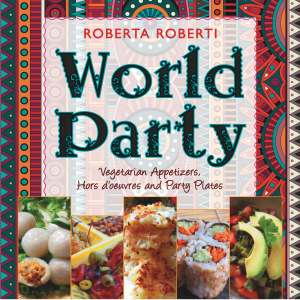
 At long last, I can finally announce the release of my latest cookbook, World Party: Vegetarian Appetizers, Hors d’oeuvres and Party Plates.

Thai Peanut Dumplings
This is both an excitement and a relief because this book has been on a long and arduous trip. I first got the idea for it, and began researching recipes and cuisines for it, in 2002. I spent many years testing and developing recipes to duplicate the dishes I’d read about and sampled, but in such a way that they would stay true to the originals as much as possible while making them meatless.

M’Baazi
I started with a list, and that list grew and grew. Over the years, I added recipes, deleted recipes, changed recipes, and in a few cases I was so determined to make a particular recipe work that I just kept testing and testing until I came up with the right result. Sometimes a recipe simply didn’t work and I tossed it. Occasionally I would discover that I’d confused one dish for another, and sometimes I had a recipe that I couldn’t find the proper name for in its originating culture. In those cases, I researched high and low on the internet and in books and magazines, asked friends and coworkers if they knew, asked friends to ask their friends and coworkers if they knew, posted questions in special interest groups on Facebook, etc. I found out the answers to some, and found out that I had others all wrong.

An Indian Feast
As I met and talked to more and more people from different cultures, my list expanded but, oddly, also shrank. So many cultures have more common threads than we imagine, and as I started to examine my recipes, I began to realize that there were more similarities than differences. It was a fascinating and educational journey I went on.
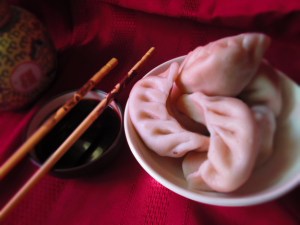
Pot Stickers
The one thing I’ve learned from this project, if nothing else, is that no matter what clothing people wear, what religion they practice, what rituals they perform, what kinds of jobs they hold, or how much money they have, we are more similar than we are different. You can see this in the very similar dishes that are shared between nations, with maybe just a spice or two, or a cooking method, differentiating them.

Arepitas with Black Bean-Corn Salsa
Eating is the one thing that every single human being on earth must do to survive, so it’s no wonder that food is the common bond across the planet. No matter where you go in the world, a signal that you are welcome is the offer of food. When you are a guest at someone’s home, it always gives your hosts tremendous pleasure to feed to. It is the global sign of hospitality, and many customs and rituals were created around food. In some places, to refuse food is an insult, or to not finish it all is a sign of poor manners. Some cultures expect you to belch loudly when you’re done to show that you are satisfied.
Food always brings brings people of the world together.

Australian “Roo” Burgers
It’s my hope that through food, we can find common ground and sit at the table together to share a meal.
So take a trip around the world. If you can’t do it physically, do it in your kitchen and at your table. Try new recipes and explore new flavors, and invite your friends and loved ones to share in the journey. Most of all, enjoy it. Peace.

A Spanish Feast
Save
 thing about cranberry sauce is that it has a pretty long shelf life (the sugar acts as a preservative). But the question is always, what do I do with it all?

 In a small bowl, mix together eggs and buttermilk.
 Mix this into the flour mixture just until all dry ingredients are moistened.
 Stir in the walnuts. Swirl in the cranberry sauce, but don’t mix it in completely—you just want it to run through the batter.
 Spoon batter into loaf pan. Bake until lightly golden on top and a toothpick inserted in the center comes out fairly clean, about 20 to 25 minutes. Some moist cranberry on the toothpick is okay.

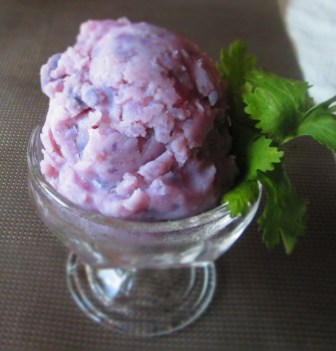
 potatoes in general are originally from), particularly Peru and Bolivia. In fact, they’re sometimes referred to as Purple Peruvian potatoes. While they taste pretty much the same as standard white potatoes, because of their pigment, purple potatoes are high in antioxidants—4 times as much as white potatoes. Antioxidants are cancer-fighting agents, are good for immunity and heart health.


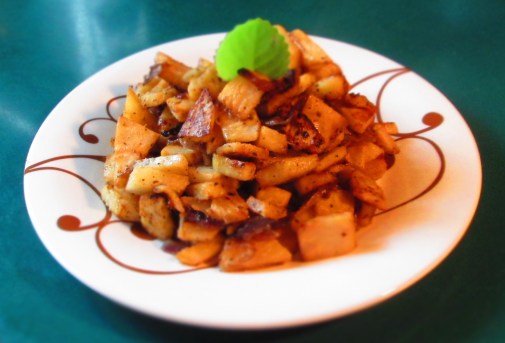
 More spaghetti squash? Why not? It’s squash season, after all. Squash is synonymous with autumn.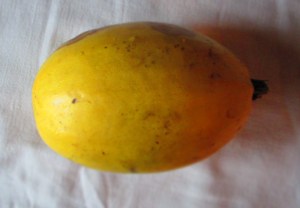

 A few months ago



 Miz Chef