Miz Chef

Cooking Up a Healthy Life


Leave a comment

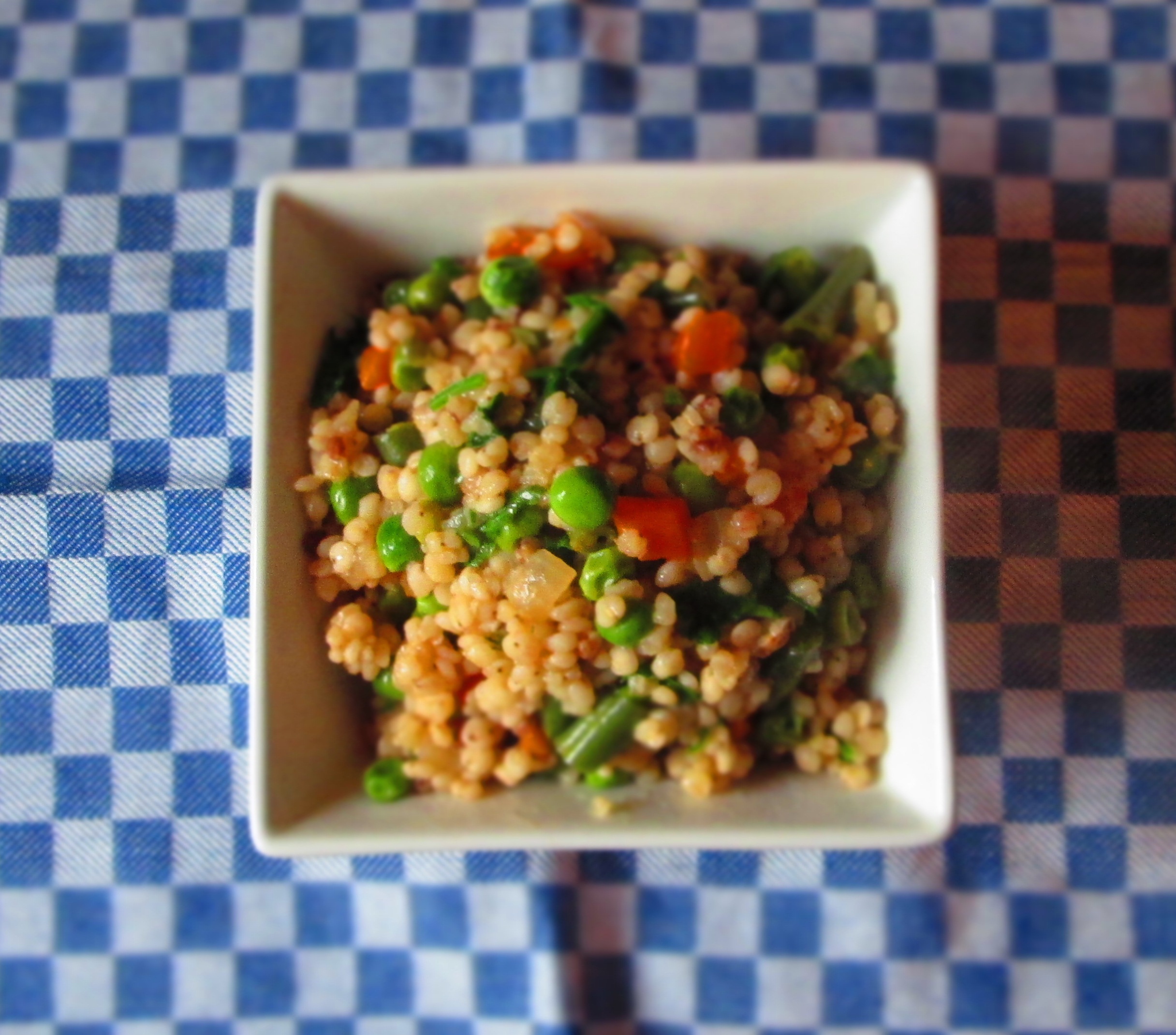
Sorghum Pilaf

IMG_4640

Sorghum is technically a grass (but for culinary purposes is classified as a grain) that is native to Africa, and was introduced to to the U.S. in the 1800s. It’s always been an important food crop around the world, but in the U.S., it’s been used primarily as animal feed. The exception to this is in the U.S. South, where sorghum molasses is a traditional sweetener, used much in the same way as honey or maple syrup. However, with the rising interest in gluten-free and ancient grains, sorghum is becoming more and more popular as human food in the U.S.IMG_4625

The great thing about sorghum, apart from the fact that it’s gluten free, is that it doesn’t have an outer shell that has to be removed to make it edible. That means that it’s a whole food, and that means that it’s healthy and just plain awesome.
Continue reading


Leave a comment

Colcannon—An Irish Mash

Irish cuisine is traditionally hearty and to the point. Years of impoverishment and famine led to honest cooking that holds the utmost respect for the food being used. In other words, food was not taken for granted. And it made use of foods that were available—the crops that would easily grow in the Irish terrain and the livestock that were raised in the countryside.potatoes

The food probably most associated with Ireland is the potato. Potatoes were introduced in the 16th century and because they grew abundantly and cheaply, they became the most important crop in feeding the masses, which is why when a blight destroyed potato crops in the mid-1800s, famine decimated the population.

Another important item in Irish cuisine is cabbage. It, too, grows abundantly and cheaply and, like potatoes, lasts a long time in storage. Sometimes kale is used, or other members of the cabbage family.AU_MAR~1

Colcannon became known in the 18th century, but some food historians believe that it existed before then. It combines these two staple ingredients in the simplest, most basic of ways: boiled and combined into a mash. Okay, there’s a bit more to it than that, but not much. The potatoes and cabbage are flavored by sautéed leeks and enriched with butter.

For a little more in-depth history of Irish cuisine, and specifically colcannon, check out FoodTimeline.org or DoChara.com.

So, make this traditional Irish dish for St. Patrick’s Day and may the luck o’ the Irish be with you.

Erin go bragh.

(This recipe will be appearing in one of my upcoming cookbooks, so please do not reprint it in any format without express written permission.  That doesn’t mean you shouldn’t print it out–you definitely should! Thanks!)
Colcannon

Colcannon
Mashed Potatoes and Cabbage

4 cups thinly sliced cabbage
1 tbsp + 1 tsp salt
2 large potatoes, quartered
2 tbsp butter
1 cup milk
Pepper to taste
1 tbsp canola oil
2 large leeks, washed and sliced
2 tbsp minced parsley for garnish (optional)

Bring a large pot of water to a boil; add the cabbage and 1 tsp salt. Lower the heat to medium-low and boil until tender, about 12 to 15 minutes. Drain well.

At the same time, place the potatoes in a medium pot and cover with water. Bring it to a boil; lower the heat to medium-low, partially cover, and boil until tender when pierced with a knife, about 15 to 20 minutes. Drain, peel, place in a bowl, and coarsely mash. Add the milk, butter, ½ tablespoon of the salt, and pepper and mix well.

Heat the oil in a wide pan. Add the leeks and sauté until soft and golden brown, about 15 minutes. Add the cooked cabbage and remaining salt and sauté over medium-high heat, stirring often, until cabbage starts to brown. Add to the mashed potatoes and mix well. Taste for seasoning and adjust, if necessary. Transfer the colcannon to a platter. Garnish with parsley and serve hot.

Makes 6 to 8 servings.


Leave a comment

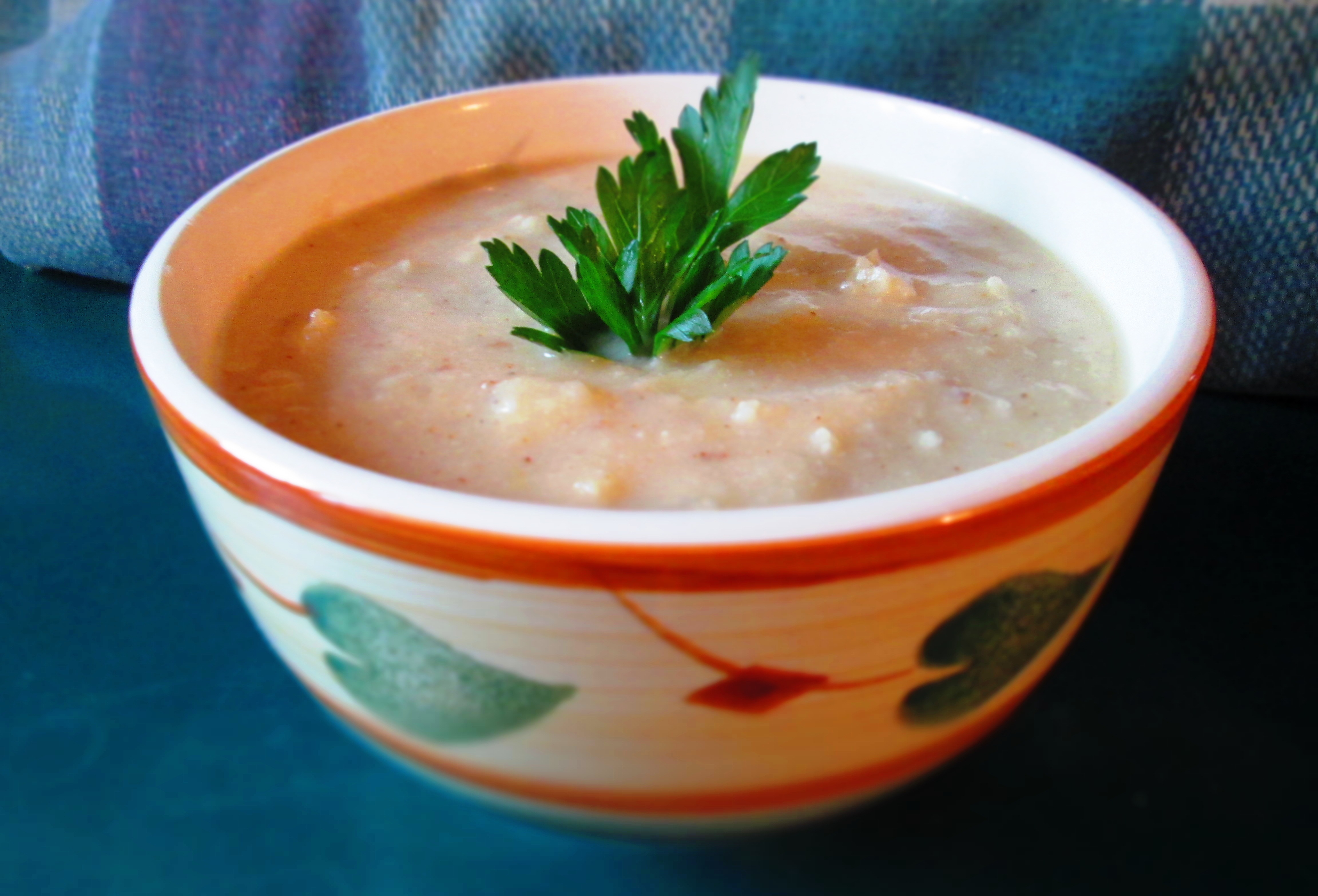
Creamy Roasted Cauliflower Bisque

IMG_4620

I had no plans for cauliflower over the course of my very busy weekend, but when I saw big, beautiful heads of cauliflower in the store the other day, I couldn’t resist buying one.

It’s cold, snowy, wintry weather, and days like this just scream soup, and what I wanted was a creamy bisque. But before I get to my recipe, let’s talk a bit about this wonderful cruciferous vegetable.

Cauliflower is part of the Brassicaceae family and is related to cabbage, broccoli, Brussels sprouts, bok choi, collard greens, and some other leafy green vegetables. In my cookbook, Vegetarian Italian: Traditions, Volume 1, I talk a little bit about the history of cauliflower and its health benefits:
Continue reading


Leave a comment

Gluten-Free Lemon-Poppy Berry-Topped Cake

IMG_4573

On this deep-in-winter February day, I’d like to offer a recipe for a gluten-free cake that is really easy to make and very versatile. The batter doesn’t rise much, which makes it a great vehicle for all kinds of toppings.

I like it because it’s not overly sweet and it can be paired with lots of different things. Instead of berries, you can top it with lemon curd or orange marmalade, or buttercream frosting. You can put the batter into 4 small loaf pans for individual desserts. You can also substitute the lemon zest and juice with orange or other citrus. And with the exception of 1 egg, it’s also dairy free, so for those of you who are lactose intolerant, it’s a great choice.

Enjoy!

Gluten-Free Lemon-Poppy Berry-Topped Cake

Makes 1 8-inch cake.¼ cup sorghum flour

¼ cup chickpea flour
2 tablespoons tapioca flour
2 teaspoons baking powder
1 teaspoon baking soda
Pinch sea salt
2 teaspoons lemon zest
2 tablespoons poppy seeds
1 large egg
¼ cup plus 2 tablespoons maple crystals or coconut sugar
¼ cup plain yogurt
1 tablespoon melted coconut oil
2 tablespoons fresh lemon juice
2 cups fresh berries
2 tablespoons confectioners’ sugar (optional)

Preheat oven to 350 degrees. Grease an 8-inch cake springform pan.

In a medium bowl, whisk together flours, baking powder, baking soda, salt, zest, and poppy seed.

In another medium bowl, whisk egg, sugar, yogurt, oil, and lemon juice. Fold in dry ingredients, just until all ingredients are moistened.

Bake about 25 to 30 minutes, or until a toothpick inserted in center comes out clean. Transfer to a wire rack and let cool 5 minutes. Remove ring. Invert onto a plate, remove pan plate, then invert again back onto rack. Let cool completely.

Transfer to a plate. Decorate with berries and dust with confectioners’ sugar, if desired. (The best way to do this is to put sugar in a fine mesh sieve set over a bowl. Then shake the sieve gently over the cake.)

IMAG2572


Leave a comment

The Dark Mistress of Valentine’s Day…and Pudding Hearts

IMG_4491

It’s kind of fascinating how you can point to any holiday on the calendar at any time of the year and, invariably, there will be food associated with that holiday. And if it’s not about the things you should eat, then it’s the things you should not eat. Or, it’s that you should not eat at all (as in fasting).

Personally, I think holidays are just excuses for eating lots of delicious things that we normally stay away from, or otherwise berate ourselves for indulging in when there’s no holiday to make it permissible.

Photo: André Karwath

Photo: André Karwath

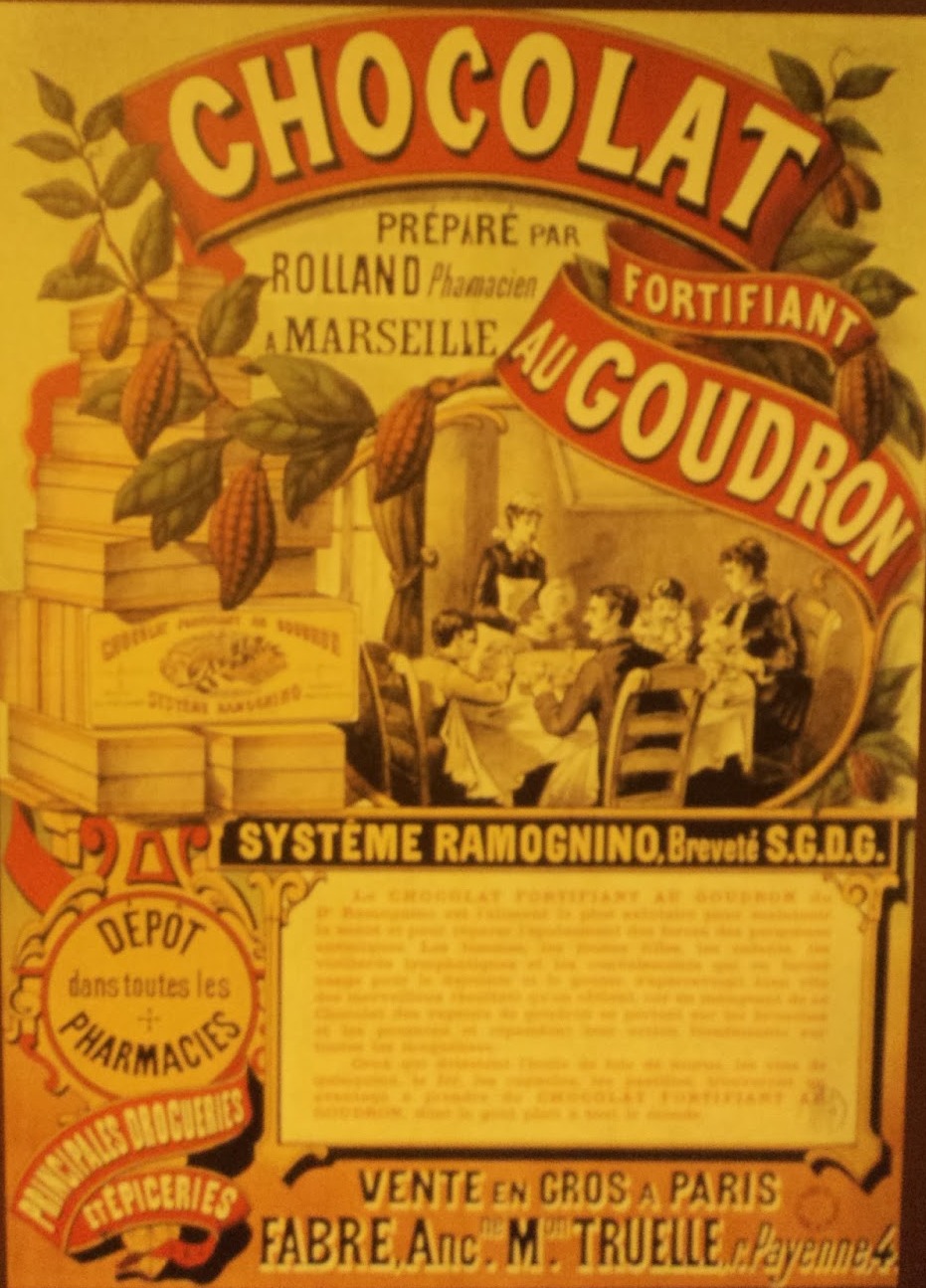
St. Valentine’s Day is no exception. The number one food for V-Day, of course, is chocolate. What would this lovers’ holiday be without the sweet, dark mistress of passion? And a mistress she is—when she calls you, you come running, even if you have to jump hurdles to get to her. She seduces you with her aroma and her flavor, and when you get a taste of her, you savor her, letting her linger on your palate. And once she whips you into submission, she makes you beg for more. There’s a reason why the Aztecs called it the food of the gods.Choco Story Museum in Bruges Belgium (9)

Continue reading


Leave a comment

Cooking with Cambrays

IMG_4422

Cambray onions, also known as spring onions, are related to scallions. In fact, they look like a cross between scallions and Texas onions—long green stems with big round bulbs.

I’d seen them before but had never purchased them, so when I saw them this past week, I grabbed a few. I learned that they are a popular onion in Latin cuisine (in which they are referred to as cebollitas de Cambray or cebolla Cambray), and almost always appear on mixed grill platters.

They can be used in many types of preparations, from salads to onion tarts to tacos. Being that this was the first time I was eating them (to my knowledge, anyway), I did what I often do with a new-to-me vegetables—I roasted them. I like to do this because it allows me to sample the new vegetable in its basic form with no added ingredients, besides olive oil, salt, and pepper. Plus, once you’ve grilled a vegetable, you can then add it into many other dishes.

So, I roasted the Cambrays until they were caramelized and tasted one by itself. It was sweet and creamy and I could imagine throwing them, cut up, into a dish of pasta or adding them to a stew or chili. I put a few pieces on some flat bread, drizzled some extra virgin olive oil over it, sprinkled a little more salt and pepper, and finished it with some grated Parmigiano-Reggiano. Very simple and very good.

IMG_4430Roasted Cambray Onions

Several Cambray onions
1/4 cup olive oil
1 teaspoon sea salt
Freshly ground black pepper

Preheat oven to 350 degrees.

Trim onions by slicing off roots and removing outer layers that look brown or funky.

Lay onions on a baking sheet. Drizzle oil over onions and rub them to coat with oil. Sprinkle on salt and pepper.IMG_4423Roast about 15 minutes; turn them over and roast another 10 minutes, or until both sides are golden brown.IMG_4427


Leave a comment

Avocado Pineapple Cake

IMG_4411

This weekend was my mother’s birthday. She just turned 81. She’s very spry for her age and still sharp in mind, and I’m thankful every day for that.

She’s also set in her ways. She likes what she likes, and doesn’t like what she doesn’t. She’s never liked going out to restaurants much, since, in her opinion, restaurant food lacks in many departments. The one and only time she was ever really excited to go to a restaurant was when my brother and I took my parents to Felidia, Lidia Bastianich’s place in Manhattan. She’s a huge fan of Lidia and just being in her world was a thrill for Mom. (One of my regrets is not getting a picture with Lidia when I met her at the James Beard House when I was interning there. She treasures the picture of me with Jacques Pepin and I think one of me with Lidia would have made her swoon.)

Continue reading


Leave a comment

Apple Cider Special

Apple cider drinkIt’s the last weekend before Christmas. For many of you, the tree’s been trimmed, the stockings have been hung by the chimney with care, the presents are wrapped and waiting under the tree, and the cookies for Santa have been baked. For many of you, this frenzy will continue for the next few days until Santa Claus is on the radar over Singapore.

For both of these groups of people—and even for those who don’t like Christmas and feel that it’s a time of year you must endure—the best thing I could think to off this week is an alcoholic beverage.

Apple cider is everywhere this time of year and it’s not unknown to add a dash or whiskey of bourbon to enhance its qualities. I thought I’d try something slightly different: apple cider, gold rum, and apricot brandy.

Continue reading


Leave a comment

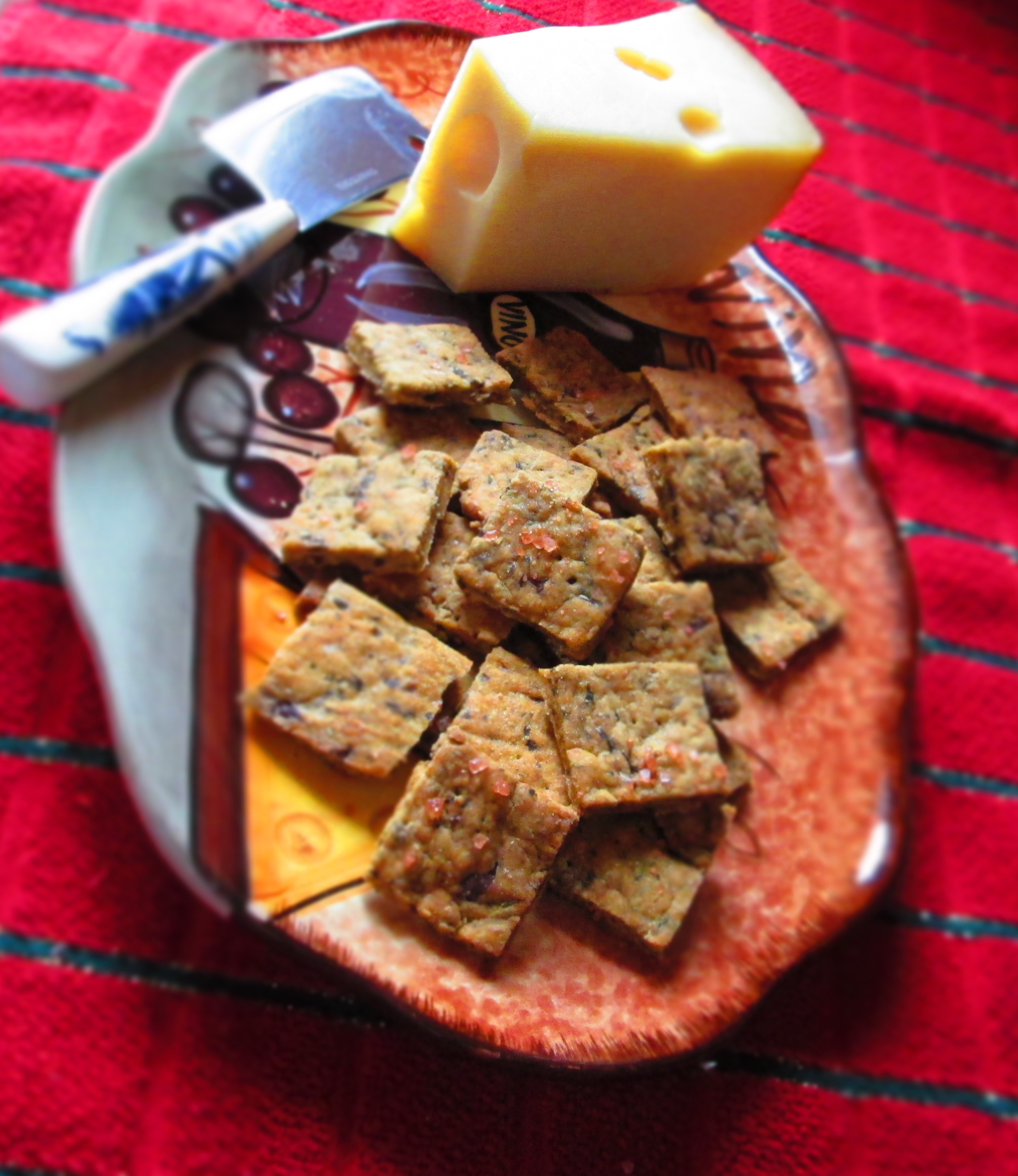
Italian Vegetable Crackers

IMG_4189

Want to do something different for that  Christmas party? Why don’t you try making your own crackers? They’re really not that difficult.

Crackers have been around for thousands of years—the ancient Romans made them! The word “cracker” comes from the Medieval word craken, meaning “to resound,” which describes the sound they made when broken.

Italians love to put vegetables in everything, and crackers are no exception. These crackers are a nice blend of herbs and fresh greens. Fava beans, in particular, are very popular in Italy and this recipes utilizes fava bean flour. Not only does it eliminate at least a little bit of the white flour, but it lends the crackers a more complex, vaguely nutty flavor.

Put these out with cheese, dips, salsa, or even guacamole. But they’re tasty enough to enjoy on their own.

Enjoy!

Italian Vegetable Crackers

Makes approximately 7 dozen crackers.

½ cup chopped greens (spinach, kale, chard, etc.)
¼ cup +2 teaspoons olive oil
½ cup fava bean flour (or chick pea flour)
1 ½ cups all-purpose flour
1 teaspoon ground rosemary
1 teaspoon oregano
1 teaspoon paprika
1 teaspoon garlic powder
1 teaspoon kosher salt
½ teaspoon ground fennel seed
¼ teaspoon freshly ground black pepper
¼ cup parmesan cheese
Hawaiian sea salt or other finishing salt (optional)

Preheat oven to 375 degrees F.

Place greens and 1 teaspoon oil in a food processor and process until very finely chopped. Set aside.

In a medium bowl, whisk together flours, rosemary, oregano, paprika, garlic powder,  kosher salt, fennel seed, pepper, and parmesan. IMG_4165

Add ¼ cup oil and mix until a dough forms. If necessary, add water, a little at a time, until all ingredients come together.IMG_4166IMG_4167

Place a piece of parchment paper down on a clean surface. Place  dough on the parchment and roll out as thinly as possible. IMG_4169

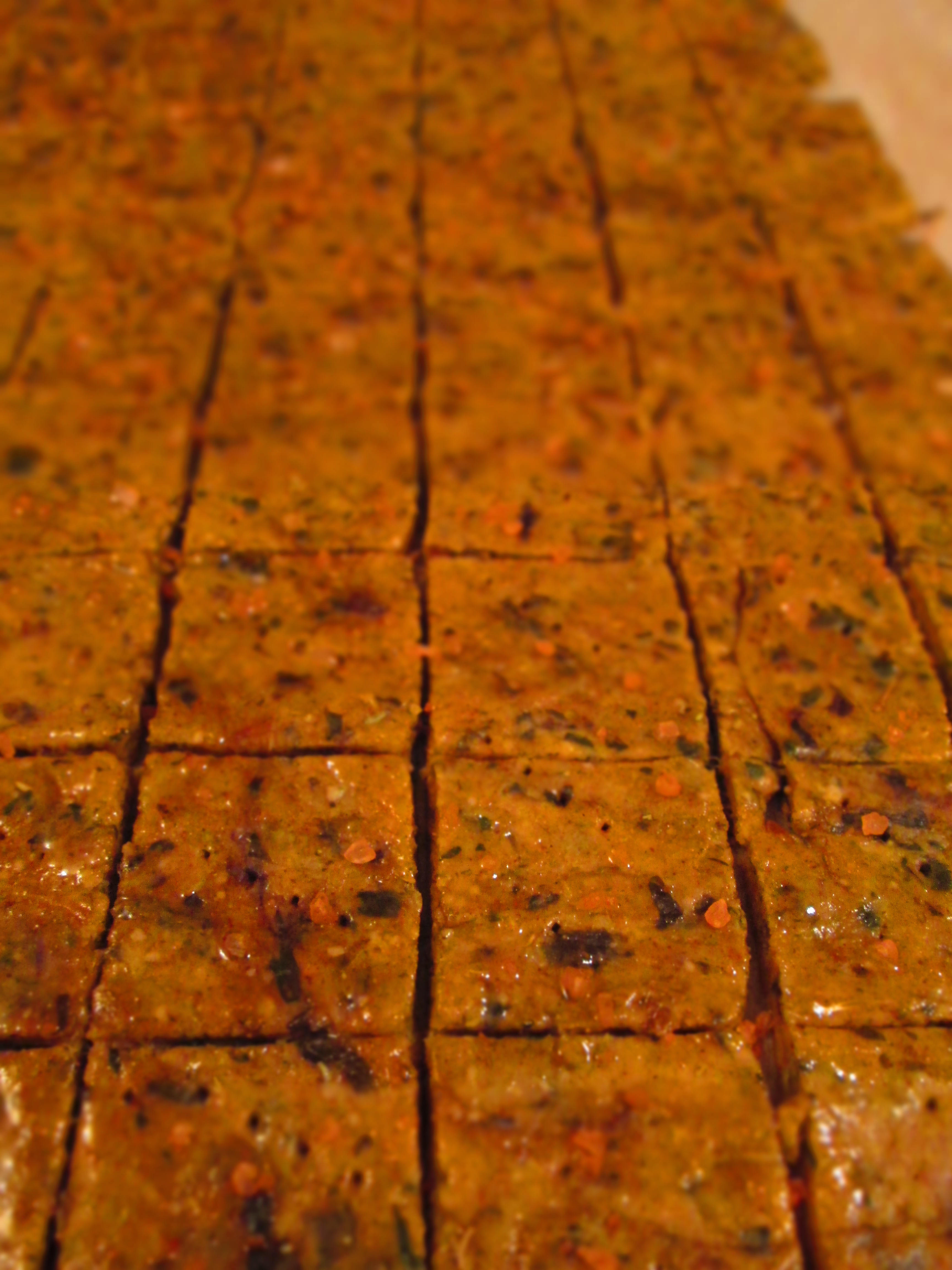
Cut off the edges to make straight lines. With a ruler, score 1 inch rows down and then across. IMG_4171

Brush top with remaining oil; sprinkle with finishing salt, if desired.IMG_4174

Bake until firm and lightly browned, about 25 minutes. Remove from oven and let cool 5 minutes. Then move parchment to a cooling rack. Separate crackers and let cool completely.

Store in a tin.

IMG_4182


4 Comments

Broccoli Rabe and Cheese-Stuffed Bread

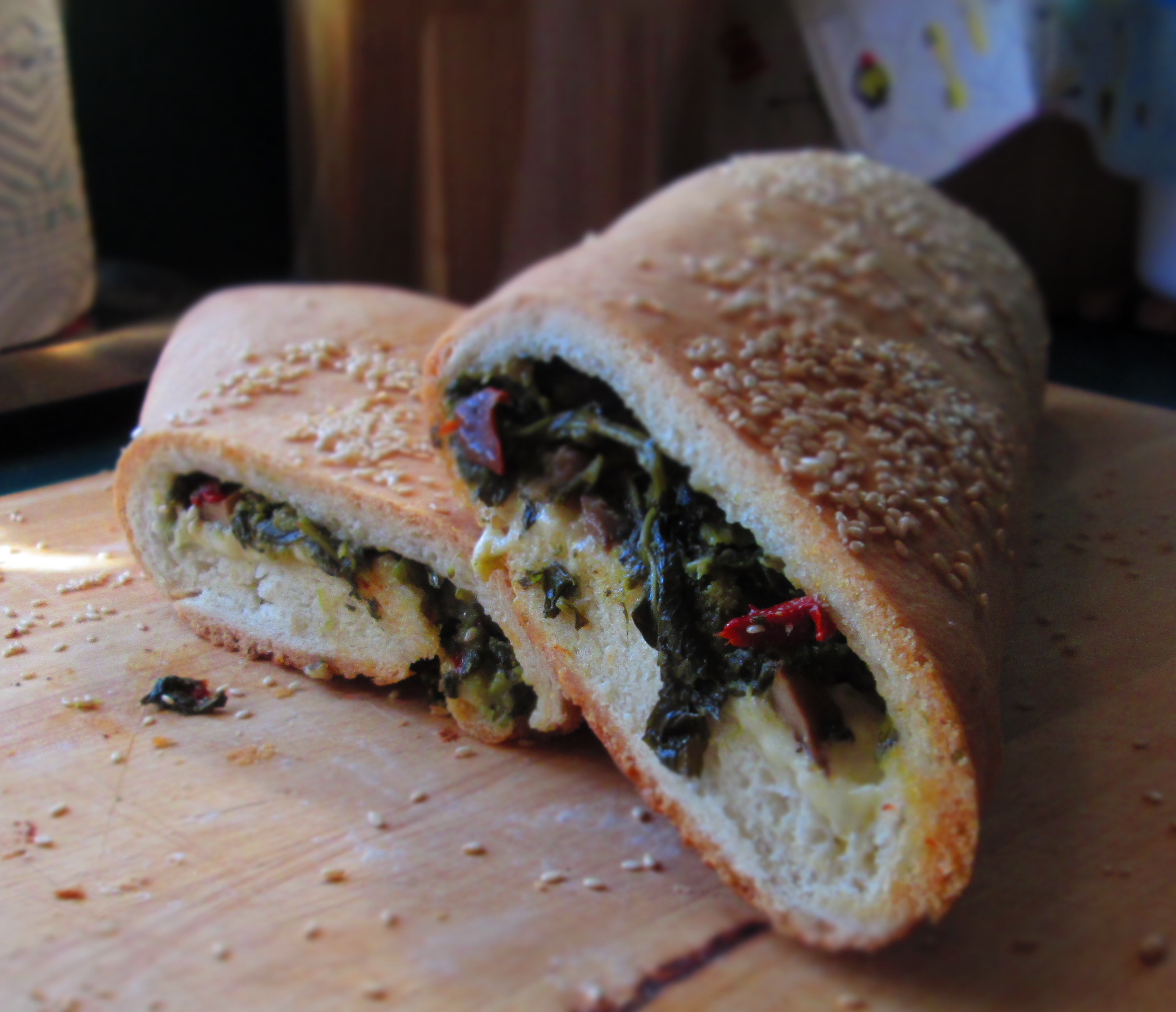
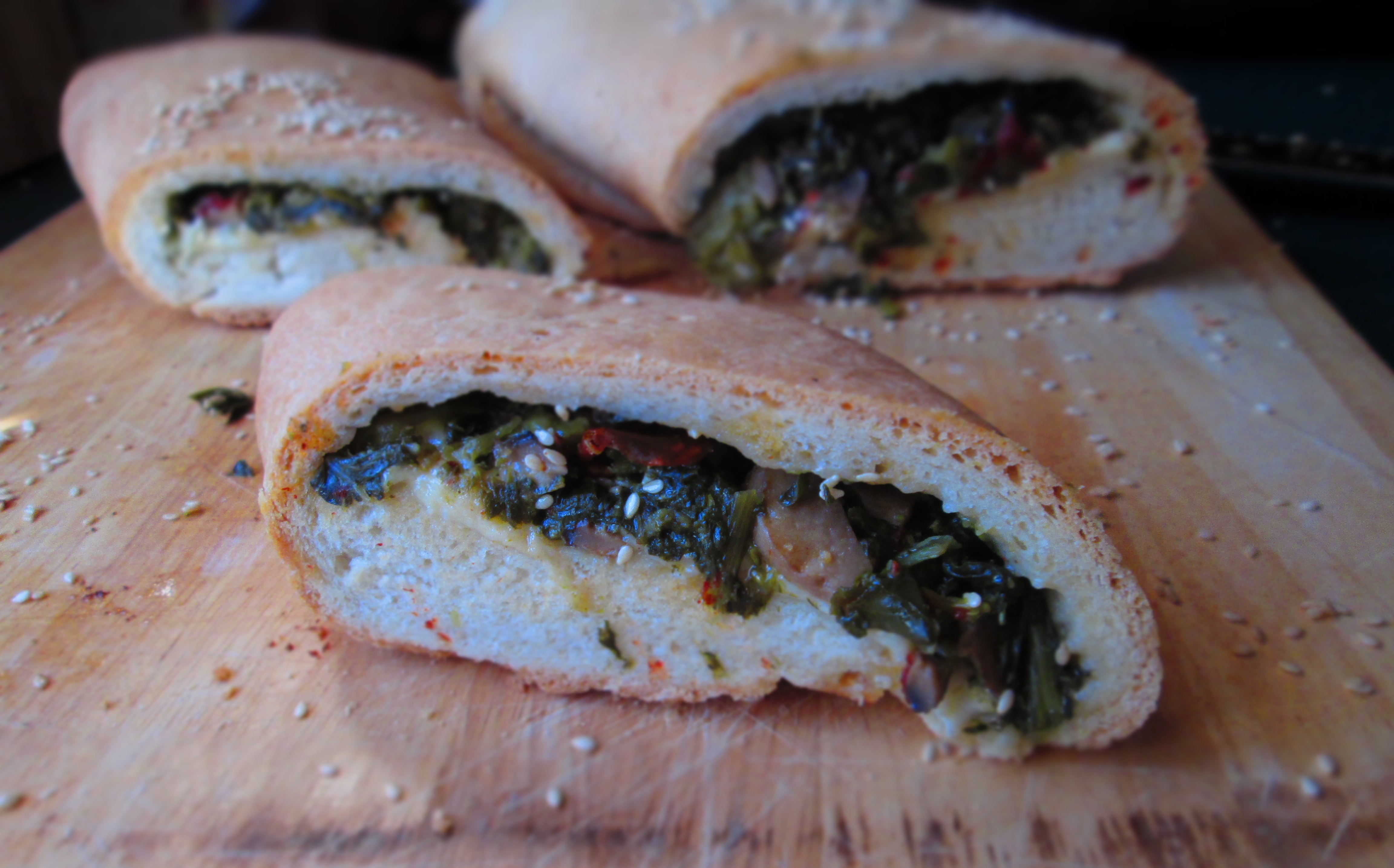
IMG_4110What happens when you have the urge to bake bread and have some broccoli rabe in the refrigerator? You make broccoli rabe bread, of course. Or, more specifically, broccoli rabe and cheese-stuffed bread.

Stuffed bread is an age-old delicacy and Italian cuisine is known for many kinds. In this one, the pleasant bitterness of the broccoli rabe is tamed by the rustic bread. The addition of cheese lends a salty sharpness to it. You can use whatever cheese you want. I used a blend of Fontina and Jarlsberg. If you like, you can add a sprinkle of parmesan cheese as well.

I just bought a big ol’ package of yeast, so I think I’m going to be on a bread-baking kick for a while. We’ll see. In the meantime, try this one out for breakfast, lunch, or a snack. By the way, it goes great with wine.

Broccoli Rabe and Cheese-Stuffed Bread

Bread:

2 teaspoons dry active yeast
½ teaspoon sugar
2 ½-3cups all-purpose flour
1 teaspoon kosher salt
1 tablespoon butter, melted
½ cup milk
2 teaspoon olive oil

Broccoli Rabe-Cheese Filling:

1 teaspoon olive oil
2 large garlic cloves, sliced
½ cup chopped mushrooms
1 teaspoon sea salt
1 large head broccoli rabe, chopped
1 teaspoon red pepper flakes
1 cup shredded cheese
1 egg, well beaten (optional)
2 tablespoons sesame seeds (optional)

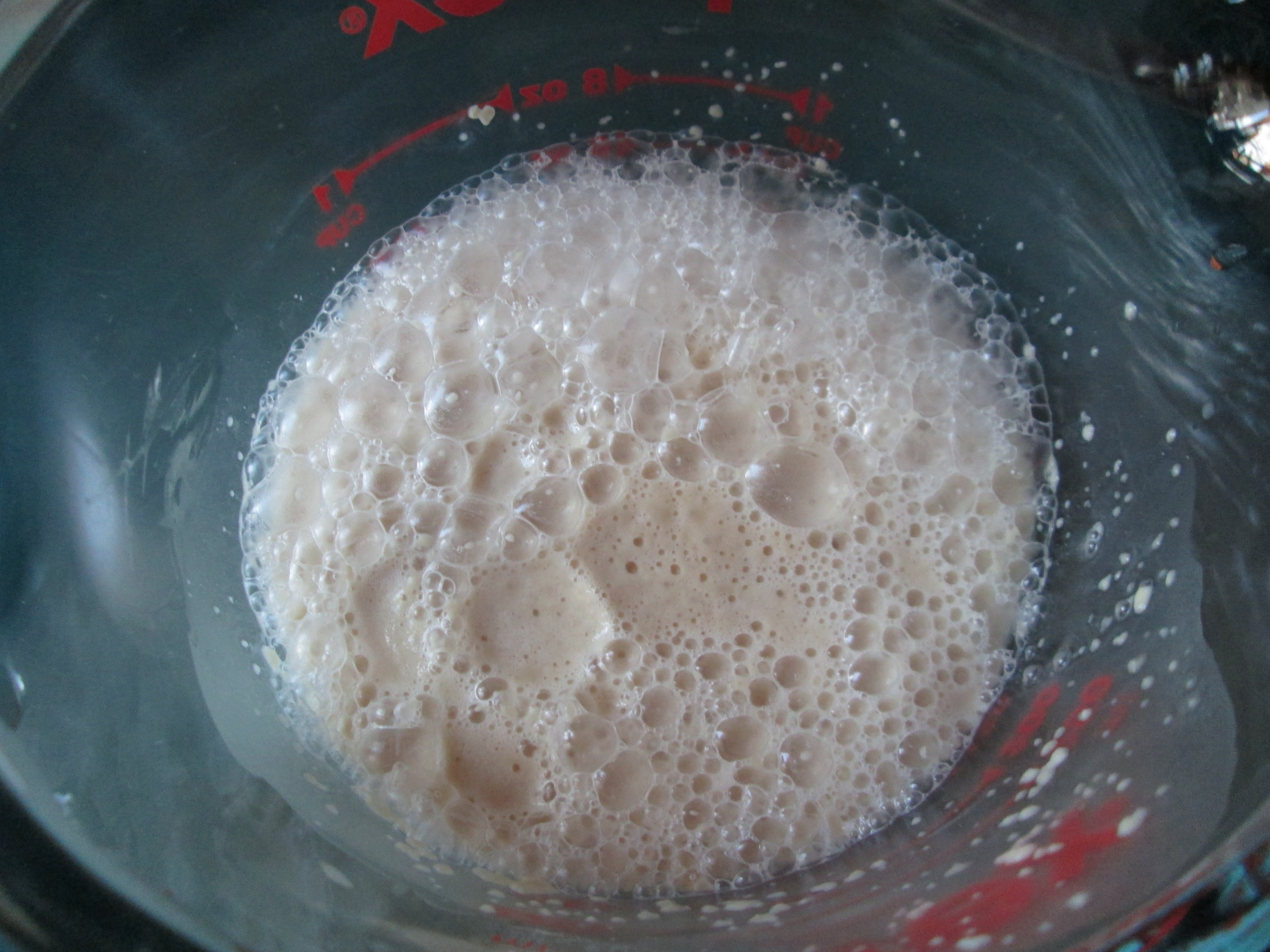
Combine the yeast with sugar and ¼ cup very warm water. Stir until dissolved and let sit for 5 minutes until it bubbles and foams.

IMG_4075

Combine 2½ cups flour and salt in the bowl of a stand mixer with the dough hook attached. Add the yeast and butter and begin mixing on medium speed. Begin adding milk a little at a time, then increase speed until dough comes together. Continue mixing for a couple of minutes.

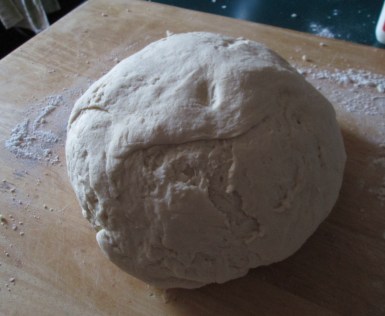
IMG_4078IMG_4079

Transfer dough to a lightly floured board and knead for 2 or 3 minutes. Place oil in bottom of mixer bowl; place dough in oil then turn it over so that all of dough is coated. Cover with a clean towel and place in a warm, draft-free place and let rise for 1 hour.
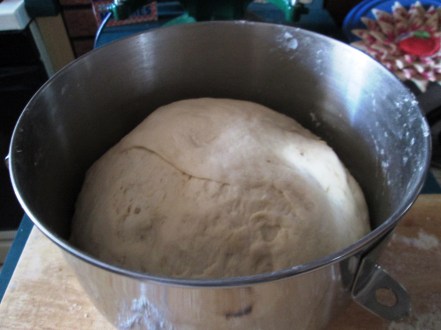
IMG_4080

Meanwhile, make filling. Heat oil in a wide pan. Add garlic and saute for 1 minute. Add mushrooms and ½ teaspoon salt and sauté until they start to brown, about 10 minutes. Add broccoli rabe, red pepper flakes, and remaining salt; cover and let cook until tender, about 5 minutes. If pan dries out, add a little water, white wine, or broth.

IMG_4086

When dough has risen for an hour, place on lightly floured board again. Roll out into a rectangle about 8 x 15 inches. (It doesn’t have to be perfect, as my picture can attest.) Place the broccoli rabe along the center of the dough, then spread on the cheese. Roll up dough and pinch the seam together. Tuck in the ends and pinch together. Place on a baking sheet lined with parchment paper. Cover with the cloth and let rise again for another hour.

IMG_4093

Preheat oven to 375 degrees.

Prick the dough with a fork in several places. If you want to add sesame seeds, brush the top with egg and sprinkle on the sesame seeds.
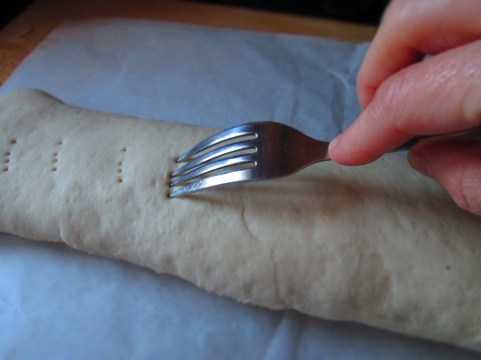
IMG_4094IMG_4098

Bake for about an hour, or until golden brown and bottom sounds hollow when thumped.

IMG_4101

Move to a cooling rack and let sit for 5 minutes before cutting into it.

IMG_4114

Enjoy!