Green beans are a versatile vegetable. You can use them in many different ways. For those of you who have only had mushy green beans that have been boiled to death, I feel sorry for you. But I’m here to tell you, there’s something else. (That’s my small, brief homage to Prince.)
I had purchased a bag of green beans for a diet that I was going on and found myself with lots of leftover beans. I had just roasted a batch the week before, and as much as I love roasted green beans, I wanted to do something different. I also had these beautiful pink grapefruits in the refrigerator, so I came up with this recipe.
It’s a little different but simple enough to make easily and quickly. There are very few ingredients and very few steps involved, yet the taste is fresh and flavorful, but not overpowering. See what you think.Continue reading →
I’ve been so busy lately that I have a stack of magazines that have been piling up, waiting to be read. I finally read the holiday issue of Saveur magazine. There was an interesting article in there by Andy Isaacson about saffron. What made this particular article different was that it talked about domestic saffron, and, in particular, saffron grown by the Pennsylvania Dutch.
Skunky saffron
Yeah. Who know that Amish people grew saffron? Apparently, it’s part of their heritage. And that got me thinking about how very little Americans use saffron, while in some cultures it’s an integral part of their cuisine. Of course, cost is a factor—saffron is the most expensive spice in the world (anywhere from $1500 to 10,000 per pound). I almost laughed myself silly when I saw some saffron in an Asian market for $1.99. It was the skunkiest saffron I’d ever seen and wondered what it really was (it looked like singed gorilla hair).
Well, that in turn reminded me that I still had some great saffron that my brother brought me from Morocco, and I was inspired to use it in this dish. In this recipe, you have protein, heart-healthy vegetables, and the exotic saffron to give it a special flavor, aroma, and color. Enjoy!
Broccoli and Beans Braised in Saffron Broth
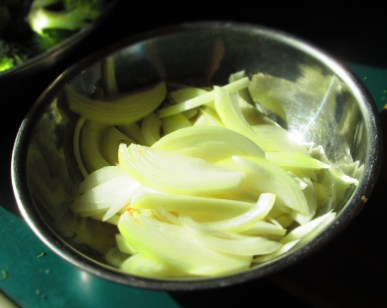
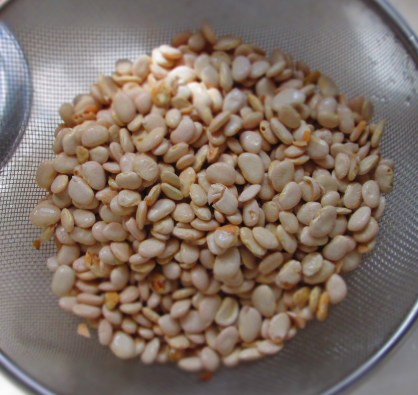
2 cups dry white beans 3 cups vegetable broth Pinch of saffron 1 large head broccoli, cut into large florets 1 large onion, sliced 3 or 4 large garlic cloves, crushed 1 teaspoon kosher salt Freshly ground black pepper to taste
Clean the beans by rinsing them and picking out any stones or debris. Place them in a medium saucepan pot and cover with water by about 3 inches; bring it to a boil. Let it boil for about 2 minutes, then shut the heat and let the beans set for about an hour.
Preheat the oven to 350 degrees F. Crush the saffron into the broth and let it sit for a few minutes.
Drain the beans.
Transfer the beans to a large casserole dish. Pour in the broth. Combine the broccoli, onions, salt, and pepper and place them on top of the beans. Cover with aluminum foil. Bake for 1 hour.
Stir the contents, and bake another 20 minutes to thicken. If it seems dry at this point, add another 1 cup of broth or water.
Hey, all. Gluten-free noodle time again! Those black noodles I bought and made last time turned out so good, I wanted to do something else with them. But what? Pasta pie, of course!
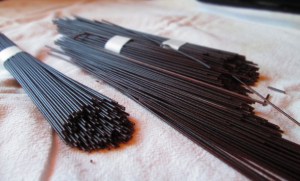
Pasta pie is nothing new, but I wanted to give it a new spin by using the black rice noodles. It’s not only tasty, but visually stunning as well. Texturally, of course, it’s a different experience than regular pasta pie, as it always is when replacing regular pasta with gluten-free noodles. The result is a tender, yielding pie, and it won’t sit in your stomach like a brick.
Look for black rice noodles in Asian markets and give this a try. It’s beautiful, fun, and, most important, delicious. Enjoy!
Black Rice Noodle Pie
Makes 8 servings
Approx. 14 oz. black rice noodles (or other gluten-free noodles) 2 tablespoons olive oil 1 cup milk 2 medium eggs, beaten ¼ cup + 2 tablespoons grated Parmigiano-Reggiano 1 teaspoon kosher salt 1 teaspoon black pepper 6 to 8 slices deli provolone cheese (about ¼ lb.)
Preheat the oven to 400 degrees F. Grease an 8-inch springform cake pan with 1 teaspoon of the olive oil. Line the bottom with a piece of parchment paper.
Bring a medium pot of water to a boil. Add the noodles, stir, and cook until firm-tender, about 8 minutes. Drain well.
Transfer to a mixing bowl. Add the remaining olive oil and mix throughout the noodles. Add the milk, eggs, ¼ cup Parmigiano-Reggiano, salt, and pepper. Mix well. The noodles will clump together, so stir well. Tear a couple of slices of the provolone into small pieces to make ¼ cup and stir that into the noodles.
Lay 2 or three slices of provolone on the bottom of the cake pan.
Pour the noodles into the pan (scrape the bowl to get any bits of cheese). Lay 3 or 4 slices across the top of the noodles, then sprinkle on the remaining Parmigiano.
Bake until set (a knife inserted should come out just barely wet) and the cheese is golden brown, about 30 minutes. Let it sit 5 to 10 minutes.
Remove the ring from the pan and invert the pie onto a plate. Remove the bottom and the parchment paper and invert it again onto a serving plate.
I’m on noodle kick. If you read my blog last week, you know that I wrote about noodles then as well. That blog was about the mung bean noodles that I found in an Asian market. Well, in that same market, I found black rice noodles, and, as usual, I couldn’t resist trying them.
A New Superfood
Black foods are not only striking to look at, but they’re typically high in antioxidants because of they’re high levels of pigments. Black rice is high in Vitamin E, which helps the immune system and protects cells from free radical damage. According to a study from the Louisiana State University Agricultural Center, black rice contains more anthocyanin antioxidants than blueberries, making it an even healthier choice than brown rice. As a result, black rice is considered one of the new superfoods. And let’s not overlook the fact that these noodles are gluten free! Here’s more about it at Livestrong.com.
The unfortunate part of using black rice noodles is that once they’re cooked, they’re no longer black but a dark purple. But that’s okay—they’re still pretty to look at. And they still stand out beautifully against white beans and vegetables, which is exactly what I did with this recipe.Continue reading →
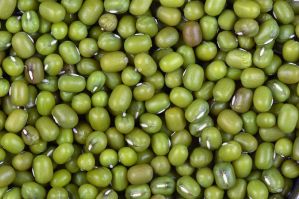
Mung bean noodles are noodles that are made from dried, ground mung beans. Mung beans have been consumed since antiquity but are unfamiliar outside of Indian and Asian communities. They are an important part of Ayurvedic cuisine, and are popular for sprouting. (Many of the bean sprouts that come with your salad or in your Asian take-out come from mung beans).
Mung beans are a high source of protein—about 3 grams per tablespoon, or 14 grams per cup. They’re also rich in manganese, potassium, magnesium, folate, copper, zinc and some B vitamins. They’re low on the glycemic index, and high in antioxidants. They’re considered a good food in the battle against heart disease, cancer, diabetes, inflammation, and obesity.
Mung beans can be found in Indian and Asian markets, but are slowly starting to find their way onto supermarket shelves as well. You can get mung bean noodles in Asian markets. The logical conclusion would be to use them in a dish with Asian flavors, right? However, I chose to go Italian style with these, and it worked out beautifully. I simply made them the way I would make a dish of traditional Italian pasta—with olive oil, garlic, and vegetables.
Mung Bean Noodles
Like many non-wheat noodles, these will not come out al dente, like traditional pasta. Mung bean noodles come out soft and somewhat sticky, so the eating experience will be different than what you get from eating traditional pasta, but it’s pleasant and delicious with a slightly nutty flavor. I like to add a little extra virgin olive oil at the end not only for the extra flavor boost but also to counteract the stickiness of the noodles.
I hope you enjoy them.
Italian-Style Mung Bean Noodles
Makes 2 servings.
1 small head broccoli, cut into florets 2 tablespoons + 2 teaspoons olive oil ½ teaspoon kosher salt Freshly ground black pepper to taste 6 to 8 ounces mung bean noodles 2 large garlic cloves, minced 1 teaspoon paprika 2 tablespoons grated cheese 2 teaspoons extra virgin olive oil
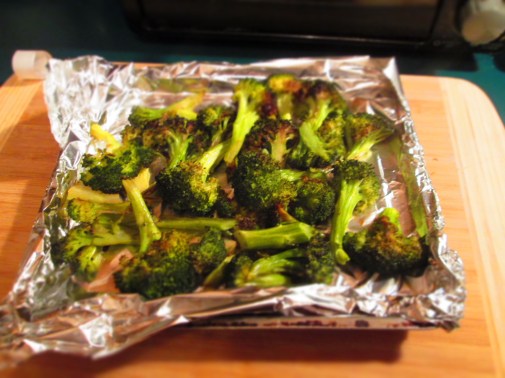
Preheat the oven to 350 F. Spread the broccoli out on a baking sheet. Toss with 2 tablespoons olive oil, salt, and pepper. Roast for 10 minutes. Stir and continue roasting until tender when pierced with a knife and browned, about another 10 to 15 minutes.
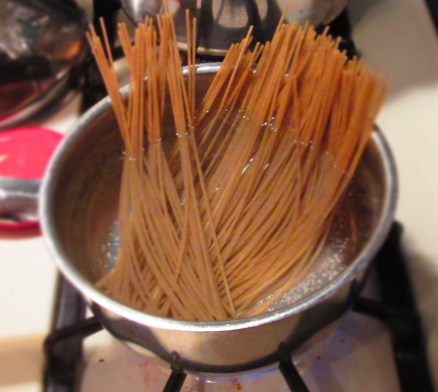
Bring a medium pot of water to a boil. Add the mung bean noodles and cook, stirring occasionally until tender, about 5 minutes. Drain.
Split the noodles between 2 bowls, and add broccoli to both, and mix well.
Heat the remaining olive oil in a small pan. Add the garlic and sauté just until it becomes fragrant and starts to color.
Add the paprika, swirl it around, and immediately pour equally over the two the bowls of noodles and broccoli.
Sprinkle grated cheese over the top, then the extra virgin olive oil, and serve.
This week in honor of last week’s episode of The Walking Dead, I offer you Warm Sorghum Salad.
Okay, the truth is, I already had this blog post and recipe prepared but it seemed like an appropriate time to post it.
Many people don’t know what sorghum is. It’s a grain that originated in Africa and that’s been used in this country for years as fodder—except in the South, where it’s been a fairly popular grain. Also in the South, sorghum molasses often takes the place of regular molasses, honey, maple syrup, and corn syrup. In short, it’s a liquid sweetener that’s used in baked goods, as well for drizzling on biscuits, pancakes, and toast.
Sorghum is gluten free and inexpensive. But it’s also very use friendly. It’s a diverse grain that can be used in many different dishes. Here’s my Warm Sorghum Salad. It’s great to bring to dinner in the fall and winter, but also to barbecues and picnics in the warmer seasons. And the kale makes it a well-rounded, healthy dish. Enjoy!
Warm Sorghum Salad
Makes 6 servings
1 cup sorghum grain 1 tablespoon olive oil ½ cup minced shallot 1 teaspoon kosher salt ½ lb. mushrooms (preferably a combination of white and baby bella), thinly sliced 1 tablespoon apple cider vinegar 4 packed cups chopped kale Fresh pepper ½ small lemon
Dressing ¼ cup extra virgin olive oil 1 teaspoon balsamic vinegar 1 teaspoon Dijon mustard Freshly ground black pepper to taste
Place the sorghum in a mesh strainer and rinse it under running water for a minute or two. Place it in a small pot along with 3 cups water and bring to a boil. Lower the heat and simmer, partially covered, until tender, about 30 to 40 minutes. Drain well.
Meanwhile, heat the oil in a wide skillet. Add the shallot, ¼ teaspoon salt, and saute until soft and translucent, 2 or 3 minutes. Add the mushrooms and 1/4 teaspoon salt and saute until the water they release dries up and mushrooms brown.When you see browned bits in the pan, deglaze with the apple cider vinegar (add it to the pan and scrape up the brown bits with a wooden spoon).
Add the kale and another ½ teaspoon salt and cover; cook until kale is tender.While that’s cooking, make the dressing and set aside.
When the sorghum is cooked, add it to the pan with the kale and pepper and mix.Pour in the dressing and mix well. Taste for seasoning and adjust if needed. Squeeze the lemon over it and stir.
I’ve been roasting cauliflower a lot lately because it’s a very versatile vegetable. Once roasted, you can use it in a variety of dishes, and this is one of them.
Spinach Fettuccine nests
Even if you aren’t a fan of cauliflower, I guarantee that you will like it roasted. Roasting brings out both a sweetness and a smokiness, not to mention a fabulous umami flavor. You can certainly start from scratch and roast the cauliflower specifically for this purpose, but I love the idea of roasting a whole head and having it in the refrigerator to use for the whole week. Then, when you’re ready to make dinner, take some out and add it to whatever you’re making. It will taste great. (You can refer to my blog on Creamy Roasted Cauliflower Bisque on how to roast the cauliflower.)
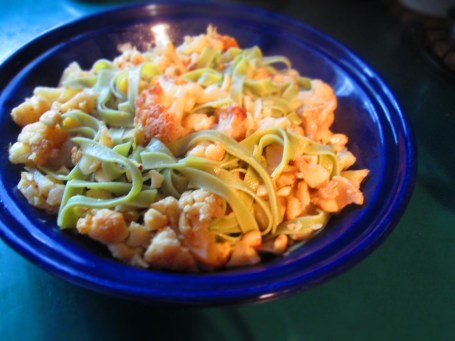
On this particular evening, I made Spinach Fettuccine with Roasted Cauliflower-Almond Sauce. Pasta with cauliflower and nuts (particularly pine nuts, or pignoli) is a typical Italian dish, and is especially popular in Sicily. My version calls for the roasted cauliflower and toasted almonds. The spinach fettuccine that I had came in the form of “nests,” but you can use any kind or brand of spinach fettuccine.Continue reading →
My pantry is stuffed to the gills with all sorts of items that the average cook with raise an eyebrow to. In fact, I’ll bet I have a few items in there that the average cook has possibly not even heard of, let alone used. If you were my neighbor and needed something for a recipe you were cooking or baking, chances are I’d have it. Anything at all. Need some flour? What kind? All-purpose? Whole wheat? Pastry? Spelt? Soy? Buckwheat? Barley? Teff? Oat? Fava bean?
Need rice? Currently, I’ve got brown, basmati, brown basmati, jasmin, Thai black, rosematta, glutinous Thai, and Japanese short grain.
Looking for grains? Choose from white and red quinoa, buckwheat, amaranth, sorghum, millet, and teff.
So, what am I saying here? That I am constantly looking for ways to use up all of that stuff! And so here is what I came up with to use both amaranth and some mixed dal I had. I could’ve just made a soup, but I wanted to do something different. This is what I came up with—Amaranth-Dal Patties. If you’re not familiar with amaranth, they’re tiny little grains that are gluten-free and high in iron and lysine. Here’s a link for more information.
Amaranth
You can season the patties with whatever herbs or spices you like, and/or dress them with any kind of sauce, from raita to salsa to piri piri (just make sure to pair the seasonings and dressing appropriately—you wouldn’t want to use garam masala as a seasoning and then dip them in Asian soy dipping sauce!). You can also substitute the flour for something that is gluten-free.Continue reading →
Hi there. It was homemade vegetable stock day here at Chez Roberti, so I wanted to offer a quick and easy way to make your own. Just follow along on the infographic below and you’ll be all set.
A note on salt: Traditionally, salt is not used in stock because it’s supposed to act as a base to support other flavors. By not adding salt, you control the salt content in a recipe later on. However, if you’re going to use this stock as a basic soup broth, you can add some kosher salt, if you want.
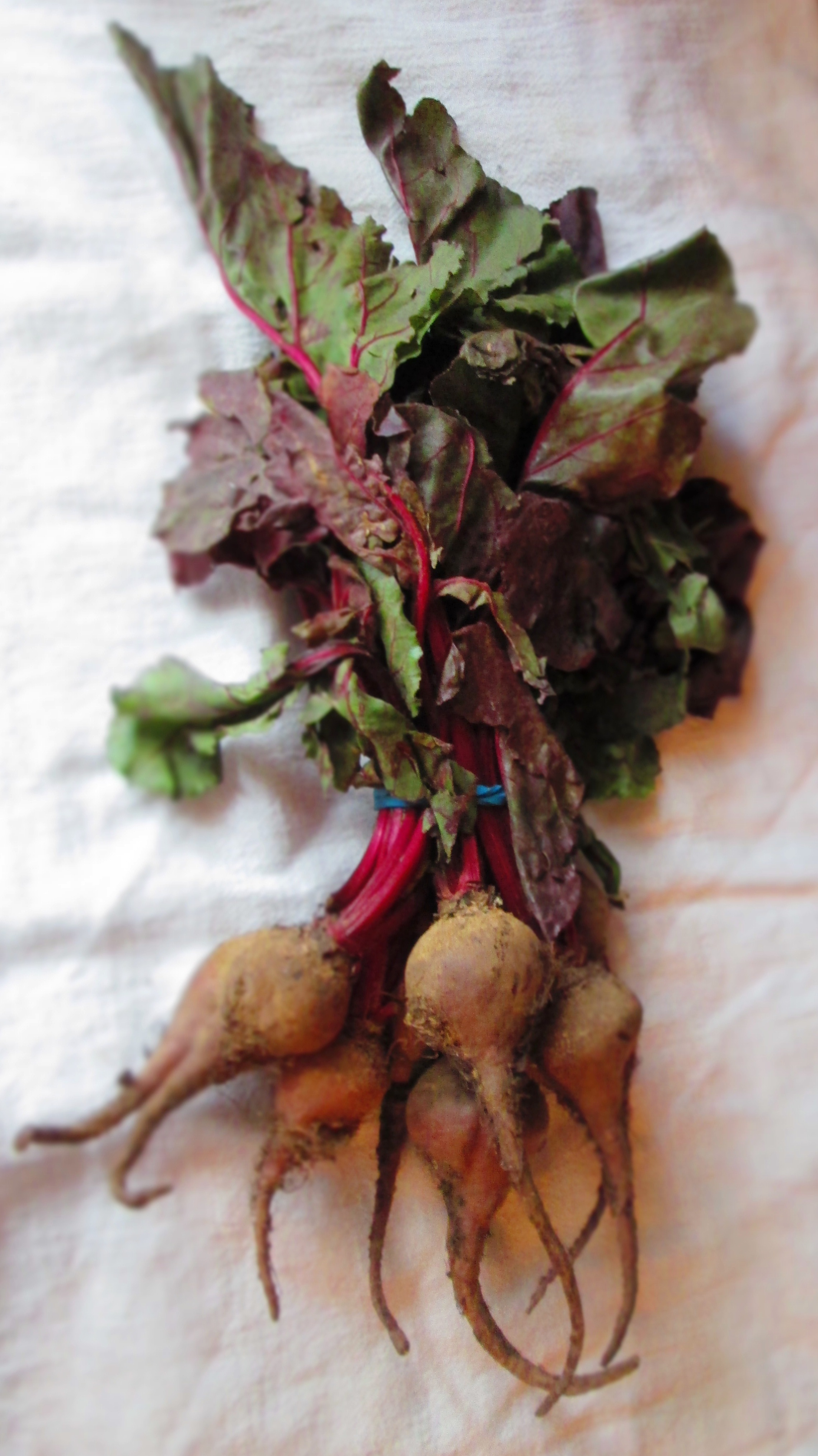
Once again, I was lured by the Siren’s song of the farmers’ market. I picked up some lettuce, some carrots, some cipolline onions. But what caught my eye this week was the box of baby beets. Gigantic red globes can be found anywhere, but baby beets are not quite as easily found. At least not for me. So I pounced on them.
When I was doing my internship at the James Beard House, I worked with different chefs each week. One week, I worked with the crew from Blackberry Farm in North Carolina. They did a plate of roasted baby beets that were like sparkling jewels. And the memory of those little gems is what inspired me to make this recipe.

 Green beans are a versatile vegetable. You can use them in many different ways. For those of you who have only had mushy green beans that have been boiled to death, I feel sorry for you. But I’m here to tell you, there’s something else. (That’s my small, brief homage to Prince.)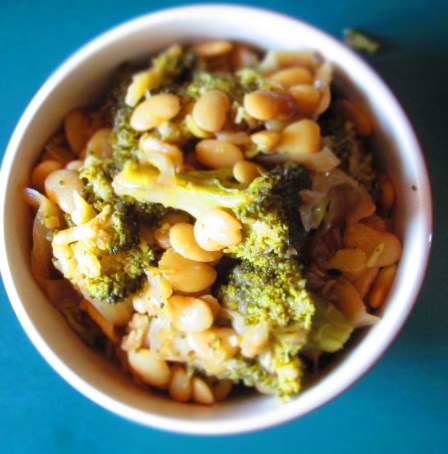




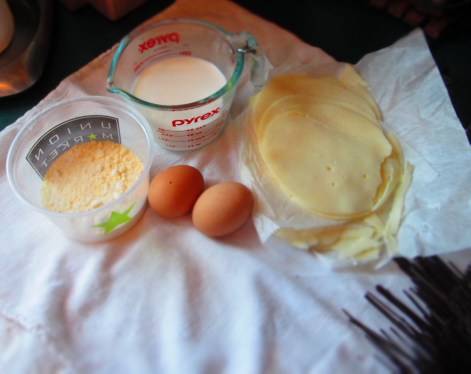 Preheat the oven to 400 degrees F. Grease an 8-inch springform cake pan with 1 teaspoon of the olive oil. Line the bottom with a piece of parchment paper.

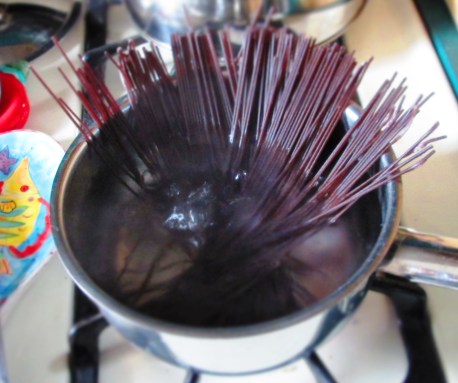


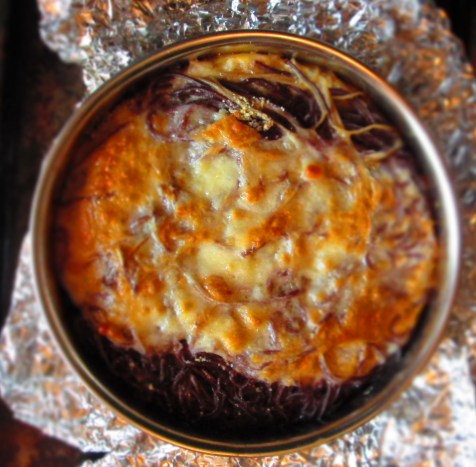


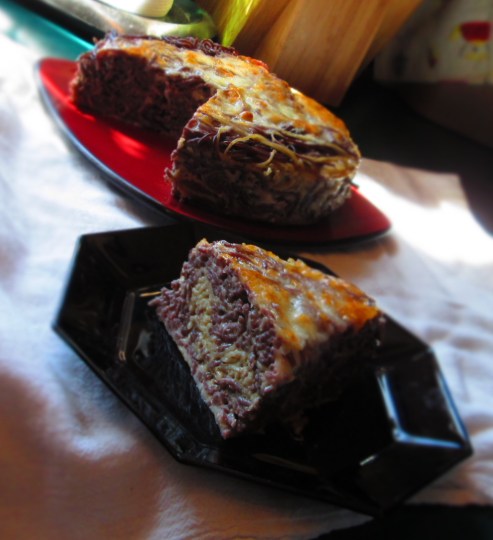






 Sprinkle grated cheese over the top, then the extra virgin olive oil, and serve.


 When you see browned bits in the pan, deglaze with the apple cider vinegar (add it to the pan and scrape up the brown bits with a wooden spoon).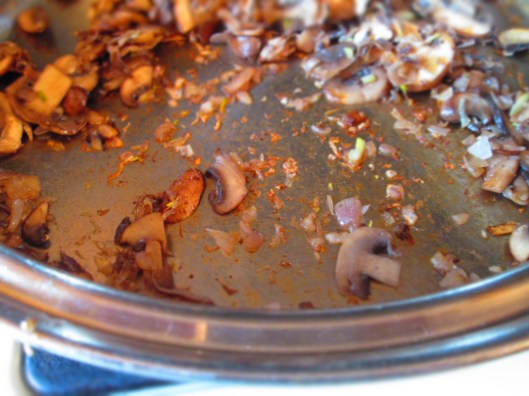
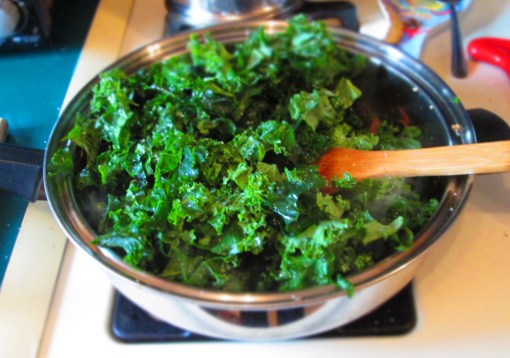 While that’s cooking, make the dressing and set aside.
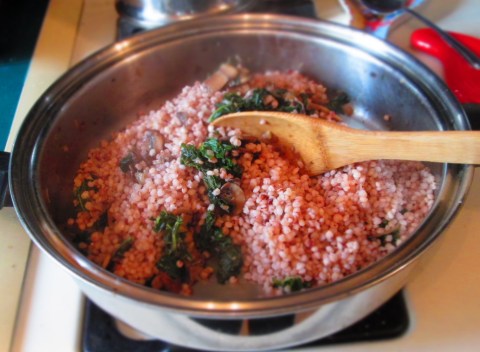 Pour in the dressing and mix well. Taste for seasoning and adjust if needed. Squeeze the lemon over it and stir.


 Miz Chef