Miz Chef

Cooking Up a Healthy Life


2 Comments

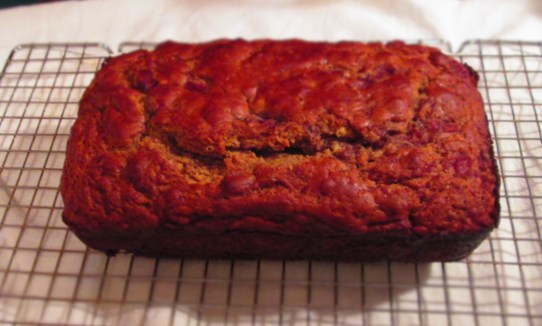
Cranberry Bread

IMG_5651

Do you still have cranberry sauce leftover from Thanksgiving? I’ll bet many of you do. Maybe it’s a stray can hanging out in the pantry, or it’s a cup or so in the fridge that you haven’t been able to bring yourself to throw out. That’s okay—cranberry sauce lasts a long time in the refrigerator, but at this point, use it or lose it.

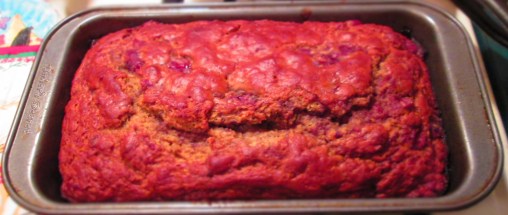
There are many things you can do with leftover cranberry sauce, but making a loaf is one of my favorites. (This is a wheat-free version, but it has spelt flour, so if you have—or are making it for someone with—Celiac disease, this isn’t the right recipe for you. It also contains soy flour, so if you’re avoiding soy, again, this isn’t right for you.)

This is not overly sweet, so it makes a nice breakfast loaf, toasted with some butter or jam. But it’s got enough sweetness and crunch from the walnuts (if you want to use them) that it makes a great snack with an extra dollop of cranberry sauce.Pilcrow & Dagger Cover

I’m happy to say that another version of this loaf (not gluten free) appears in the holiday issue of the literary magazine Pilcrow & Dagger, along with my recipe for homemade cranberry sauce. Check out a sneak preview HERE. And if you’re interested in purchasing a copy, you can do so HERE.

So, rescue that leftover cranberry sauce and make this tasty loaf and enjoy.

I hope you all had a wonderful, joyful holiday season, and may 2016 bring happiness and success, whatever that means for you.

Cranberry Bread

Makes 1 (8 x 4) loaf.

1 cup spelt flour
1 cup soy flour
¾ cup chickpea flour
¼ cup rice flour
½ cup sugar or maple crystals
1 teaspoon baking powder
1 teaspoon baking soda
1/4 teaspoon ground cinnamon
¼ teaspoon allspice
¼ teaspoon nutmeg
1 teaspoon kosher salt
3 medium eggs
1 cup buttermilk
2 tablespoons melted coconut oil
½ cup chopped walnuts (optional)
1 cup cranberry sauce

Preheat oven to 375 degrees F. Grease a 8 x 4-inch loaf pan (or line is with parchment paper).

In a medium bowl, whisk together the flours, sugar, baking soda, cinnamon, allspice, nutmeg, and salt.IMG_5633In a small bowl, mix together eggs, buttermilk, coconut oil, and ¼ cup water.IMG_5634Mix this into the flour mixture just until all dry ingredients are moistened. If it seems dry, add a bit more water.IMG_5635

IMG_5636Stir in the walnuts, if you’re using them, then stir in the cranberry sauce, but don’t mix it in completely—just run it through.IMG_5639Spoon the batter into the loaf pan. Bake until golden and a knife inserted in the center comes out fairly clean, about 45 to 50 minutes. Some moist cranberry on the knife is okay.

If the loaf starts getting very dark or starts burn around the edges but the loaf isn’t done, cover it with a piece of foil and continue baking.IMG_5645Set pan on a wire rack to cool for 10 minutes. Turn loaf out onto the rack. Serve warm or cool completely.IMG_5646
IMG_5654


2 Comments

Fried Green Tomatoes at the Whet-Your-Whistle Bar

IMG_5525Yeah, that would be MY bar. It’s a cart in the corner of my dining room loaded up with various alcoholic delights. Don’t judge me.IMG_5509

Anyway, we hit a little cool snap here last week on the East Coast and suddenly people with gardens found themselves having to make some quick decisions about their remaining vegetables. My parents still had a garden full of tomatoes that had to be taken in.

There’s no better opportunity to make fried green tomatoes.

Although fried green tomatoes are associated with the American South, according to an article on Smithsonian.com and this article from Bon Appetit, they’re actually from the North and Midwest, possibly of Ashkenazi Jewish origins. But the use of cornmeal is probably a Southern contribution to the dish, and I think that the flavor and texture of the cornmeal are what makes the tomatoes so tasty and unique.

Fried green tomatoes are really easy to make and can be flavored with whatever spices you like.

Enjoy!

Fried Green Tomatoes

1½ pounds green tomatoes
1 medium egg
2 teaspoons milk (any kind)
¾ cup cornmeal
1 teaspoon garlic powder
1 teaspoon paprika
1 teaspoon kosher salt

freshly ground pepper to taste
Coconut oil

Line a large plate with paper towels and place it by the stove.

Slice the tomatoes into ½-inch-thick slices.IMG_5512Beat the egg with the milk in a medium bowl. Combine the cornmeal, garlic powder, paprika, salt, and pepper on platter. Place a few of the tomato slices in the egg and coat both sides. Then put them in the cornmeal and coat both sides.IMG_5517Heat about ½ inch oil. Gently shake off excess cornmeal from the tomato slices and place them in the oil. Fry, flipping them over once, until golden brown on both sides, about 3 or 4 minutes per side. Transfer to the paper towels.

Repeat with the remaining tomatoes. Replenish the oil in the pan as needed.

Serve with a creamy dressing, sour cream, or salsa.

Makes 6 to 8 servings.

IMG_5522


Leave a comment

Parsnip-Butternut Soup

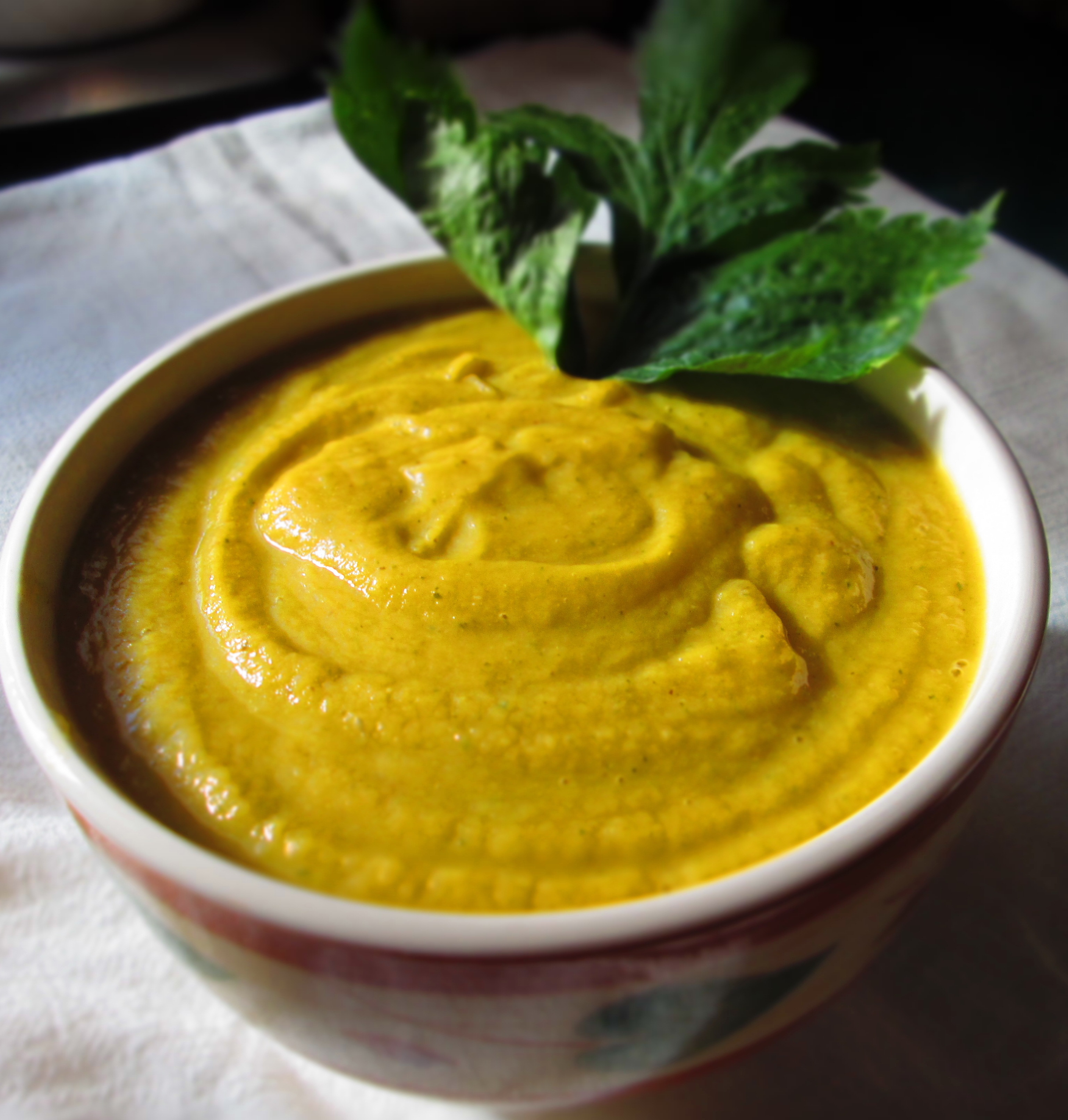
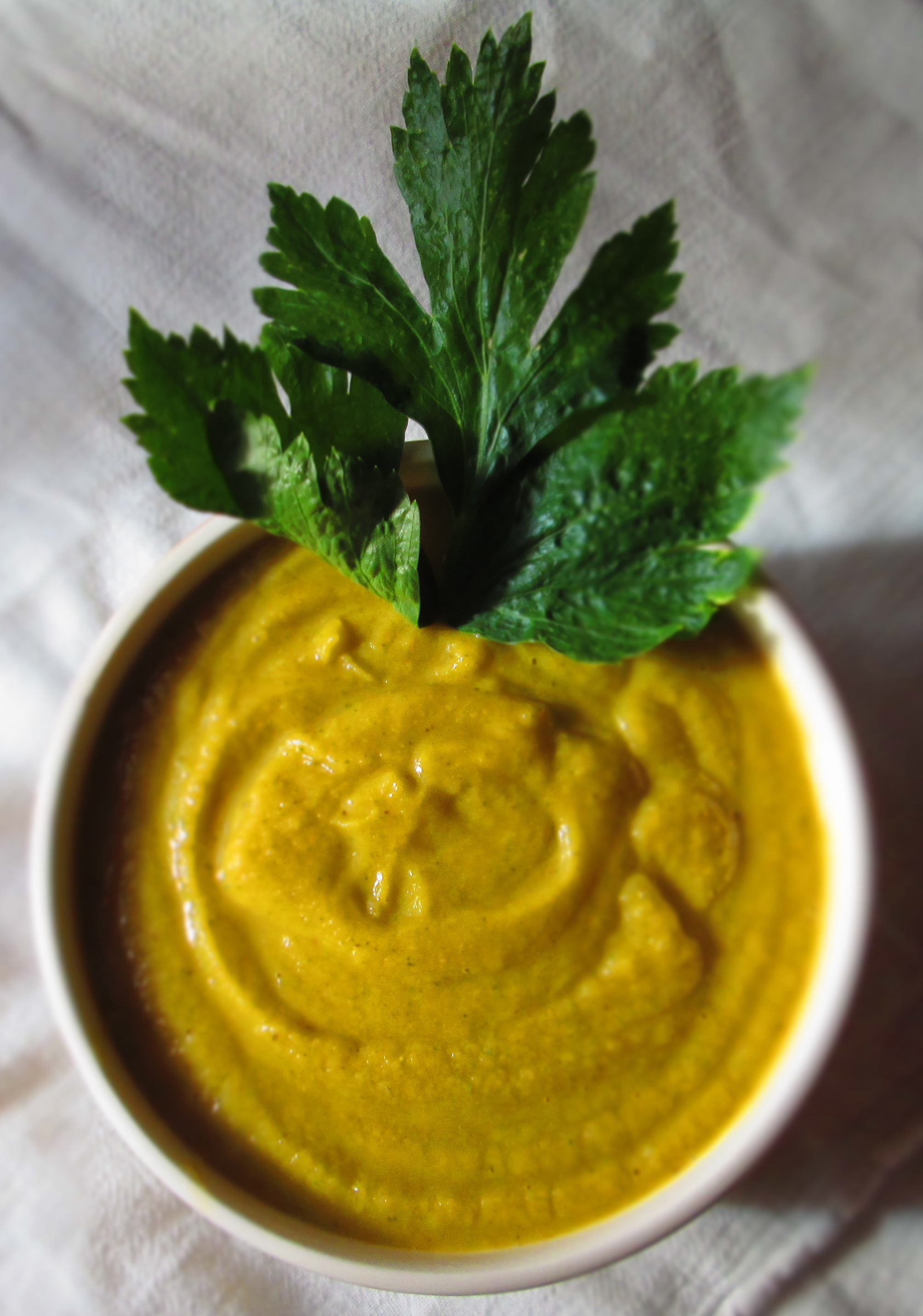
IMG_5468My parents’ garden comes up with great stuff every year. This season, they got butternut squash, and I took a cute little one for myself. The farmers’ market had great-looking parsnips, so I decided to make parsnip-butternut soup.

Because it’s October and I don’t have any fresh herbs left my garden, I turned to my dried herbs. You can use whatever dried herbs you have on hand or particularly like for soup. I used thyme and savory.

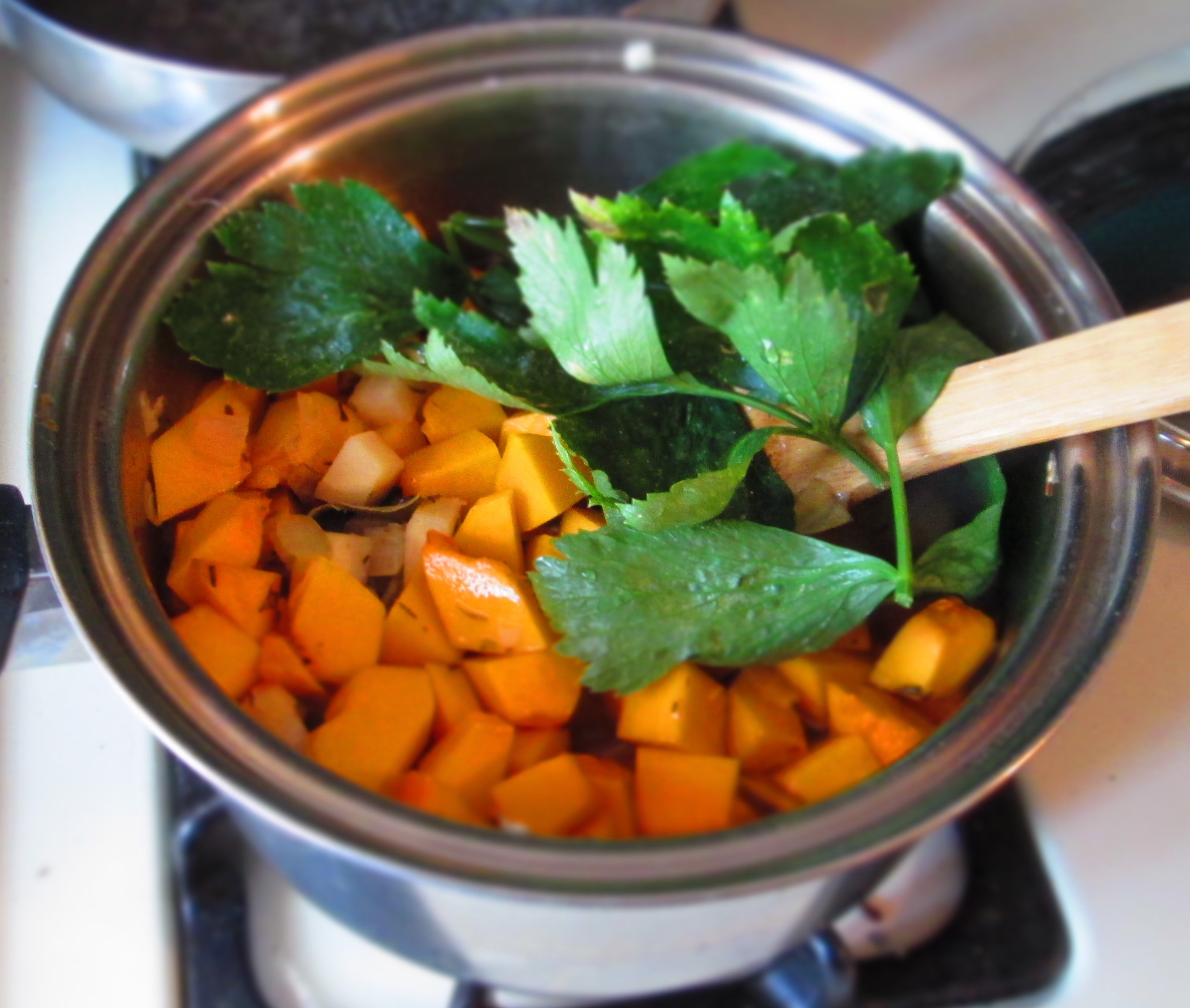
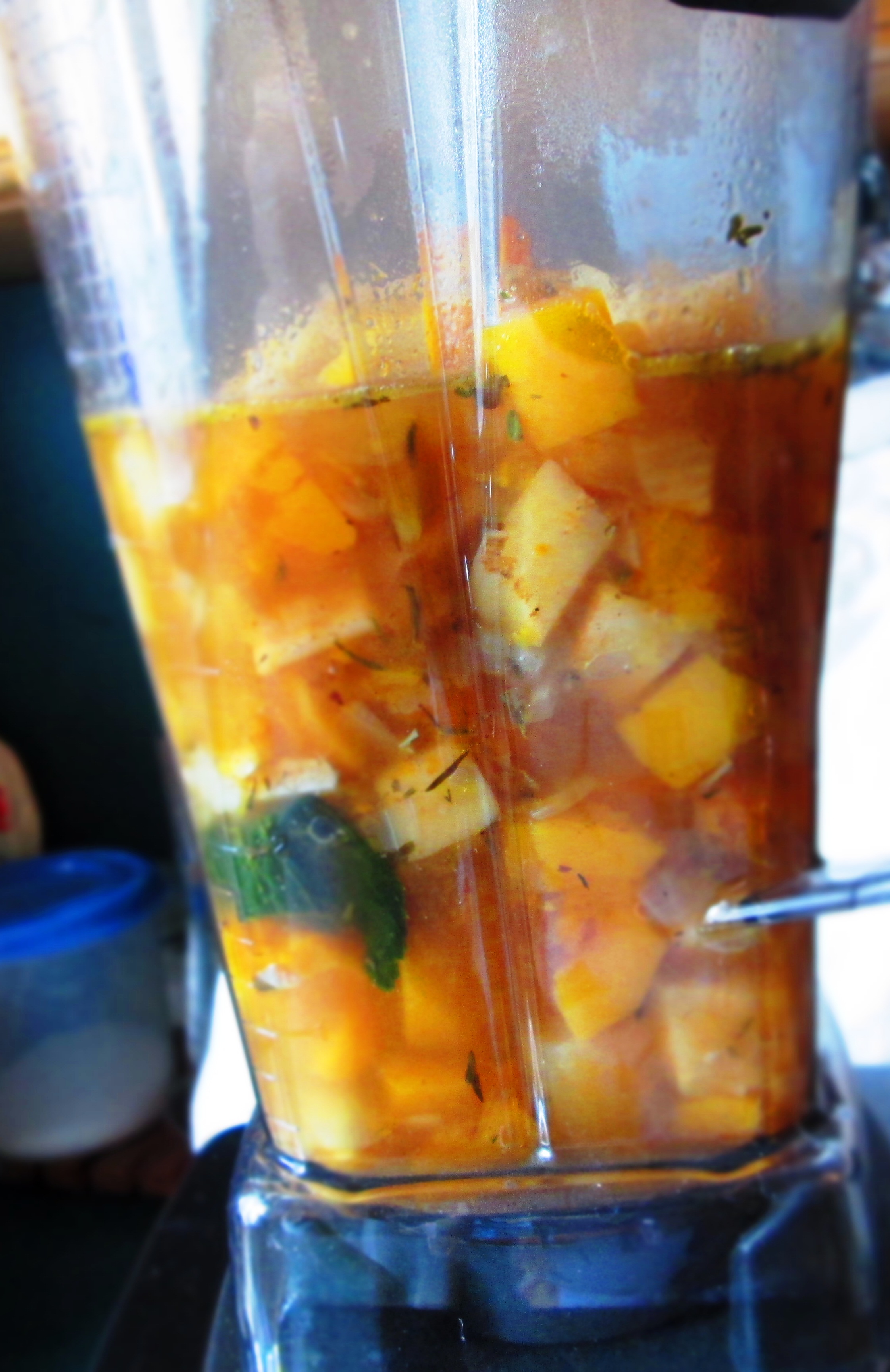
Also growing in my parents’ garden is celery. But it’s a kind of wild celery—in fact, it’s probably lovage, a relative of celery that has big leaves and small, thin stalks. I put some of these leaves into the soup and pureed everything together. It unexpectedly turned my soup green, so it kind of looks like split-pea soup. If I hadn’t done that, I would have ended up with something that looks more like typical butternut squash soup.

Regardless, it’s delicious. The parsnips give the soup an earthy tone, while the squash sweetens it up. It was just what I needed on a brisk autumn day. You can have it with croutons or chopped walnuts or little cooked cubes of butternut.

Give it a try. Enjoy!IMG_5452

Parsnip-Butternut Soup

Makes 4 servings.

1 teaspoon olive oil
1 small onion, chopped
½ teaspoon kosher salt
3 large garlic cloves, coarsely chopped
1 bay leaf
1 teaspoon dried spices (see instructions)
1 teaspoon garlic salt
2 cups cut-up parsnip (from 1 large parsnip)
2 cups vegetable broth
2 cups cut-up butternut squash (from 1 small squash)
Fresh herbs, if available
Black pepper to taste

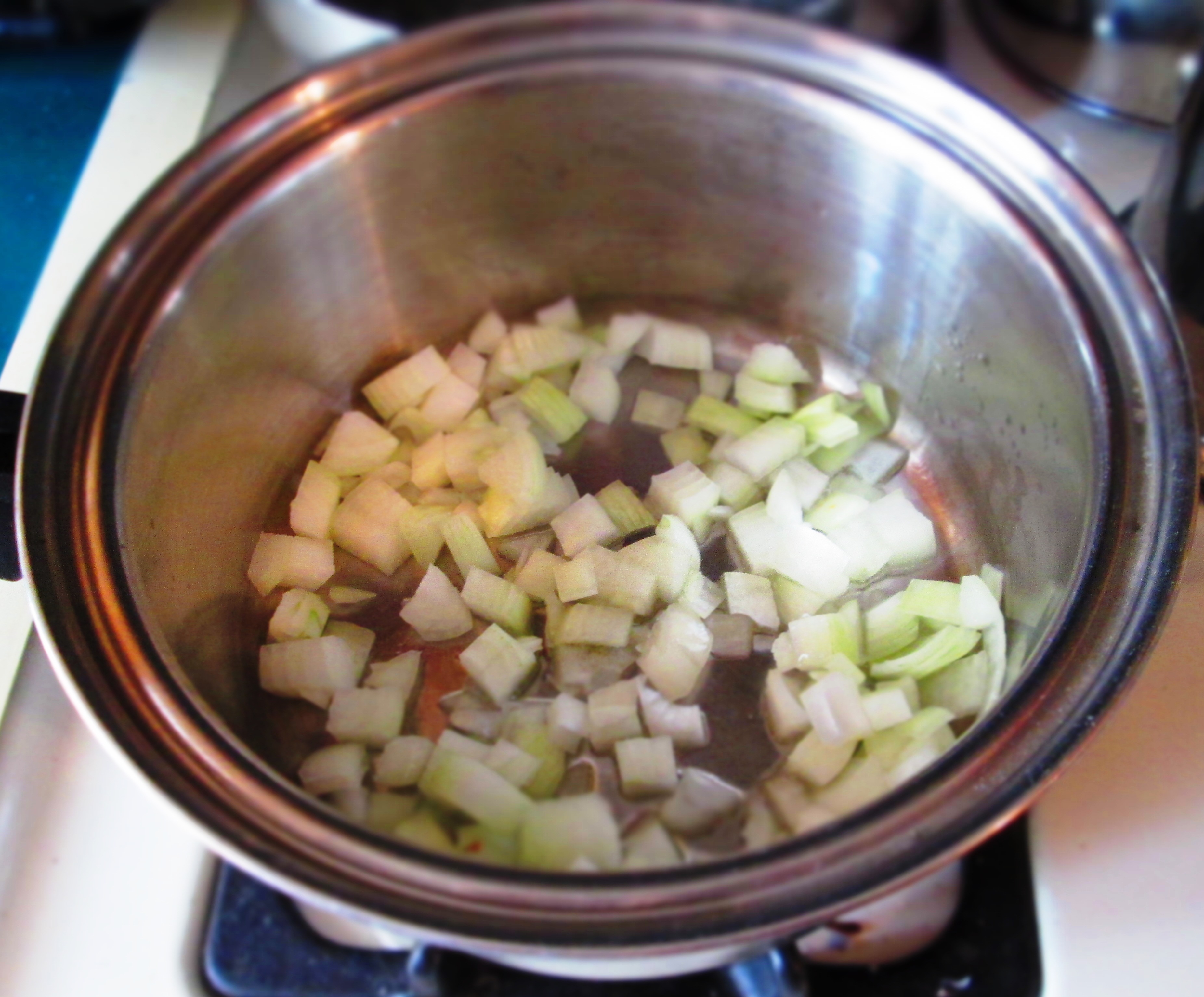
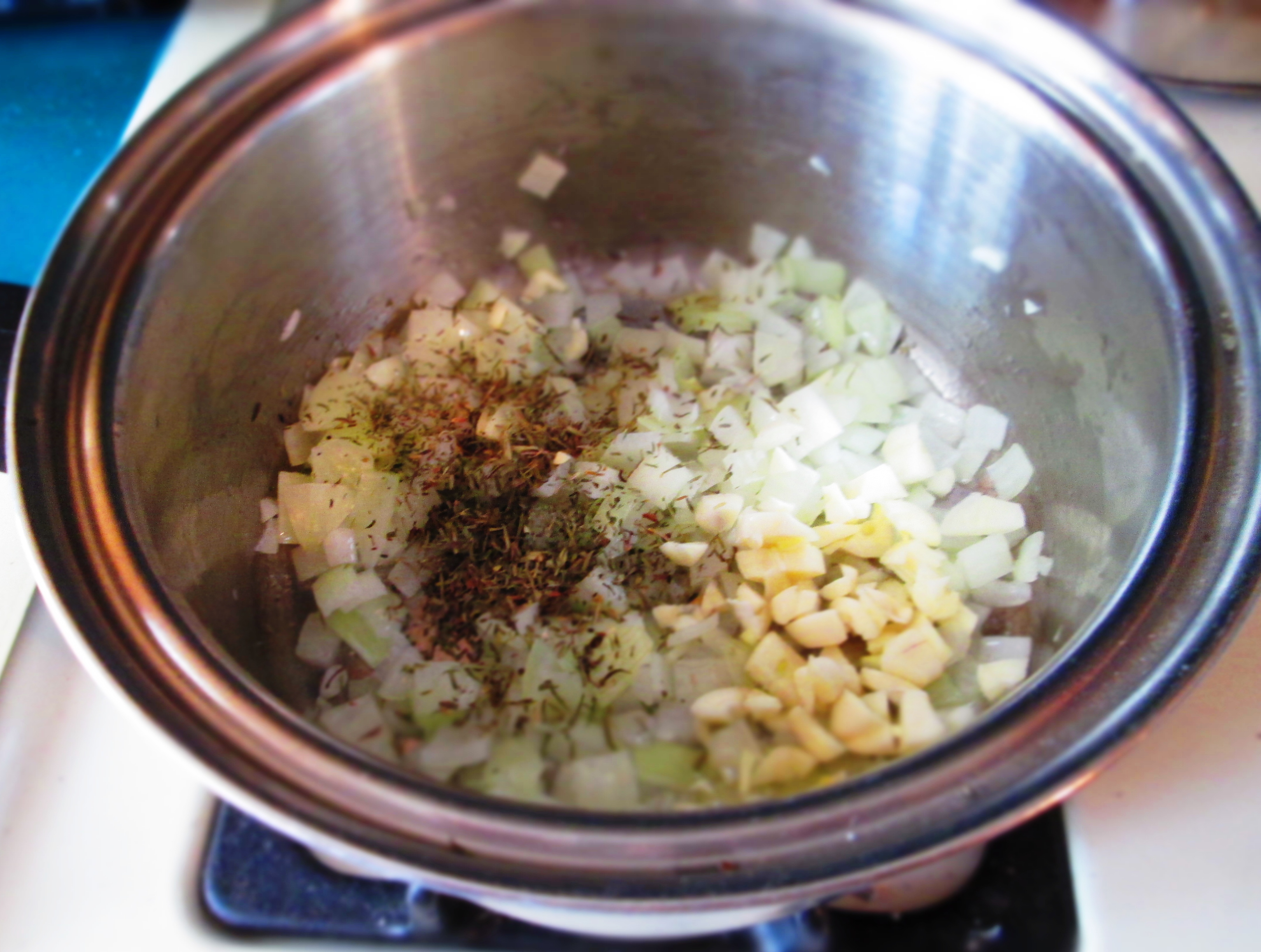
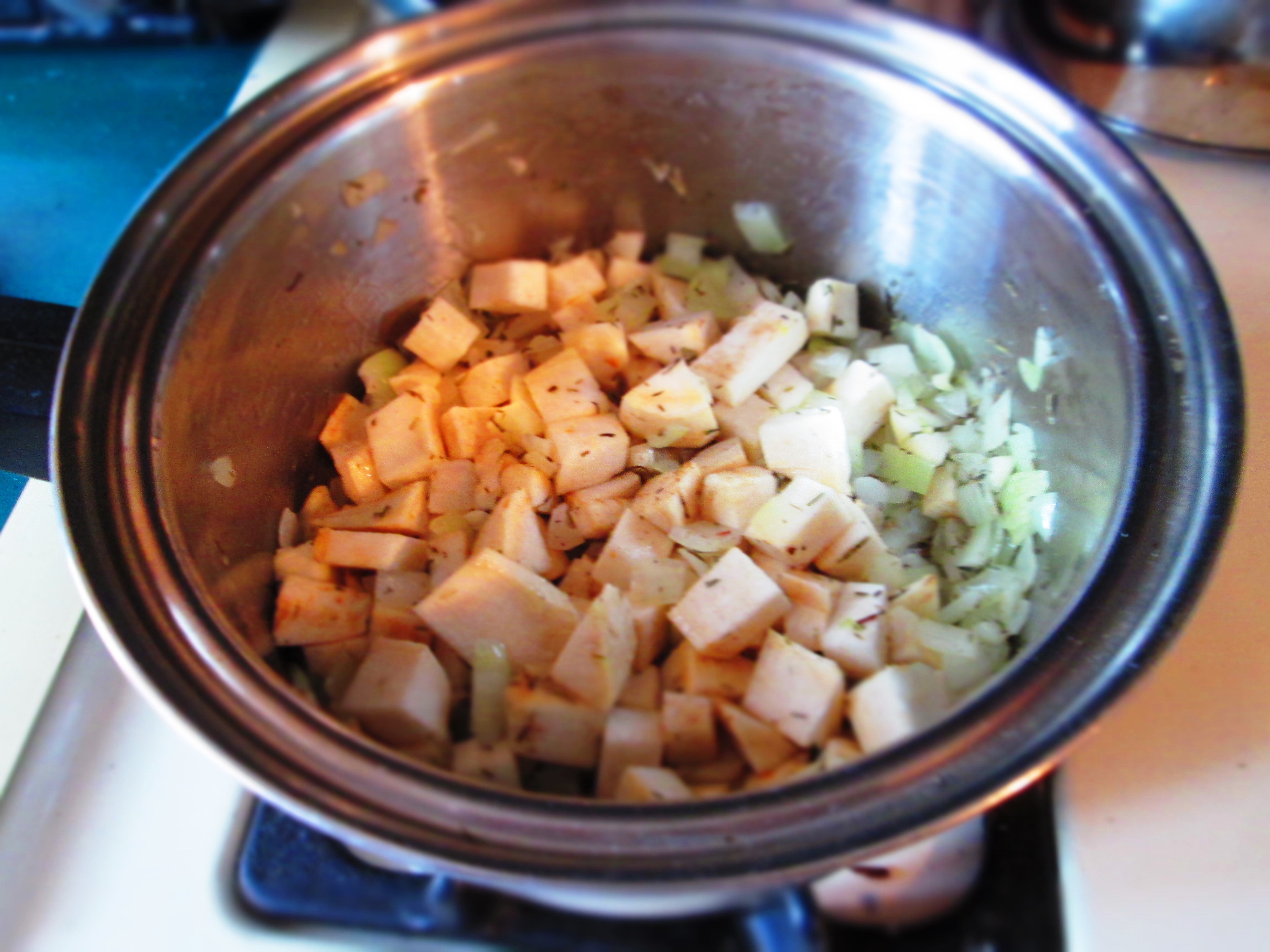
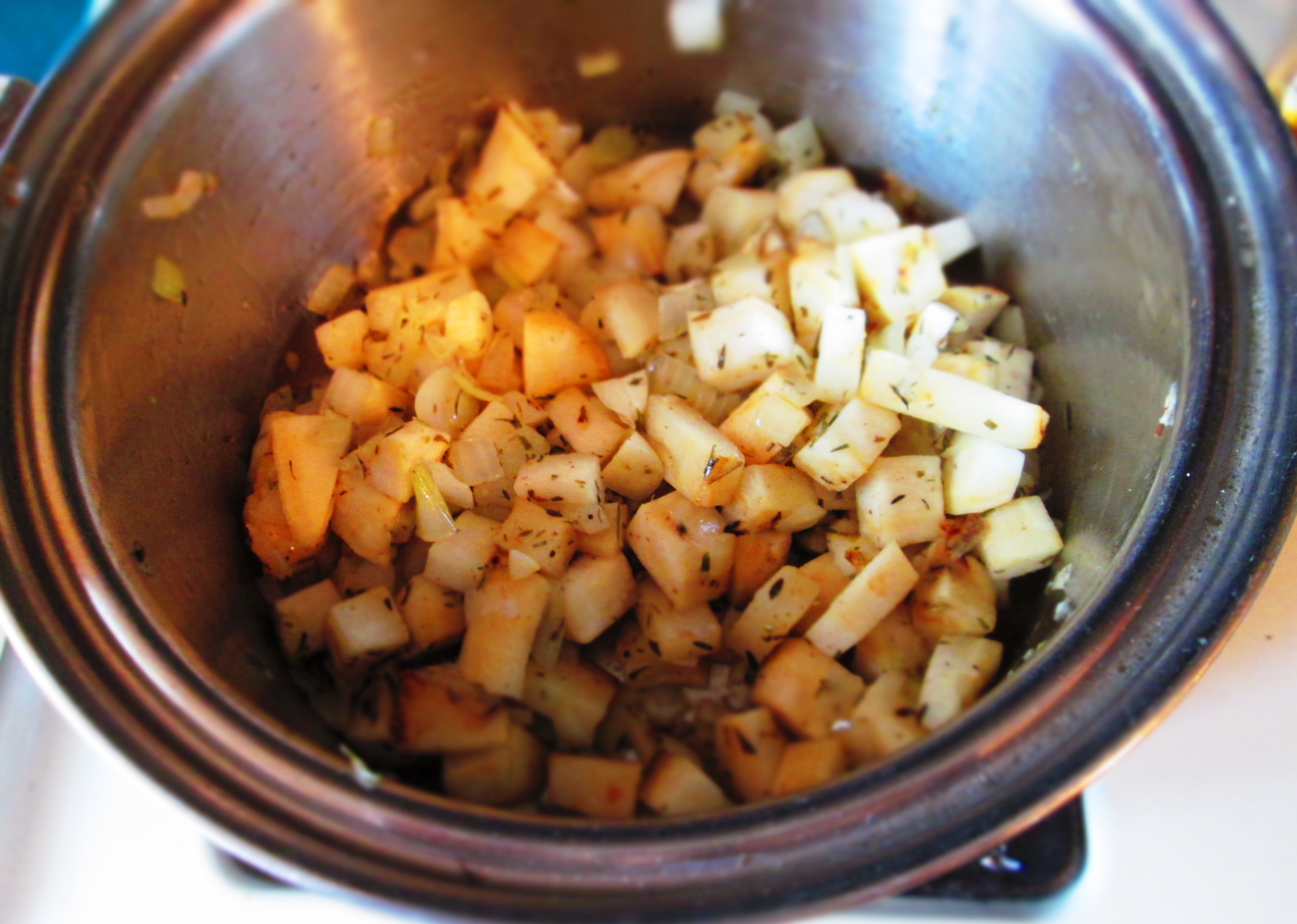
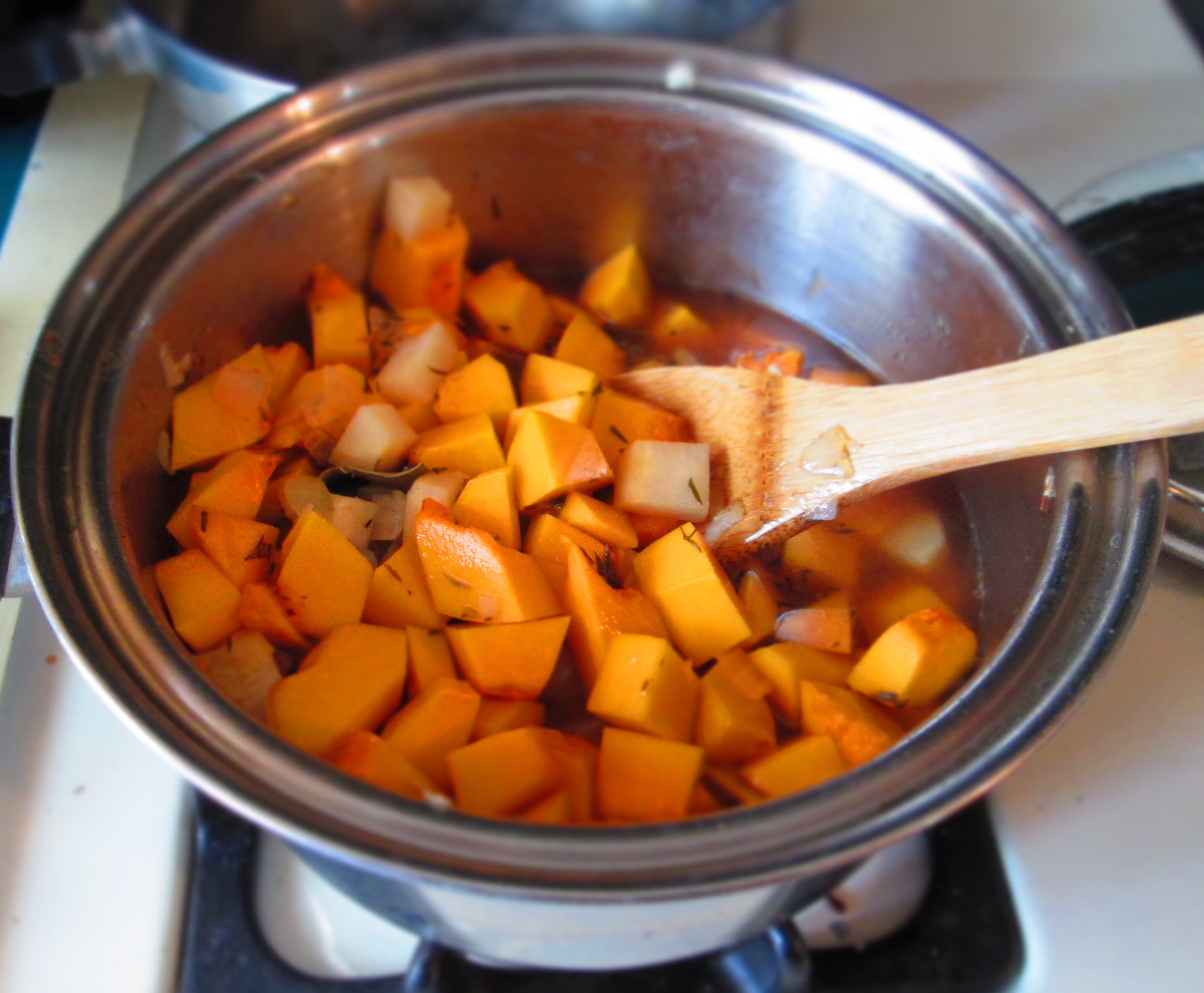
Heat the olive oil in a medium saucepan. Add the onion and salt and cook until translucent.IMG_5454Add the garlic, bay leaf, dried spices (I used 1/2 teaspoon each thyme and savory), and garlic salt. Stir and continue cooking another 2 minutes.IMG_5455Add parsnips and saute, stirring often, until parsnips starts browning.IMG_5456IMG_5457Add broth. Bring to a boil.IMG_5458Add squash and any fresh herbs you want. Lower the heat and simmer, partially covered, until the vegetables are tender when pierced with a knife. Add black pepper.IMG_5460IMG_5461Transfer to a blender and puree. Taste for seasoning and adjust if needed.IMG_5463IMG_5464Serve hot.IMG_5467


Leave a comment

Chickpeas and Beet Salad

IMG_1024Despite the fact that I have less and less time to cook for myself these days, when I walk past the farmer’s market, I’m seduced by the beautiful vegetables. So, then I find myself with vegetables that I have no time to cook, but must.

This week, I had beets. The beets were firm and bright and the leaves were full and green. I couldn’t help myself. But I had to deal with them quickly. So, I went to my go-to beet recipe: Chickpea and Beet Salad. It’s simple, it’s fast (once the beets are cooked), and it’s satisfying.

The greens? My go-to greens recipe: sautéed in olive oil and garlic.

The reason for my lack of time? Well, apart from my work/commute issue, I have multiple projects happening at the same time. One of those is volume 2 of Vegetarian Italian: Traditions, which is finally under way after a very long delay at my publisher. It’s slated for release in April 2016. With any luck, that will be the case.

This beet recipe, by the way, appears in volume 1 of Vegetarian Italian: Traditions, and it’s just one of many delectable dishes straight from the Mediterranean. Continue reading


Leave a comment

Mediterranean White Bean Spread

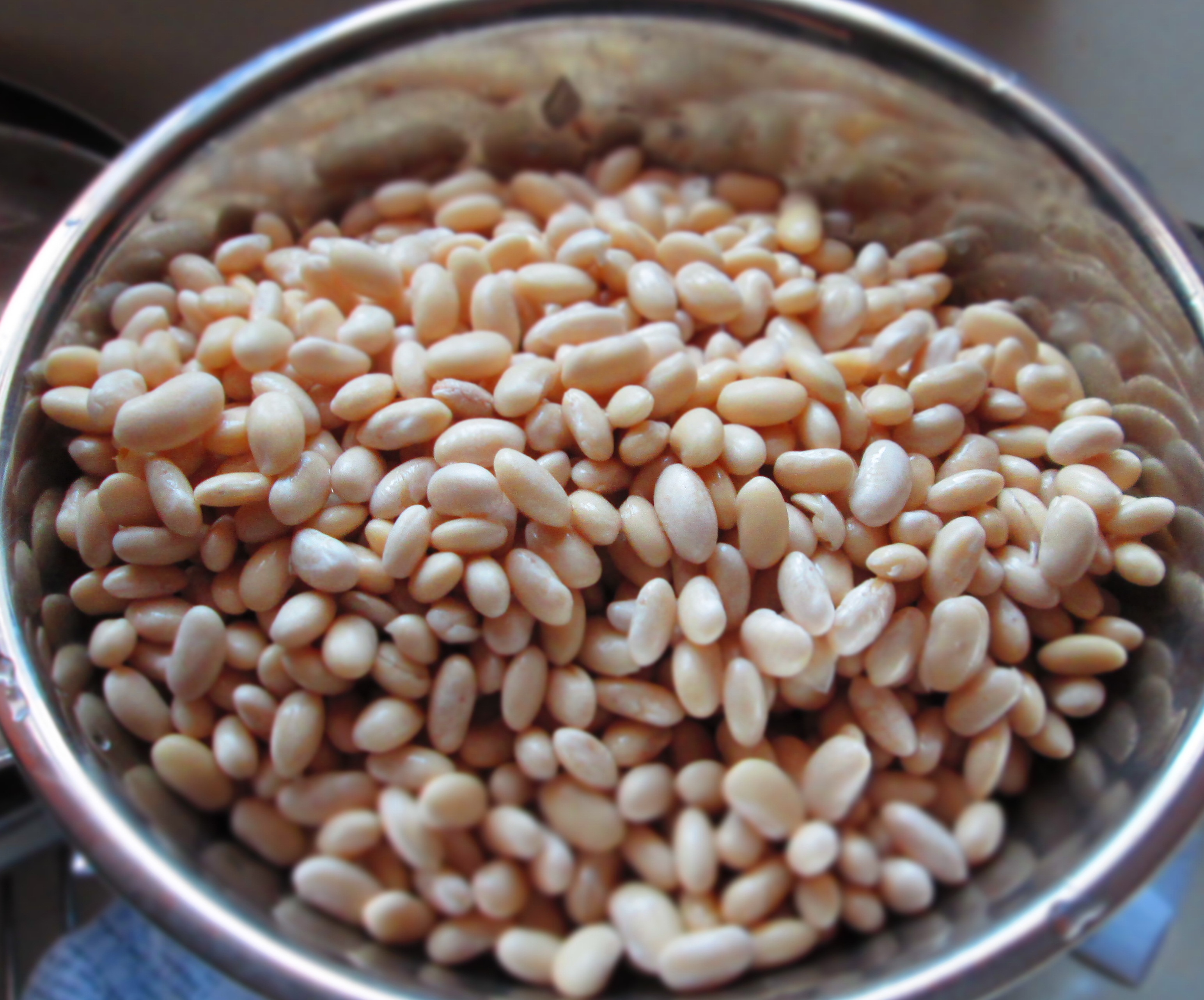
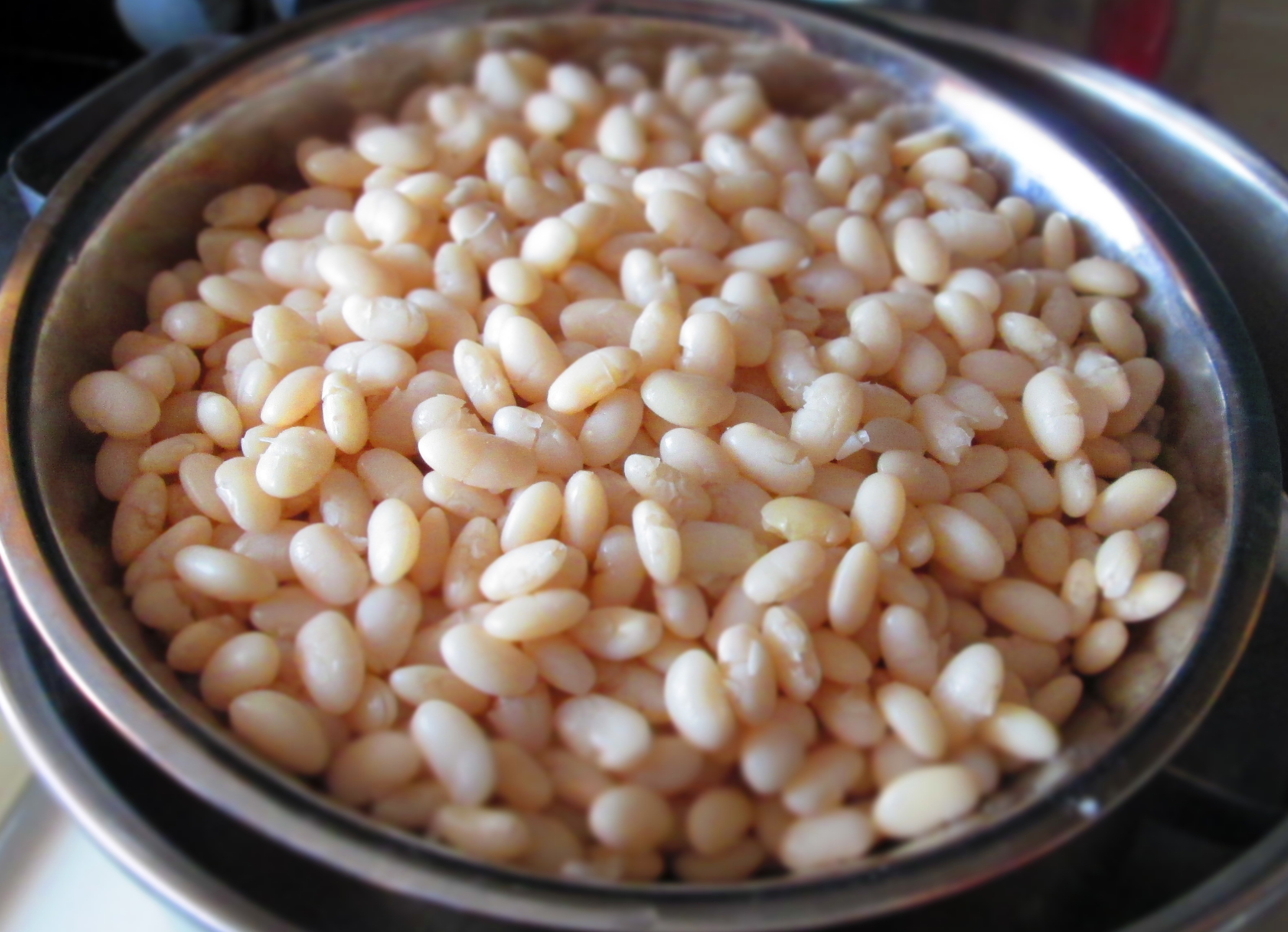
IMG_5318I recently found myself with an abundance of dried Great Northern beans, and if you stopped by here last time, you saw that I took some of those beans to make Tomato-y White Beans.

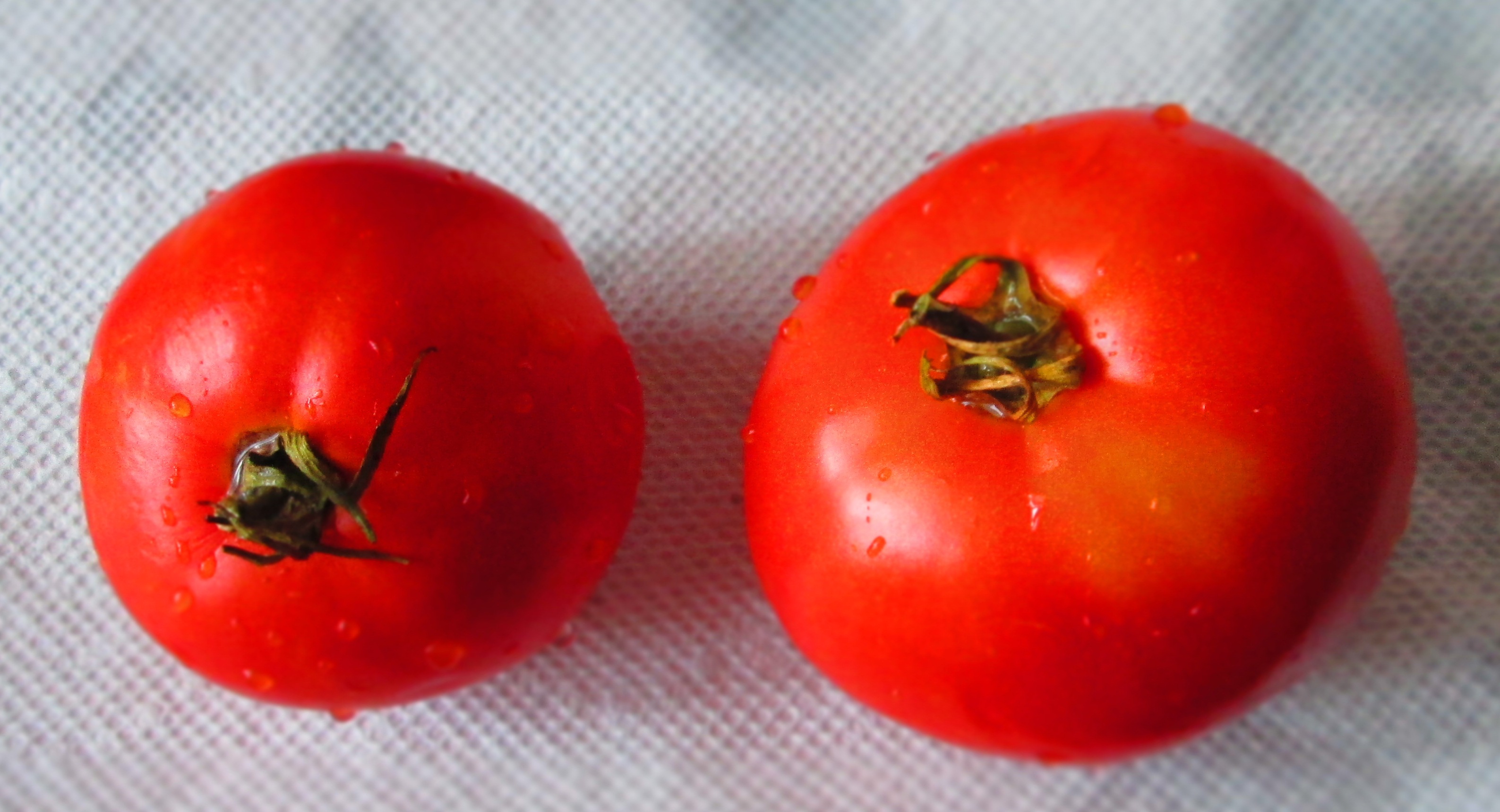
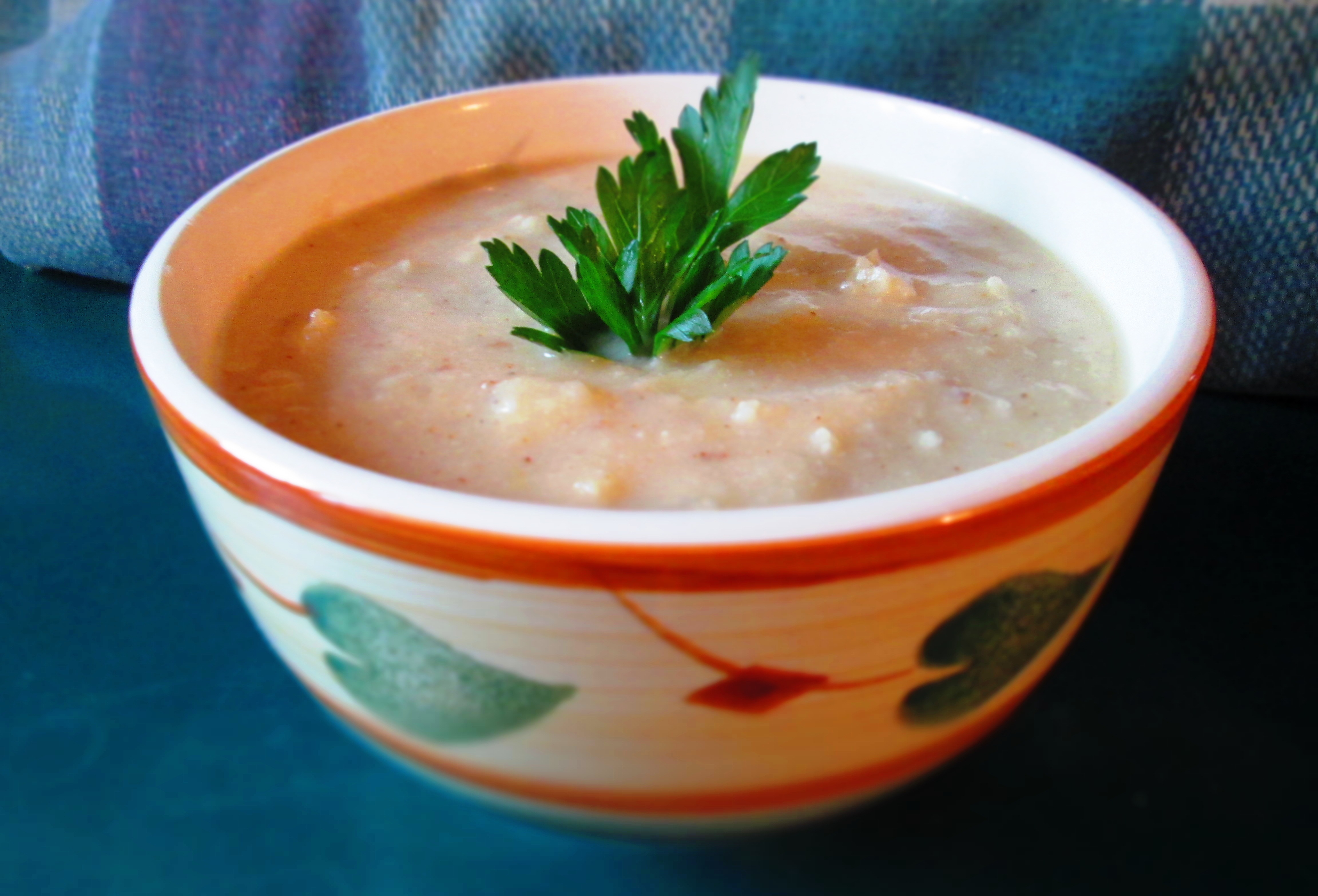
I had cooked up a huge batch, so I needed to come up with something else. And, as I also said last time, because it’s summer, I’ve had access to a bunch of tomatoes. Well, both they went into a food processor for a white bean spread. With a few additional ingredients, this is a flavorful, filling, yet light, snack. It’s also perfect to taking to a picnic or barbecue.IMG_5309

Continue reading


Leave a comment

Tomato-y White Beans

IMG_5305Sometimes you go through your pantry or refrigerator and see a bunch of stuff that you know you have to use or it will go bad. It’s been that way with me and all of these dried beans I realized I had. And since it’s summer, I also find myself with a steady influx of tomatoes.IMG_5298

I’m a whiz at utilitarian cooking. And I say that because it really doesn’t take much to be a whiz at utilitarian cooking. You basically just throw a bunch of stuff you have together and that’s it. And, usually, it works out better than any pre-meditated, planned, plotted, and plated dish you can conjure.

Okay, sometimes it doesn’t work out, but it usually does. I wouldn’t tell you about the stuff that doesn’t work out, anyway.

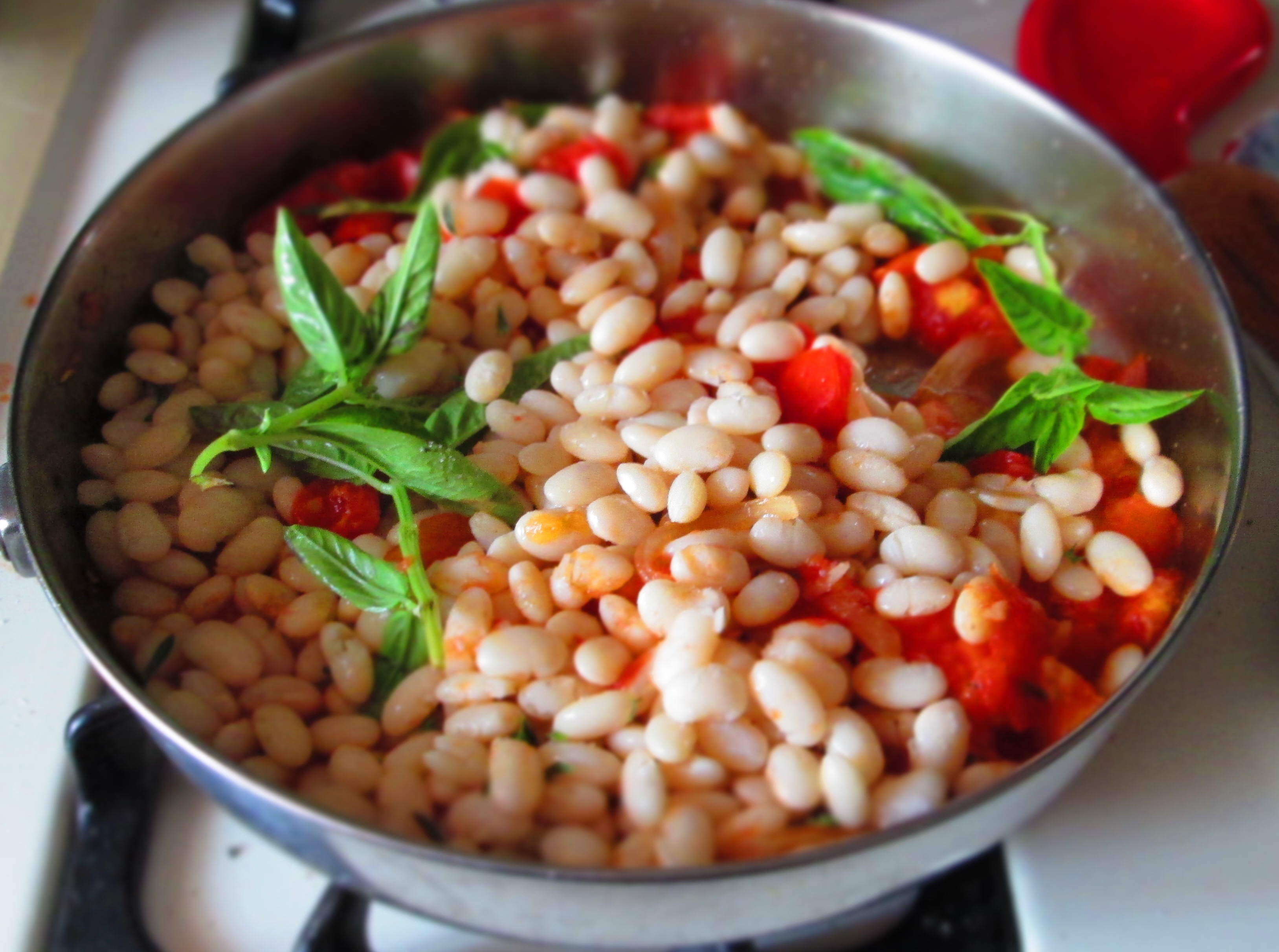
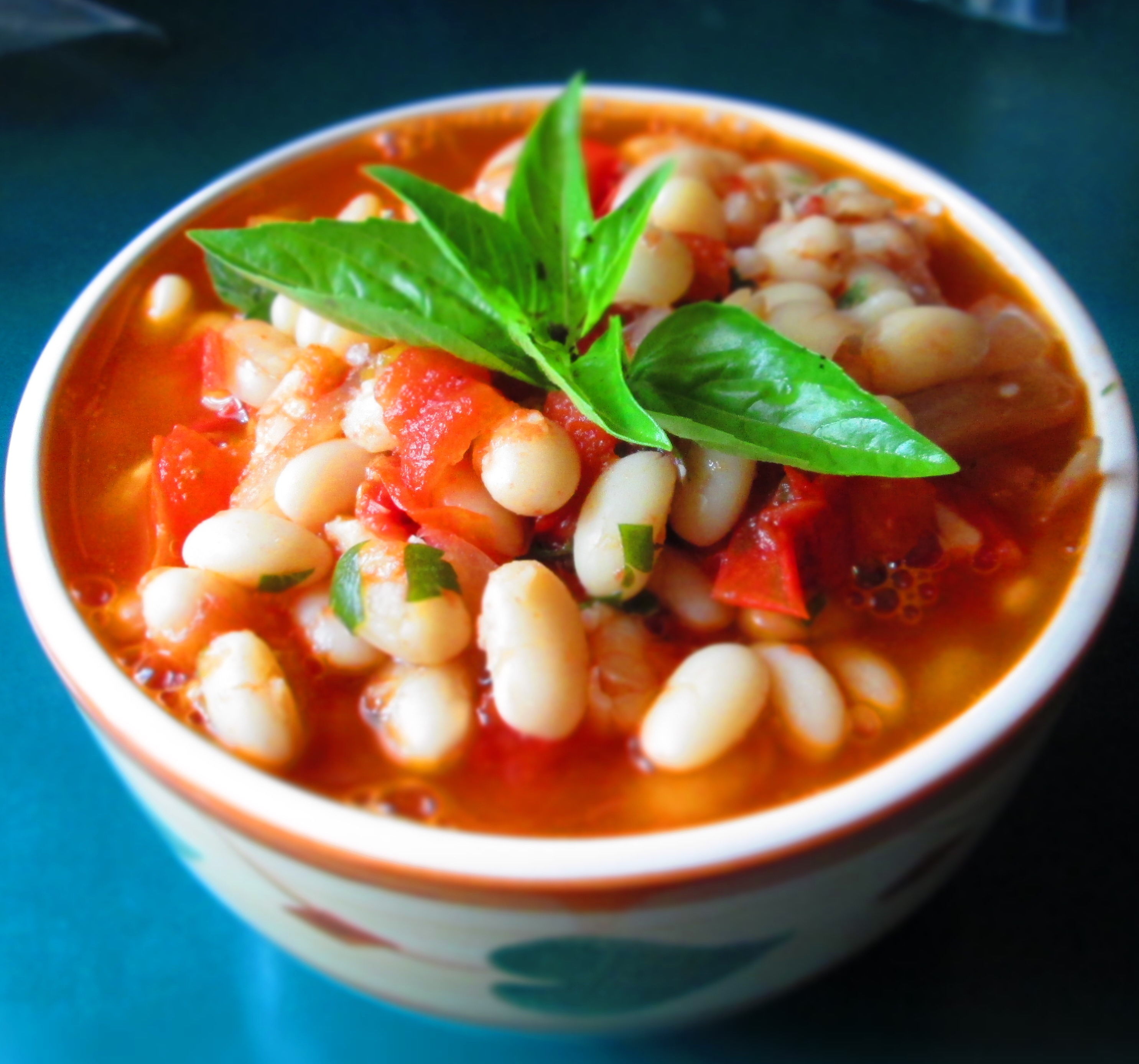
So, I cooked up a mess of Great Northern beans, added some fresh tomatoes from my mother’s garden, and got this: tomato-y white beans. It’s really simple, so I hope you give it a try.

Tomato-y White Beans

Makes about 6 servings.

1½ cups dried Great Northern beans
2 bay leaves
4 large garlic cloves
½ large onion, sliced
2 teaspoons kosher salt
2 teaspoons olive oil
¼ cup white wine
3 or 4 medium tomatoes, seeded and chopped
Freshly ground black pepper
1/2 cup vegetable broth
Fresh herbs (whatever you have available)

Place the beans in a bowl and cover with water by about 3 inches. Cover and soak overnight.IMG_5297The next day, drain the beans and place them in a medium pot. Add water to cover by about 2 inches. Add the bay leaves. Smash two of the garlic cloves and add them to the pot, along with half the onion, and 1 teaspoon of the salt. Bring to a boil. Lower the heat to low; partially cover the pot, and simmer until the beans are tender but still firm, about 45 minutes.IMG_5299Drain the beans in a colander and remove the bay leaves and garlic and discard. Finely chop the rest of the garlic.IMG_5300Heat the oil, in a wide pan. Add the rest of the onion and cook until translucent. Add the garlic and sauté one more minute. Add the wine and let it cook until it’s evaporated. Add the tomatoes, the rest of the salt, pepper and sauté 5 minutes.IMG_5302Add the beans, broth, and herbs (I had basil, savory, and parsley), and cook for about 5 minutes, or until it thickens.IMG_5303IMG_5304You’re ready to eat. Have it over rice, pasta, or with crusty bread. IMG_5306


Leave a comment

Boozy Watermelon

IMG_5288I was passing by a market that had some fruit on display outside. I was paying no attention to it, but something caught my eye. They had a box of mini round watermelons. They looked so cute, I had to have one. So, I picked one out and took it home. (I paid for it first, of course.)IMAG3106

When I cut it open, I discovered that it was a yellow watermelon. They hadn’t labeled it yellow—the sign only said “sweet.” I love finding yellow watermelons. They’re like yellow topazes, sparkling in the light.

Unfortunately, it was a lot prettier than it was tasty. They lied. It wasn’t sweet.

Now I had to find a way to enjoy this melon without resenting the money I paid for it.IMG_5274

So, I cut it up and put some booze in it. But not just any booze. I had this beautiful elderflower rum that I picked up at a farmers’ market in Vermont and it paired perfectly with the melon. Then I decided to mash it and make it into a slushy. Continue reading


Leave a comment

Garlic Scapes with Fresh Peas & Israeli Couscous

IMG_5159Garlic scapes come around once a year for a short period of time and I’ve generally only seen them at farmer’s markets. So when I do see them, I make sure to grab some.

The first time I bought garlic scapes, I used them raw in a pesto. It was delicious but incredibly strong. Very garlicky. So after that, I used them only cooked.IMG_5110When I was at the farmer’s market this past week, I not only found garlic scapes, I found fresh peas as well (also quick to come and go at the market). I decided to combine them with some whole wheat Israeli couscous and the result was fabulous.

IMG_5118Here’s the recipe. I guarantee you’ll love it.
Continue reading


Leave a comment

Colcannon—An Irish Mash

Irish cuisine is traditionally hearty and to the point. Years of impoverishment and famine led to honest cooking that holds the utmost respect for the food being used. In other words, food was not taken for granted. And it made use of foods that were available—the crops that would easily grow in the Irish terrain and the livestock that were raised in the countryside.potatoes

The food probably most associated with Ireland is the potato. Potatoes were introduced in the 16th century and because they grew abundantly and cheaply, they became the most important crop in feeding the masses, which is why when a blight destroyed potato crops in the mid-1800s, famine decimated the population.

Another important item in Irish cuisine is cabbage. It, too, grows abundantly and cheaply and, like potatoes, lasts a long time in storage. Sometimes kale is used, or other members of the cabbage family.AU_MAR~1

Colcannon became known in the 18th century, but some food historians believe that it existed before then. It combines these two staple ingredients in the simplest, most basic of ways: boiled and combined into a mash. Okay, there’s a bit more to it than that, but not much. The potatoes and cabbage are flavored by sautéed leeks and enriched with butter.

For a little more in-depth history of Irish cuisine, and specifically colcannon, check out FoodTimeline.org or DoChara.com.

So, make this traditional Irish dish for St. Patrick’s Day and may the luck o’ the Irish be with you.

Erin go bragh.

(This recipe will be appearing in one of my upcoming cookbooks, so please do not reprint it in any format without express written permission.  That doesn’t mean you shouldn’t print it out–you definitely should! Thanks!)
Colcannon

Colcannon
Mashed Potatoes and Cabbage

4 cups thinly sliced cabbage
1 tbsp + 1 tsp salt
2 large potatoes, quartered
2 tbsp butter
1 cup milk
Pepper to taste
1 tbsp canola oil
2 large leeks, washed and sliced
2 tbsp minced parsley for garnish (optional)

Bring a large pot of water to a boil; add the cabbage and 1 tsp salt. Lower the heat to medium-low and boil until tender, about 12 to 15 minutes. Drain well.

At the same time, place the potatoes in a medium pot and cover with water. Bring it to a boil; lower the heat to medium-low, partially cover, and boil until tender when pierced with a knife, about 15 to 20 minutes. Drain, peel, place in a bowl, and coarsely mash. Add the milk, butter, ½ tablespoon of the salt, and pepper and mix well.

Heat the oil in a wide pan. Add the leeks and sauté until soft and golden brown, about 15 minutes. Add the cooked cabbage and remaining salt and sauté over medium-high heat, stirring often, until cabbage starts to brown. Add to the mashed potatoes and mix well. Taste for seasoning and adjust, if necessary. Transfer the colcannon to a platter. Garnish with parsley and serve hot.

Makes 6 to 8 servings.


Leave a comment

Creamy Roasted Cauliflower Bisque

IMG_4620

I had no plans for cauliflower over the course of my very busy weekend, but when I saw big, beautiful heads of cauliflower in the store the other day, I couldn’t resist buying one.

It’s cold, snowy, wintry weather, and days like this just scream soup, and what I wanted was a creamy bisque. But before I get to my recipe, let’s talk a bit about this wonderful cruciferous vegetable.

Cauliflower is part of the Brassicaceae family and is related to cabbage, broccoli, Brussels sprouts, bok choi, collard greens, and some other leafy green vegetables. In my cookbook, Vegetarian Italian: Traditions, Volume 1, I talk a little bit about the history of cauliflower and its health benefits:
Continue reading