A while back, while scrolling through photos of food on Instagram, I came across a picture of a peanut butter and jelly sandwich. It was enticing.
Let me just say that while I love peanut butter, I’m not fond of jelly. So, ever since I was a kid, I’ve been eating peanut butter sandwiches, sans jelly.
But the PB&J in this photo was so delicious looking, so scrumptious, that it made me think for a moment that maybe I’d been wrong. Maybe I’d judged jelly too harshly. Maybe I should give it another try.
Mmm, no. I’m old enough to know what I like and don’t like. Honey, yes. Jelly, no.
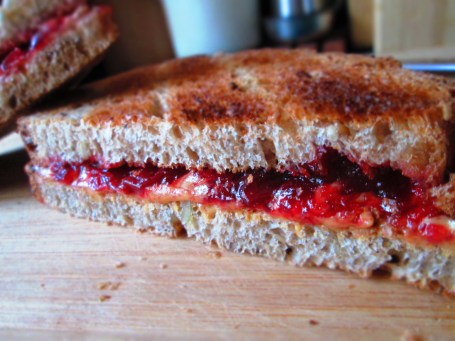
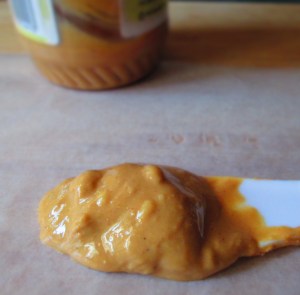
Then, a thought hit me. What if…now, hear me out…what if I made a peanut butter and cranberry sandwich? I had a jar of homemade cranberry sauce left over from Thanksgiving. I’ve used cranberry sauce for many things—why not a sandwich?
And, so, I did. And it was crazy good. I mean crazy AND good.
Leave the zucchini and other fair-weather vegetables to summer. Winter calls for thick-skinned squashes.
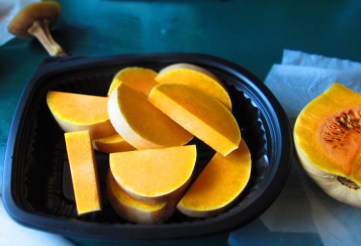
My favorite is butternut squash. In my opinion, it not only has the best flavor, but the best texture as well. When cooked down, it’s creamy and smooth, and incredibly diverse.
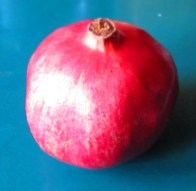
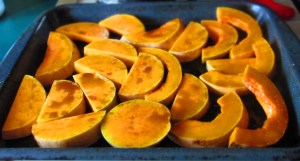
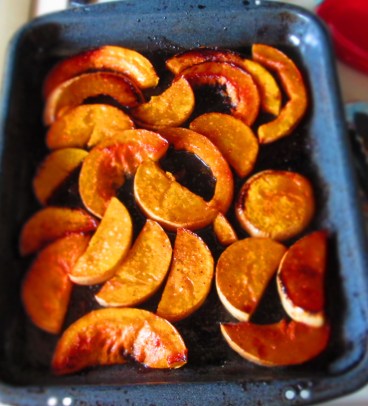
Roasting brings out the sweetness and beauty in most vegetables, but this is especially true of squash. My mother wanted me to roast squash for Thanksgiving and I wanted to come up with something that was familiar, that I knew would be liked, but something every-so-slightly different. I came up with an easy, delicious honey-soy-mirin glaze and honey-pomegranate sauce…because, you know, pomegranates.
Unless you’ve been living under a rock, you’ve heard how healthful pomegranates are. Here’s a quick rundown of their health benefits:
Based on US RDA, one cup of pomegranate seeds contains 7 grams fiber, 3 grams protein, 30% vitamin C, 36% vitamin K, 16% folate, and 12% potassium. They have antiinflammatory, antibacterial, and antifungal properties.They help fight cancer, especially prostate and breast, and heart disease, and have been known to improve memory function.
Delicious AND healthy. Do you need anything more? Give this a try on a cold winter day…or even a warm one. Enjoy!
Roasted Butternut Squash with Honey-Soy-Mirin Glaze and Honey-Pomegranate Sauce
1 pomegranate 2 tablespoons honey 1 tablespoon white wine or ginger ale
Grease a baking sheet. Preheat the oven to 400 degrees F.
Peel and seed the squash. Cut into 1/2-inch-thick slices and place them in a large bowl.In a small bowl, mix together the honey, olive oil, soy sauce, mirin. pour over the squash.
Sprinkle in salt and pepper. Use your hands to spread the mixture over both sides of the squash. Lay the slices neatly on the baking sheet in a single layer.
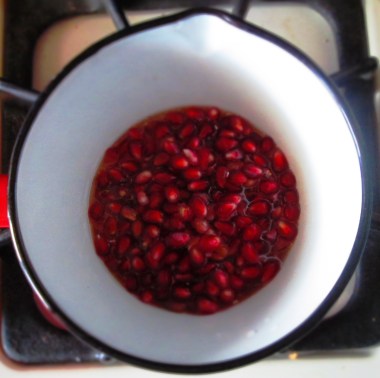
Roast until almost tender, about 20 to 30 minutes. Turn the slices over and continue roasting until fully tender and golden brown at the edges.Meanwhile, make the Honey-Pomegranate Sauce. Cut open the pomegranate and place the pieces in a large bowl of cool water. Separate the seeds from the membrane and discard the skin. Let the membranes rise to the top and scoop them out.Drain in a mesh strainer and rinse.Measure out ½ cup seeds and place in a small pot. Reserve the remaining seeds for the top or another purpose. Mix together the honey and wine and add to pomegranate seeds. Cook over medium-low heat until thickened, about 10 minutes.Transfer cooked squash to a serving platter. Drizzle sauce over top, sprinkle on some fresh pomegranate seeds, and serve.
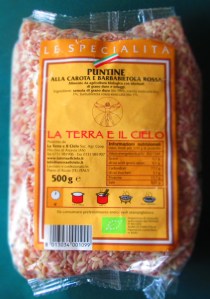
Pasta comes in so many shapes and sizes, from monstrous, long tubes to the tiniest little dots. Puntine (pronounced poon-TEEN-eh) means “little points,” and that’s what these are. It’s a kind of pasta that’s perfect for soups and dishes like the one I’m offering here today.
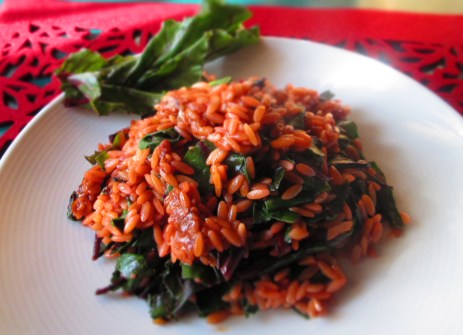
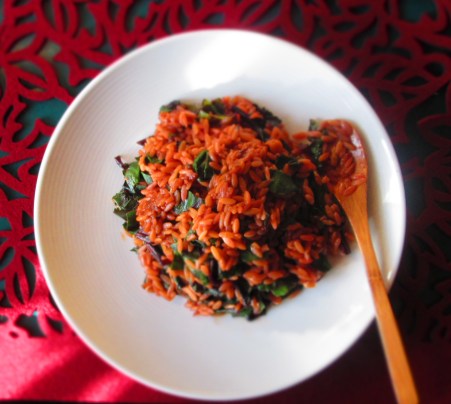
This recipe starts off as sort of a pilaf, but ends as a creamy vegetable melange. The addition of beet greens gives it a great flavor and texture, and makes it a healthful dish with plenty of vitamin C and antioxidants.
If you can’t find puntine, a good substitute is orzo. They’re almost the same, except that orzo is a little bigger.
Enjoy!
Puntine with Beet Greens
Makes 4 servings.
1 tablespoon olive oil ½ tablespoon unsalted butter 2 large garlic cloves, minced 1 tablespoon paprika
½ cup puntine or orzo 2 ½ cups vegetable broth
3 cups chopped beet greens
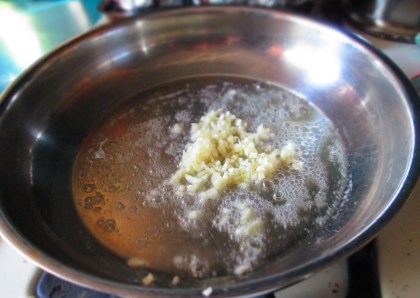
In a medium pan, heat the oil and butter until the butter is melted. Add the garlic and sauté until fragrant, about 1 minute.Sprinkle in the paprika. Add the puntine and toss so that all the pasta is coated. Toast the puntine for about 5 minutes, stirring occasionally.Pour in the broth and bring to a boil. Lower the heat to low, cover, and let it cook until the broth has been absorbed and the puntine is tender. If the broth is fully absorbed but the pasta isn’t cooked, add a little more water (about ¼ cup) and let it continued cooking until tender.
Add the beet greens and stir them in.Add another ¼ cup water and cover. Let it continue cooking until greens are tender, about 5 minutes. If the puntine starts to stick to the pan at any point, add a little water and stir. Grind in some pepper. If you feel that it needs salt, add some to your taste. Serve.
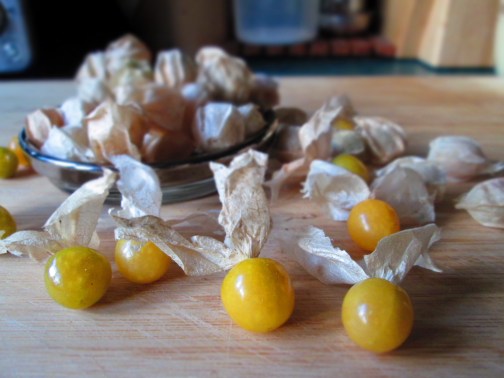
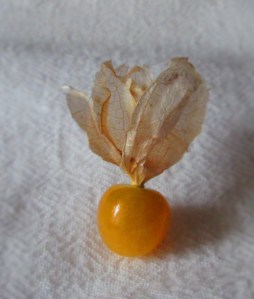
So, what exactly are husk cherries? That’s what I wanted to know when I spotted them at the Union Square farmers’ Market in Manhattan. At first I thought they were gooseberries because they looked exactly like gooseberries—they were golden globes covered in a paper-thin, skin-like husk.
But the sign said “husk cherries.” Naturally, I bought some.
Native to the New World, husk cherries are not cherries at all. Sometimes also called husk tomatoes, Cape gooseberries, and ground cherries, they’re a type of flowering plant belonging to the nightshade family.
Their flavor is quite unique. It’s like a cross between a tomato, a papaya, and a pineapple. Sweet and savory at the same time. The easiest and no-brainer way to use them is in a salsa, which is exactly how Native Americans peoples used them, as well as eating them out of hand.
I think if food-loving people were smart, they’d introduce themselves to husk cherries and make them better known to the world. They’re really a great little fruit/vegetable. If you ever see them, buy a small bagful and give this recipe a try.
Enjoy!
Husk Cherry Salsa
Makes approximately 1½ cups.
1 cup husk cherries ¼ cup finely chopped red onion 2 tablespoons extra virgin olive oil 1 tablespoon minced chile of your choice ¼ minced cilantro 2 tablespoons lemon or lime juice ¼ teaspoon sea salt
Freshly ground black pepper to taste
Remove the husks from the cherries by peeling the husks back and twisting them off. Rinse the cherries in cool water and set on paper towels to drain. Cut the cherries in half and place them in a bowl.Add the remaining ingredients and mix well. Taste and adjust seasoning, if necessary. Serve with tortilla chips or pita bread, or use as a relish for fish, chicken, pork, or vegetables.
This is both an excitement and a relief because this book has been on a long and arduous trip. I first got the idea for it, and began researching recipes and cuisines for it, in 2002. I spent many years testing and developing recipes to duplicate the dishes I’d read about and sampled, but in such a way that they would stay true to the originals as much as possible while making them meatless.
M’Baazi
I started with a list, and that list grew and grew. Over the years, I added recipes, deleted recipes, changed recipes, and in a few cases I was so determined to make a particular recipe work that I just kept testing and testing until I came up with the right result. Sometimes a recipe simply didn’t work and I tossed it. Occasionally I would discover that I’d confused one dish for another, and sometimes I had a recipe that I couldn’t find the proper name for in its originating culture. In those cases, I researched high and low on the internet and in books and magazines, asked friends and coworkers if they knew, asked friends to ask their friends and coworkers if they knew, posted questions in special interest groups on Facebook, etc. I found out the answers to some, and found out that I had others all wrong.
An Indian Feast
As I met and talked to more and more people from different cultures, my list expanded but, oddly, also shrank. So many cultures have more common threads than we imagine, and as I started to examine my recipes, I began to realize that there were more similarities than differences. It was a fascinating and educational journey I went on.
Pot Stickers
The one thing I’ve learned from this project, if nothing else, is that no matter what clothing people wear, what religion they practice, what rituals they perform, what kinds of jobs they hold, or how much money they have, we are more similar than we are different. You can see this in the very similar dishes that are shared between nations, with maybe just a spice or two, or a cooking method, differentiating them.
Arepitas with Black Bean-Corn Salsa
Eating is the one thing that every single human being on earth must do to survive, so it’s no wonder that food is the common bond across the planet. No matter where you go in the world, a signal that you are welcome is the offer of food. When you are a guest at someone’s home, it always gives your hosts tremendous pleasure to feed to. It is the global sign of hospitality, and many customs and rituals were created around food. In some places, to refuse food is an insult, or to not finish it all is a sign of poor manners. Some cultures expect you to belch loudly when you’re done to show that you are satisfied.
Food always brings brings people of the world together.
Australian “Roo” Burgers
It’s my hope that through food, we can find common ground and sit at the table together to share a meal.
So take a trip around the world. If you can’t do it physically, do it in your kitchen and at your table. Try new recipes and explore new flavors, and invite your friends and loved ones to share in the journey. Most of all, enjoy it. Peace.
A few years ago, I introduced a recipe for Cranberry Sauce with a Sorghum Twist. I think using sorghum syrup is a great way to enjoy traditional dishes without using white cane sugar.
In my cranberry sauce, it also adds a different dimension to the flavor. And it’s still one of my favorite cranberry sauce recipes.
So, below is a reprint of my original post from 2013. I hope you like it. Have a fun, safe, and peaceful Thanksgiving.
Thanksgiving is coming up and people are always looking for new and different ways to serve favorite and/or traditional dishes. Purple potatoes are a great way to liven up the table.
Purple potatoes are originally from South America (where potatoes in general are originally from), particularly Peru and Bolivia. In fact, they’re sometimes referred to as Purple Peruvian potatoes. While they taste pretty much the same as standard white potatoes, because of their pigment, purple potatoes are high in antioxidants—4 times as much as white potatoes. Antioxidants are cancer-fighting agents, are good for immunity and heart health.
I found some beautiful purple potatoes at the farmers’ market and decided to mash them. Their dramatic blue/purple color makes this a special dish while still giving everyone the scrumptious mashed potatoes they’ve come to love and expect.
Enjoy.
Mashed Purple Potatoes
6 small to medium purple potatoes 2 tablespoons olive oil 1 tablespoon half-n-half ½ teaspoon sea salt Freshly ground black pepper
Scrub the potatoes and cut them in halves or quarters. Place them in a medium pot, cover with cold water, and bring to a boil.
Lower the heat to low, partially cover, and simmer until the potatoes are tender when pierced with the tip of a knife. Drain well and let cool a bit. When they’re cool enough to handle, peel off the skin.
Place the potatoes in a mixing bowl. Add the oil, half-n-half, salt, and pepper. Mash with a potato masher. (Don’t use a food processor or blender, as this will make the potatoes gummy.)
Check the potatoes for seasoning and adjust, if needed.
More spaghetti squash? Why not? It’s squash season, after all. Squash is synonymous with autumn.
Although spaghetti squash can be found from fall through the spring, there’s something comforting and pleasurable about roasting vegetables in the fall, especially squash. And since many people aren’t sure what to do with spaghetti squash, I’ve been offering some recipes. Last week, I offered Easy Spaghetti Squash Chili. This week, I have for you Roasted Maple-Bourbon Spaghetti Squash with Amaranth Pilaf.
Cultivated by the Aztecs 8,000 years ago, amaranth is a tiny little grain that is surprisingly high in protein, as well as other nutrients. One cup of raw amaranth contains 28 grams of protein, 15 milligrams of iron, and 18 milligrams of fiber, which makes it one of the most nutrient-rich grains on earth.
Amaranth is also a great source of lysine, a protein-rich amino acid. This is good news for those of us who suffer from canker and cold sores. L-lysine has been shown to shorten the life span of canker sores. I can personally attest to this because when one of those little monsters starts making itself known, I start digging into the giant bottle of lysine, and believe me, it works.
So this dish makes the perfect side dish to any autumn meal, but because of the amaranth and almonds, it also is a satisfying entree on its own. And spaghetti squash is low in calories, low in carbs, and almost fat free, so whatever diet you may be on, you can’t go wrong with this squash. You can serve it in lovely slices, or you can scrape out the spaghetti-like flesh and eat it like a pasta dish. Continue reading →
A few months ago I did a blog where I offered a recipe using spaghetti squash. Some people commented to me that they were glad I had done that because they never quite knew what to do with spaghetti squash.
Spaghetti squash can be used in many different ways. This week I decided to use it in a chili. And because spaghetti squash is a fast-cooking squash (about 15 minutes in a steamer), I made the entire recipe a quick-and-easy chili. You can throw this together in less than an hour.
Hi, fellow foodies. We are in full pumpkin swing and candy is popping up all over the place! If you haven’t already, start stocking up because those trick-or-treaters will be knocking on your door in about a week. And you don’t want your house toilet papered, do you?
For any of you having ghoulish gatherings and sinister soirees, there are lots of horrific recipes out there that will make your guests scream…or at least look twice at what they’re eating and drinking. There are recipes out there for every type of ghoulish treat, from cute ghosts and witches to truly horrifying zombies and body parts.
Photo: HalfBaked Harvest.com
If you’re going to be doing any pumpkin carving, don’t throw away all that fabulous flesh and those beautiful seeds! To me, throwing out all that stuff is an abomination. You can prepare the flesh and use it in recipes, the same as you would canned pumpkin. Never done it before? I’ll tell you how.














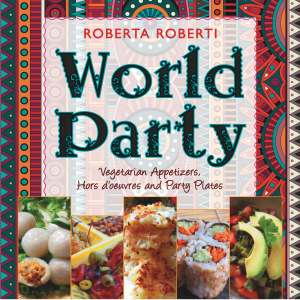 At long last, I can finally announce the release of my latest cookbook,





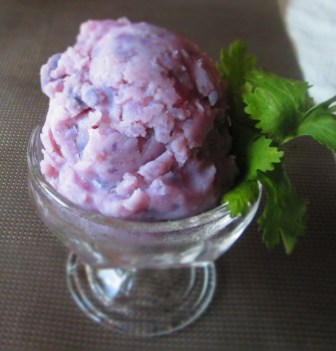
 potatoes in general are originally from), particularly Peru and Bolivia. In fact, they’re sometimes referred to as Purple Peruvian potatoes. While they taste pretty much the same as standard white potatoes, because of their pigment, purple potatoes are high in antioxidants—4 times as much as white potatoes. Antioxidants are cancer-fighting agents, are good for immunity and heart health.


 More spaghetti squash? Why not? It’s squash season, after all. Squash is synonymous with autumn.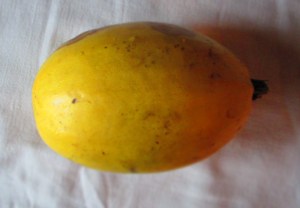

 A few months ago

 Miz Chef