Pancit bihon noodles are long, thin noodles made from cornstarch and are used widely in Philippine cuisine. They’ve got a nice firm texture and can be used in pretty much any recipe that calls for long, spaghetti-like noodles. And they are gluten free.
Noodles were introduced to the Philippines by the Chinese. It’s said that the word pancit comes from Hokkien, a southern Chinese dialect: pian e sit, which means “something conveniently cooked.” Pancit noodles became a staple—in fact, national—dish of the Philippines.
The recipe I offer here today is a basic Asian noodle dish, and you can add or remove anything you like. Look for pancit bihon in Asian markets.
Pancit Bihon Noodles with Snow Peas
Makes 4 to 6 servings.
½ lb. snow peas 8 oz. pancit bihon noodles 2 teaspoons cooking oil (such as grapeseed or sunflower) 3 large garlic cloves, minced 1 tablespoon sesame oil 1 tablespoon soy sauce Sea salt, if desired
Trim the snow peas and either cut into strips or just chop coarsely.Bring a medium-large pot of water to a boil. Add the noodles and stir them in. Cook until tender, about 5 to 7 minutes.Drain in a colander and run under cool water to stop the cooking. Set aside.In a wok or wide frying pan, heat the cooking oil, then add the garlic and sauté until fragrant. Add the snow peas and sauté a few minutes until softened but still crisp.Add the noodles, sesame oil, and soy sauce. Mix well with tongs.Taste for seasoning and add a little salt, if needed. Serve hot.
This is both an excitement and a relief because this book has been on a long and arduous trip. I first got the idea for it, and began researching recipes and cuisines for it, in 2002. I spent many years testing and developing recipes to duplicate the dishes I’d read about and sampled, but in such a way that they would stay true to the originals as much as possible while making them meatless.
M’Baazi
I started with a list, and that list grew and grew. Over the years, I added recipes, deleted recipes, changed recipes, and in a few cases I was so determined to make a particular recipe work that I just kept testing and testing until I came up with the right result. Sometimes a recipe simply didn’t work and I tossed it. Occasionally I would discover that I’d confused one dish for another, and sometimes I had a recipe that I couldn’t find the proper name for in its originating culture. In those cases, I researched high and low on the internet and in books and magazines, asked friends and coworkers if they knew, asked friends to ask their friends and coworkers if they knew, posted questions in special interest groups on Facebook, etc. I found out the answers to some, and found out that I had others all wrong.
An Indian Feast
As I met and talked to more and more people from different cultures, my list expanded but, oddly, also shrank. So many cultures have more common threads than we imagine, and as I started to examine my recipes, I began to realize that there were more similarities than differences. It was a fascinating and educational journey I went on.
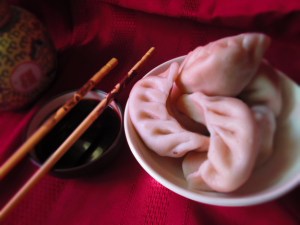
Pot Stickers
The one thing I’ve learned from this project, if nothing else, is that no matter what clothing people wear, what religion they practice, what rituals they perform, what kinds of jobs they hold, or how much money they have, we are more similar than we are different. You can see this in the very similar dishes that are shared between nations, with maybe just a spice or two, or a cooking method, differentiating them.
Arepitas with Black Bean-Corn Salsa
Eating is the one thing that every single human being on earth must do to survive, so it’s no wonder that food is the common bond across the planet. No matter where you go in the world, a signal that you are welcome is the offer of food. When you are a guest at someone’s home, it always gives your hosts tremendous pleasure to feed to. It is the global sign of hospitality, and many customs and rituals were created around food. In some places, to refuse food is an insult, or to not finish it all is a sign of poor manners. Some cultures expect you to belch loudly when you’re done to show that you are satisfied.
Food always brings brings people of the world together.
Australian “Roo” Burgers
It’s my hope that through food, we can find common ground and sit at the table together to share a meal.
So take a trip around the world. If you can’t do it physically, do it in your kitchen and at your table. Try new recipes and explore new flavors, and invite your friends and loved ones to share in the journey. Most of all, enjoy it. Peace.
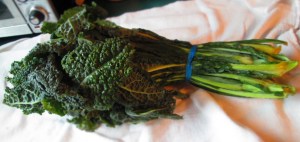
Tuscan kale is a beautiful specimen of the kale family. The leaves are long and dainty looking, and look really pretty in a garden. But like standard kale, the leaves are hearty and the stems tough. Thick stems should be cut off and the leaves need to cook for a substantial amount of time (versus greens such s spinach or chard, which cook down in a few minutes).
I’ve been making posole salad for picnics, parties, and barbecues years. I think people enjoy it because it’s both something different from the usual fare, while offering something familiar and not too “out there.”
Dried hominy
So what is posole (or pozole)? Not everyone outside of the Latin community is familiar with posole. Posole means “hominy” (from the Nahuatl word pozolle), and actually refers to a stew, popular in Mexico and made with hominy and pork or chicken. But it is sometimes also used (loosely and unofficially) to refer to the hominy itself, which is properly called mote. Corn, in general, is known as maize.
Mote is maize that has had its hulls removed through a process known as nixtamalization. This involves boiling the kernels in a water-and-lime (or ash) solution. The resulting product is used in many traditional dishes throughout Latin America, the most commonly known being posole stew, a dish that goes back to the pre-Colombian Aztecs.Continue reading →
One of the best things about summer is all the beautiful, luscious tomatoes that become available. So this is the season for tomato salads. It’s almost not even worth it to make tomato salad any other time of the year.
This is a simple Chilean version, which gets a bit of a kick from minced Serrano or jalapeno pepper. But if you like, you can omit it. Choose any tomatoes you like—there are so many options this time of year! Heirloom varieties make a stunning salad, but good old beefsteak tomatoes do better than fine.Continue reading →
Yes, I’m still on a noodle kick. This time I’ve created a recipe using oat flour noodles. The nice thing about gluten-free noodles is that they’re lighter than wheat noodles, but like wheat noodles, they can be used in a variety of ways.
For some reason, these noodles are sold in packages with the odd weight of 13.4 ounces. I don’t know how or why they came up with that number, but it makes it awkward to create a recipe. (They probably started with 380 grams and it just happens to convert to 13.4 ounces, but why 380?) Well, I used approximately 10 ounces, which is three of the bundles that come in the package in the photo.
In this recipe, I’ve paired oat noodles with string beans and Japanese yams (although, if you can’t find Japanese yams, you can use sweet potatoes). The noodles and yams will soak up the dressing very efficiently, so if the salad is too dry for your tastes, you can add a little more olive oil, but the salad will not be oily in the slightest.
Ume Plum
For the dressing, I used an umeboshi plum. Umbeboshi plums, a Japanese specialty, are ume plums (but more closely related to apricots) that have been salted and fermented. In the world of natural healing, umeboshi plums are considered miracle workers. If you divide foods into acidic, alkaline, and neutral, umeboshis are alkaline and can adjust imbalances in your body. It’s been used in Asia, particularly, Japan, China, and Korea, for centuries for a variety of ailments, including fatigue, nausea, diarrhea, colds, indigestion, headaches, and hangovers, among other things. Samurai soldiers were given umboshi as part of their field rations. They not used the plums to help them battle fatigue, they also used them to flavor foods such as rice and vegetables. Umeboshis also acted as a water and food purifier.Continue reading →
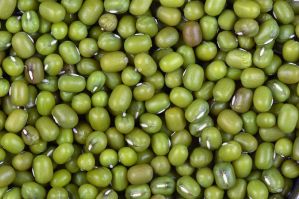
Mung bean noodles are noodles that are made from dried, ground mung beans. Mung beans have been consumed since antiquity but are unfamiliar outside of Indian and Asian communities. They are an important part of Ayurvedic cuisine, and are popular for sprouting. (Many of the bean sprouts that come with your salad or in your Asian take-out come from mung beans).
Mung beans are a high source of protein—about 3 grams per tablespoon, or 14 grams per cup. They’re also rich in manganese, potassium, magnesium, folate, copper, zinc and some B vitamins. They’re low on the glycemic index, and high in antioxidants. They’re considered a good food in the battle against heart disease, cancer, diabetes, inflammation, and obesity.
Mung beans can be found in Indian and Asian markets, but are slowly starting to find their way onto supermarket shelves as well. You can get mung bean noodles in Asian markets. The logical conclusion would be to use them in a dish with Asian flavors, right? However, I chose to go Italian style with these, and it worked out beautifully. I simply made them the way I would make a dish of traditional Italian pasta—with olive oil, garlic, and vegetables.
Mung Bean Noodles
Like many non-wheat noodles, these will not come out al dente, like traditional pasta. Mung bean noodles come out soft and somewhat sticky, so the eating experience will be different than what you get from eating traditional pasta, but it’s pleasant and delicious with a slightly nutty flavor. I like to add a little extra virgin olive oil at the end not only for the extra flavor boost but also to counteract the stickiness of the noodles.
I hope you enjoy them.
Italian-Style Mung Bean Noodles
Makes 2 servings.
1 small head broccoli, cut into florets 2 tablespoons + 2 teaspoons olive oil ½ teaspoon kosher salt Freshly ground black pepper to taste 6 to 8 ounces mung bean noodles 2 large garlic cloves, minced 1 teaspoon paprika 2 tablespoons grated cheese 2 teaspoons extra virgin olive oil
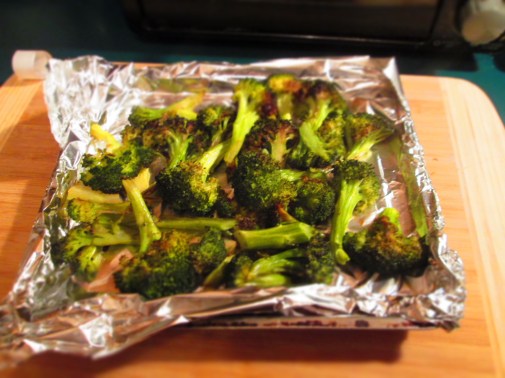
Preheat the oven to 350 F. Spread the broccoli out on a baking sheet. Toss with 2 tablespoons olive oil, salt, and pepper. Roast for 10 minutes. Stir and continue roasting until tender when pierced with a knife and browned, about another 10 to 15 minutes.
Bring a medium pot of water to a boil. Add the mung bean noodles and cook, stirring occasionally until tender, about 5 minutes. Drain.
Split the noodles between 2 bowls, and add broccoli to both, and mix well.
Heat the remaining olive oil in a small pan. Add the garlic and sauté just until it becomes fragrant and starts to color.
Add the paprika, swirl it around, and immediately pour equally over the two the bowls of noodles and broccoli.
Sprinkle grated cheese over the top, then the extra virgin olive oil, and serve.
Yeah, that would be MY bar. It’s a cart in the corner of my dining room loaded up with various alcoholic delights. Don’t judge me.
Anyway, we hit a little cool snap here last week on the East Coast and suddenly people with gardens found themselves having to make some quick decisions about their remaining vegetables. My parents still had a garden full of tomatoes that had to be taken in.
There’s no better opportunity to make fried green tomatoes.
Although fried green tomatoes are associated with the American South, according to an article on Smithsonian.com and this article from Bon Appetit, they’re actually from the North and Midwest, possibly of Ashkenazi Jewish origins. But the use of cornmeal is probably a Southern contribution to the dish, and I think that the flavor and texture of the cornmeal are what makes the tomatoes so tasty and unique.
Fried green tomatoes are really easy to make and can be flavored with whatever spices you like.
Enjoy!
Fried Green Tomatoes
1½ pounds green tomatoes 1 medium egg 2 teaspoons milk (any kind) ¾ cup cornmeal 1 teaspoon garlic powder
1 teaspoon paprika
1 teaspoon kosher salt freshly ground pepper to taste Coconut oil
Line a large plate with paper towels and place it by the stove.
Slice the tomatoes into ½-inch-thick slices.Beat the egg with the milk in a medium bowl. Combine the cornmeal, garlic powder, paprika, salt, and pepper on platter. Place a few of the tomato slices in the egg and coat both sides. Then put them in the cornmeal and coat both sides.Heat about ½ inch oil. Gently shake off excess cornmeal from the tomato slices and place them in the oil. Fry, flipping them over once, until golden brown on both sides, about 3 or 4 minutes per side. Transfer to the paper towels.
Repeat with the remaining tomatoes. Replenish the oil in the pan as needed.
Serve with a creamy dressing, sour cream, or salsa.
I was in Seattle this past week and as it usually is when I return from a trip, I found myself with an empty fridge. Well, what I consider empty, anyway. So, I went to the produce market to see what vegetables looked good. I was surprised to be irresistibly drawn to some spinach.
I say surprised because, although I like spinach, I don’t exactly go wild for it. But this particular store had bunches of spinach on sale for $1. And they were nice-looking bunches, too. Not wilted or dried, but fresh and green. So, I bought a couple of bunches.
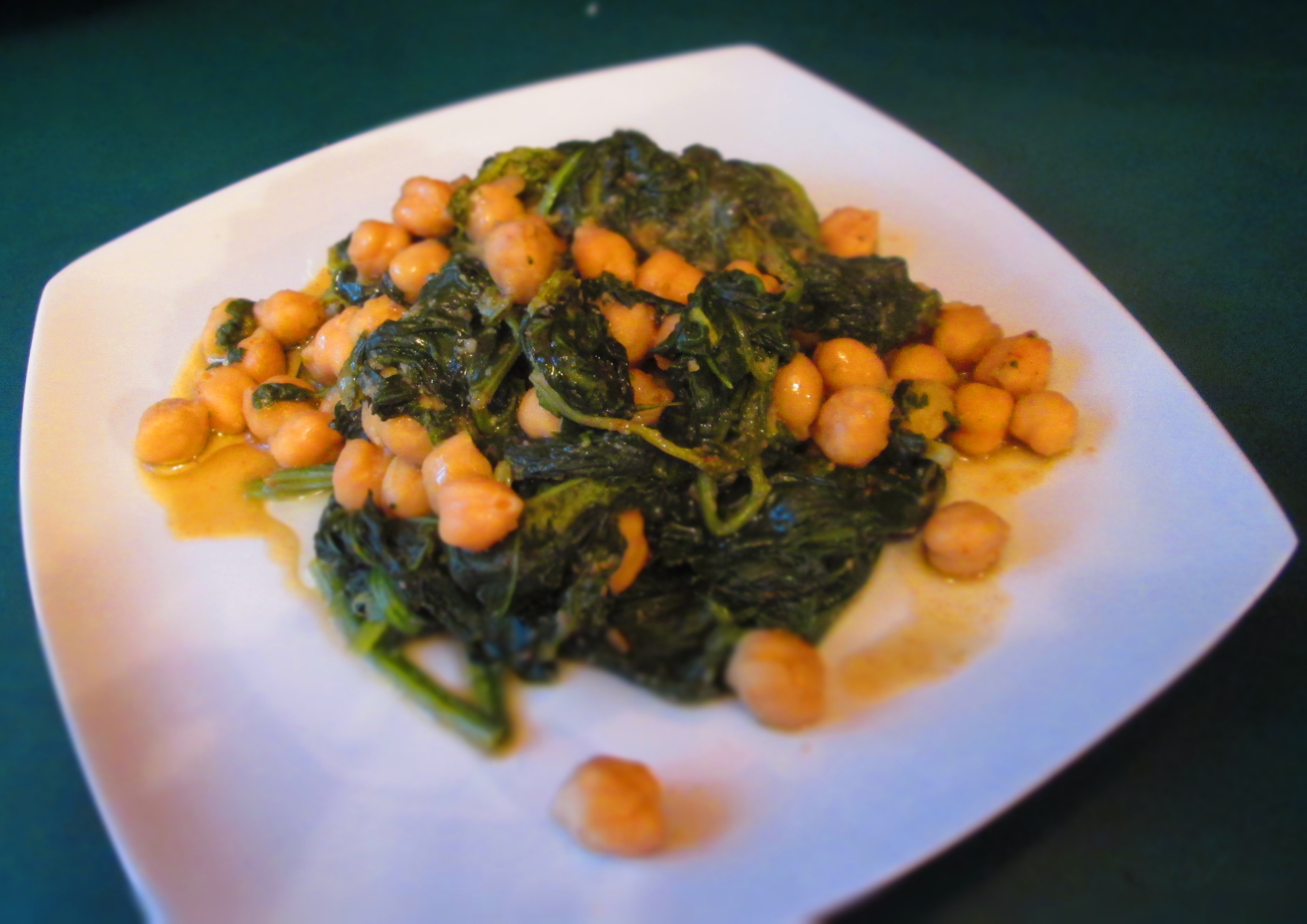
After giving a little thought to what I might want to do with it, I quickly decided that I wanted to make a Spanish tapa staple: Espinaca con Garbanzos. Or Spinach with Chickpeas.
What makes this dish delectable is the bread crumbs, which turns the flavorful, garlicky spinach liquid into a thick, scoopable sauce. If you are gluten intolerant, you can use gluten-free bread crumbs. You can change the flavor profile very easily by adding any kind of spices you like. And best of all, this is a low-cal, low-fat, high-nutrient dish that is savory and comforting all at once. Continue reading →
Oh, my peeps, do I have a great recipe for you this week. I saw these beautiful Mexican guavas at the store and picked up a carton. I’m a big fan of guava and knew that I could do quite a few things with them.
First, I decided to make a puree and I would go from there. When I cut them open, I was surprised to find that they were white guavas rather than the pink ones that we most often think of. They’re delicious, just not as pretty. But that’s okay.
I also happened to have some queso fresco on hand, which I’d purchased for another recipe. Queso fresco—literally, “fresh cheese”—is like a feta cheese in flavor and texture, but it’s much milder, and it’s used frequently in Latin American cuisines. You can find it in Latin American markets, or supermarkets that have a decent cheese selection. If you can’t find it, any crumbly feta-like cheese will do.
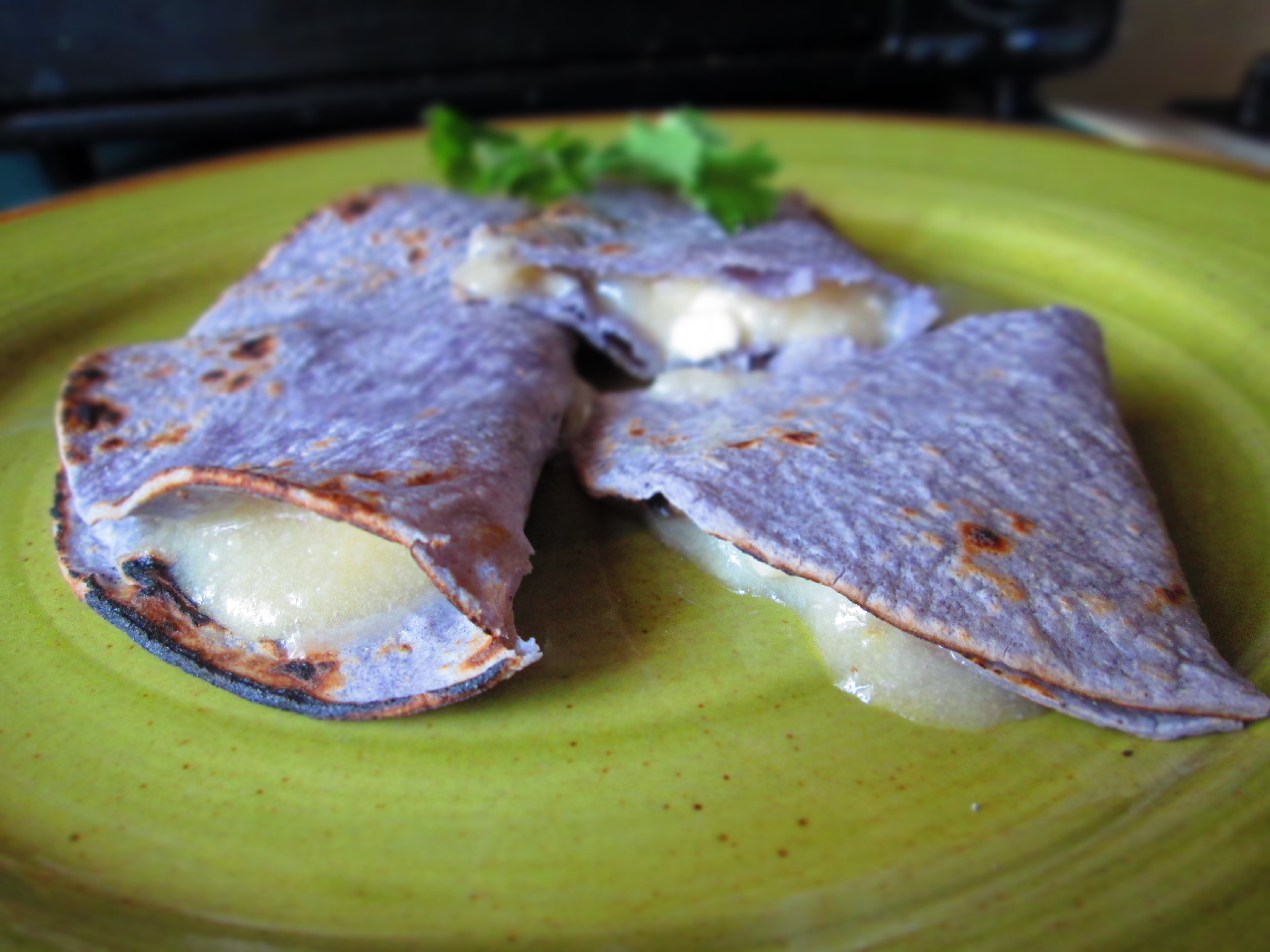
Oh, and I also had blue corn tortillas. My decision was easy. I would make guava quesadillas. They require so few ingredients, yet guava quesadillas are so flavor-packed and really fun to eat. The sweetness of the guava is offset by the saltiness of the cheese, so you can actually have them as part of a meal, a snack, or dessert. And you can add whatever toppings you like: salsa, guacamole, hot sauce. It all works.Continue reading →


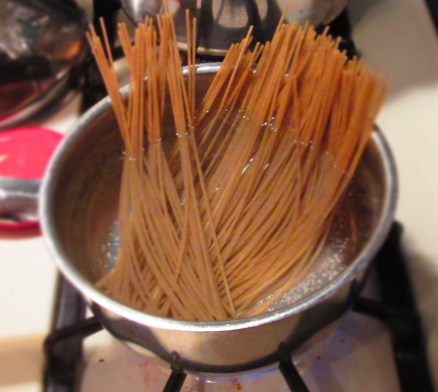
 Bring a medium-large pot of water to a boil. Add the noodles and stir them in. Cook until tender, about 5 to 7 minutes.
 Drain in a colander and run under cool water to stop the cooking. Set aside.
 In a wok or wide frying pan, heat the cooking oil, then add the garlic and sauté until fragrant. Add the snow peas and sauté a few minutes until softened but still crisp.
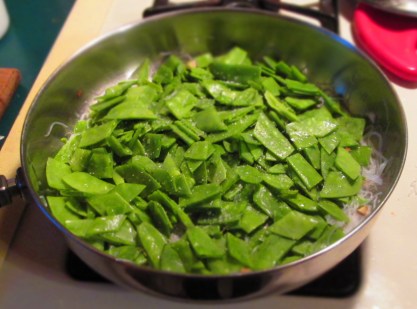 Add the noodles, sesame oil, and soy sauce. Mix well with tongs.
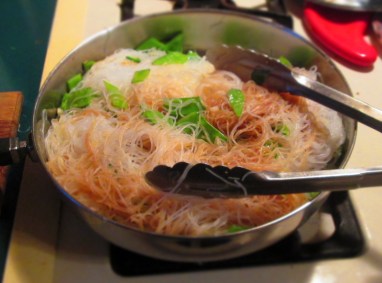 Taste for seasoning and add a little salt, if needed. Serve hot.
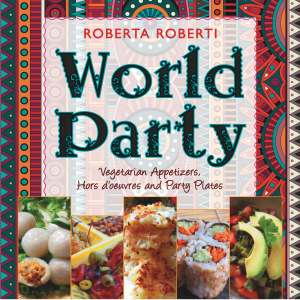 At long last, I can finally announce the release of my latest cookbook,










 Sprinkle grated cheese over the top, then the extra virgin olive oil, and serve.




 Miz Chef