Miz Chef

Cooking Up a Healthy Life


Leave a comment

Fresh Chickpeas with Kale, Sweet Onions and Rice

IMG_5960

It wasn’t until a couple of years ago that I knew that fresh chickpeas—in the pod—could even be had. One day, I entered an Indian market in Jackson Heights, and there was a bin of what looked like little individual pea pods, shorter and squatter. What are these, I wondered?

The handwritten sign at the top of the bin said chana. I knew that chana meant chickpeas. What?! No way. I picked one up, popped it, and there it was. A fresh, firm, beautiful chickpea. I bought a bunch and cooked my very first batch of chickpeas right out of the shell. It was all very exciting.fresh chickeas in pod

But fresh chickpeas (also known as garbanzos) are not available all the time. In fact, they can only be found in spring. So when I saw them again, I bought some for myself and my mom (I knew she’d love them).

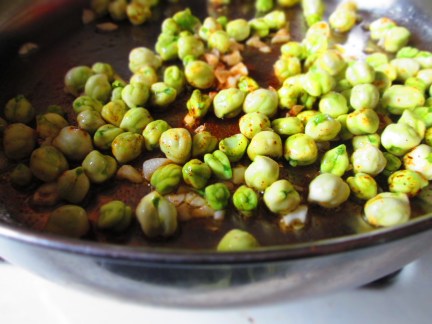
When you have fresh beans like this, not much needs to, or should, be done to them. Fresh beans are meaty, savory, nutty, and have a great feel in the mouth. Plump and pale green, chickpeas are packed with protein, and are a good source of vitamin C, calcium, and iron. They’ve been shown to be a great food to help fight diabetes, hypertension, heart disease, cancer, high cholesterol, and inflammation, and promote healthy digestion.IMG_5976

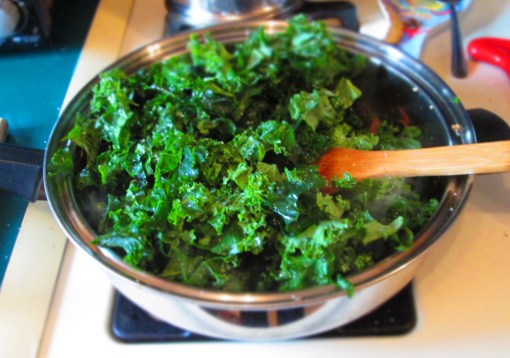
Between the chickpeas and the kale, this dish is not only filling and delicious, but healthy, substantial, and physically satisfying. The addition of the rice (whatever kind you like), rounds it out for a truly filling meal.

Enjoy!

Fresh Chickpeas with Kale, Sweet Onions and Rice

Makes 2 servings

2 teaspoons olive oil
3 large garlic cloves, minced
½ teaspoon paprika
1 cup fresh chickpeas
1 cup chopped sweet onion
1 teaspoon kosher salt
1 cup vegetable broth
3 cups chopped kale
1 cup cooked rice
¼ cup grated parmigiana (optional)

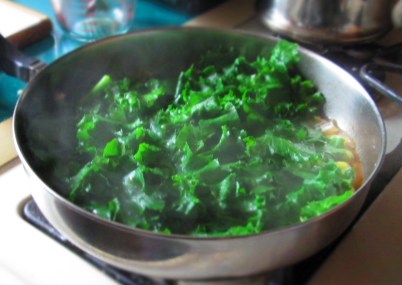
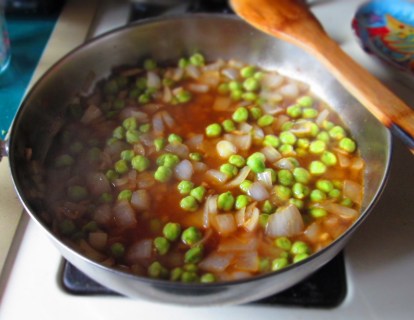
In a wide skillet, heat the oil with the garlic. When the garlic is fragrant, add the paprika and chickpeas. Sauté 5 minutes.IMG_5981Add the onion and ½ teaspoon of the salt. Continue sautéing until the onion is soft and translucent, about 5 minutes.IMG_5983Pour in the broth, then add the kale and remaining salt. Cover and cook until kale is tender, about another 5 to 7 minutes. Stir occasionally. Taste and adjust seasoning, if needed.IMG_5984IMG_5986Transfer vegetables to 2 bowls and stir ½ cup rice into each. Top with a little parmigiano, if desired.IMG_5992

Leave a comment

Broccoli and Beans Braised in Saffron Broth

IMG_5923

IMG_5917

Saffron

I’ve been so busy lately that I have a stack of magazines that have been piling up, waiting to be read. I finally read the holiday issue of Saveur magazine. There was an interesting article in there by Andy Isaacson about saffron. What made this particular article different was that it talked about domestic saffron, and, in particular, saffron grown by the Pennsylvania Dutch.

Skunky saffron

Skunky saffron

Yeah. Who know that Amish people grew saffron? Apparently, it’s part of their heritage. And that got me thinking about how very little Americans use saffron, while in some cultures it’s an integral part of their cuisine. Of course, cost is a factor—saffron is the most expensive spice in the world (anywhere from $1500 to 10,000 per pound). I almost laughed myself silly when I saw some saffron in an Asian market for $1.99. It was the skunkiest saffron I’d ever seen and wondered what it really was (it looked like singed gorilla hair).

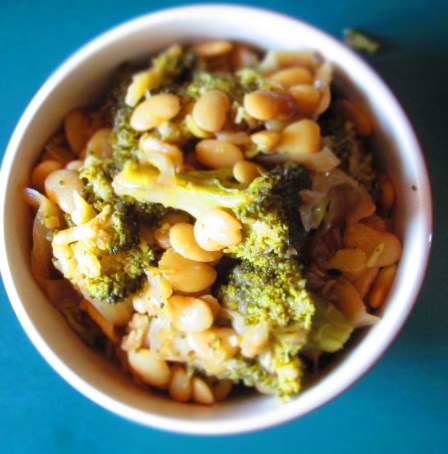
Well, that in turn reminded me that I still had some great saffron that my brother brought me from Morocco, and I was inspired to use it in this dish. In this recipe, you have protein, heart-healthy vegetables, and the exotic saffron to give it a special flavor, aroma, and color. Enjoy!

Broccoli and Beans Braised in Saffron Broth

2 cups dry white beans
3 cups vegetable broth
Pinch of saffron
1 large head broccoli, cut into large florets
1 large onion, sliced
3 or 4 large garlic cloves, crushed
1 teaspoon kosher salt
Freshly ground black pepper to taste

IMG_5912IMG_5914

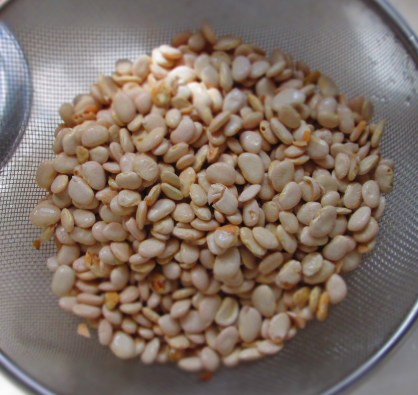
Clean the beans by rinsing them and picking out any stones or debris. Place them in a medium saucepan pot and cover with water by about 3 inches; bring it to a boil. Let it boil for about 2 minutes, then shut the heat and let the beans set for about an hour. IMG_5909

IMG_5910

Preheat the oven to 350 degrees F. Crush the saffron into the broth and let it sit for a few minutes.

Drain the beans.

IMG_5918

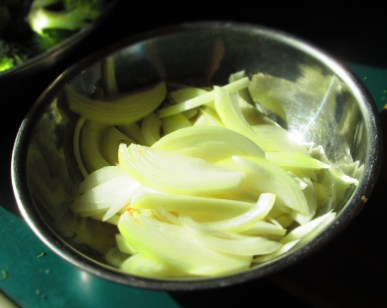
Transfer the beans to a large casserole dish. Pour in the broth. Combine the broccoli, onions, salt, and pepper and place them on top of the beans. Cover with aluminum foil. Bake for 1 hour.IMG_5919

Stir the contents, and bake another 20 minutes to thicken. If it seems dry at this point, add another 1 cup of broth or water.IMG_5921

Serve with brown rice or noodles.IMG_5924


Leave a comment

Black Rice Noodle Pie

IMG_5897

IMG_5879

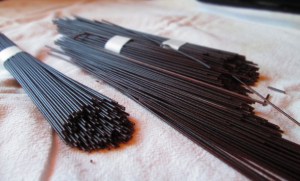
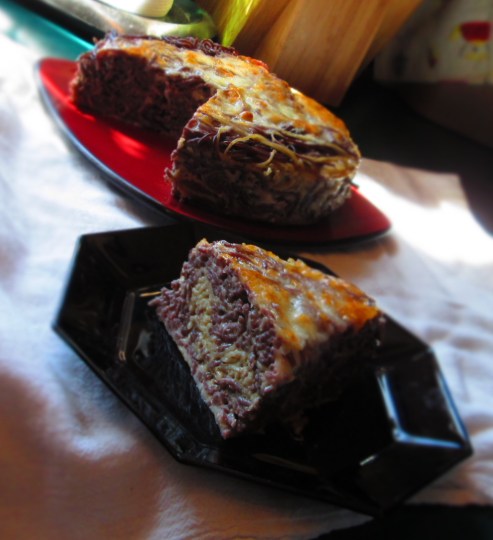
Hey, all. Gluten-free noodle time again! Those black noodles I bought and made last time turned out so good, I wanted to do something else with them. But what? Pasta pie, of course!

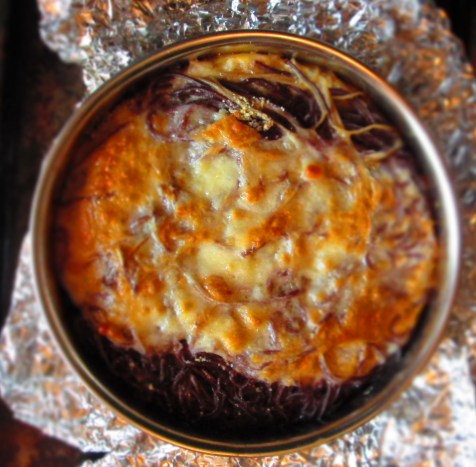
Pasta pie is nothing new, but I wanted to give it a new spin by using the black rice noodles. It’s not only tasty, but visually stunning as well. Texturally, of course, it’s a different experience than regular pasta pie, as it always is when replacing regular pasta with gluten-free noodles. The result is a tender, yielding pie, and it won’t sit in your stomach like a brick.

Look for black rice noodles in Asian markets and give this a try. It’s beautiful, fun, and, most important, delicious. Enjoy!

Black Rice Noodle Pie

Makes 8 servings

Approx. 14 oz. black rice noodles (or other gluten-free noodles)
2 tablespoons olive oil
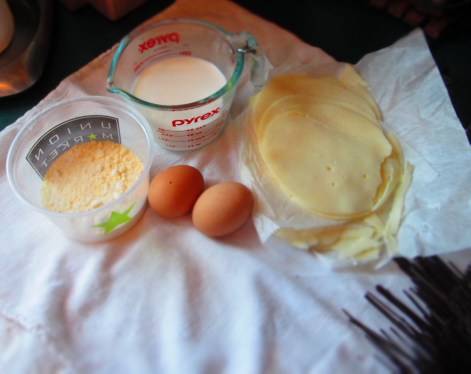
1 cup milk
2 medium eggs, beaten
¼ cup + 2 tablespoons grated Parmigiano-Reggiano
1 teaspoon kosher salt
1 teaspoon black pepper
6 to 8 slices deli provolone cheese (about ¼ lb.)

IMG_5881Preheat the oven to 400 degrees F. Grease an 8-inch springform cake pan with 1 teaspoon of the olive oil. Line the bottom with a piece of parchment paper.IMG_5882IMG_5883

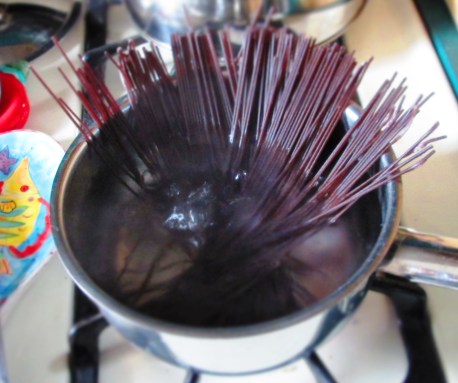
Bring a medium pot of water to a boil. Add the noodles, stir, and cook until firm-tender, about 8 minutes. Drain well.IMG_5868

Transfer to a mixing bowl. Add the remaining olive oil and mix throughout the noodles. Add the milk, eggs, ¼ cup Parmigiano-Reggiano, salt, and pepper. Mix well. The noodles will clump together, so stir well. Tear a couple of slices of the provolone into small pieces to make ¼ cup and stir that into the noodles.IMG_5884

Lay 2 or three slices of provolone on the bottom of the cake pan.IMG_5887

Pour the noodles into the pan (scrape the bowl to get any bits of cheese). Lay 3 or 4 slices across the top of the noodles, then sprinkle on the remaining Parmigiano.

IMG_5888

Bake until set (a knife inserted should come out just barely wet) and the cheese is golden brown, about 30 minutes. Let it sit 5 to 10 minutes.IMG_5889

Remove the ring from the pan and invert the pie onto a plate. Remove the bottom and the parchment paper and invert it again onto a serving plate.IMG_5896IMG_5899

Cut into 8 wedges. Serve hot.IMG_5905


Leave a comment

Black Rice Noodles with White Beans & Cauliflower

IMG_5874

I’m on noodle kick. If you read my blog last week, you know that I wrote about noodles then as well. That blog was about the mung bean noodles that I found in an Asian market. Well, in that same market, I found black rice noodles, and, as usual, I couldn’t resist trying them.

A New SuperfoodIMG_5856

Black foods are not only striking to look at, but they’re typically high in antioxidants because of they’re high levels of pigments. Black rice is high in Vitamin E, which helps the immune system and protects cells from free radical damage. According to a study from the Louisiana State University Agricultural Center, black rice contains more anthocyanin antioxidants than blueberries, making it an even healthier choice than brown rice. As a result, black rice is considered one of the new superfoods. And let’s not overlook the fact that these noodles are gluten free! Here’s more about it at Livestrong.com.

The unfortunate part of using black rice noodles is that once they’re cooked, they’re no longer black but a dark purple. But that’s okay—they’re still pretty to look at. And they still stand out beautifully against white beans and vegetables, which is exactly what I did with this recipe. Continue reading


Leave a comment

Italian-Style Mung Bean Noodles

IMG_5803

mung beans

Mung Beans

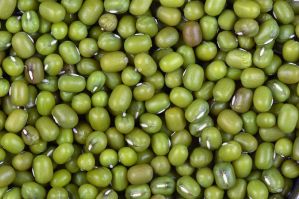
Mung bean noodles are noodles that are made from dried, ground mung beans. Mung beans have been consumed since antiquity but are unfamiliar outside of Indian and Asian communities. They are an important part of Ayurvedic cuisine, and are popular for sprouting. (Many of the bean sprouts that come with your salad or in your Asian take-out come from mung beans).IMAG3683

Mung beans are a high source of protein—about 3 grams per tablespoon, or 14 grams per cup. They’re also rich in manganese, potassium, magnesium, folate, copper, zinc and some B vitamins. They’re low on the glycemic index, and high in antioxidants. They’re considered a good food in the battle against heart disease, cancer, diabetes, inflammation, and obesity.

Mung beans can be found in Indian and Asian markets, but are slowly starting to find their way onto supermarket shelves as well. You can get mung bean noodles in Asian markets. The logical conclusion would be to use them in a dish with Asian flavors, right? However, I chose to go Italian style with these, and it worked out beautifully. I simply made them the way I would make a dish of traditional Italian pasta—with olive oil, garlic, and vegetables.

Mung Bean Noodles

Mung Bean Noodles

Like many non-wheat noodles, these will not come out al dente, like traditional pasta. Mung bean noodles come out soft and somewhat sticky, so the eating experience will be different than what you get from eating traditional pasta, but it’s pleasant and delicious with a slightly nutty flavor. I like to add a little extra virgin olive oil at the end not only for the extra flavor boost but also to counteract the stickiness of the noodles.

I hope you enjoy them.

Italian-Style Mung Bean Noodles

Makes 2 servings.

1 small head broccoli, cut into florets
2 tablespoons + 2 teaspoons olive oil
½ teaspoon kosher salt
Freshly ground black pepper to taste
6 to 8 ounces mung bean noodles
2 large garlic cloves, minced
1 teaspoon paprika
2 tablespoons grated cheese
2 teaspoons extra virgin olive oil

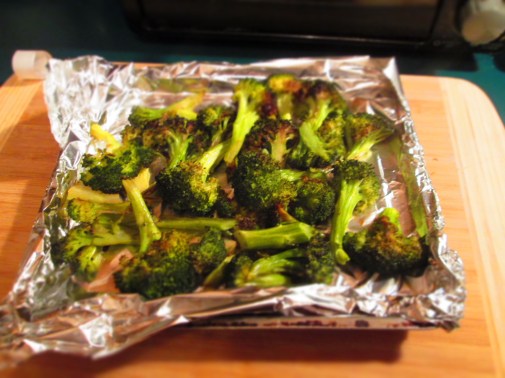
Preheat the oven to 350 F. Spread the broccoli out on a baking sheet. Toss with 2 tablespoons olive oil, salt, and pepper. Roast for 10 minutes. Stir and continue roasting until tender when pierced with a knife and browned, about another 10 to 15 minutes.IMG_5797

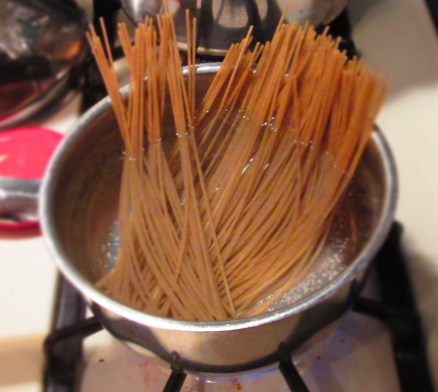
Bring a medium pot of water to a boil. Add the mung bean noodles and cook, stirring occasionally until tender, about 5 minutes. Drain.IMG_5795IMG_5802

Split the noodles between 2 bowls, and add broccoli to both, and mix well.

Heat the remaining olive oil in a small pan. Add the garlic and sauté just until it becomes fragrant and starts to color.IMG_5796

Add the paprika, swirl it around, and immediately pour equally over the two the bowls of noodles and broccoli.

IMG_5800Sprinkle grated cheese over the top, then the extra virgin olive oil, and serve.

IMG_5806


Leave a comment

Warm Sorghum Salad

IMG_5823

This week in honor of last week’s episode of The Walking Dead, I offer you Warm Sorghum Salad.

Okay, the truth is, I already had this blog post and recipe prepared but it seemed like an appropriate time to post it.IMG_5809

Many people don’t know what sorghum is. It’s a grain that originated in Africa and that’s been used in this country for years as fodder—except in the South, where it’s been a fairly popular grain. Also in the South, sorghum molasses often takes the place of regular molasses, honey, maple syrup, and corn syrup. In short, it’s a liquid sweetener that’s used in baked goods, as well for drizzling on biscuits, pancakes, and toast.

I’ve offered other sorghum recipes here, such as Sorghum Pilaf, Sorghum Stir-Fry, and my Cranberry Sauce with a Sorghum Twist (using sorghum molasses) even made it in into the holiday issue of Pilcrow & Dagger.

Sorghum is gluten free and inexpensive. But it’s also very use friendly. It’s a diverse grain that can be used in many different dishes. Here’s my Warm Sorghum Salad. It’s great to bring to dinner in the fall and winter, but also to barbecues and picnics in the warmer seasons. And the kale makes it a well-rounded, healthy dish. Enjoy!

Warm Sorghum Salad

Makes 6 servings

1 cup sorghum grain
1 tablespoon olive oil
½ cup minced shallot
1 teaspoon kosher salt
½ lb. mushrooms (preferably a combination of white and baby bella), thinly sliced
1 tablespoon apple cider vinegar
4 packed cups chopped kale
Fresh pepper
½ small lemon

Dressing
¼ cup extra virgin olive oil

1 teaspoon balsamic vinegar
1 teaspoon Dijon mustard
Freshly ground black pepper to taste

Place the sorghum in a mesh strainer and rinse it under running water for a minute or two. Place it in a small pot along with 3 cups water and bring to a boil. Lower the heat and simmer, partially covered, until tender, about 30 to 40 minutes. Drain well.

IMG_5820

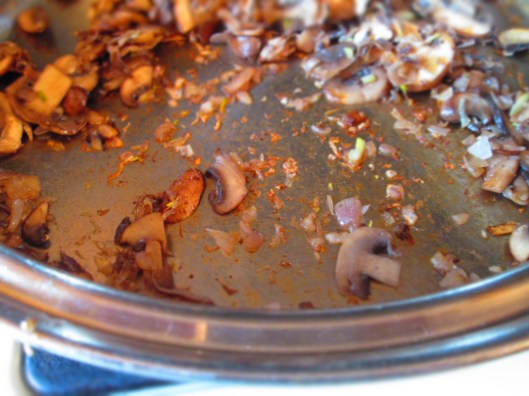
Meanwhile, heat the oil in a wide skillet. Add the shallot, ¼ teaspoon salt, and saute until soft and translucent, 2 or 3 minutes. Add the mushrooms and 1/4 teaspoon salt and saute until the water they release dries up and mushrooms brown.IMG_5813When you see browned bits in the pan, deglaze with the apple cider vinegar (add it to the pan and scrape up the brown bits with a wooden spoon).IMG_5816
Add the kale and another ½ teaspoon salt and cover; cook until kale is tender.IMG_5818While that’s cooking, make the dressing and set aside.
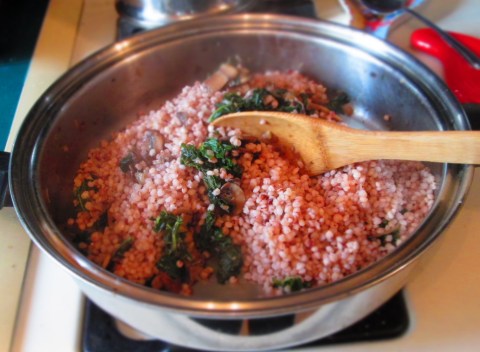
When the sorghum is cooked, add it to the pan with the kale and pepper and mix.IMG_5821Pour in the dressing and mix well. Taste for seasoning and adjust if needed. Squeeze the lemon over it and stir.

Transfer to a serving bowl and serve warm.IMG_5824


Leave a comment

Amaranth-Dal Patties

IMG_5693

My pantry is stuffed to the gills with all sorts of items that the average cook with raise an eyebrow to. In fact, I’ll bet I have a few items in there that the average cook has possibly not even heard of, let alone used. If you were my neighbor and needed something for a recipe you were cooking or baking, chances are I’d have it. Anything at all. Need some flour? What kind? All-purpose? Whole wheat? Pastry? Spelt? Soy? Buckwheat? Barley? Teff? Oat? Fava bean?

Need rice? Currently, I’ve got brown, basmati, brown basmati, jasmin, Thai black, rosematta, glutinous Thai, and Japanese short grain.

Looking for grains? Choose from white and red quinoa, buckwheat, amaranth, sorghum, millet, and teff.

So, what am I saying here? That I am constantly looking for ways to use up all of that stuff! And so here is what I came up with to use both amaranth and some mixed dal I had. I could’ve just made a soup, but I wanted to do something different. This is what I came up with—Amaranth-Dal Patties. If you’re not familiar with amaranth, they’re tiny little grains that are gluten-free and high in iron and lysine. Here’s a link for more information.

Amaranth

Amaranth

You can season the patties with whatever herbs or spices you like, and/or dress them with any kind of sauce, from raita to salsa to piri piri (just make sure to pair the seasonings and dressing appropriately—you wouldn’t want to use garam masala as a seasoning and then dip them in Asian soy dipping sauce!). You can also substitute the flour for something that is gluten-free. Continue reading


2 Comments

Cranberry Bread

IMG_5651

Do you still have cranberry sauce leftover from Thanksgiving? I’ll bet many of you do. Maybe it’s a stray can hanging out in the pantry, or it’s a cup or so in the fridge that you haven’t been able to bring yourself to throw out. That’s okay—cranberry sauce lasts a long time in the refrigerator, but at this point, use it or lose it.

There are many things you can do with leftover cranberry sauce, but making a loaf is one of my favorites. (This is a wheat-free version, but it has spelt flour, so if you have—or are making it for someone with—Celiac disease, this isn’t the right recipe for you. It also contains soy flour, so if you’re avoiding soy, again, this isn’t right for you.)

This is not overly sweet, so it makes a nice breakfast loaf, toasted with some butter or jam. But it’s got enough sweetness and crunch from the walnuts (if you want to use them) that it makes a great snack with an extra dollop of cranberry sauce.Pilcrow & Dagger Cover

I’m happy to say that another version of this loaf (not gluten free) appears in the holiday issue of the literary magazine Pilcrow & Dagger, along with my recipe for homemade cranberry sauce. Check out a sneak preview HERE. And if you’re interested in purchasing a copy, you can do so HERE.

So, rescue that leftover cranberry sauce and make this tasty loaf and enjoy.

I hope you all had a wonderful, joyful holiday season, and may 2016 bring happiness and success, whatever that means for you.

Cranberry Bread

Makes 1 (8 x 4) loaf.

1 cup spelt flour
1 cup soy flour
¾ cup chickpea flour
¼ cup rice flour
½ cup sugar or maple crystals
1 teaspoon baking powder
1 teaspoon baking soda
1/4 teaspoon ground cinnamon
¼ teaspoon allspice
¼ teaspoon nutmeg
1 teaspoon kosher salt
3 medium eggs
1 cup buttermilk
2 tablespoons melted coconut oil
½ cup chopped walnuts (optional)
1 cup cranberry sauce

Preheat oven to 375 degrees F. Grease a 8 x 4-inch loaf pan (or line is with parchment paper).

In a medium bowl, whisk together the flours, sugar, baking soda, cinnamon, allspice, nutmeg, and salt.IMG_5633In a small bowl, mix together eggs, buttermilk, coconut oil, and ¼ cup water.IMG_5634Mix this into the flour mixture just until all dry ingredients are moistened. If it seems dry, add a bit more water.IMG_5635

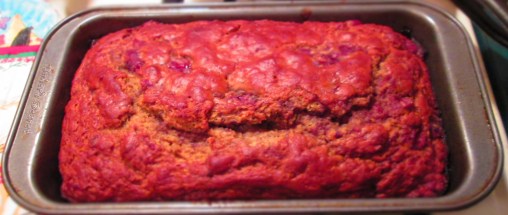
IMG_5636Stir in the walnuts, if you’re using them, then stir in the cranberry sauce, but don’t mix it in completely—just run it through.IMG_5639Spoon the batter into the loaf pan. Bake until golden and a knife inserted in the center comes out fairly clean, about 45 to 50 minutes. Some moist cranberry on the knife is okay.

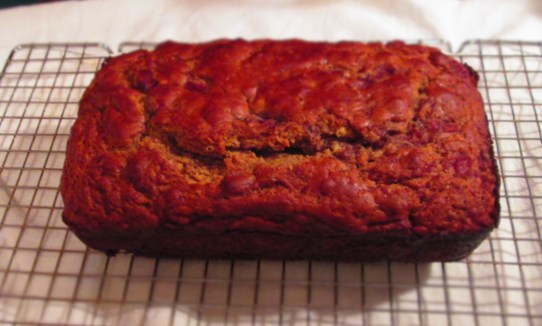
If the loaf starts getting very dark or starts burn around the edges but the loaf isn’t done, cover it with a piece of foil and continue baking.IMG_5645Set pan on a wire rack to cool for 10 minutes. Turn loaf out onto the rack. Serve warm or cool completely.IMG_5646

IMG_5654


3 Comments

Wheat-Free Carrot Cake

IMG_5598This is one of those recipes that I made spur of the moment but, luckily, turned out well. So, I needed a quick dessert to make for a lunch at my parents’ house. We were having a guest who is gluten-free and I wanted to make sure there would be dessert for her.

There’s nothing easier than carrot cake. I love carrot cake. It’s not only flavorful and delicious, but it’s also very difficult to do badly. I mean, I’ve had great carrot cake, good carrot cake, and so-so carrot cake, but I don’t recall ever having terrible carrot cake.

That’s probably because it would take a deliberate effort to make a terrible carrot cake. There’s no creaming of butter, no whipping of egg whites, no adding of things in additions, or layering of ingredients. Aside from whisking together the dry ingredients first, everything gets mixed together. (And, quite honestly, you probably don’t even really need to mix the dry ingredients. I just recommend it to ensure that you get no lumps.)

I call this cake “wheat free” and not “gluten free” because it calls for spelt flour. I didn’t want to use all chickpea flour because I didn’t want it to be too heavy or dense or taste to “beany.” Spelt is related to wheat, so it’s the non-wheat flour that is closest to it in chemistry, flavor, and behavior. However, because it’s related to wheat, people who have Celiac disease can’t digest it. People who have a gluten/wheat intolerance, on the other hand, can usually consume it without negative consequences.

I (and everyone else) was pleasantly surprised at how light and moist this cake came out. It has a somewhat unusual flavor because of the chickpea flour but not a bad one. Just different. I hope you like it.

Wheat-Free Carrot Cake

1 cup chickpea flour
¼ cup spelt flour
½ cup coconut (palm) or date sugar
1 teaspoon ground cinnamon
½ teaspoon ground nutmeg
½ teaspoon baking powder
½ teaspoon salt
2 cups shredded carrots
2 medium eggs, lightly beaten
½ teaspoon vanilla extract
½ cup applesauce
¼ cup water

Frosting:
1 (8-ounce) package cream cheese, at room temperature
½ cup confectioner’s sugar
1 tablespoon grated orange zest

Preheat the oven to 350 degrees F. Grease an 8- or 9-inch square baking pan or line it with parchment paper.

In a medium bowl, whisk together the flours, sugar, cinnamon, nutmeg, baking powder, and salt.

Stir in the carrots, eggs, vanilla, applesauce, and water with a wooden spoon or rubber spatula. Transfer the batter to the prepared pan and bake until a toothpick inserted into the center comes out clean, about 30 to 40 minutes.

Transfer to a cooling rack and let it cool completely.

Make the frosting: With an electric mixer, cream together the cream cheese, sugar, and zest until smooth.

Remove the cake from the pan. Invert the cake, then invert it again on a serving plate. If you used parchment, peel it off gently. Spread the frosting evenly on the top and sides. Serve.

IMG_5603

(For the cake in the photo, I chose to use a simpler confectioners’ sugar icing and coconut flakes. Mix 1 cup confectioners’ sugar with a tablespoon of water. Mix until smooth, adding a tiny bit more water at a time, as needed. Spread over the cake, then sprinkle on 1/2 cup unsweetened coconut flakes.)


Leave a comment

Cauliflower Steak with Sun-Dried Tomato-Olive Sauce

IMG_5504Cauliflower steak is a mainstay of many vegetarian and vegan restaurants. I think it’s because once you’ve worked your way through a big slab of cauliflower, you find yourself full and satisfied. Don’t get me wrong, I’m not claiming that a cauliflower steak gives the same feeling of satisfaction that of a regular steak or that it’s a comparable substitute in any way, but for vegetarians, it’s a hearty and delicious option.

Continue reading