Miz Chef

Cooking Up a Healthy Life


Leave a comment

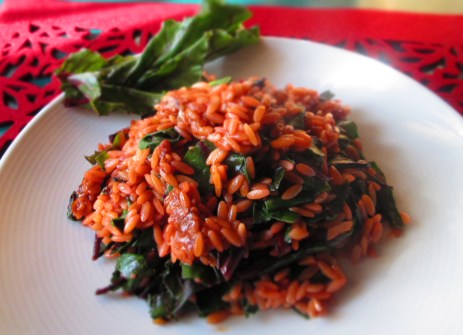
Puntine with Beet Greens

img_6393

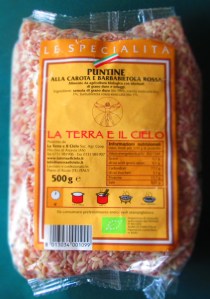
Pasta comes in so many shapes and sizes, from monstrous, long tubes to the tiniest little dots. Puntine (pronounced poon-TEEN-eh) means “little points,” and that’s what these are. It’s a kind of pasta that’s perfect for soups and dishes like the one I’m offering here today.img_6377
This recipe starts off as sort of a pilaf, but ends as a creamy vegetable melange. The addition of beet greens gives it a great flavor and texture, and makes it a healthful dish with plenty of vitamin C and antioxidants.

If you can’t find puntine, a good substitute is orzo. They’re almost the same, except that orzo is a little bigger.

Enjoy!

Puntine with Beet Greens

Makes 4 servings.

1 tablespoon olive oil
½ tablespoon unsalted butter
2 large garlic cloves, minced
1 tablespoon paprika
½ cup puntine or orzo

2 ½ cups vegetable broth
3 cups chopped beet greens

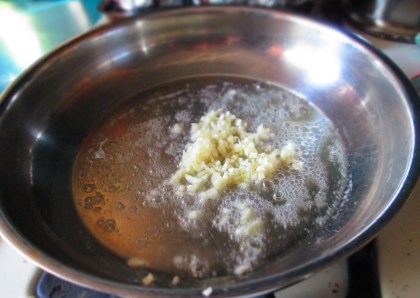
In a medium pan, heat the oil and butter until the butter is melted. Add the garlic and sauté until fragrant, about 1 minute.img_6382Sprinkle in the paprika. Add the puntine and toss so that all the pasta is coated. Toast the puntine for about 5 minutes, stirring occasionally.img_6385Pour in the broth and bring to a boil. Lower the heat to low, cover, and let it cook until the broth has been absorbed and the puntine is tender. If the broth is fully absorbed but the pasta isn’t cooked, add a little more water (about ¼ cup) and let it continued cooking until tender.img_6387
img_6385

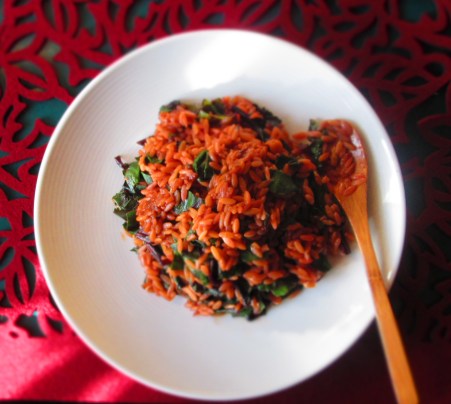
Add the beet greens and stir them in.img_6389Add another ¼ cup water and cover. Let it continue cooking until greens are tender, about 5 minutes. If the puntine starts to stick to the pan at any point, add a little water and stir. Grind in some pepper. If you feel that it needs salt, add some to your taste. Serve.img_6402
Save


Leave a comment

Husk Cherry Salsa

img_6407

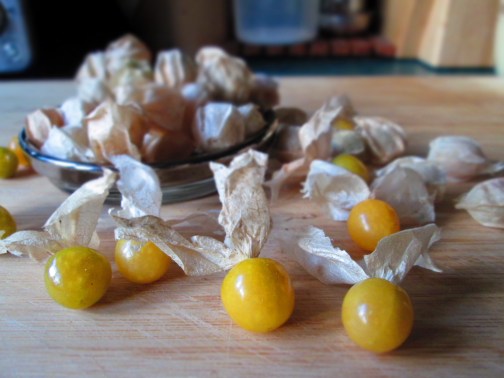
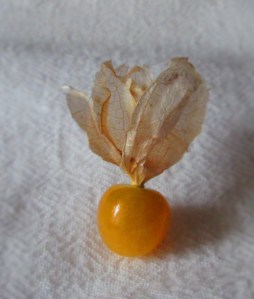
So, what exactly are husk cherries? That’s what I wanted to know when I spotted them at the Union Square farmers’ Market in Manhattan. At first I thought they were gooseberries because they looked exactly like gooseberries—they were golden globes covered in a paper-thin, skin-like husk.

But the sign said “husk cherries.” Naturally, I bought some.img_6445

Native to the New World, husk cherries are not cherries at all. Sometimes also called husk tomatoes, Cape gooseberries, and ground cherries, they’re a type of flowering plant belonging to the nightshade family.

Their flavor is quite unique. It’s like a cross between a tomato, a papaya, and a pineapple. Sweet and savory at the same time. The easiest and no-brainer way to use them is in a salsa, which is exactly how Native Americans peoples used them, as well as eating them out of hand.

I think if food-loving people were smart, they’d introduce themselves to husk cherries and make them better known to the world. They’re really a great little fruit/vegetable. If you ever see them, buy a small bagful and give this recipe a try.

Enjoy!

img_6456

Husk Cherry Salsa

Makes approximately 1½ cups.

1 cup husk cherries
¼ cup finely chopped red onion
2 tablespoons extra virgin olive oil
1 tablespoon minced chile of your choice
¼ minced cilantro
2 tablespoons lemon or lime juice
¼ teaspoon sea salt

Freshly ground black pepper to taste


Remove the husks from the cherries by peeling the husks back and twisting them off. Rinse the cherries in cool water and set on paper towels to drain. Cut the cherries in half and place them in a bowl.img_6451Add the remaining ingredients and mix well. Taste and adjust seasoning, if necessary. Serve with tortilla chips or pita bread, or use as a relish for fish, chicken, pork, or vegetables.img_6455

Save

Save


Leave a comment

Mashed Purple Potatoes

img_6345

Thanksgiving is coming up and people are always looking for new and different ways to serve favorite and/or traditional dishes. Purple potatoes are a great way to liven up the table.

Purple potatoes are originally from South America (where img_6316potatoes in general are originally from), particularly Peru and Bolivia. In fact, they’re sometimes referred to as Purple Peruvian potatoes. While they taste pretty much the same as standard white potatoes, because of their pigment, purple potatoes are high in antioxidants—4 times as much as white potatoes. Antioxidants are cancer-fighting agents, are good for immunity and heart health.

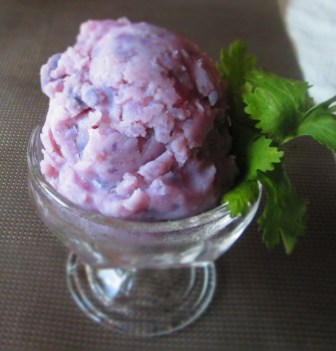
I found some beautiful purple potatoes at the farmers’ market and decided to mash them. Their dramatic blue/purple color makes this a special dish while still giving everyone the scrumptious mashed potatoes they’ve come to love and expect.

Enjoy.

Mashed Purple Potatoes

6 small to medium purple potatoes
2 tablespoons olive oil
1 tablespoon half-n-half
½ teaspoon sea salt
Freshly ground black pepper

Scrub the potatoes and cut them in halves or quarters. Place them in a medium pot, cover with cold water, and bring to a boil.img_6317

Lower the heat to low, partially cover, and simmer until the potatoes are tender when pierced with the tip of a knife. Drain well and let cool a bit. When they’re cool enough to handle, peel off the skin.img_6338

Place the potatoes in a mixing bowl. Add the oil, half-n-half, salt, and pepper. Mash with a potato masher. (Don’t use a food processor or blender, as this will make the potatoes gummy.)img_6339

Check the potatoes for seasoning and adjust, if needed.


Save


Leave a comment

Roasted Spaghetti Squash with Amaranth Pilaf and Red Onions

Roasted Spaghetti SquashMore spaghetti squash? Why not? It’s squash season, after all. Squash is synonymous with autumn. img_6232
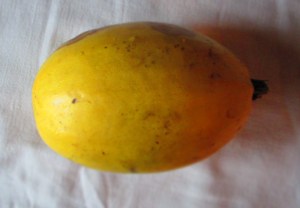
Although spaghetti squash can be found from fall through the spring, there’s something comforting and pleasurable about roasting vegetables in the fall, especially squash. And since many people aren’t sure what to do with spaghetti squash, I’ve been offering some recipes. Last week, I offered Easy Spaghetti Squash Chili. This week, I have for you Roasted Maple-Bourbon Spaghetti Squash with Amaranth Pilaf.

Cultivated by the Aztecs 8,000 years ago, amaranth is a tiny little grain that is surprisingly high in protein, as well as other nutrients. One cup of raw amaranth contains 28 grams of protein, 15 milligrams of iron, and 18 milligrams of fiber, which makes it one of the most nutrient-rich grains on earth. img_6256

Amaranth is also a great source of lysine, a protein-rich amino acid. This is good news for those of us who suffer from canker and cold sores. L-lysine has been shown to shorten the life span of canker sores. I can personally attest to this because when one of those little monsters starts making itself known, I start digging into the giant bottle of lysine, and believe me, it works.

So this dish makes the perfect side dish to any autumn meal, but because of the amaranth and almonds, it also is a satisfying entree on its own. And spaghetti squash is low in calories, low in carbs, and almost fat free, so whatever diet you may be on, you can’t go wrong with this squash. You can serve it in lovely slices, or you can scrape out the spaghetti-like flesh and eat it like a pasta dish. Continue reading


1 Comment

Easy Spaghetti Squash Chili

img_6245A few months ago I did a blog where I offered a recipe using spaghetti squash. Some people commented to me that they were glad I had done that because they never quite knew what to do with spaghetti squash.

Spaghetti squash can be used in many different ways. This week I decided to use it in a chili. And because spaghetti squash is a fast-cooking squash (about 15 minutes in a steamer), I made the entire recipe a quick-and-easy chili. You can throw this together in less than an hour.

Enjoy.

Continue reading


Leave a comment

Pumpkins, Ghoulies, and Ravioli, Oh My

Photo: pikabu.ru

Photo: pikabu.ru

Hi, fellow foodies. We are in full pumpkin swing and candy is popping up all over the place! If you haven’t already, start stocking up because those trick-or-treaters will be knocking on your door in about a week. And you don’t want your house toilet papered, do you?

For any of you having ghoulish gatherings and sinister soirees, there are lots of horrific recipes out there that will make your guests scream…or at least look twice at what they’re eating and drinking. There are recipes out there for every type of ghoulish treat, from cute ghosts and witches to truly horrifying zombies and body parts.

Photo: HalfBaked Harvest.com

Photo: HalfBaked Harvest.com

If you’re going to be doing any pumpkin carving, don’t throw away all that fabulous flesh and those beautiful seeds! To me, throwing out all that stuff is an abomination. You can prepare the flesh and use it in recipes, the same as you would canned pumpkin. Never done it before? I’ll tell you how.

Continue reading


Leave a comment

Sauteed Celery Root with Red Onion

img_6224

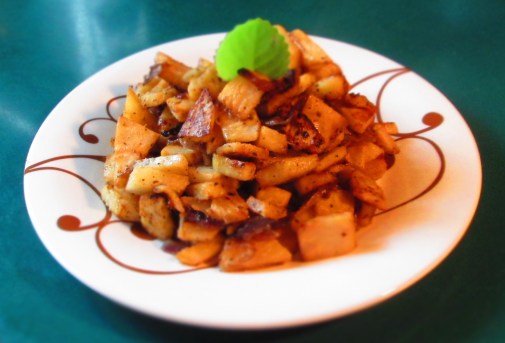
Celery root, or celeriac, is one of those vegetables that people don’t know what to do with when they see it. Truth is, it can be used in so many ways—essentially, in any dish where root vegetables are called for.

img_6212

Celery root, aka celeriac

You should, however, like the taste of celery. Celery root has a very strong celery flavor and if that’s not your thing, you might not like it. On the other hand, it’s also sweeter than celery, so even if celery isn’t your favorite thing, you may be pleasantly surprised. I happen to like the flavor of celery, but I don’t enjoy chomping on it when it’s cooked. So, while I add it to other foods, I always pick it out. (I do like it raw, though. Go figure.)

Will you like celery root? You won’t know until you try. Here’s a simple way to cook it. If you’ve never had it before, this is an easy introduction to it.

You can find celery root at farmers’ markets, most supermarkets, and sometimes at local produce stores.

Enjoy.

Sauteed Celery Root with Red Onion

Makes about 4 servings.

1 medium celery root
2 teaspoons olive oil
1 medium red onion, thinly sliced
1 teaspoon dry basil
1 teaspoon paprika
½ teaspoon garlic powder
½ teaspoon kosher salt
Freshly ground black pepper to taste

Peel celery root. Cut off root and stem, then slice off the skin with a vegetable peeler or sharp knife.

img_6213

Cut the celery root into wedges, then slice them into ¼-inch-thick pieces. You should get about 2 cups.

img_6214

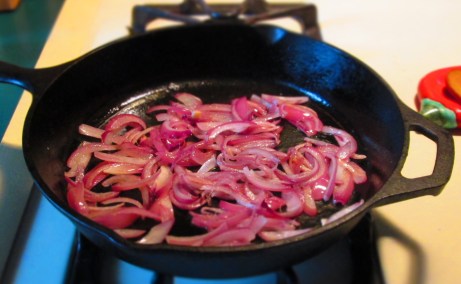
Heat the oil in a skillet. Add the onion and sauté until soft and translucent, about 5 minutes.

img_6218

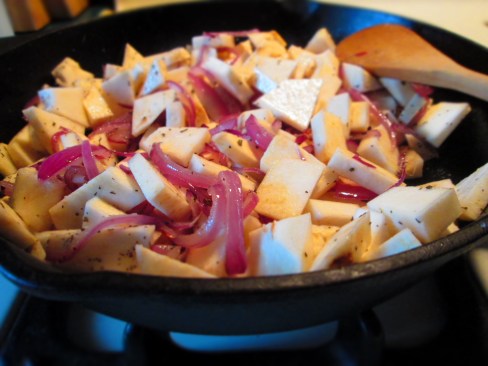
Add basil and paprika. Add the celery root, garlic powder, salt, and pepper.

img_6220

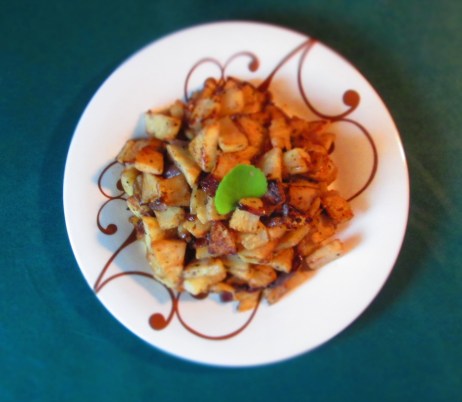
Sauté stirring occasionally, until celery root starts to brown. This could take up to 15 minutes.

Cover and lower heat, cook until tender, about 10 minutes. Taste for seasoning and adjust if necessary.

img_6225


Save

Save

Save

Save

Save


Leave a comment

Tuscan Kale-Bean Soup with Fregola

img_6211

img_6191

Tuscan Kale

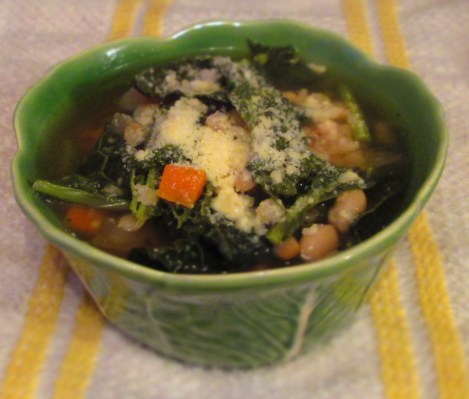
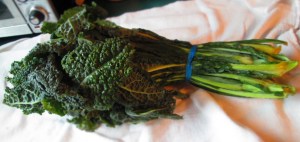
Tuscan kale is a beautiful specimen of the kale family. The leaves are long and dainty looking, and look really pretty in a garden. But like standard kale, the leaves are hearty and the stems tough. Thick stems should be cut off and the leaves need to cook for a substantial amount of time (versus greens such s spinach or chard, which cook down in a few minutes).

Continue reading


Leave a comment

Quick Omelet Cups

IMG_6178

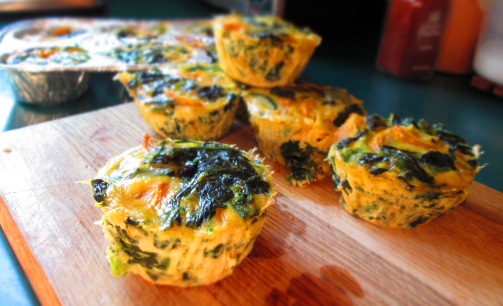
Today’s recipe is one that I created in order to have quick, easy-to-transport, and easy-to-heat breakfasts that fit in with a low-carb diet. Working a full-time job, commuting 15 hours a week, and having a writing career on the side makes it difficult for me to prepare meals for myself on a daily basis.

Obviously, I love to cook, but lack of time and energy keeps me from doing a whole lot of it. To be truthful, I rely on my mom’s leftovers to get me through the week. But when there isn’t enough for a week’s worth of lunches and dinners (never mind breakfast), or when I’m on a particular diet, I have to engage in a long, arduous cooking spree on the weekend.

And that’s what happened when I created these omelet cups. I needed something that I could have for breakfast that would fill me and that I didn’t have to think about–I could just grab some and go.

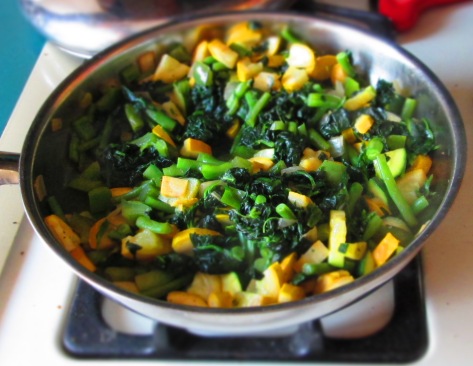
I wanted to pack them with as many veggies as I could, so I got what was fresh at the farmer’s market that week: zucchini, summer squash, and green beans. Spinach is always a good veggie option for egg dishes, but needed to make this fast (especially because it was a thousand degrees that day and I didn’t want to spend more time in my hot kitchen than I had to). But you can certainly use fresh spinach if you want to.

These are very easy to make, are wonderfully transportable, and easily heated in a microwave or toaster oven. Or eaten at room temperature. They are not only low carb, but gluten and wheat free as well. And since this makes a batch of 12, you can throw some in the freezer for three months.

Enjoy!

Quick Omelet Cups

10 oz. frozen spinach, thawed
1 tablespoon olive oil
½ cup chopped onion
½ cup chopped green bell pepper
½ cup chopped green beans
1 cup chopped zucchini
1 cup chopped summer (yellow) squash
½ teaspoon kosher salt
Freshly ground black pepper to taste
8 large eggs
½ cup shredded cheddar cheese

Squeeze as much water as you can from the spinach and set aside. Grease the cups of a standard 12-cup muffin tin (or 2 6-cups tins) and set aside. (If you want, you can use paper muffin cups.) Preheat the oven to 350 degrees.

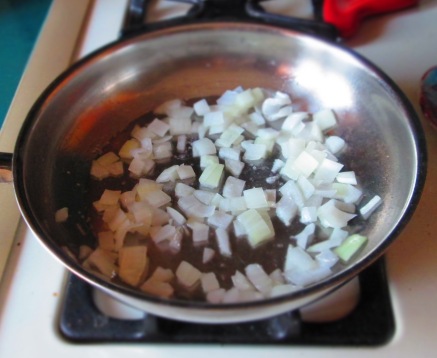
Heat the oil in a wide frying pan. Add the onion and sauté until soft and translucent.IMG_6163

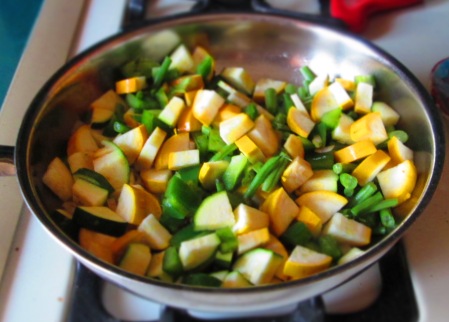
Add the green pepper and continue sautéing until the pepper softens. Add the green beans, zucchini, summer squash, salt, and black pepper. Continue sautéing, stirring occasionally, until vegetables have softened and begin to brown.IMG_6164Add the spinach and mix well. Taste for seasoning and adjust if needed.IMG_6165Beat the eggs in a large bowl. Mix in the cooked vegetables, along with the cheese.IMG_6170Ladle equal amounts into each of the 12 muffin cups.IMG_6173and bake about 20 minutes, or until a toothpick inserted into the center of an omelet cup comes out fairly clean.IMG_6176Serve hot or at room temperature. These can be kept in the refrigerator up to a week, or frozen up to 3 months.IMG_6184
 

Save

Save

Save


4 Comments

Red and Gold Beet Salad


beet saladLove, love, love beets. There are different varieties, but I think it’s safe to say that the majority of us find the red most often. Getting the golden, pink, rainbow, or any other kind of beets, for me, requires a special trip to a farmers’ market or specialty store.

Well, this past week, I lucked out. The farmers’ market that sets up shop outside of my workplace once a week had golden beets, which is not always the case.beets

Anyway, in my opinion, the best thing to do with beets is make a salad with them. It’s the easiest thing in the world and so flavorful. And when you mix beets, it’s beautiful, too.

But if you can only find the red beets, it’s just as delicious. I like to roast beets, but in the summer, turning on the oven is not fun, so I boil them. (If you have a grill you can use, then that’s even better!). There’s nothing wrong with boiling, just don’t overcook them and use only just enough water to cover them in the pot. Enjoy!

Red and Gold Beet Salad

1½ pounds red and yellow beets
½ small red onion, thinly sliced
3 tablespoons extra virgin olive oil
1 teaspoon balsamic vinegar
½ teaspoon sea salt
Freshly ground pepper to taste

Wash and trim the beets of excess roots or threads. Place in a medium-large pot and fill with enough water to cover the beets. Bring to a boil; lower the heat to medium-low and simmer, partially covered, until the beets are cooked. You should be able to stick the tip of a knife easily all the way through.

Remove beets from the water and let them cool. Peel off the skin and trim off unappealing parts (such as near the roots). Cut them into quarters or bite-sized pieces. Place in a medium bowl. Add the remaining ingredients and stir gently. Serve.
beet salad

Save

Save