I’m on noodle kick. If you read my blog last week, you know that I wrote about noodles then as well. That blog was about the mung bean noodles that I found in an Asian market. Well, in that same market, I found black rice noodles, and, as usual, I couldn’t resist trying them.
A New Superfood
Black foods are not only striking to look at, but they’re typically high in antioxidants because of they’re high levels of pigments. Black rice is high in Vitamin E, which helps the immune system and protects cells from free radical damage. According to a study from the Louisiana State University Agricultural Center, black rice contains more anthocyanin antioxidants than blueberries, making it an even healthier choice than brown rice. As a result, black rice is considered one of the new superfoods. And let’s not overlook the fact that these noodles are gluten free! Here’s more about it at Livestrong.com.
The unfortunate part of using black rice noodles is that once they’re cooked, they’re no longer black but a dark purple. But that’s okay—they’re still pretty to look at. And they still stand out beautifully against white beans and vegetables, which is exactly what I did with this recipe.Continue reading →
This week in honor of last week’s episode of The Walking Dead, I offer you Warm Sorghum Salad.
Okay, the truth is, I already had this blog post and recipe prepared but it seemed like an appropriate time to post it.
Many people don’t know what sorghum is. It’s a grain that originated in Africa and that’s been used in this country for years as fodder—except in the South, where it’s been a fairly popular grain. Also in the South, sorghum molasses often takes the place of regular molasses, honey, maple syrup, and corn syrup. In short, it’s a liquid sweetener that’s used in baked goods, as well for drizzling on biscuits, pancakes, and toast.
Sorghum is gluten free and inexpensive. But it’s also very use friendly. It’s a diverse grain that can be used in many different dishes. Here’s my Warm Sorghum Salad. It’s great to bring to dinner in the fall and winter, but also to barbecues and picnics in the warmer seasons. And the kale makes it a well-rounded, healthy dish. Enjoy!
Warm Sorghum Salad
Makes 6 servings
1 cup sorghum grain 1 tablespoon olive oil ½ cup minced shallot 1 teaspoon kosher salt ½ lb. mushrooms (preferably a combination of white and baby bella), thinly sliced 1 tablespoon apple cider vinegar 4 packed cups chopped kale Fresh pepper ½ small lemon
Dressing ¼ cup extra virgin olive oil 1 teaspoon balsamic vinegar 1 teaspoon Dijon mustard Freshly ground black pepper to taste
Place the sorghum in a mesh strainer and rinse it under running water for a minute or two. Place it in a small pot along with 3 cups water and bring to a boil. Lower the heat and simmer, partially covered, until tender, about 30 to 40 minutes. Drain well.
Meanwhile, heat the oil in a wide skillet. Add the shallot, ¼ teaspoon salt, and saute until soft and translucent, 2 or 3 minutes. Add the mushrooms and 1/4 teaspoon salt and saute until the water they release dries up and mushrooms brown.When you see browned bits in the pan, deglaze with the apple cider vinegar (add it to the pan and scrape up the brown bits with a wooden spoon).
Add the kale and another ½ teaspoon salt and cover; cook until kale is tender.While that’s cooking, make the dressing and set aside.
When the sorghum is cooked, add it to the pan with the kale and pepper and mix.Pour in the dressing and mix well. Taste for seasoning and adjust if needed. Squeeze the lemon over it and stir.
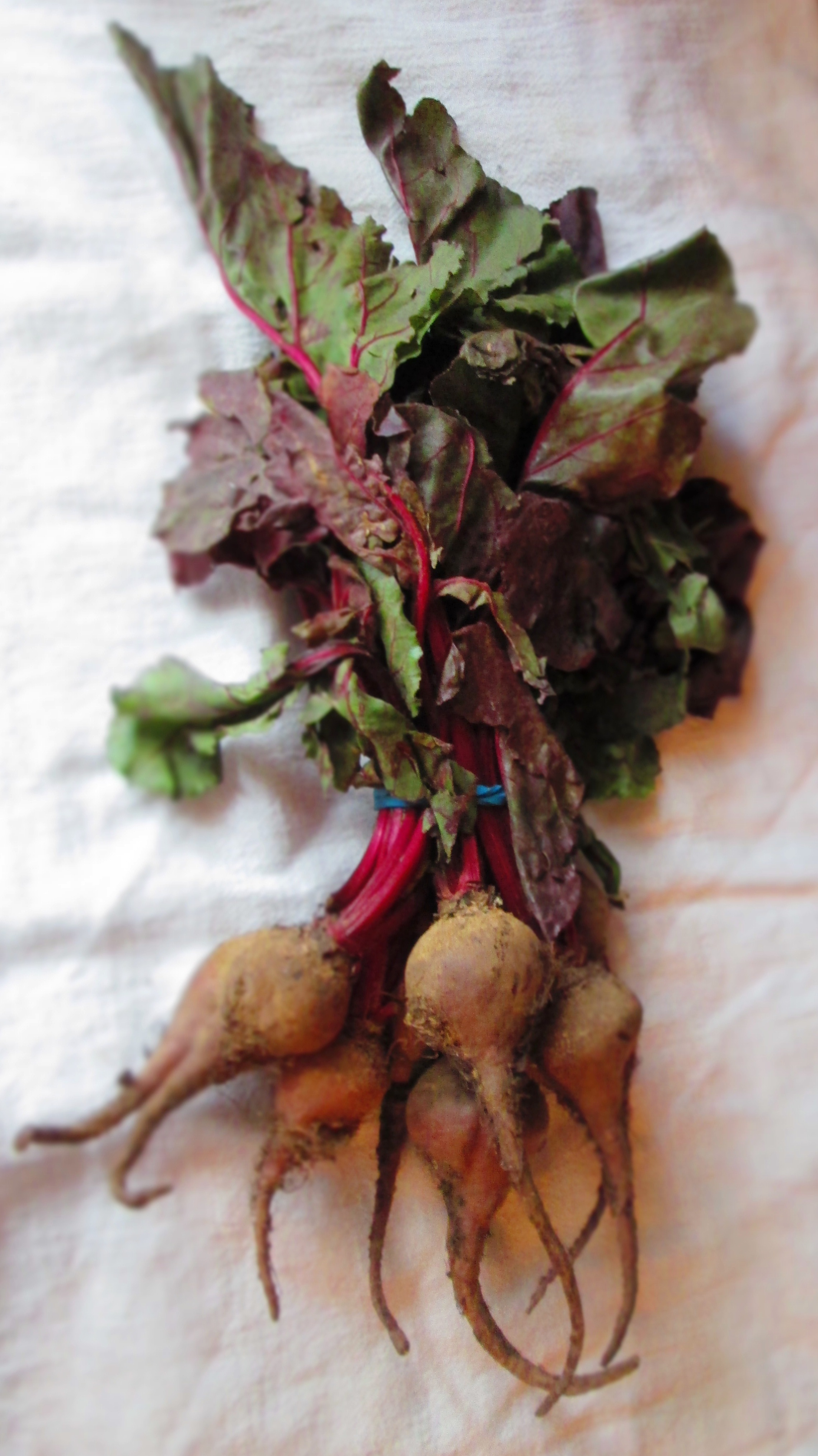
Once again, I was lured by the Siren’s song of the farmers’ market. I picked up some lettuce, some carrots, some cipolline onions. But what caught my eye this week was the box of baby beets. Gigantic red globes can be found anywhere, but baby beets are not quite as easily found. At least not for me. So I pounced on them.
When I was doing my internship at the James Beard House, I worked with different chefs each week. One week, I worked with the crew from Blackberry Farm in North Carolina. They did a plate of roasted baby beets that were like sparkling jewels. And the memory of those little gems is what inspired me to make this recipe.
What is rice-cake pudding? you ask. I’m going to tell you.
I recently found in an Asian market another product that I had never seen before: rice cakes. Not the round disks of puffed rice that dieters have been munching on for decades, but flattened oval, kind of paddle-shaped, disks made from pounded sticky rice. Of course, I bought some.I had absolutely no idea at the time what I was supposed to do with these, so I looked around a bit. I saw a few recipes where the rice cakes are sautéed or stir fried with other vegetables, and that’s something that I’m going to try. But according to the package, they can be fried for a popped rick cake snack, to which you can add “highly tasteful or plain ingredients” for “indeed a favourable dish either for entertainment or for home meal.”Well, how could I not give it a try? I fried a small batch in oil and, as you can see in the photo below, they do puff up. I fried them until they were golden brown, at which point they are quite crisp but hard. Not unpleasantly hard—some people like that, including me. The ones that were more lightly fried had a flakier texture. A sprinkle of sea salt over the top and that was it.
So there you have it for fried rice cakes—a lighter fry for flaky/crispy, a longer fry for crunchy/crispy. (Make sure you dry the rice cakes before putting them in the oil. See note below about soaking.)But what I really wanted to try was rice pudding. Would it taste or be anything like regular rice pudding? I made mine with coconut milk and I can honestly say that it came out pretty darn good. What made it truly different from regular rice pudding, though, was the texture. Because the rice is in the form of these paddles that retain their shape, you have something that requires chewing, not just a mashing, as with regular rice pudding. I’m very much about texture where food is concerned, so I enjoyed this more than I normally enjoy rice pudding (never one of my favorite desserts).
If rice pudding is not usually your thing, whether because of the texture or because it’s a “milky” dish (another reason why I don’t usually care for it), try my recipe below. You might just like it.
So this is my coconut rice-cake pudding. It’s vegan, gluten free, and dairy free. Give it a go, and let me know what you think. Enjoy!
Coconut Rice-Cake Pudding
Note that the rice cakes have to soak in water a minimum of 12 hours or overnight before using them in any recipe.
Makes 2 servings.
2 ounces (about 2 cups) rice cakes
1 cinnamon stick
2 cups coconut milk
½ cup coconut water or plain water
¼- 1/3 cup sugar (based on your sweetness preference)
½ teaspoon kosher salt
½ teaspoon vanilla extract
Garnish: Cinnamon and coconut flakes
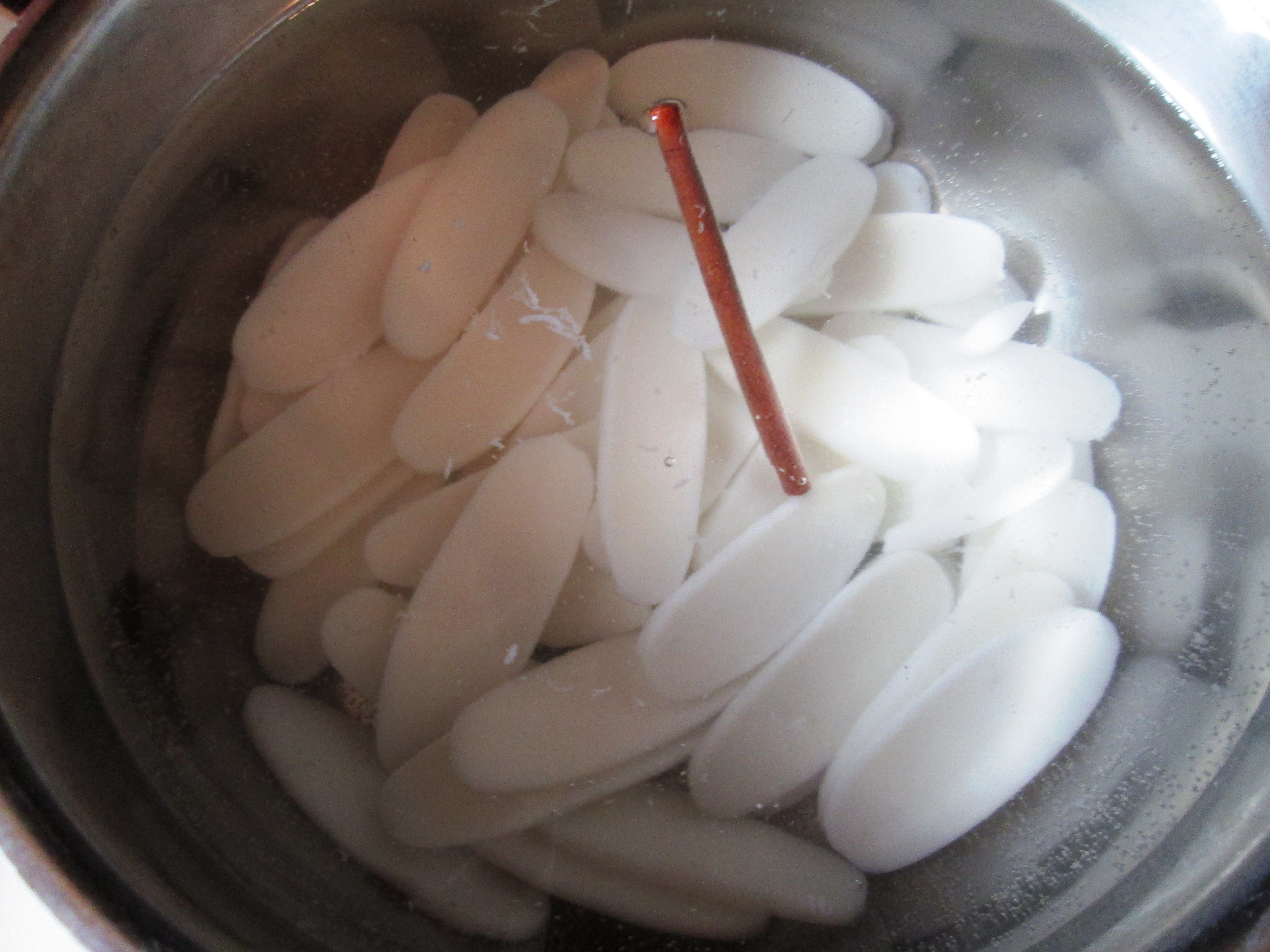
Place the rice cakes in a bowl with enough water to cover by about an inch for a small amount or 2 inches for an entire bag. Cover and let soak in refrigerator at least 12 hours or overnight.
Rice cakes after soaking overnight
Drain the rice cakes and place them, along with the cinnamon stick, in a medium saucepan with water to cover. Bring to a boil; lower the heat to low and simmer 5 minutes.Drain and return the rice cakes and cinnamon to the pot. Add the coconut milk, coconut water, sugar, salt, and vanilla. Bring to a boil; lower heat to low and simmer, partially covered, until thick and creamy, about 45 to 55 minutes. Stir frequently, especially in the last 15 minutes of cooking.
Divide the pudding between 2 pudding dishes and garnish with cinnamon and/or coconut flakes.
(I left my pudding unadorned in the photos so that you can see how the rice cakes retained their shape.)
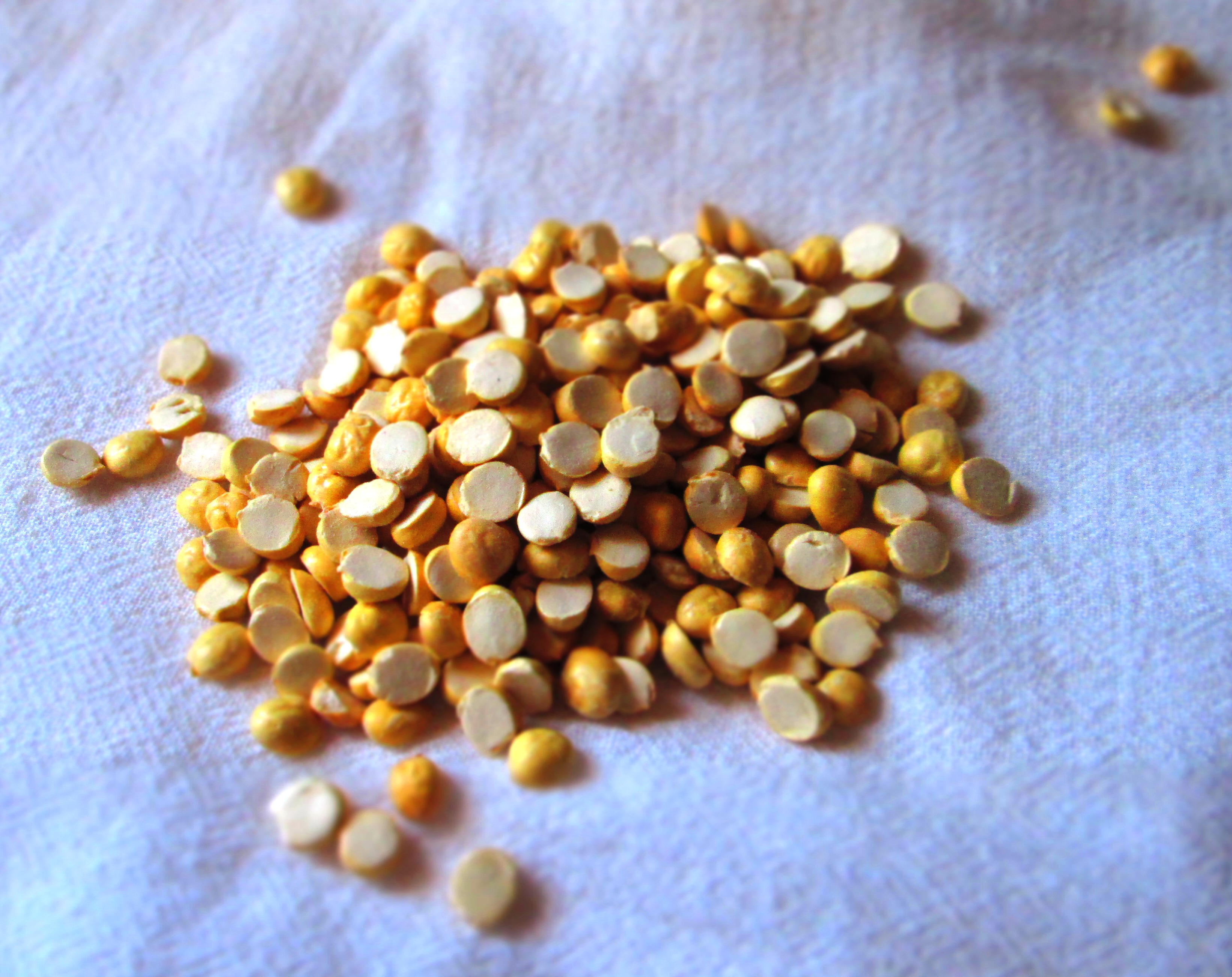
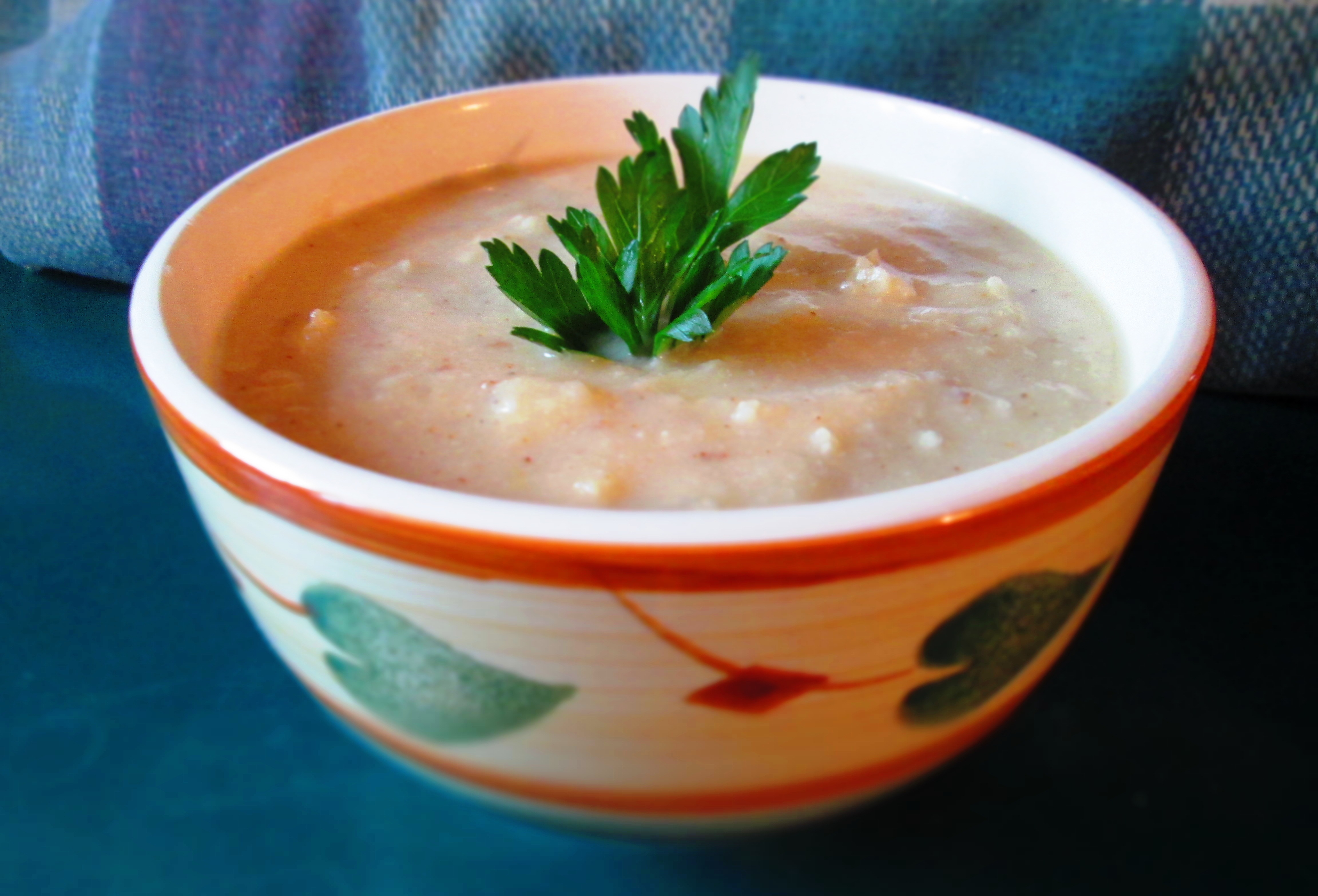
So, I was perusing the bean shelves in my favorite Indian market and found roasted split chickpeas (chana dalia). I’d never seen them before and wondered if they could be cooked just like split green peas. I bought a package and this recipe is the result of my experimentation.The resulting soup is very thick—not just in the viscosity of the soup but the pureed chickpeas themselves leave a thickness on the tongue. Unlike pureed split pea soup, it has a somewhat grainy—but not unpleasant—texture, and the flavor is intensely nutty.
I had no plans for cauliflower over the course of my very busy weekend, but when I saw big, beautiful heads of cauliflower in the store the other day, I couldn’t resist buying one.
It’s cold, snowy, wintry weather, and days like this just scream soup, and what I wanted was a creamy bisque. But before I get to my recipe, let’s talk a bit about this wonderful cruciferous vegetable.
Cauliflower is part of the Brassicaceae family and is related to cabbage, broccoli, Brussels sprouts, bok choi, collard greens, and some other leafy green vegetables. In my cookbook, Vegetarian Italian: Traditions, Volume 1, I talk a little bit about the history of cauliflower and its health benefits: Continue reading →
My friend, Linda, asked me recently for suggestions on what to do with the water she had used to cook kale. This water, known as pot liquor (sometimes spelled potlikker), has set many a cook’s heart aflutter because it’s loaded with flavor. Not only that, it’s also packed with nutrients from the kale, or whatever greens you have cooked in it.
Pot liquor is a U.S. Southern speciality, usually made from collard, mustard, or turnip greens, and can be used in place of water or broth in almost anything. Here are some ways to use it:
* In soups, stews, or chilis
* To cook rice, quinoa, or any other grain
* To braise vegetables or fish
* In a vegetable casserole
* In a vegetable smoothie
* In place of broth in a pan sauce
* If you have enough of it, you can reduce it and add a roux for a sauce, too. This would go very well with grilled/baked/sauteed tofu or tempeh.
* Add it to your pet’s food—it’s nutritious for our furry friends, too!
So, get yourself a nice big bunch of greens—any greens—and cook it down. The best way is to sauté greens in a pan with garlic and oil. But you can also use a small amount of water to boil them. That way, you get the nutrient-packed water without leeching everything out of the greens themselves. Place the greens in a large skillet or dutch oven and add about a cup of water and salt. After the greens are cooked, remove them and save the liquid. To sauté in oil, follow the recipe below, then reserve the pot liquor. It will have incredible added flavor from the garlic and spices.
(By the way, I was very tempted to call this blog “Pot Liquor,” but I was afraid it would draw the wrong kind of traffic. 🙂 As it is, I expect to get a lot of garbage from spammers who are keying in on the words “pot” and “liquor.”)
Sauteed Greens
1 large bunch greens, washed, drained
1 tbsp olive oil
2 large garlic cloves, sliced
1 tsp paprika
1/4 tsp red pepper flakes (optional)
Salt to taste
Freshly ground black pepper to taste
1. Coarsely chop the greens.
2. Heat the oil in a wide pan; add garlic and cook 1 minutes. Add paprika and red pepper lakes and immediately add the greens.
3. Add ½ cup water, salt, and pepper and mix well. Cover the pan and cook until greens are tender. The time will vary, depending on the type of green it is. Add more water if it starts to get dry.
4. Use tongs to remove the greens and garlic. Reserve the pot liquor for use in other recipes.
This week, I wanted to offer my recipe for Chocolate Cake with Avocado Mousse. It received raves when I made it and I’m finally getting around to posting it.
The first ingredients is a chocolate sheet cake. You can certainly make it from scratch, but if you’re pressed for time, you can go and buy one from the store.
Rich chocolate cake paired with a zesty avocado mousse makes a luscious sweet-tart flavor combo. The white chocolate chips give it a gratifying chewy element without competing with the cake. Besides, with antioxidants in chocolate and omega-3 fatty acids in avocado, who can argue that this is a decadent dessert with health benefits? And it’s vegan!
Chocolate Cake with Avocado Mousse
1 chocolate sheet cake (9×13”)
2 Haas avocados
1/4 cup lime juice
1 teaspoon vanilla extract
1 tablespoon honey
1 tablespoon citrus zest (orange, lemon, lime or a combo)
1 teaspoon maple crystals
1/3 cup white chocolate chips
1. Trim off about 1 inch from each end of the cake. Split the cake in half, lift off the top half, and set aside.
2. Combine avocados, lime juice, vanilla, honey, citrus zest, and maple crystals in a food processor and process until completely smooth. (Stop the machine and push down the mixture with a rubber spatula, if necessary.)
3. Spread the avocado mixture evenly over the bottom half of the cake. Sprinkle the chips evenly over the avocado. Replace the top half of the cake.
4. Cut into 12 squares, or use a 2 1/2-inch ring mold to cut out circles. Serve as is or sprinkle powdered sugar over the top.
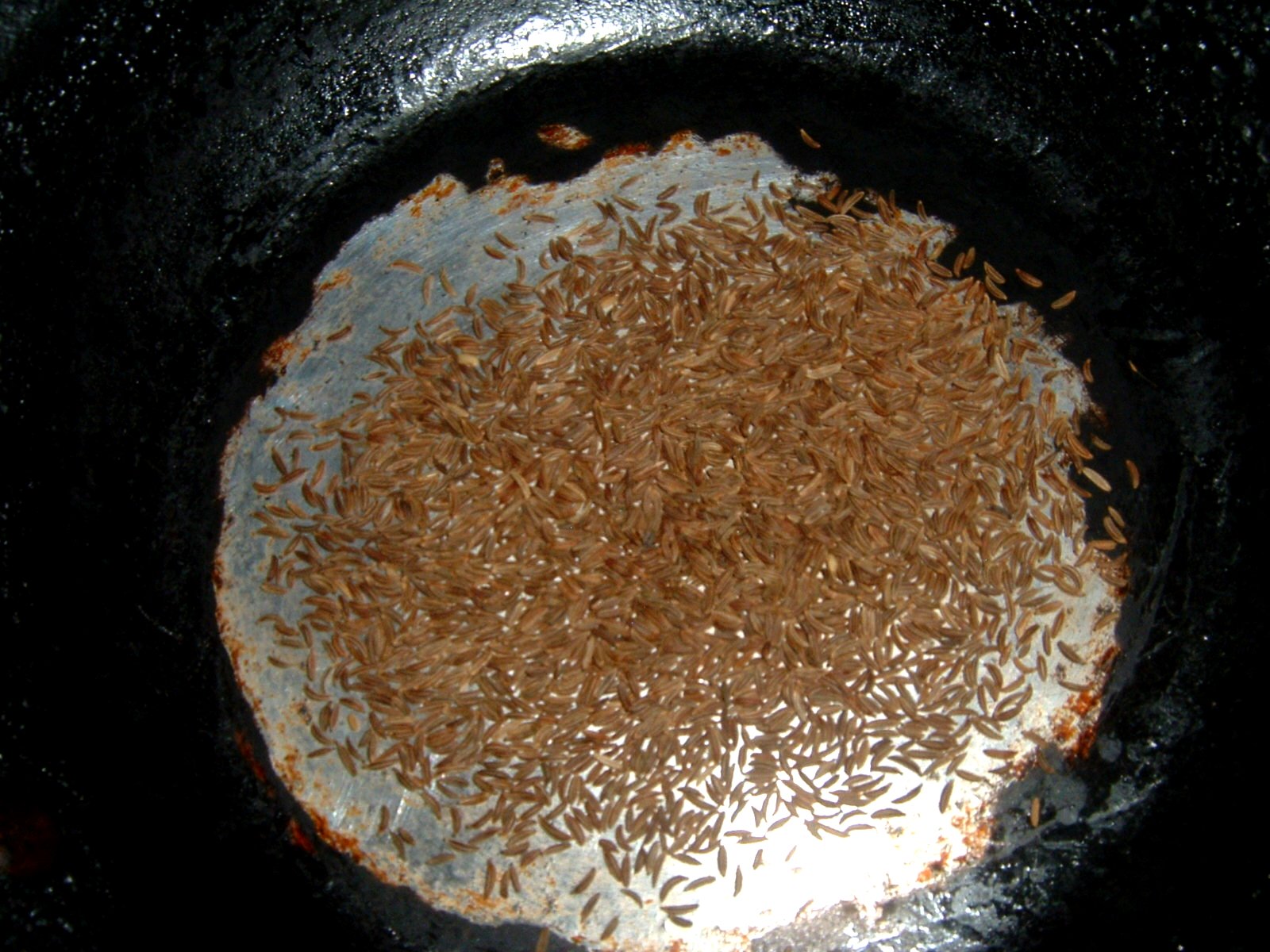
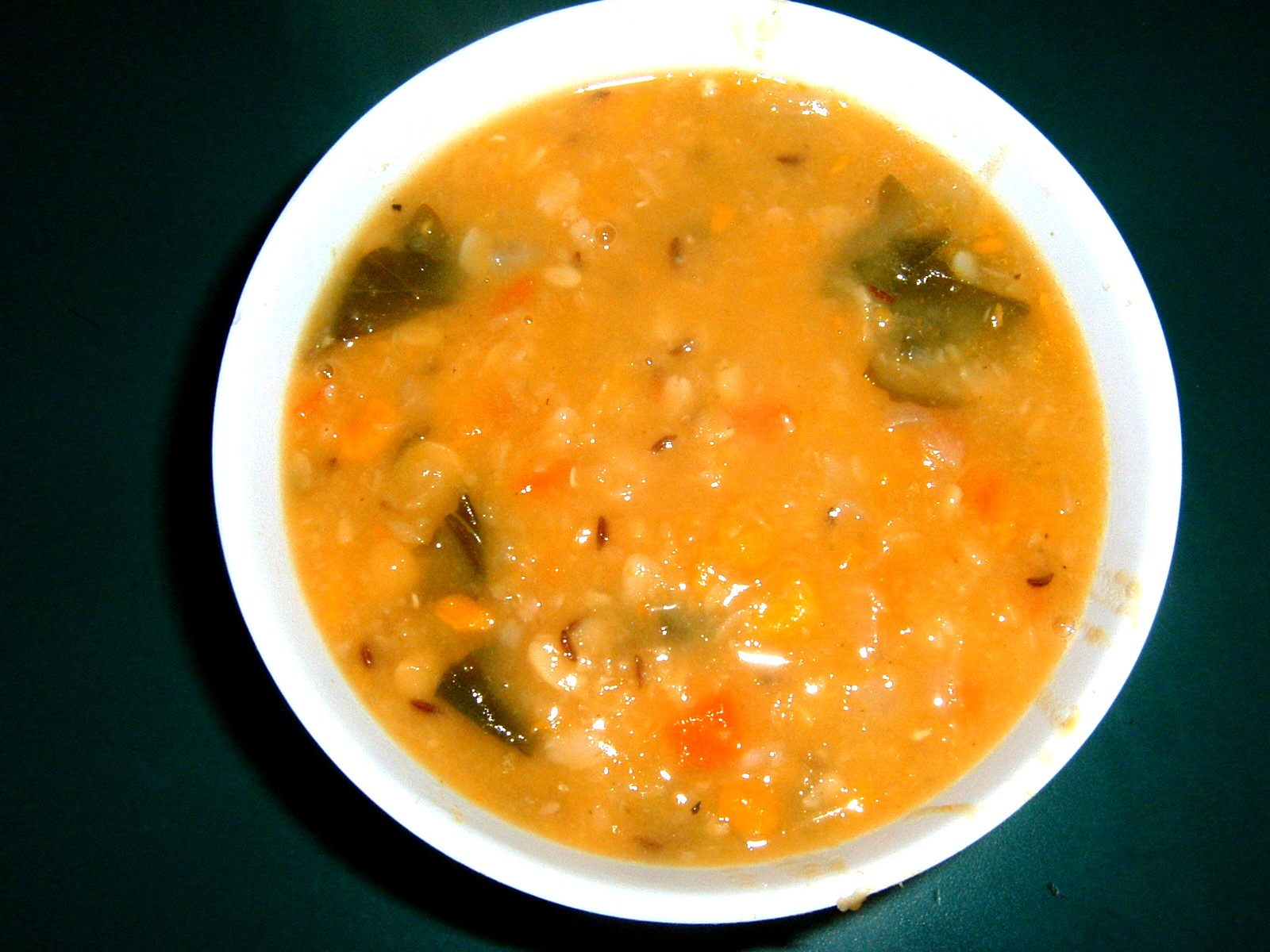
I picked up some mixed dal at an Indian store in Jackson Heights and since the weather was about to take a turn for the worse, I decided to make mixed dal soup. Mixed dal is a mixture of different split lentils and they make delicious meals. They’re also packed with protein, and with a few greens thrown in, you’ve got a complete, filling, satisfying meal. Toasting the caraway seeds gives the soup a great, complex flavor. And it was just right on a rainy, dreary day. So here’s my version of mixed dal soup.
Mixed Dal Soup
2 tablespoon olive oil
1 small onion, diced small
1 medium carrot, diced small
1 celery rib, finely chopped
¼ lb. sweet potato, diced small
½ teaspoon kosher salt
1 cup mixed dal
1 tablespoon caraway seeds, toasted (optional)
1 teaspoon ground fennel seeds
1 teaspoon garlic salt
freshly ground black pepper
½ lb. bok choy (green tops only), chopped
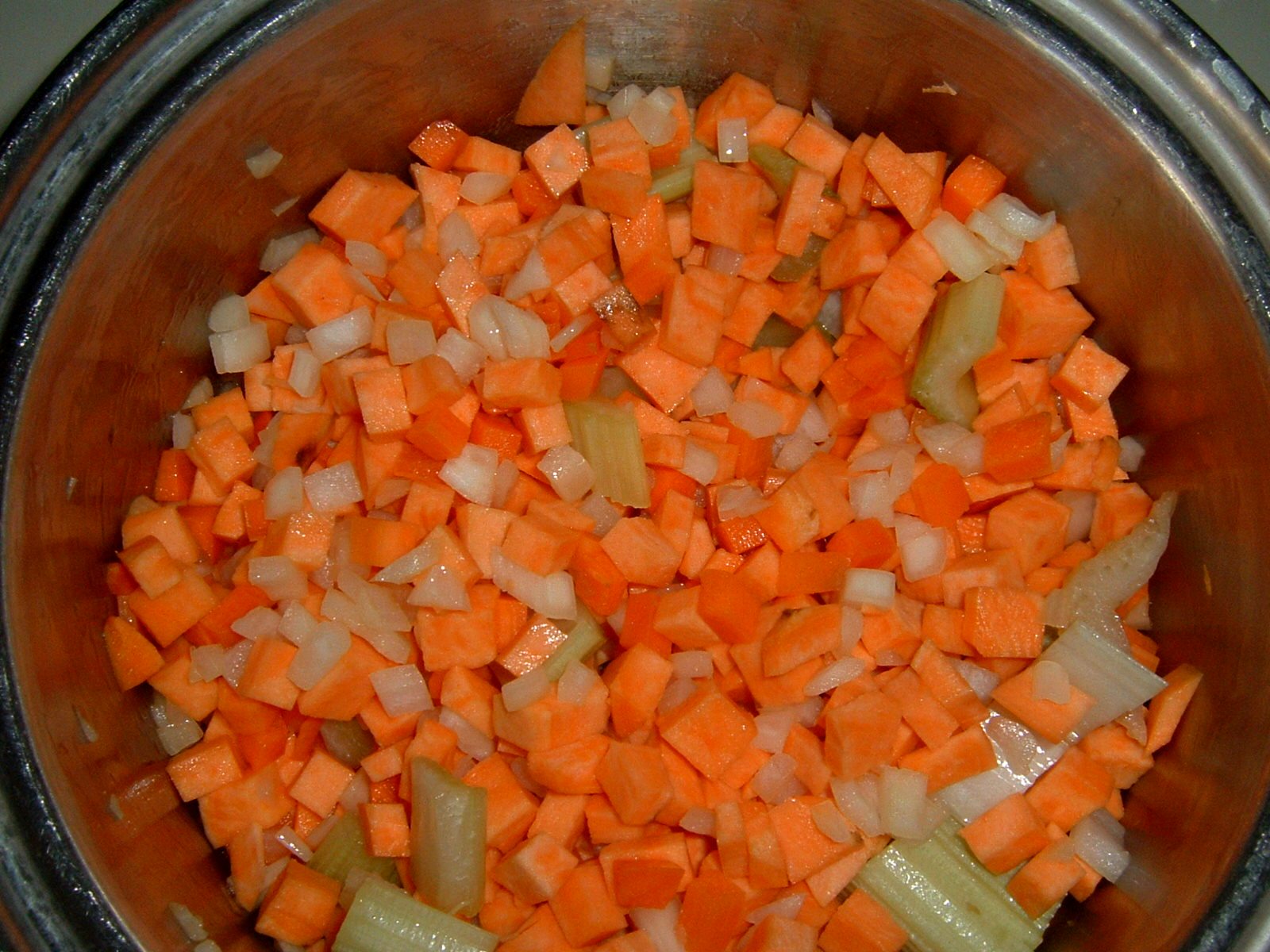
1. Heat the oil in a medium-large pot. Add the onion, carrot, celery, sweet potato, and kosher salt and sauté 5 minutes, or until vegetables have softened and onions are translucent.
2. Add the dal, caraway seeds, fennel, garlic salt, pepper, and 4 cups water; mix well. Bring to a boil; lower the heat and cook, partially covered, until the dal are completely soft and disintegrating, about 1 to 1 ½ hours. Stir occasionally.
3. Add the bok choy and continue cooking a few more minutes until the greens have softened.
4. Taste the soup for seasoning; adjust as desired. Serve hot.


 When you see browned bits in the pan, deglaze with the apple cider vinegar (add it to the pan and scrape up the brown bits with a wooden spoon).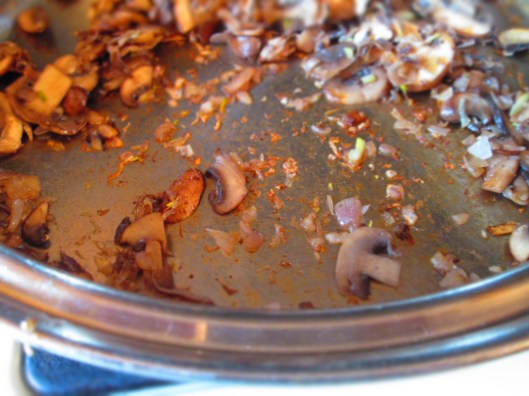
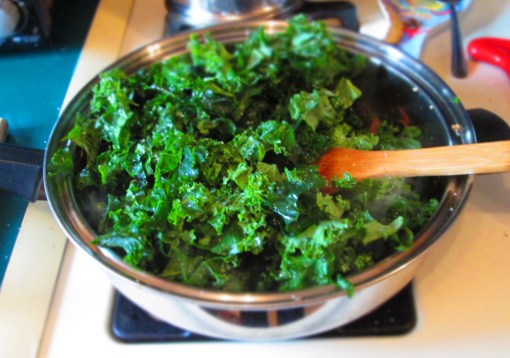 While that’s cooking, make the dressing and set aside.
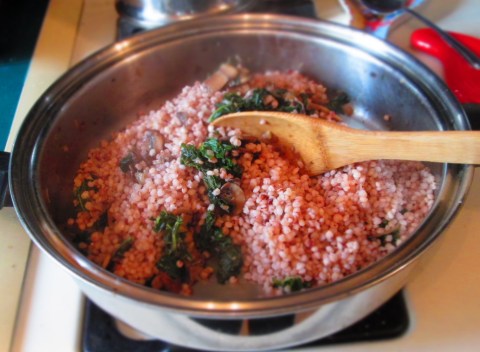 Pour in the dressing and mix well. Taste for seasoning and adjust if needed. Squeeze the lemon over it and stir.










 Miz Chef