Miz Chef

Cooking Up a Healthy Life


4 Comments

Red and Gold Beet Salad


beet saladLove, love, love beets. There are different varieties, but I think it’s safe to say that the majority of us find the red most often. Getting the golden, pink, rainbow, or any other kind of beets, for me, requires a special trip to a farmers’ market or specialty store.

Well, this past week, I lucked out. The farmers’ market that sets up shop outside of my workplace once a week had golden beets, which is not always the case.beets

Anyway, in my opinion, the best thing to do with beets is make a salad with them. It’s the easiest thing in the world and so flavorful. And when you mix beets, it’s beautiful, too.

But if you can only find the red beets, it’s just as delicious. I like to roast beets, but in the summer, turning on the oven is not fun, so I boil them. (If you have a grill you can use, then that’s even better!). There’s nothing wrong with boiling, just don’t overcook them and use only just enough water to cover them in the pot. Enjoy!

Red and Gold Beet Salad

1½ pounds red and yellow beets
½ small red onion, thinly sliced
3 tablespoons extra virgin olive oil
1 teaspoon balsamic vinegar
½ teaspoon sea salt
Freshly ground pepper to taste

Wash and trim the beets of excess roots or threads. Place in a medium-large pot and fill with enough water to cover the beets. Bring to a boil; lower the heat to medium-low and simmer, partially covered, until the beets are cooked. You should be able to stick the tip of a knife easily all the way through.

Remove beets from the water and let them cool. Peel off the skin and trim off unappealing parts (such as near the roots). Cut them into quarters or bite-sized pieces. Place in a medium bowl. Add the remaining ingredients and stir gently. Serve.
beet salad

Save

Save


Leave a comment

Picnic Posole Salad

posole text

I’ve been making posole salad for picnics, parties, and barbecues years. I think people enjoy it because it’s both something different from the usual fare, while offering something familiar and not too “out there.”

hominy

Dried hominy

So what is posole (or pozole)? Not everyone outside of the Latin community is familiar with posole. Posole means “hominy” (from the Nahuatl word pozolle), and actually refers to a stew, popular in Mexico and made with hominy and pork or chicken. But it is sometimes also used (loosely and unofficially) to refer to the hominy itself, which is properly called mote. Corn, in general, is known as maize.

Mote is maize that has had its hulls removed through a process known as nixtamalization. This involves boiling the kernels in a water-and-lime (or ash) solution. The resulting product is used in many traditional dishes throughout Latin America, the most commonly known being posole stew, a dish that goes back to the pre-Colombian Aztecs. Continue reading

Lentils with garlic scapes


Leave a comment

Lentils with Garlic Scapes

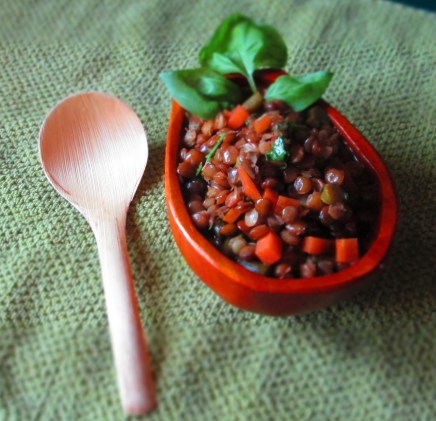
Lentils with garlic scapesGarlic scapes are one of summer’s treasures and if you have a farmers’ market near you, try to find some. They’re available for a short time in early summer. Scapes can be used in many different ways—basically, any way you would use garlic or onions. Last week, I used them with beet greens (very tasty!).

Garlic scapes

For this recipe, I used garlic scapes as the flavor base for lentils. Scapes lend the dish a mellow garlic-like taste but there’s more complexity to it. The addition of fresh herbs really elevate this to a gourmet meal, but the simplicity can’t be beat. The final result is so flavorful and something really special. Continue reading


1 Comment

Beet Greens and Garlic Scapes

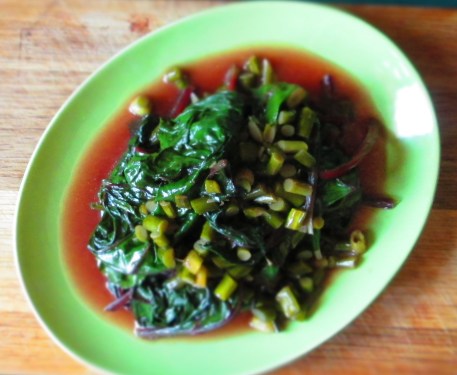
beet greens with garlic scapes

I was just commenting to someone that I sometimes feel that I cook more in summer than in winter. That seems counter-intuitive, but there’s a reason for this. With summer comes all the beautiful vegetables that you can’t get in winter (or they’re not as good in winter), and I definitely want to take full advantage.

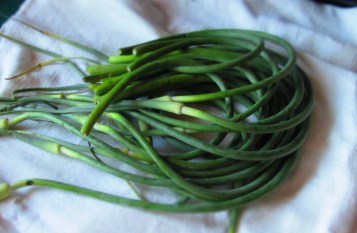
One of those things is garlic scapes, which are available for a short while in early summer.garlic scapes

At the farmers’ market this week I found garlic scapes, as well as beets with beautiful lush leaves. Usually I cook beet greens with garlic, so I thought that garlic scapes would work well too. And they do. Continue reading


4 Comments

Chilean Tomato and Sweet Onion Salad

IMG_3119

One of the best things about summer is all the beautiful, luscious tomatoes that become available. So this is the season for tomato salads. It’s almost not even worth it to make tomato salad any other time of the year.

This is a simple Chilean version, which gets a bit of a kick from minced Serrano or jalapeno pepper. But if you like, you can omit it. Choose any tomatoes you like—there are so many options this time of year! Heirloom varieties make a stunning salad, but good old beefsteak tomatoes do better than fine. Continue reading


Leave a comment

Oat Noodle Salad with Umeboshi Plum Dressing

IMG_6054

Yes, I’m still on a noodle kick. This time I’ve created a recipe using oat flour noodles. The nice thing about gluten-free noodles is that they’re lighter than wheat noodles, but like wheat noodles, they can be used in a variety of ways.IMG_6043

For some reason, these noodles are sold in packages with the odd weight of 13.4 ounces. I don’t know how or why they came up with that number, but it makes it awkward to create a recipe. (They probably started with 380 grams and it just happens to convert to 13.4 ounces, but why 380?) Well, I used approximately 10 ounces, which is three of the bundles that come in the package in the photo.

In this recipe, I’ve paired oat noodles with string beans and Japanese yams (although, if you can’t find Japanese yams, you can use sweet potatoes). The noodles and yams will soak up the dressing very efficiently, so if the salad is too dry for your tastes, you can add a little more olive oil, but the salad will not be oily in the slightest.

Ume Plum

Ume Plum

For the dressing, I used an umeboshi plum. Umbeboshi plums, a Japanese specialty, are ume plums (but more closely related to apricots) that have been salted and fermented. In the world of natural healing, umeboshi plums are considered miracle workers. If you divide foods into acidic, alkaline, and neutral, umeboshis are alkaline and can adjust imbalances in your body. It’s been used in Asia, particularly, Japan, China, and Korea, for centuries for a variety of ailments, including fatigue, nausea, diarrhea, colds, indigestion, headaches, and hangovers, among other things. Samurai soldiers were given umboshi as part of their field rations. They not used the plums to help them battle fatigue, they also used them to flavor foods such as rice and vegetables. Umeboshis also acted as a water and food purifier. Continue reading


6 Comments

Green Beans with Hazelnuts and Grapefruit Butter

IMG_5944Green beans are a versatile vegetable. You can use them in many different ways. For those of you who have only had mushy green beans that have been boiled to death, I feel sorry for you. But I’m here to tell you, there’s something else. (That’s my small, brief homage to Prince.)

I had purchased a bag of green beans for a diet that I was going on and found myself with lots of leftover beans. I had just roasted a batch the week before, and as much as I love roasted green beans, I wanted to do something different. I also had these beautiful pink grapefruits in the refrigerator, so I came up with this recipe.

It’s a little different but simple enough to make easily and quickly. There are very few ingredients and very few steps involved, yet the taste is fresh and flavorful, but not overpowering. See what you think. Continue reading


Leave a comment

Black Rice Noodles with White Beans & Cauliflower

IMG_5874

I’m on noodle kick. If you read my blog last week, you know that I wrote about noodles then as well. That blog was about the mung bean noodles that I found in an Asian market. Well, in that same market, I found black rice noodles, and, as usual, I couldn’t resist trying them.

A New SuperfoodIMG_5856

Black foods are not only striking to look at, but they’re typically high in antioxidants because of they’re high levels of pigments. Black rice is high in Vitamin E, which helps the immune system and protects cells from free radical damage. According to a study from the Louisiana State University Agricultural Center, black rice contains more anthocyanin antioxidants than blueberries, making it an even healthier choice than brown rice. As a result, black rice is considered one of the new superfoods. And let’s not overlook the fact that these noodles are gluten free! Here’s more about it at Livestrong.com.

The unfortunate part of using black rice noodles is that once they’re cooked, they’re no longer black but a dark purple. But that’s okay—they’re still pretty to look at. And they still stand out beautifully against white beans and vegetables, which is exactly what I did with this recipe. Continue reading


Leave a comment

Italian-Style Mung Bean Noodles

IMG_5803

mung beans

Mung Beans

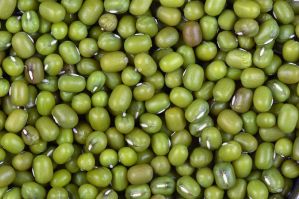
Mung bean noodles are noodles that are made from dried, ground mung beans. Mung beans have been consumed since antiquity but are unfamiliar outside of Indian and Asian communities. They are an important part of Ayurvedic cuisine, and are popular for sprouting. (Many of the bean sprouts that come with your salad or in your Asian take-out come from mung beans).IMAG3683

Mung beans are a high source of protein—about 3 grams per tablespoon, or 14 grams per cup. They’re also rich in manganese, potassium, magnesium, folate, copper, zinc and some B vitamins. They’re low on the glycemic index, and high in antioxidants. They’re considered a good food in the battle against heart disease, cancer, diabetes, inflammation, and obesity.

Mung beans can be found in Indian and Asian markets, but are slowly starting to find their way onto supermarket shelves as well. You can get mung bean noodles in Asian markets. The logical conclusion would be to use them in a dish with Asian flavors, right? However, I chose to go Italian style with these, and it worked out beautifully. I simply made them the way I would make a dish of traditional Italian pasta—with olive oil, garlic, and vegetables.

Mung Bean Noodles

Mung Bean Noodles

Like many non-wheat noodles, these will not come out al dente, like traditional pasta. Mung bean noodles come out soft and somewhat sticky, so the eating experience will be different than what you get from eating traditional pasta, but it’s pleasant and delicious with a slightly nutty flavor. I like to add a little extra virgin olive oil at the end not only for the extra flavor boost but also to counteract the stickiness of the noodles.

I hope you enjoy them.

Italian-Style Mung Bean Noodles

Makes 2 servings.

1 small head broccoli, cut into florets
2 tablespoons + 2 teaspoons olive oil
½ teaspoon kosher salt
Freshly ground black pepper to taste
6 to 8 ounces mung bean noodles
2 large garlic cloves, minced
1 teaspoon paprika
2 tablespoons grated cheese
2 teaspoons extra virgin olive oil

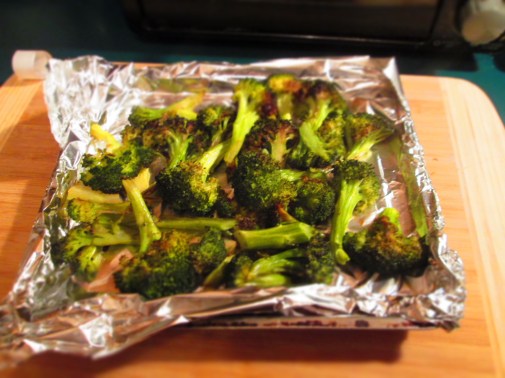
Preheat the oven to 350 F. Spread the broccoli out on a baking sheet. Toss with 2 tablespoons olive oil, salt, and pepper. Roast for 10 minutes. Stir and continue roasting until tender when pierced with a knife and browned, about another 10 to 15 minutes.IMG_5797

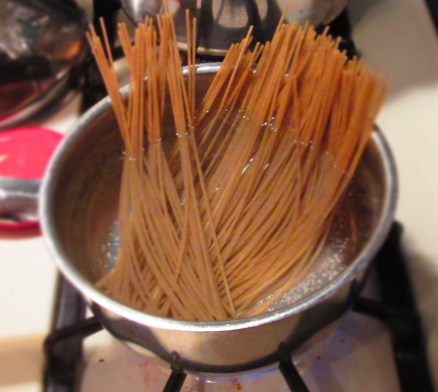
Bring a medium pot of water to a boil. Add the mung bean noodles and cook, stirring occasionally until tender, about 5 minutes. Drain.IMG_5795IMG_5802

Split the noodles between 2 bowls, and add broccoli to both, and mix well.

Heat the remaining olive oil in a small pan. Add the garlic and sauté just until it becomes fragrant and starts to color.IMG_5796

Add the paprika, swirl it around, and immediately pour equally over the two the bowls of noodles and broccoli.

IMG_5800Sprinkle grated cheese over the top, then the extra virgin olive oil, and serve.

IMG_5806


Leave a comment

Warm Sorghum Salad

IMG_5823

This week in honor of last week’s episode of The Walking Dead, I offer you Warm Sorghum Salad.

Okay, the truth is, I already had this blog post and recipe prepared but it seemed like an appropriate time to post it.IMG_5809

Many people don’t know what sorghum is. It’s a grain that originated in Africa and that’s been used in this country for years as fodder—except in the South, where it’s been a fairly popular grain. Also in the South, sorghum molasses often takes the place of regular molasses, honey, maple syrup, and corn syrup. In short, it’s a liquid sweetener that’s used in baked goods, as well for drizzling on biscuits, pancakes, and toast.

I’ve offered other sorghum recipes here, such as Sorghum Pilaf, Sorghum Stir-Fry, and my Cranberry Sauce with a Sorghum Twist (using sorghum molasses) even made it in into the holiday issue of Pilcrow & Dagger.

Sorghum is gluten free and inexpensive. But it’s also very use friendly. It’s a diverse grain that can be used in many different dishes. Here’s my Warm Sorghum Salad. It’s great to bring to dinner in the fall and winter, but also to barbecues and picnics in the warmer seasons. And the kale makes it a well-rounded, healthy dish. Enjoy!

Warm Sorghum Salad

Makes 6 servings

1 cup sorghum grain
1 tablespoon olive oil
½ cup minced shallot
1 teaspoon kosher salt
½ lb. mushrooms (preferably a combination of white and baby bella), thinly sliced
1 tablespoon apple cider vinegar
4 packed cups chopped kale
Fresh pepper
½ small lemon

Dressing
¼ cup extra virgin olive oil

1 teaspoon balsamic vinegar
1 teaspoon Dijon mustard
Freshly ground black pepper to taste

Place the sorghum in a mesh strainer and rinse it under running water for a minute or two. Place it in a small pot along with 3 cups water and bring to a boil. Lower the heat and simmer, partially covered, until tender, about 30 to 40 minutes. Drain well.

IMG_5820

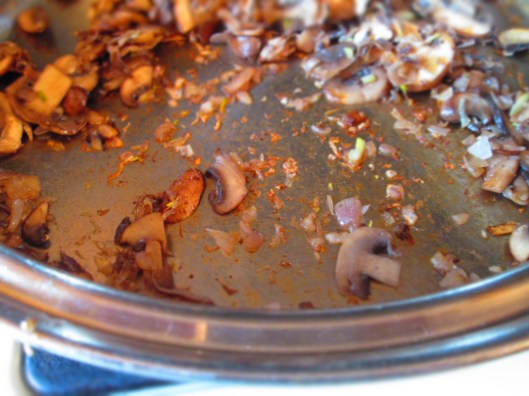
Meanwhile, heat the oil in a wide skillet. Add the shallot, ¼ teaspoon salt, and saute until soft and translucent, 2 or 3 minutes. Add the mushrooms and 1/4 teaspoon salt and saute until the water they release dries up and mushrooms brown.IMG_5813When you see browned bits in the pan, deglaze with the apple cider vinegar (add it to the pan and scrape up the brown bits with a wooden spoon).IMG_5816
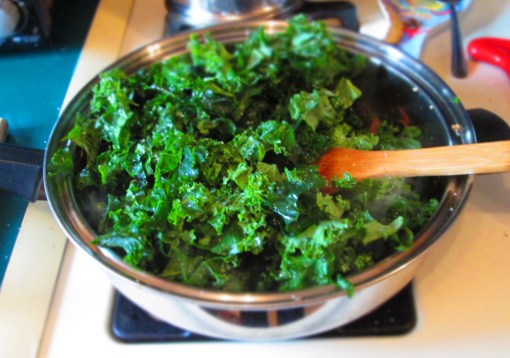
Add the kale and another ½ teaspoon salt and cover; cook until kale is tender.IMG_5818While that’s cooking, make the dressing and set aside.
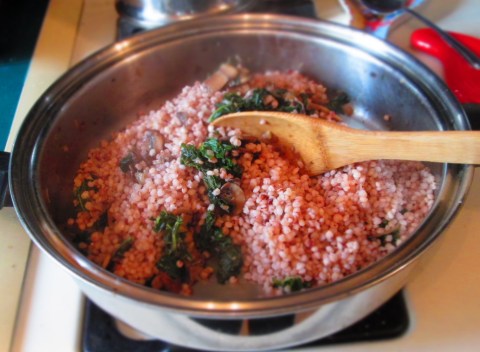
When the sorghum is cooked, add it to the pan with the kale and pepper and mix.IMG_5821Pour in the dressing and mix well. Taste for seasoning and adjust if needed. Squeeze the lemon over it and stir.

Transfer to a serving bowl and serve warm.IMG_5824